
Payday lending is legal in Ohio, but only under the Short-Term Loan Act, which caps loans at $1,000, limits interest to 28% a year plus a capped monthly fee, and requires at least 91 days to repay. The old two-week, 391% APR payday loan has been illegal here since April 27, 2019, when House Bill 123 (the Fairness in Lending Act) took effect. Car title loans are not authorized under Ohio law at all.
Run the numbers
Payday and short-term loans in Ohio
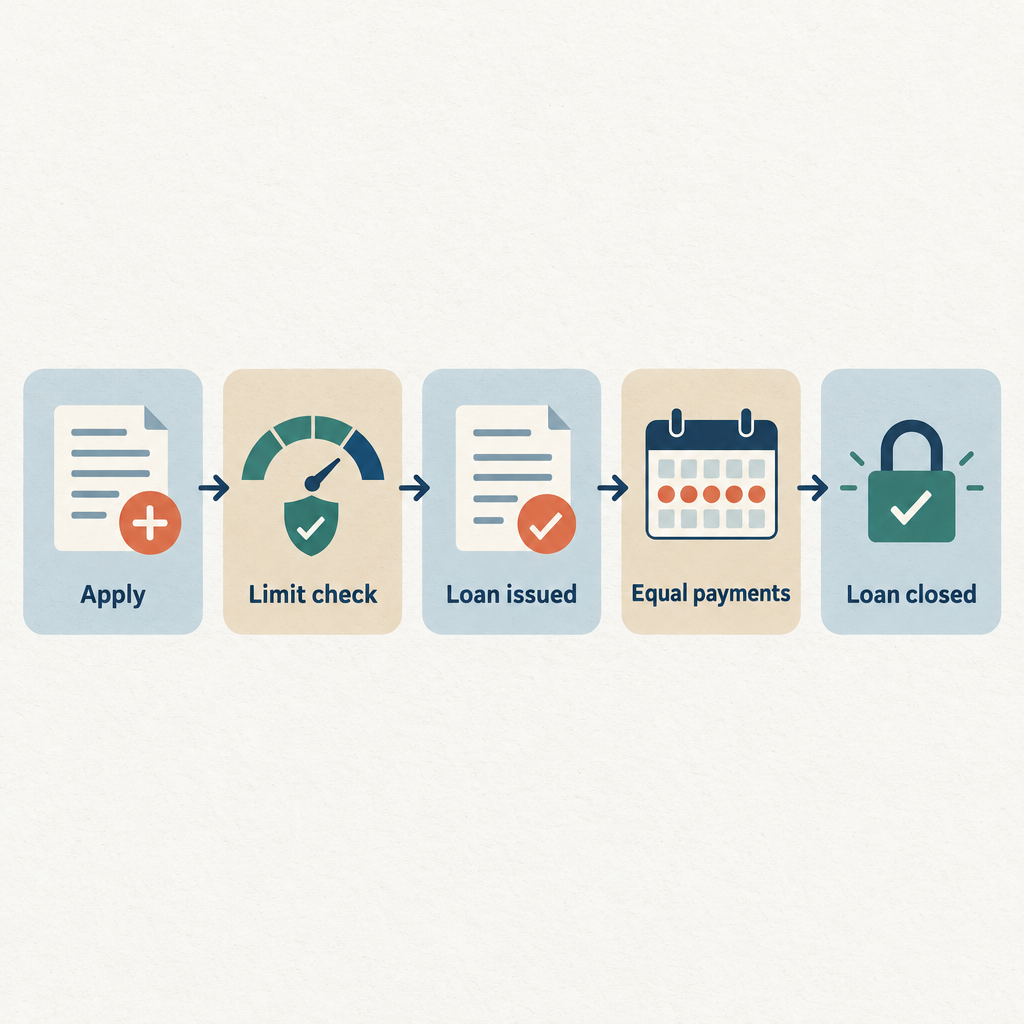
Every loan of $1,000 or less with a term under a year falls under the Short-Term Loan Act, Ohio Revised Code sections 1321.35 to 1321.48. Lenders can’t dodge it by calling the product something else. Before 2019 they did exactly that: after voters upheld a 28% cap in 2008, storefronts re-registered under the Mortgage Loan Act and the Credit Services Organization Act, and the Ohio Supreme Court let them in Ohio Neighborhood Finance, Inc. v. Scott, 2014-Ohio-2440. HB 123 closed both routes.
Here is what a licensed lender can charge you now under ORC 1321.40.
| Rule (ORC 1321.39 and 1321.40) | Ohio limit |
|---|---|
| Maximum loan | $1,000 |
| Minimum term | 91 days (shorter only if your payment is at or under 6% of gross or 7% of net monthly income) |
| Maximum term | 12 months |
| Interest | 28% per year |
| Monthly maintenance fee | Lesser of 10% of the original principal or $30; not allowed for active-duty military or dependents |
| Origination fee | 2% of principal, only on loans of $500 or more |
| Returned-check charge | Up to $20 |
| Total fees and interest | Capped at 60% of the original principal |
| Payments | Substantially equal installments |
| Cancel | Free rescission by 5 p.m. on the third business day |
A few other protections matter in practice. You can’t have more than $2,500 in short-term loans outstanding across all lenders, and the lender must get your signed attestation on that point. Ohio runs no statewide loan database, so the attestation is the only check. Lenders can’t take your car title as security, and they can’t threaten or pursue criminal charges over a bounced payment. The structure is a fixed installment plan, so there is no “rollover” in the old sense: you repay on schedule or you default, and default triggers ordinary civil collection, not a new fee cycle.
What a short-term loan really costs in Ohio
The 28% figure is the interest cap, not the whole price. The maintenance fee usually costs more than the interest. Our calculations below use the statutory maximums.
| Loan | Term | Interest (28%) | Maintenance fees | Origination | Total cost | Total repaid | Rough APR |
|---|---|---|---|---|---|---|---|
| $300 | 4 months | about $18 | $30 × 4 = $120 | $0 | about $138 | about $438 | about 240% |
| $500 | 6 months | about $41 | $30 × 6 = $180 | $10 | about $231 | about $731 | about 145% |
| $1,000 | 12 months | about $155 | $30 × 12 = $360 | $20 | about $535 | about $1,535 | about 90% |
Here is the APR math in plain words: take every dollar of cost, spread it over the months you actually have the money, and annualize it. A $500 loan that costs $231 over six months has you paying about 46% of the principal in half a year, which works out near 145% APR once you account for the balance shrinking each month. Smaller, shorter loans carry the highest APR because the flat $30 fee hits hardest against a small balance.
Car title loans in Ohio
Ohio has no title loan statute, and the Short-Term Loan Act expressly bars licensed lenders from taking a security interest in your vehicle. Any storefront or website offering a “title loan” to an Ohio resident is either unlicensed or operating under a different license that doesn’t fit the product. If a company holds your title, pulls it or threatens repossession on a small loan, treat that as a red flag and report it to the Division of Financial Institutions. This is a sharp contrast with states like Alabama, where title pawns at 25% a month are legal; our piece on “alabama payday loan laws” shows how different the picture is one state south.
Installment and personal loans in Ohio
Loans above $1,000, or any loan with a term over a year, fall under Ohio’s older lending acts, and this is where today’s high-cost lenders have moved. The Center for Responsible Lending and Ohio consumer groups have documented lenders steering borrowers into loans of $1,001 or more precisely to escape the Short-Term Loan Act, so watch the dollar amount on any offer you get.
| Law | Code section | Typical use | Rate rule |
|---|---|---|---|
| Short-Term Loan Act | ORC 1321.35–1321.48 | Loans up to $1,000, under 12 months | 28% plus capped fees (table above) |
| Small Loan Act | ORC 1321.01–1321.19 | Installment loans up to $5,000 | 28% on the first $1,000, 22% above that (ORC 1321.13) |
| General Loan Law | ORC 1321.51–1321.60 | Larger personal and installment loans | 25% per year (ORC 1321.57) plus permitted fees |
| Consumer Installment Loan Act | ORC 1321.62–1321.702 | Installment loans from CILA licensees | Interest and origination fee set in ORC 1321.68 |
| General usury statute | ORC 1343.01 | Contracts with no other license | 8% per year unless an exception applies |
The 8% figure in ORC 1343.01 is Ohio’s baseline usury rate, and it applies to written contracts not covered by a specific lending license. Banks, credit unions and licensed finance companies operate under exceptions, which is why a “personal loan for bad credit” from a licensed lender can lawfully carry 25% or more. Our explainer on “usury laws” covers how these carve-outs work in every state. A “direct lender installment loan” is simply a loan from the company that funds it rather than a broker; it still needs one of the licenses above.
Two marketing claims deserve a plain answer. “No credit check” installment loans in Ohio almost always mean the lender uses alternative data, bank-account access or a soft inquiry, then prices the risk in with the highest fees the license allows. “Same day” funding is legal and common, but speed is never a reason to skip reading the Truth in Lending disclosure, which must show the APR and the total you will repay before you sign.
Online and tribal lenders
Ohio law follows the borrower, not the lender’s address. ORC 1321.36 requires anyone making short-term loans to Ohio residents to hold an Ohio license, and the same applies to the Small Loan Act and General Loan Law. An online lender in Utah or Delaware still has to meet Ohio’s $1,000 cap and 60% total-cost limit when the borrower lives in Columbus or Dayton.
Tribal lenders are the exception that bites. They claim sovereign immunity from state caps, Ohio regulators have limited power to compel them, and complaint data from the CFPB shows these loans frequently run several hundred percent APR with automatic bank debits. If a lender is not in the Ohio license lookup and says state law doesn’t apply, you have no state protection if something goes wrong. Texas still allows a broker model that produces similar prices through state-licensed companies; see “texas payday loan laws” for how that works and why Ohio shut it down.
How to check an Ohio lender
- Search the company name in NMLS Consumer Access and confirm an active Ohio license, not just a federal registration.
- Cross-check the Ohio Division of Financial Institutions’ consumer finance licensee list on the Department of Commerce site.
- Confirm the license type matches the product: a Short-Term Loan Act license for loans up to $1,000.
- Read the Truth in Lending box for the APR and total of payments before signing anything.
Debt collection and wage garnishment in Ohio
Ohio does not license debt collectors, so the Fair Debt Collection Practices Act is your main shield, backed by the Ohio Consumer Sales Practices Act (ORC Chapter 1345), which the Attorney General enforces against unfair collection practices. The limits on what a creditor can take after a judgment are set by state statute.
| Collection rule | Ohio law | Limit |
|---|---|---|
| Wage garnishment | ORC 2329.66(A)(13) and 2716.02 | Lesser of 25% of disposable earnings or the amount above 30 times the federal minimum wage per week ($217.50) |
| Pre-garnishment notice | ORC 2716.02 | Creditor must send a demand letter 15 to 45 days before filing |
| Statute of limitations, written contract | ORC 2305.06 | 6 years (cut from 8 by Senate Bill 13, effective June 16, 2021) |
| Statute of limitations, oral contract | ORC 2305.07 | 4 years |
| Trusteeship alternative | ORC 2329.70 | Pay through the court to stop garnishment |
The 15-day demand letter is unusual and useful. It must tell you that you can avoid garnishment by paying the debt or applying for a court trusteeship, where you make one payment to the court each month and all creditors share it. Social Security, SSI, unemployment and public assistance are exempt from garnishment entirely. If a collector takes more than the law allows, the “financial dispute resolution” routes we cover elsewhere, from written disputes to small claims, all apply.
Help that costs less
Cheaper options first
Payday alternative loans from a federal credit union: $200 to $2,000, 28% APR cap, no more than a $20 application fee under 12 CFR 701.21(c)(7).
Prevention, Retention and Contingency (PRC) emergency grants through your county Job and Family Services office.
Ohio’s HEAP and Winter Crisis Program for utility bills, run by the Ohio Department of Development; dial 211 for local rent and food aid.
Nonprofit credit counselors accredited through the NFCC offer debt management plans that cut card interest without a settlement company’s fees. If you consider a for-profit “debt relief program,” know that Ohio’s Debt Adjusters Act (ORC Chapter 4710) caps what adjusters can charge and requires annual audits; companies that promise to erase debt for a large upfront fee are breaking federal rules too. Ohio Legal Help and your regional legal aid office handle collection suits and garnishment hearings free of charge for income-eligible residents.
Federal rules that apply everywhere
The Truth in Lending Act and Regulation Z (12 CFR 1026) require every Ohio lender, online or storefront, to disclose the APR and finance charge before you sign. The Military Lending Act caps the military annual percentage rate at 36% for active-duty service members and their dependents, and Ohio adds its own ban on the maintenance fee for that group. The Fair Debt Collection Practices Act bars third-party collectors from calling before 8 a.m. or after 9 p.m., contacting your employer about the debt, or lying about what you owe. Since March 30, 2025, the CFPB’s payday lending rule also stops lenders from trying to debit your account a third time after two failed attempts without fresh authorization.
How to check a license and file a complaint
Ohio lending licenses are issued by the Division of Financial Institutions within the Ohio Department of Commerce, which maintains a licensee search and a consumer complaint form on its website. Complaints about collectors, debt settlement companies and deceptive marketing go to the Ohio Attorney General’s Consumer Protection Section. For any lender, including tribal and out-of-state companies, file with the CFPB complaint portal; the Bureau forwards complaints to the company and publishes the response record. Suspected fraud, such as a fake “lender” demanding an upfront fee, belongs with FTC ReportFraud and the FBI’s IC3.
Before you borrow
A maximum-cost $500 Ohio short-term loan repays about $731 over six months. Loans of $1,001 or more escape every cap in the Short-Term Loan Act, so a lender nudging you above $1,000 is usually doing it for their benefit, not yours.
FAQ
Are payday loans legal in Ohio?
Yes, in a regulated form. Loans up to $1,000 must run at least 91 days, carry no more than 28% interest plus a capped monthly fee, and keep total fees and interest under 60% of the principal. Traditional two-week payday loans with a single balloon payment are illegal.
How much can I borrow from a payday lender in Ohio?
The Short-Term Loan Act caps a single loan at $1,000, and you cannot have more than $2,500 in short-term loans outstanding across all lenders at once.
Can I get a car title loan in Ohio?
No Ohio statute authorizes title loans, and short-term lenders are barred from taking a vehicle title as collateral. Offers you see online are either unlicensed or built on a license that doesn’t permit the product.
What happens if I default on a payday loan in Ohio?
The lender can sue in civil court and, after a judgment, garnish up to 25% of your disposable pay following a 15-day notice. The lender cannot have you arrested or charged with a crime for a returned payment.
Can an online payday lender charge Ohio residents more than the cap?
Not legally, if it is a state-licensed lender. Tribal lenders claim immunity from Ohio’s caps, and the state has little practical power over them, which is why checking NMLS Consumer Access before borrowing matters more online than in a storefront.
Where do I complain about a lender in Ohio?
Start with the Ohio Division of Financial Institutions for licensed lenders and the Ohio Attorney General for collectors and deceptive marketing. File a CFPB complaint for any company, licensed or not, since the Bureau tracks responses and shares data with state regulators.
Laws and regulations referenced
- Truth in Lending Act, 15 U.S.C. 1601
- Regulation Z, 12 CFR Part 1026
- Fair Debt Collection Practices Act, 15 U.S.C. 1692
- Military Lending Act, 10 U.S.C. 987
- CFPB payday lending rule, 12 CFR Part 1041
Links go to the official text on government sites.
Check, verify or complain
Sources
- lsc.ohio.gov › assets › organizations › legislative service commission › files › payday lend… lsc.ohio.gov · primary source
- legalclarity.org › ohio usury laws interest rate limits and legal consequences legalclarity.org
- ohiopaydaylendingreform.org › about reform ohiopaydaylendingreform.org
- nolo.com › legal encyclopedia › restrictions payday lending ohio nolo.com
- ohiopaydaylendingreform.org › media coverage › lenders boost access 3w2rh ohiopaydaylendingreform.org
- ustatesloans.org › law › oh ustatesloans.org
- mcglinchey.com › insights › ohio tightens small dollar lending law mcglinchey.com
- law.justia.com › cases › ohio › supreme court of ohio › 2014 › 2013 0103 law.justia.com
- debthammer.org › ohio payday loan laws debthammer.org

Elena writes about getting through a money emergency, assistance programs, budgeting on a tight income, banking basics and borrower rights. Her guides list the cheaper options first and link the agency or program that can actually help.

Ruth is US Financer's standards editor. Every article goes through her checks before and after it is published: each rate, fee, cap, deadline and rule is matched against its primary source, every law named is linked to its official text, and anything that cannot be…
Comments are closed