
General information, not legal advice. Laws change, so confirm with the official statute, your state regulator or a licensed attorney before you act.
Payday lending is legal in Alabama. The Alabama Deferred Presentment Services Act, Ala. Code § 5-18A-1 and following, limits payday borrowing to $500 outstanding and caps the fee at 17.5% of the amount advanced. On a two-week loan that works out to about 456% APR. Car title loans are also legal and cost more, because Alabama treats them as pawn transactions that can charge 25% a month.
Run the numbers
Key takeaways
- You can owe no more than $500 in payday loans at once, across all lenders, and a statewide database enforces that limit.
- A $500 payday loan costs $87.50 for each term of up to 31 days, and the lender can renew it only once.
- Title loans fall under the Alabama Pawnshop Act: 25% per 30 days, no cap on the loan amount, and you lose the whole car if you do not redeem it.
- Installment loans of $2,000 or more have no numeric state rate cap.
- As of November 2026, no bill to tighten these limits has become law.
Payday and short-term loans in Alabama
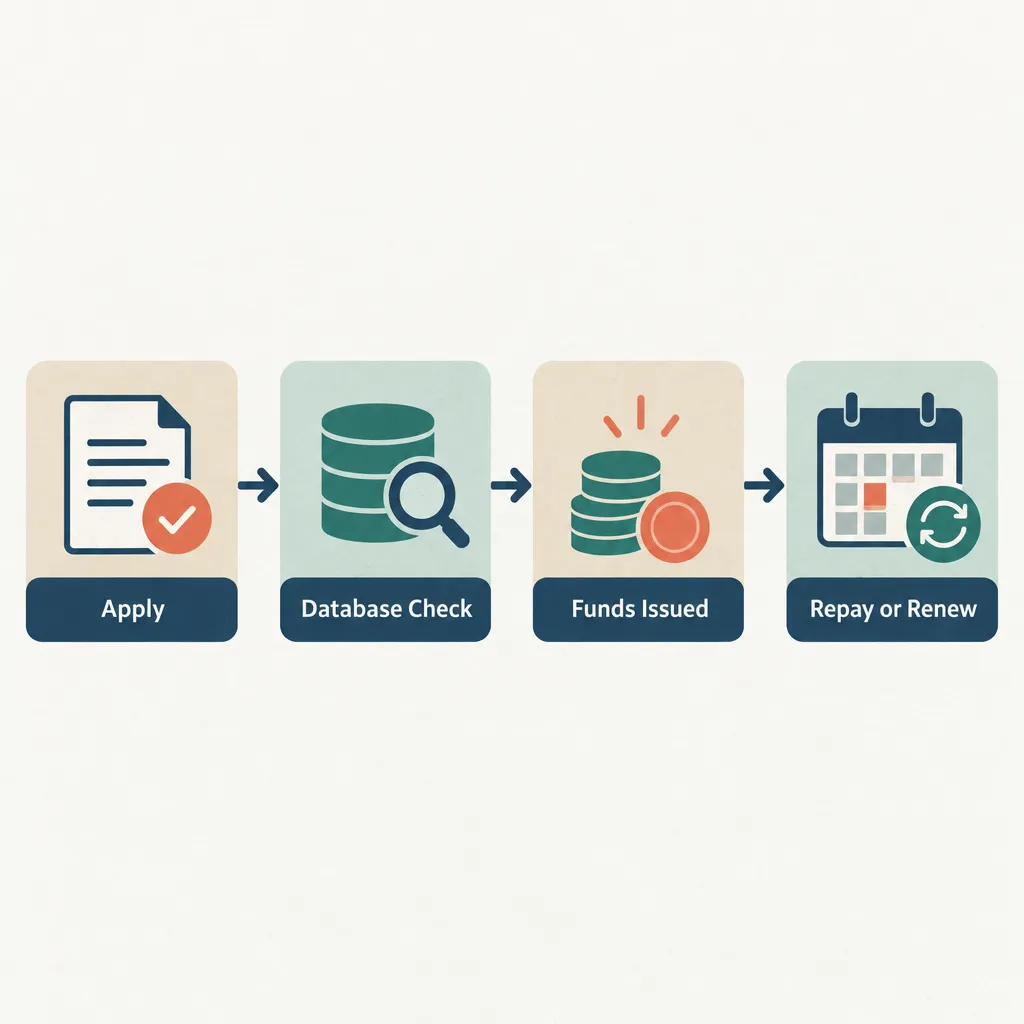
Alabama legalized payday lending in 2003 with the Deferred Presentment Services Act. The law calls the product a “deferred presentment transaction.” You write a check or authorize a debit for the loan amount plus the fee, and the lender agrees to hold it until your next payday. The lender needs a license from the State Banking Department’s Bureau of Loans, and under § 5-18A-3 every store or website serving Alabama residents needs its own license.
The main limits are in § 5-18A-12 and § 5-18A-13:
- Maximum loan: $500. This is a total across all payday lenders, not a per-store limit, and the state database enforces it.
- Maximum fee: 17.5% of the amount advanced, which is $17.50 for every $100 borrowed.
- Term: at least 10 days and no more than 31 days.
- Rollovers: the lender may renew or extend a loan once. After that, you have to repay the loan in full.
- Cooling-off period: once you complete two consecutive loans, the lender cannot make a new one until the next business day. That still lets you repay one loan and take out another the next day, which is why consumer advocates in the state call the rule largely symbolic.
- Returned checks: if your check bounces, the lender can charge one returned-item fee and cannot add more penalties.
- No criminal threats: the Act bars a licensee from threatening or pursuing criminal bad-check charges over an unpaid payday loan. A lender can sue you in civil court, but a bounced payday check is not a crime in Alabama.
The law does not call the payday fee interest. Even so, Regulation Z (12 CFR 1026), which implements the Truth in Lending Act, requires the lender to show it as an APR. Here is how the math works.
| Loan amount | Fee at 17.5% | Term | Total repaid | APR |
|---|---|---|---|---|
| $100 | $17.50 | 14 days | $117.50 | 456% |
| $300 | $52.50 | 14 days | $352.50 | 456% |
| $500 | $87.50 | 14 days | $587.50 | 456% |
| $500 | $87.50 | 31 days | $587.50 | 206% |
| $500 rolled over once | $175.00 ($87.50 × 2) | 28 days | $675.00 | 456% |
How the APR is calculated. A $52.50 fee on $300 is 17.5% of the amount borrowed ($52.50 ÷ $300 = 0.175). A year has 365 ÷ 14 = 26.07 two-week periods, so 17.5% × 26.07 = 456%. Over the full 31 days the law allows, the result is 17.5% × (365 ÷ 31) = 17.5% × 11.77 = 206%. A longer term lowers the APR, but borrowing $500 for a month still costs $87.50. To see the cost of other amounts and terms, enter them in a payday loan calculator.
The statewide payday database
Since August 2015, every licensed Alabama payday lender has had to check a central database before making a loan. The Banking Department set up the database by regulation in its deferred presentment rules, Ala. Admin. Code chapter 155-2-4, after lenders challenged the plan in court. Before the database existed, a borrower could hold several $500 loans from different stores at the same time, so the $500 limit was easy to get around.
The database does two things for you:
- It stops a licensed lender from making a loan that would push your outstanding payday balance over $500.
- It gives the state a yearly count of loans, borrowers and fees.
Advocacy groups such as Alabama Arise use these figures to argue that most fee revenue comes from people who renew or borrow again, not from one-time users.
Reform efforts, and where they stand
As of November 2026, the 2003 limits are still law. Alabama has not meaningfully tightened its payday law since then, and no bill to change it was enacted in the 2025 or 2026 sessions.
The most common reform proposal is called “30 Days to Pay.” It is sponsored by Sen. Arthur Orr of Decatur and backed by Alabama Arise. It would make the minimum term about a month, so the same fee would be spread over 30 days instead of two weeks. Alabama Arise estimates this would lower the effective APR from 456% to about 220%. Versions of the bill have passed the Senate but died in the House Financial Services Committee, and one version was voted down 8-6 in the Senate Banking and Insurance Committee. A 36% APR cap, Alabama Arise’s top recommendation, has also been filed several times without passing.
Licensing moved to NMLS in 2026
Starting September 1, 2026, the State Banking Department began managing 10 license types through the Nationwide Multistate Licensing System (NMLS). These include deferred presentment, pawnshop, small loan and non-mortgage consumer credit licenses, at both company and branch level. Existing licensees must complete the transition in NMLS by December 31, 2026, or their licenses expire. Approved licenses stay active through December 31, 2027.
Did you know?
According to the Alabama State Banking Department’s 2026 licensee notice, any payday, pawnshop, small loan or consumer credit lender that does not move its license into NMLS by December 31, 2026 loses that license. A lender still operating in Alabama in 2027 should therefore appear in NMLS Consumer Access.
Car title loans in Alabama
Alabama has no separate title loan statute. In Floyd v. Title Exchange and Pawn of Anniston (1993), the Alabama Supreme Court treated a car’s certificate of title as tangible personal property that can be pawned. Since then, title lenders have operated under the Alabama Pawnshop Act, Ala. Code § 5-19A-1 and following.
Under § 5-19A-7, a pawnbroker can charge up to 25% of the principal per month. That equals 300% APR, and it applies to a loan of any size, because the Pawnshop Act has no maximum loan amount and no requirement to check whether you can repay.
Under § 5-19A-8, the maturity date cannot be less than 30 days after the loan is made. Under § 5-19A-6, you then have 30 more days to redeem the car. After that, it belongs to the lender. The Act does not require the lender to give back any surplus if the car is worth more than you owed. If you pledge a $6,000 truck for a $1,500 loan and do not redeem it, you lose the whole truck.
| Title loan | Monthly charge at 25% | Months carried | Total charges | Total repaid |
|---|---|---|---|---|
| $1,000 | $250 | 1 | $250 | $1,250 |
| $1,000 | $250 | 3 | $750 ($250 × 3) | $1,750 |
| $1,000 | $250 | 6 | $1,500 ($250 × 6) | $2,500 |
| $2,500 | $625 | 3 | $1,875 ($625 × 3) | $4,375 |
The math. 25% × 12 months = 300% a year. After four months of charges (4 × 25% = 100%), you have paid as much in fees as you borrowed and still owe the full principal.
The State Banking Department licenses title lenders as pawnbrokers. Because title loans fall under pawn law, none of the payday protections apply to them: no database check, no $500 cap, no one-rollover limit and no ban on criminal threats. Alabama is one of a shrinking number of states where a 300% title loan with no surplus protection is fully legal.
Installment and personal loans in Alabama
Three overlapping laws set the rates for an installment loan in Alabama. Which one applies depends on how much you borrow and what license the lender holds.
| Loan size | Governing law | Maximum charge |
|---|---|---|
| Under $1,500 (small loan license) | Alabama Small Loan Act, § 5-18-15 | 3% per month on the first $200 of unpaid balance, 2% per month on the rest |
| Under $2,000 (consumer credit license) | Alabama Consumer Credit Act (“Mini-Code”), § 5-19-3 | $15 per $100 per year on the first $750, $10 per $100 per year above $750 (add-on) |
| $2,000 or more | § 8-8-5 | No numeric cap; the rate agreed in writing |
| Loans no other law covers | § 8-8-1 | $8 per $100 per year (8%) by written contract, $6 per $100 (6%) without one |
How the two capped tiers cost out
The two capped laws calculate interest in different ways. The Small Loan Act charges a monthly rate on the balance you still owe. The Mini-Code charges an add-on rate on the original amount for the whole term.
| Example | Calculation | Finance charge | Total repaid | Approx. APR |
|---|---|---|---|---|
| Small Loan Act, $1,000, first month | (3% × $200) + (2% × $800) = $6 + $16 | $22 in month one | Depends on term | About 26%, rising slightly as the balance falls |
| Mini-Code, $1,000, 12 months | ($15 × 7.5) + ($10 × 2.5) = $112.50 + $25 | $137.50 | $1,137.50 (about $94.79 a month) | About 24.5% |
On the Small Loan Act loan, the $200 tier works out to 36% a year (3% × 12) and the rest to 24% a year (2% × 12). As you pay down the balance, the 36% tier makes up a larger share of what remains, so the blended rate goes up a little.
On the Mini-Code loan, the $137.50 charge is 13.75% of $1,000. Because you pay the balance down each month while the charge stays based on the full $1,000, the true APR is about 24.5%, nearly double the add-on figure. Regulation Z requires the lender to disclose that true APR to you before you sign, so compare loans using the APR, not the add-on rate.
No cap at $2,000 and above
For loans of $2,000 or more, Alabama has no numeric rate cap. Under § 8-8-5, a lender can charge whatever rate the borrower agrees to in writing. That is why some online lenders offer Alabama residents loans of just over $2,000 at triple-digit APRs. These loans are legal if the lender holds an Alabama consumer credit license. Before you accept one, run the numbers through a personal loan calculator and compare the total repaid with a credit union loan.
The Bureau of Loans administers both the Small Loan Act and the Mini-Code. Since the 2026 NMLS transition, a consumer credit lender that also made small loans holds a new “Section 22 Small Loan” license instead of its old small loan license.
Online and tribal lenders
Alabama’s lending laws protect you based on where you live, not where the lender is based. Under § 5-18A-3, anyone offering payday loans to Alabama residents, including online, must hold an Alabama license. The Consumer Credit Act applies to online installment lenders the same way. A licensed online lender must follow the $500 cap, the 17.5% fee limit and the database check, just like a store.
The gray area is lenders owned by federally recognized tribes. These lenders claim sovereign immunity from state rules and often charge triple-digit APRs without an Alabama license. Federal courts have split on whether tribal immunity protects the lender from state law, and the Banking Department has limited power to make an unlicensed tribal lender refund fees. Your best protection is to refuse any lender you cannot find in the license records and to report any that contact you.
How to check a lender's Alabama license
- Search the lender’s exact legal name in NMLS Consumer Access. As of 2026, it lists Alabama deferred presentment, pawnshop, small loan and consumer credit licenses.
- Cross-check the Bureau of Loans pages on the State Banking Department’s website.
- Confirm that the address on the website matches the licensed location. A lender licensed only in another state, or offshore, is not licensed to lend to you.
- If the lender is not listed, do not sign. Report it to the Bureau of Loans and the CFPB.
Debt collection and wage garnishment in Alabama
Alabama does not separately license third-party debt collectors, so the Fair Debt Collection Practices Act (15 U.S.C. § 1692 and following) is your main protection when a debt collector contacts you. Under the FDCPA, a collector cannot:
- call before 8 a.m. or after 9 p.m.
- contact you at work once you say your employer does not allow it
- discuss your debt with third parties
- threaten arrest, or a lawsuit it does not intend to file
The FDCPA covers collection agencies and debt buyers. It does not cover a payday lender collecting its own loan, but the Deferred Presentment Services Act’s ban on criminal threats still applies to the lender directly.
If a lender or collector sues you and wins, Ala. Code § 6-10-7 protects 75% of your wages from garnishment. The federal Consumer Credit Protection Act sets the same ceiling: a creditor can take 25% of your disposable earnings, or the amount by which your weekly pay exceeds 30 times the federal minimum wage ($7.25 × 30 = $217.50), whichever is less. Alabama also protects a set amount of personal property under § 6-10-6 and of home equity under § 6-10-2. These amounts were raised in 2015 and are adjusted for inflation periodically, so check the current figures with a legal aid office before a court hearing.
Deadlines matter too. Under § 6-2-34, the time limit to sue on a written contract is six years. Under § 6-2-37, it is three years for an open account. A collector can still ask you to pay an older debt, but it cannot win a lawsuit if you raise the time limit as a defense. Legal Services Alabama offers free help with collection lawsuits to low-income residents. Using financial dispute resolution, through a CFPB complaint or small claims court, is almost always better than ignoring a court summons.
Federal rules that apply in Alabama
Four federal rules apply on top of Alabama law:
- Truth in Lending Act and Regulation Z: every lender, including payday and title lenders, must give you the finance charge and APR in writing before you sign.
- Military Lending Act (10 U.S.C. § 987, 32 CFR part 232): caps the total cost of credit at a 36% Military Annual Percentage Rate for active-duty service members and their dependents. In practice, that rules out Alabama payday and title loans for them.
- Fair Debt Collection Practices Act: covers third-party collectors, as described above.
- CFPB payday lending rule (12 CFR part 1041): its payment provisions took effect March 30, 2025. After two failed attempts in a row to debit your bank account, the lender cannot try again without your new authorization. The rule’s ability-to-repay requirements were revoked in 2020 and never took effect. In March 2025 the CFPB said it would not prioritize enforcing the payment provisions, and it has listed reconsidering them on its regulatory agenda. As of November 2026, the rule text has not changed and state regulators can still enforce it.
Help that costs less
Cheaper options first
Federal credit unions offer payday alternative loans (PALs) of up to $2,000 at no more than 28% APR.
Ask your utility, landlord or hospital for a hardship or payment plan before you borrow to pay them.
Dial 211 for referrals to local help with rent, utilities and food in Alabama.
Federal credit unions in Alabama can make payday alternative loans under NCUA rules at 12 CFR 701.21(c)(7):
- PAL I: $200 to $1,000, repaid over one to six months.
- PAL II: up to $2,000, repaid over up to 12 months.
As of November 2026, PAL rates can be no higher than 28% APR, and the application fee is capped at $20.
| Loan | Rate | Term | Interest | Max fee | Total repaid |
|---|---|---|---|---|---|
| $500 PAL | 28% APR | 3 monthly payments of about $174.50 | about $23.50 | $20 | about $543.50 |
| $500 payday loan | 17.5% fee | 14 days | $87.50 | Included | $587.50 |
The PAL math: 28% ÷ 12 = 2.33% a month. Paying off $500 over three months at that rate takes payments of about $174.50, for a total of about $523.50, or $23.50 in interest. Even with the full $20 fee, the PAL costs about $43.50, roughly half of one two-week payday fee. You usually need to be a credit union member for at least a month before you can get a PAL, so it is worth joining before an emergency.
State and local help can also reduce the need to borrow:
- The Alabama Department of Human Resources runs SNAP, the Family Assistance (TANF) program and child care subsidies.
- The Alabama Department of Economic and Community Affairs funds the Low Income Home Energy Assistance Program through local community action agencies.
- Alabama 211 connects callers with county-level programs for rent, utilities and food.
If you already have several payday or installment loans, a nonprofit credit counseling agency approved by the Department of Justice can set up a debt management plan.
How to file a complaint
The Alabama State Banking Department’s Bureau of Loans licenses and examines payday lenders, title lenders operating as pawnbrokers, small loan companies and consumer credit lenders. It can order refunds and revoke licenses.
- Licensed lenders: file with the Bureau of Loans first.
- Any lender or collector: the Consumer Financial Protection Bureau accepts complaints, sends them to the company and publishes the response in its public complaint database.
- Unlicensed or offshore lenders: also report them to the FTC at ReportFraud. If money was taken from your account without your permission, report it to the FBI’s Internet Crime Complaint Center as well.
Before you borrow
A $500 Alabama payday loan costs $87.50 for every term you carry it. A title loan at 25% a month costs as much as the loan itself in four months, and if you default, the lender can keep your whole car.
FAQ
How many payday loans can you have at once in Alabama?
You can owe up to $500 in total, across all lenders. Since 2015, the statewide database has blocked any licensed lender from making a loan that would put you over that limit, so splitting loans between stores no longer works.
Can a payday lender have you arrested in Alabama?
No. The Deferred Presentment Services Act bars lenders from threatening or using criminal prosecution over an unpaid payday loan. A lender or collector who says otherwise is breaking state law. If it is a third-party collector, it is also violating the FDCPA.
Are title loans legal in Alabama, and what do they cost?
Yes. Under the Pawnshop Act, as applied in Floyd v. Title Exchange and Pawn, a title lender can charge up to 25% per 30 days, or 300% APR, with no cap on the loan amount. If you do not redeem the car within 30 days after the loan matures, the lender keeps it, including any value above what you owed.
Is a 36% rate cap coming to Alabama?
Not as of November 2026. Bills to cap rates at 36% APR or to set a 30-day minimum payday term have been filed for about a decade, and none has become law. Other states take different approaches. Texas payday loan laws leave fees largely uncapped at the state level. California payday loan laws limit payday loans to $300 and cap installment loans between $2,500 and $10,000 at 36% plus the federal funds rate.
How much of my paycheck can be garnished for a payday loan in Alabama?
Only after a court judgment. A creditor can then take up to 25% of your disposable earnings under Ala. Code § 6-10-7 and the federal Consumer Credit Protection Act, or less if your weekly take-home pay is close to $217.50. Social Security, SSI and most public benefits cannot be garnished for consumer debt.
What is the difference between an installment loan and a payday loan in Alabama?
A payday loan is a single-payment loan of $500 or less, due within 31 days, with a fee of up to 17.5%. An installment loan is repaid in scheduled payments over several months. Its rate cap depends on the size: tiered caps under the Small Loan Act (under $1,500) and the Mini-Code (under $2,000), and no numeric cap at $2,000 or more.
Laws and regulations referenced
- Code of Alabama, Title 5, Chapter 18A (Deferred Presentment Services Act), State Banking Department copy
- Code of Alabama, Title 5, Chapter 18 (Alabama Small Loan Act, as amended by Act 2017-373), State Banking Department copy
- Truth in Lending Act, 15 U.S.C. 1601
- Regulation Z, 12 CFR Part 1026
- Fair Debt Collection Practices Act, 15 U.S.C. 1692
- Military Lending Act, 10 U.S.C. 987
- CFPB payday lending rule, 12 CFR Part 1041
Links go to the official text on government sites.
Check, verify or complain
Sources
- consumerfinance.gov › consumer tools › educator tools › servicemembers › answers › category › money t… consumerfinance.gov · official source
- consumerfinancemonitor.com › 2020 › 07 › 07 › cfpb issues final rule rescinding payday loan rule ability… consumerfinancemonitor.com
- legalclarity.org › usurious contracts in alabama laws limits and consequences legalclarity.org
- cash-advance.us › locations › alabama cash-advance.us
- alarise.org › blog posts › alabama supreme court clears way for statewide payday loan… alarise.org
- library.nclc.org › article › rule bounced payday and high cost loan payments now effect library.nclc.org

Elena writes about getting through a money emergency, assistance programs, budgeting on a tight income, banking basics and borrower rights. Her guides list the cheaper options first and link the agency or program that can actually help.
Ruth is US Financer's standards editor. Every article goes through her checks before and after it is published: each rate, fee, cap, deadline and rule is matched against its primary source, every law named is linked to its official text, and anything that cannot be…
What changed
- Nov 13, 2026 Facts re-checked against official sources and updated; sources and links refreshed.
- Oct 16, 2026 First published.
Comments are closed