Blog

  • Where you can spend bitcoin and what you can buy with crypto

    Where you can spend bitcoin and what you can buy with crypto

    You can spend bitcoin on electronics, gift cards, hotel stays, bills, charity gifts and burgers, but almost never by handing bitcoin straight to the store. Most US purchases run through a payment processor, a crypto debit card or a gift card, and the merchant gets dollars. Each route has its own fees, and every purchase is a taxable sale in the eyes of the IRS.

    Direct merchant acceptancerare in the US
    Common routesprocessors, cards, gift cards
    Who gets paid in bitcoinusually nobody, merchant gets USD
    Tax treatmentevery purchase is a sale
    Insurancenot FDIC or SIPC covered
    As ofearly 2026

    How spending bitcoin actually works

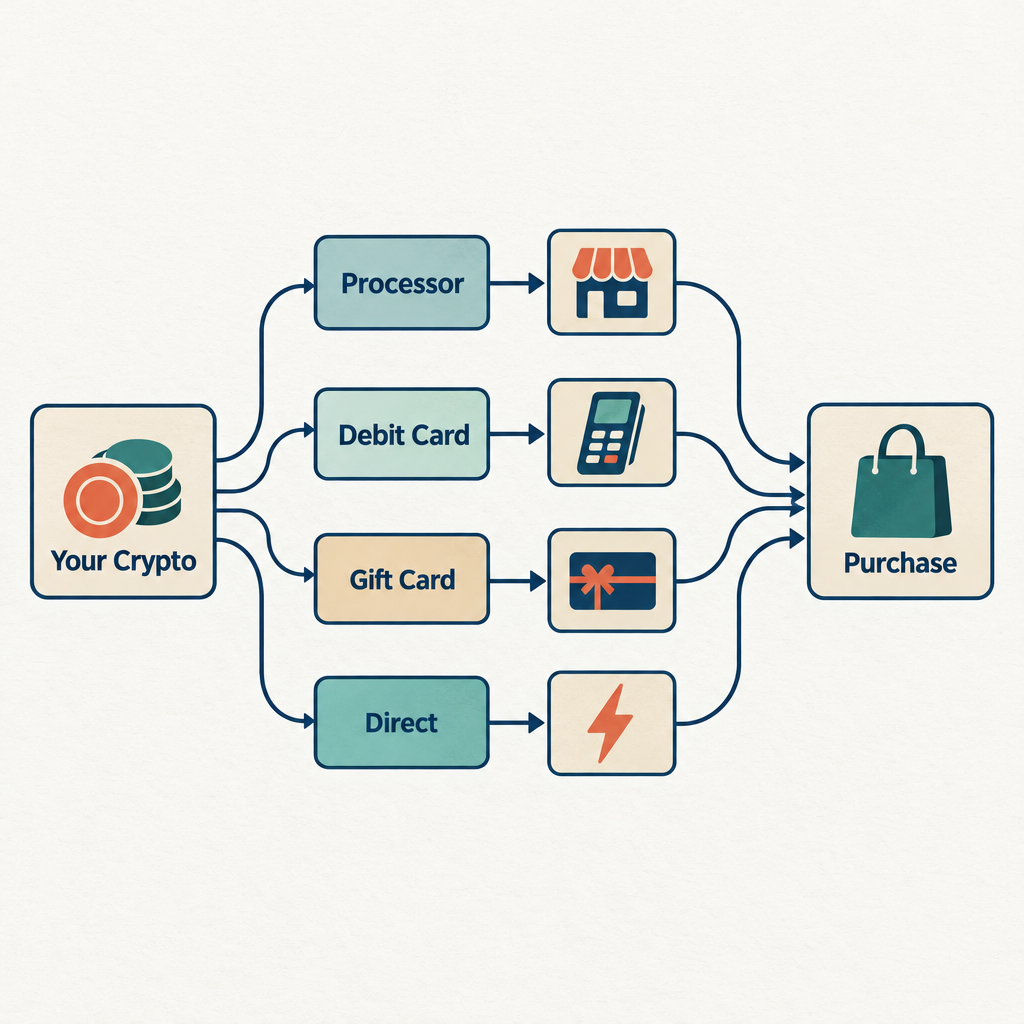
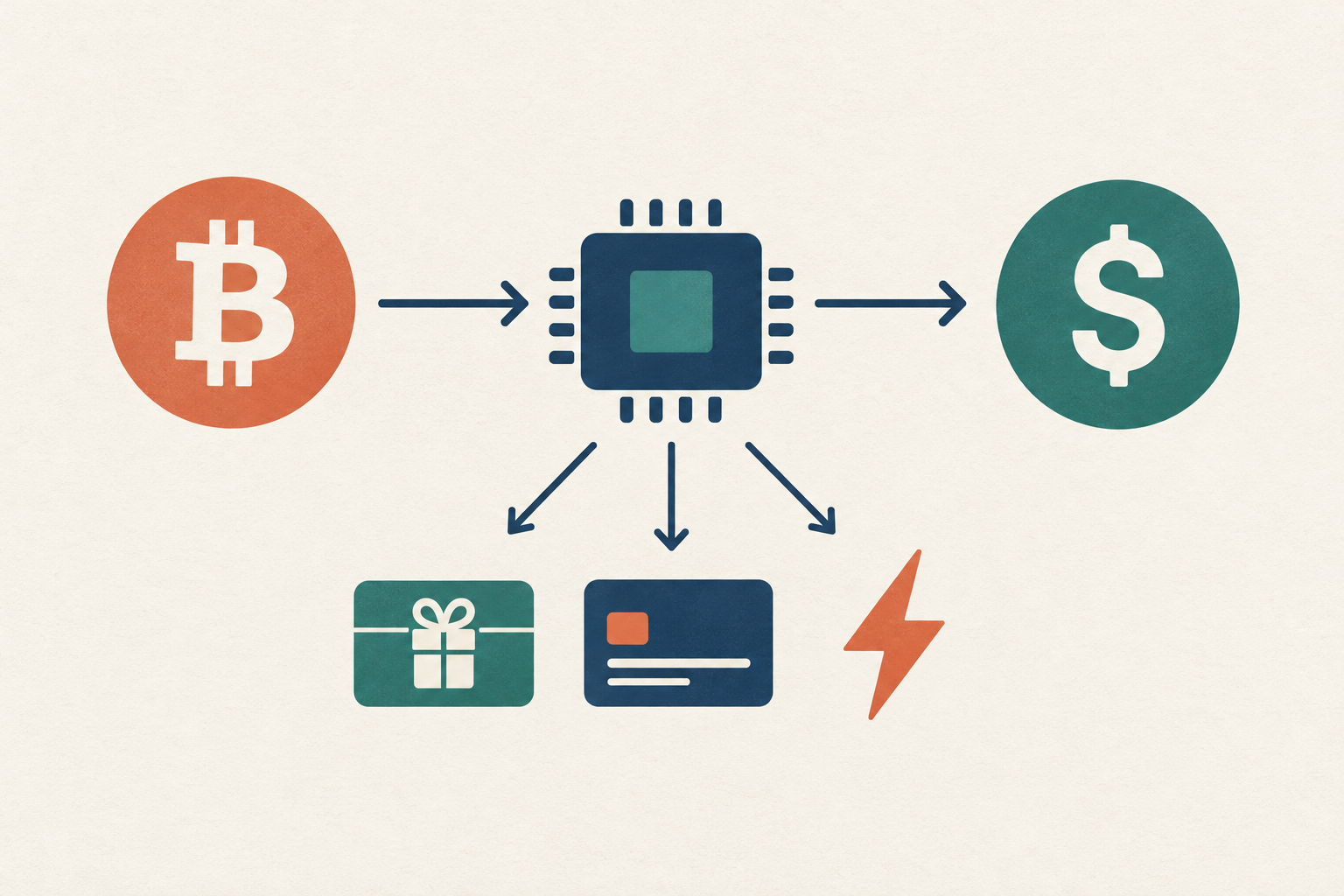
    Flow diagram showing four routes for spending bitcoin: payment processor, crypto debit card, gift card, and direct merchant acceptance

    Bitcoin is a network for sending value without a bank. Nothing in US law stops a business from taking it. Nothing requires a business to take it either. The US dollar is legal tender under 31 U.S.C. 5103, and a store can refuse any other form of payment.

    So when you see “we accept bitcoin,” read the fine print. In nearly every case one of four things is happening behind the counter.

    A processor converts it. Companies like BitPay, Coinbase Commerce and Crypto.com Pay sit between you and the store. You send crypto to the processor at a locked exchange rate. The merchant receives dollars, usually minus a processing fee around 1 percent, which the merchant pays. BitPay locks its quoted rate for a short window, roughly 15 minutes, so you are not exposed to a price swing while you confirm.

    A card converts it. Crypto debit cards from Coinbase, Crypto.com and BitPay sell your crypto at the moment you tap, then push dollars through the Visa or Mastercard network. The merchant never knows crypto was involved.

    A gift card converts it. Services like Bitrefill and BitPay’s gift card marketplace sell retailer gift cards for crypto. You then spend the gift card like anyone else.

    The merchant keeps it. A small number of businesses, mostly independent shops, hold the bitcoin they receive. Many of these use the Lightning Network, a second layer on top of bitcoin built for small, fast payments with fees that are typically a fraction of a cent.

    Understanding which route a store uses matters, because it decides what fees you pay and what happens if something goes wrong.

    Before you spend

    On-chain bitcoin payments are final. There is no chargeback, no issuer dispute and no “undo” if you send to the wrong address or get scammed. Crypto itself can lose all of its value, and nothing you hold in a wallet or exchange is FDIC or SIPC insured.

    1. Online retailers that take crypto through a processor

    This is where the biggest brand names sit. The list changes often, so treat any directory as a starting point and confirm on the checkout page before you load a wallet.

    Retailers that have run crypto checkout through BitPay for years include Newegg for electronics and the Dallas Mavericks for tickets and merchandise. AMC Theatres added bitcoin, ether and several other coins at its online checkout in late 2021. Namecheap has taken bitcoin for domains and hosting since 2013. Privacy-focused services such as ExpressVPN, NordVPN and Mullvad accept crypto, and Mullvad accepts it without even asking for an email.

    Shopify stores can turn on crypto payments with a few clicks through Coinbase Commerce, BitPay or Crypto.com Pay. That means thousands of small online shops accept bitcoin without advertising it loudly. Look for the crypto option on the payment page rather than the homepage.

    Big names drop out too. Tesla paused bitcoin payments in May 2021 after a few months. Expedia stopped in 2018. Microsoft has turned bitcoin top-ups on and off for its store over the years. Always check the current state of the checkout, not a blog post from three years ago.

    2. Gift cards, the workaround for everything else

    Amazon, Walmart, Target, Uber, DoorDash, Starbucks and most major US chains do not accept crypto directly. Gift cards are how people spend bitcoin at them anyway.

    Bitrefill lists gift cards and phone top-ups for hundreds of US brands and accepts bitcoin, Lightning, ether, USDC and others. BitPay’s wallet app and browser extension sell gift cards from a similar range of retailers. Coinsbee is another option with a large catalog.

    The trade-offs are real. Gift cards are non-refundable once delivered. Some brands cap the card value or limit how many you can buy per day. Prices track the dollar face value, so you are not getting a discount unless the service runs a promotion. And a gift card is only as safe as the retailer behind it: if the chain goes bankrupt, the card may become worthless.

    3. Crypto debit cards for everyday spending

    A crypto debit card is the closest thing to “spending bitcoin anywhere.” The Coinbase Card (Visa), Crypto.com Visa Card and BitPay Card (Mastercard) all let you fund purchases from a crypto balance. Tap at a gas station, grocery store or restaurant, and the card issuer sells enough crypto to cover the dollar amount.

    Three things to know before relying on one:

    • Every swipe is a sale. Buy a $4 coffee and you have a taxable disposition of a tiny slice of bitcoin. More on the tax rules below.
    • You pay a spread. Card issuers convert at their own rate, which includes a margin over the market price. Read the fee schedule on the issuer’s site, since terms change and vary by card.
    • Availability varies by state. The BitPay Card, for example, is issued to US residents in states where its banking partner operates, and some cards exclude New York or other states. Check the issuer’s eligibility page.

    Do not confuse these with crypto rewards credit cards such as the Gemini Credit Card. Those bill you in dollars and pay rewards in crypto. You are not spending bitcoin with them.

    4. Bills, rent and credit card balances

    BitPay’s Bill Pay feature lets US users pay credit card statements, car loans, mortgages and some utilities from a crypto balance. Spritz Finance offers a similar bill-pay service. In both cases the biller receives dollars; you are simply funding the payment with crypto.

    This can be useful if most of your savings sit in crypto and a bill is due. It is a poor idea if you are selling at a loss under pressure or paying a fee on top of a balance that is already costing you interest. If you are behind on debts and a debt collector is calling, you have rights under the Fair Debt Collection Practices Act regardless of how you pay, and a nonprofit credit counselor costs nothing to consult.

    5. Travel, cars and real estate

    Travala.com books hotels and flights for bitcoin and dozens of other coins. CheapAir has accepted bitcoin for flights since 2013. Several private jet and cruise brokers accept crypto as well, usually through BitPay.

    For cars, a few dealers accept crypto, almost always by converting it through a processor at signing. Real estate deals in crypto do happen, but the title company or escrow agent typically converts to dollars and the transaction must still be reported like any other sale. Expect extra paperwork and a counterparty who wants to know where the coins came from, since money transmitters and escrow firms carry anti-money-laundering obligations under the Bank Secrecy Act.

    6. Restaurants and local shops

    Steak ‘n Shake launched bitcoin payments through the Lightning Network at all of its US restaurants on May 16, 2025. That is the largest US food chain to do so at the counter rather than through a gift card.

    Beyond that, local acceptance is a patchwork. BTC Map, a community-maintained directory, shows independent merchants that take bitcoin and Lightning, with a heavy concentration in cities like Austin, Miami and Nashville. Coinmap is an older directory with similar coverage. Both are community data, so a pin on the map can be stale. Call ahead.

    The Lightning route is where bitcoin feels like cash. Scan a QR code, confirm in your wallet, done in seconds for a fee under a penny. Wallets like Cash App, Strike, Phoenix and Wallet of Satoshi support it, though Wallet of Satoshi and some other custodial Lightning wallets have restricted US users in the past. Check the app’s current terms.

    7. Donations and causes

    Charities were early adopters because of a tax quirk explained below. Save the Children, the American Cancer Society, United Way and many others accept crypto through The Giving Block. Donor-advised funds such as Fidelity Charitable accept bitcoin donations. The Wikimedia Foundation, by contrast, stopped taking crypto in 2022 after a community vote.

    Open-source projects, including some bitcoin developers, run on donations too. Verify the address on the project’s official site, since fake donation pages are a common scam.

    What each route costs

    Fees depend on the route, not just the coin. Here is how a hypothetical $100 purchase compares.

    Route Who converts Typical fee you pay Reversible?
    On-chain payment to processor Processor Network fee (varies with congestion, can exceed $5 when busy) No
    Lightning payment Processor or merchant Usually under $0.01 No
    Crypto debit card Card issuer Conversion spread set by issuer, plus any card fees Card purchase yes, crypto sale no
    Gift card bought with crypto Gift card seller Network fee, sometimes a small markup No
    Bill pay service Service Service fee plus network fee No

    Bitcoin’s base-layer fee is the wild card. It depends on how crowded the network is that hour, not on the amount you send. Paying $20 for a $15 purchase has happened during busy periods. For anything small, Lightning or a card beats an on-chain transfer.

    Taxes: every purchase is a sale

    Under IRS Notice 2014-21, the IRS treats cryptocurrency as property, not currency. Spending it is a disposition, the same as selling it for dollars. You owe capital gains tax on the difference between what you paid for the coins and their fair market value when you spent them.

    Step Amount
    Bought 0.005 BTC $300 (your cost basis)
    Spent it on a monitor when 0.005 BTC was worth $450
    Capital gain $150
    Held more than one year Long-term rate (0%, 15% or 20% by income)
    Held one year or less Taxed as ordinary income

    Losses work the other way. Spend coins worth less than you paid and you have a capital loss you can use against gains, and up to $3,000 a year against other income.

    You report each disposition on Form 8949 and Schedule D. Starting with 2025 transactions, exchanges and other brokers send you a 1099-DA showing gross proceeds, and cost basis reporting on that form phases in for later years. The IRS also requires you to track basis wallet by wallet under Revenue Procedure 2024-28, so a card that sells slivers of bitcoin a dozen times a week creates a dozen taxable lots. Most card issuers and exchanges export a transaction history; keep it.

    There is no de minimis exemption in current law. Bills have been introduced in Congress to exempt small purchases, a 2025 Senate proposal set the line at $300, but as of this writing none has passed. Until one does, the coffee counts.

    Sales tax still applies based on the dollar value of what you bought. Paying in bitcoin does not change what the state collects.

    Donations are the exception that makes charities popular. Give appreciated crypto you have held more than a year directly to a qualified charity and you deduct the fair market value without paying capital gains on the appreciation. Gifts over $5,000 require a qualified appraisal on Form 8283, and the IRS confirmed in Chief Counsel Advice 202302012 that an exchange price printout does not count as one.

    Your rights, and where they stop

    A bitcoin payment is not an electronic fund transfer from a bank account, so the error-resolution and unauthorized-transfer protections of the Electronic Fund Transfer Act and Regulation E generally do not reach it. If you use a crypto debit card, the dollar purchase at the merchant runs on the card network and the issuing bank’s dispute rules apply to that leg. The crypto sale that funded it is still final.

    The consumer-protection laws that do apply are the general ones. Processors like BitPay are licensed money transmitters, and you can confirm a license on NMLS Consumer Access or your state regulator’s lookup. A merchant that takes your bitcoin and never ships is still liable for the goods under state consumer law, and you can report it to the FTC at ReportFraud and to the FBI’s IC3.

    Lower-cost ways to pay

    Use Lightning or a card for small purchases; on-chain fees can swamp a $20 order.
    Buy only the gift card you need today, since cards are non-refundable.
    If a bill is the reason you are spending, call the biller about a hardship plan before selling crypto at a loss.

    Before you pay a merchant in crypto

    1. Confirm the crypto option exists on today’s checkout page, not in an old announcement.
    2. Note which processor handles it and check its license on NMLS Consumer Access.
    3. Compare the locked exchange rate to the current market price.
    4. Match the network: send bitcoin to a bitcoin address, Lightning to a Lightning invoice. Mixing them loses the money.
    5. Save the receipt with the dollar value and date for your tax records.

    Scams that target people trying to spend crypto

    A real merchant never asks you to pay bitcoin to a personal wallet address in a text message. Fake “crypto stores” with prices far below market, fake charity pages and “pay with bitcoin for a discount” offers on marketplaces are classic theft patterns, because the payment cannot be reversed. Anyone promising guaranteed returns if you “spend” crypto on an investment product is describing a ponzi scheme. Verify the business, verify the address on its official site, and walk away if the only accepted payment is crypto.

    FAQ

    Where can I buy things with bitcoins in the US?

    Directly at merchants that use processors like BitPay or Coinbase Commerce, such as Newegg, AMC Theatres and Namecheap; indirectly almost anywhere through gift cards from Bitrefill or BitPay, or with a crypto debit card.

    How do you spend bitcoins at a store that does not accept them?

    Buy a gift card for that retailer with crypto, or use a crypto debit card that sells your bitcoin and pays the store in dollars.

    Does spending bitcoin trigger taxes?

    Yes. The IRS treats crypto as property, so each purchase is a sale with a capital gain or loss. There is currently no exemption for small purchases.

    Are crypto purchases protected like credit card purchases?

    No. On-chain payments are final with no chargeback. A crypto debit card gives you the card network’s dispute process for the merchant charge, but not for the crypto sale that funded it.

    Why do merchants stop accepting bitcoin?

    Price volatility, low customer demand and compliance costs. Tesla, Expedia and Wikimedia all dropped it, which is why you should check a checkout page rather than a list.
  • Paycheck advances and paycheck loans compared

    Paycheck advances and paycheck loans compared

    A paycheck loan is a short-term, high-cost loan repaid from your next pay, usually at $10 to $30 per $100 borrowed, which works out to roughly 400% APR. A paycheck advance lets you access wages you have already earned, sometimes free through an employer and sometimes for a few dollars through an app. The products look alike on a phone screen, but the gap in what you repay can be several hundred dollars.

    Paycheck loan cost$10 to $30 per $100
    Typical APRaround 400%
    Loan size$100 to $1,000
    Paycheck advance cost$0 to about $6
    Advance sizeusually $50 to $750
    As of2026

    Before you borrow

    The biggest risk with a paycheck loan is paying the fee again two weeks later because the lump sum left you short. CFPB research found that four out of five payday loans are rolled over or followed by a new loan within 14 days, so a $60 fee becomes $240 or more before the principal moves.

    Two products hide behind one search term

    People type “paycheck loan” and mean two different things.

    The first is a payday loan with a friendlier label. You borrow a few hundred dollars from a licensed lender, in a store or online, and agree to repay it plus a flat fee on your next payday. The lender takes a postdated check or an authorization to debit your bank account. Marketing calls this a cash advance on paycheck, a pay cash advance, or a “payday advance” depending on the state.

    The second is earned wage access, usually sold as a paycheck advance, advance pay or “paycheck advance now.” Your employer or an app lets you pull part of the wages you have already worked for before payday arrives. The money is then deducted from your paycheck or your bank account when the real payroll lands.

    The difference matters because one is credit at triple-digit rates and the other is, at best, your own money a few days early. At worst, the app version drifts toward payday pricing once you add express fees and tips.

    How a paycheck loan works

    A storefront or online paycheck loan runs on a short cycle. You show proof of income, a checking account and ID. Most lenders do not pull a traditional FICO score. They run a soft check, use alternative data such as bank transaction history, or check specialty databases like Clarity or FactorTrust. That is what sits behind “no credit check” advertising. Approval is still a decision based on your income and your bank activity, and the price reflects the lender’s risk.

    The term is usually 14 to 31 days. On the due date the lender deposits your check or debits your account for the full amount plus the fee. If you cannot cover it, many states allow a rollover or a back-to-back loan, and each one carries a fresh fee.

    Applying for a paycheck loan online adds two issues. Some online lenders are not licensed in your state, and tribal or offshore lenders often charge far more than state law allows a local store to charge. Others are lead generators that sell your application to multiple companies, which is why a single search can trigger weeks of calls and texts. Marketing phrases like “urgent loans guaranteed approval” are a red flag rather than a feature, since no licensed lender can lawfully promise approval before it reviews an application.

    If you want the full mechanics, our “payday loan” explainer walks through the fee structure state by state. The lending product is the same whatever the ad calls it.

    How a paycheck advance works

    Earned wage access comes in two forms, and they are priced very differently.

    Employer-integrated advances

    Your employer contracts with a provider that connects to its payroll and timekeeping. You can see earned-but-unpaid wages and transfer some of them, often up to 50% of what you have accrued. On payday the provider is repaid directly out of your check. Many employers pay the provider’s fee as a benefit, so a standard transfer costs you nothing. Instant transfers to a debit card may cost a dollar or two.

    Direct-to-consumer apps

    Apps that work without your employer connect to your bank account instead. They estimate your earnings from deposit history and advance a set amount, commonly $50 to $500, then debit your account on your next payday. They do not charge interest. They make money three ways: a monthly subscription, an “instant” or “lightning” transfer fee for same-day money, and an optional tip. A standard transfer that takes one to three business days is usually free.

    The CFPB’s 2024 data spotlight on employer-partnered earned wage access found the typical worker made around 27 advances a year, and that once fees were counted the cost worked out to an APR above 100%. That is far cheaper than a paycheck loan, but it is not free money, and the pattern of repeat use looks a lot like payday borrowing.

    What each option really costs

    The honest way to compare a flat fee with an APR is to turn the fee into an APR. Divide the fee by the amount you received, multiply by 365, then divide by the number of days you had the money. A $60 fee on $400 for 14 days is 15%, times 365 divided by 14, which is 391% APR.

    Product Amount Fee or APR Term Total repaid APR equivalent
    Paycheck loan, paid on time $400 $15 per $100 ($60) 14 days $460 391%
    Paycheck loan, rolled over 3 times $400 $60 x 4 ($240) 56 days $640 391%
    App advance, instant transfer $100 $4.99 express fee 10 days $104.99 182%
    App advance, standard transfer $100 $0 10 days $100.00 0%
    Employer advance, employer pays fee $200 $0 7 days $200.00 0%
    Credit union PAL I $500 28% APR, $20 app fee 6 months about $562 28% plus fee
    Credit card cash advance $400 5% fee ($20) plus about 30% APR 30 days about $430 roughly 90%

    Two things jump out. The paycheck loan is the only row where the fee restarts every two weeks without reducing what you owe. And the app advance can swing from 0% to triple digits depending on whether you tap the instant button. A $5.99 express fee on a $100 advance repaid in seven days is a 312% APR, which is payday-loan territory.

    Side-by-side on the criteria that matter

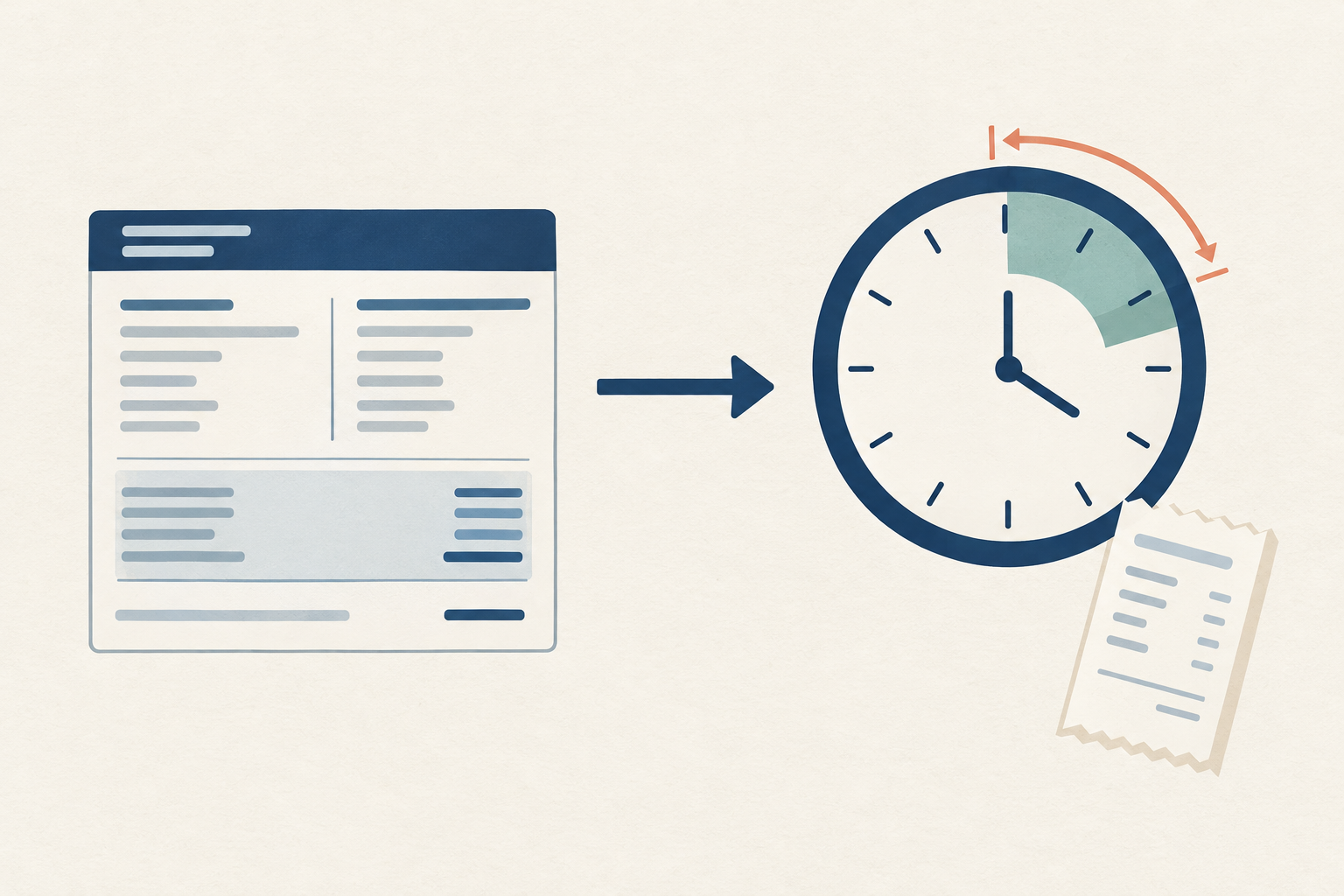
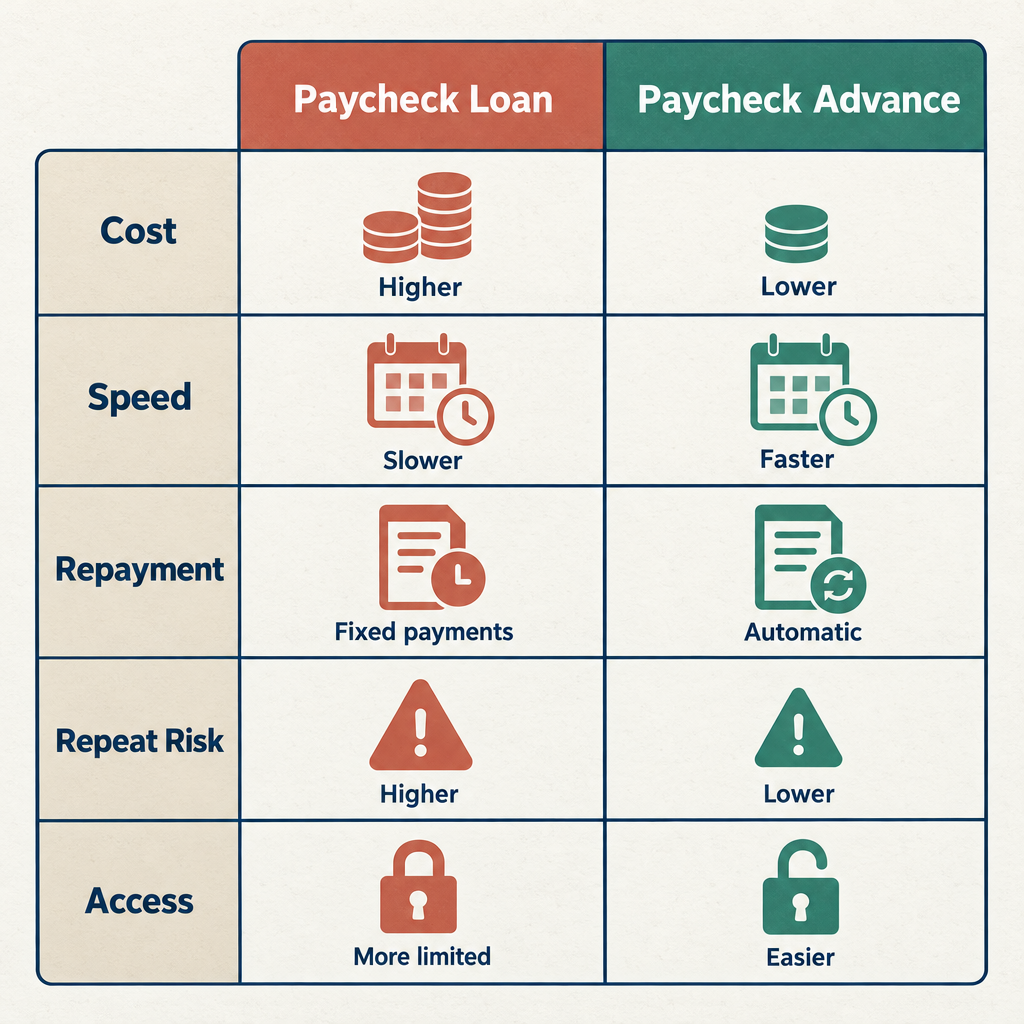
    Two-column comparison chart contrasting a paycheck loan and a paycheck advance across criteria: cost, speed, repayment, repeat risk, and access

    We compare on total cost, fees, transparency, licensing, complaint record and borrower protections, not on speed or convenience.

    Criterion Paycheck loan Employer advance App advance Credit union PAL
    Typical total cost Highest Lowest Low to moderate Low
    Cost repeats if you are short Yes, every term No new fee Only express fees No, fixed schedule
    APR disclosed up front Required under Regulation Z Usually not Usually not Required
    Licensing State lender license Varies by state Varies by state Federal or state charter
    Builds credit No No No Often yes
    Can overdraft your account Yes, via ACH Rarely, payroll deduction Yes, via ACH No
    Covered by Regulation E Yes Partly Yes Yes

    Paycheck loan from a licensed lender

    Strengths: the price is disclosed as an APR under the Truth in Lending Act, the lender holds a state license you can verify, and the amount can reach $1,000 in states that allow it.

    Weaknesses: the cost is extreme for a two-week loan, repayment is a single lump sum, and the business model relies on repeat borrowing. The CFPB’s 2017 payday rule, whose payment provisions took effect March 30, 2025, exists because lenders were hammering empty accounts with repeated debits.

    Employer-integrated paycheck advance

    Strengths: often free, repaid from payroll so it cannot overdraft your bank account, and the advance is capped at wages you have actually earned.

    Weaknesses: only available if your employer offers it, your boss’s payroll vendor knows how often you use it, and repayment shrinks your next check at the moment you may need it most.

    Direct-to-consumer paycheck advance app

    Strengths: no employer involvement, standard transfers are usually free, and the amounts are small enough that the debt rarely snowballs.

    Weaknesses: the real price is buried in subscriptions, express fees and suggested tips, the app’s debit can bounce and trigger overdraft fees at your bank, and many apps advertise an amount you will not qualify for until you have months of deposit history. Because most apps do not call the product a loan, they also do not give you a standardized APR, so comparing two apps takes real arithmetic.

    Credit union payday alternative loan

    Strengths: the NCUA caps PAL I loans at 28% APR with an application fee of no more than $20, amounts run $200 to $1,000, and terms run one to six months. PAL II allows up to $2,000 over up to 12 months with no waiting period. Payments report to credit bureaus at many credit unions.

    Weaknesses: you need to join a credit union, PAL I requires one month of membership first, and funding is rarely same-day.

    How to choose between them

    Start with the question of whether you have already earned the money. If payday is five days away and you have worked the hours, a paycheck advance that costs nothing with a standard transfer is the cheapest route by a wide margin. Ask your HR or payroll department first, because an employer program is almost always cheaper than an app.

    If the gap is bigger than one paycheck can cover, an advance just moves the hole forward a week. That is where people slide into a paycheck loan. Before you do, price a credit union PAL, a hardship plan with the bill you are trying to pay, or a credit card cash advance. All three cost a fraction of a payday product even when the credit card rate looks ugly.

    Pick a paycheck loan only if the alternatives are closed to you, you can repay the full amount on the first due date without borrowing again, and the lender is licensed in your state. If any of those three is uncertain, the loan will likely cost more than the problem it solves.

    Cheaper options first

    Ask your employer about earned wage access or a payroll advance with no fee.
    Call your utility, landlord or medical provider and ask for a payment plan before borrowing.
    Price a credit union payday alternative loan, capped at 28% APR by the NCUA.
    Dial 211 for local emergency assistance with rent, utilities and food.

    Where paycheck loans are banned or capped

    Paycheck loans are legal at triple-digit rates in a bit more than half the states. Roughly 20 states plus the District of Columbia either ban the product or cap small-loan rates at or around 36%, which makes classic two-week lending unprofitable. That group includes New York, New Jersey, Pennsylvania, Massachusetts, Connecticut, Maryland, Georgia, North Carolina, West Virginia, Vermont, Arizona, Arkansas, Colorado, Montana, South Dakota, Nebraska, New Hampshire, Illinois and New Mexico.

    Where the loans are legal, state law sets the terms. California caps the check at $300 and the fee at 15% of the face amount, so you receive $255 and repay $300 within 31 days, which the Department of Financial Protection and Innovation itself describes as a 460% APR on a two-week term. Texas allows “credit access businesses” to broker loans with fees that often push APRs above 500%. An online lender advertising nationwide availability is either licensed state by state or operating outside your state’s rules, and you should assume the second until you confirm the first.

    Paycheck advances are regulated differently and the map is still being drawn. Nevada, Missouri, Wisconsin, Kansas and South Carolina have passed laws that register earned wage access providers and treat them as something other than lenders. Connecticut went the other way and treats the fees as loan charges subject to its small-loan rate cap. California requires providers to register with the DFPI. At the federal level, the CFPB proposed an interpretive rule in July 2024 saying most paycheck advance products are credit under the Truth in Lending Act, then withdrew that proposal in 2025. As of this writing there is no settled federal rule, so your protections depend heavily on your state.

    Your rights with either product

    The Truth in Lending Act and Regulation Z (12 CFR 1026) require a licensed paycheck lender to show you the finance charge and APR in writing before you sign. If a lender quotes only a “fee” and refuses to state an APR, that is a disclosure violation.

    The Electronic Fund Transfer Act and Regulation E govern the bank debits that both lenders and apps rely on. You can revoke an ACH authorization, and you can place a stop payment with your bank at least three business days before a scheduled debit. A lender cannot condition a loan on your agreeing to repay by preauthorized electronic transfer.

    Under the CFPB’s payday lending rule, after two consecutive failed withdrawal attempts a covered lender must get a new, specific authorization from you before trying again. That provision became enforceable March 30, 2025.

    The Military Lending Act caps the Military Annual Percentage Rate at 36% for active-duty servicemembers and their dependents, which effectively bars them from standard paycheck loans. The Servicemembers Civil Relief Act separately caps pre-service debts at 6%.

    If a paycheck loan goes unpaid and is sold, the Fair Debt Collection Practices Act controls what a “debt collector” can say and do. Collectors cannot threaten arrest over a bounced loan check, call before 8 a.m. or after 9 p.m., or discuss your debt with your employer. The Fair Credit Reporting Act gives you the right to dispute inaccurate collection entries.

    Complaints go to the CFPB complaint portal, your state’s banking or financial regulator, and the FTC through ReportFraud. If you believe a lender was an outright fraud, file with the FBI’s IC3 as well.

    How to check a lender before you borrow

    1. Look the company up on NMLS Consumer Access and confirm a license for your state.
    2. Check your state regulator’s own license search, since some states license payday lenders outside NMLS.
    3. Search the CFPB complaint database for the company name and read the most recent complaints.
    4. Confirm the APR and finance charge appear in writing before you sign anything.
    5. Read the ACH authorization and note the exact date and amount of each scheduled debit.

    FAQ

    Is a paycheck loan the same as a payday loan?

    Yes. “Paycheck loan,” “cash advance on paycheck” and “pay cash advance” are marketing names for the same short-term, single-payment loan regulated under state payday or deferred-deposit laws. The fee, term and legal protections are identical.

    Is a paycheck advance a loan?

    It depends on your state. Connecticut treats paycheck advance fees as loan charges. Nevada, Missouri, Wisconsin, Kansas and South Carolina regulate providers under separate earned wage access laws. Federally, the CFPB withdrew its 2024 proposal to treat them as credit, so there is no national answer yet.

    Can I get a paycheck loan online with no credit check?

    Online lenders usually skip the big three credit bureaus but still check your income, bank history and specialty databases. “No credit check” means a soft check or alternative data, not no review. Expect higher prices than a store in your state, and verify the license before sharing your bank login.

    Do paycheck advances affect my credit score?

    Almost never. Neither paycheck loans nor paycheck advance apps report on-time payments to Equifax, Experian or TransUnion. A defaulted paycheck loan can appear as a collection account, which does hurt your score. A credit union payday alternative loan is the only option in this comparison that routinely helps build credit.

    What happens if the debit bounces?

    Your bank may charge an overdraft or returned-item fee, often around $30, and the lender may add its own returned-payment fee where state law permits. A paycheck advance app typically will not charge a penalty but may cut off future advances. Under Regulation E and the CFPB payday rule, a lender needs fresh authorization after two consecutive failed attempts.

    Which is cheaper for a $300 shortfall?

    A free standard transfer through an employer program or app costs $0. A credit card cash advance costs roughly $15 in fees plus about $7 in interest for a month. A credit union PAL costs under $10 in interest for one month plus up to $20 to apply. A paycheck loan at $15 per $100 costs $45 for two weeks, and $90 if you roll it once.

  • Payday advance loans and what you agree to when you take one

    Payday advance loans and what you agree to when you take one

    A payday advance is a small, short-term loan, usually $100 to $500, that you repay in full from your next paycheck along with a flat fee. That fee typically runs $10 to $30 per $100 borrowed, which the CFPB notes works out to nearly 400% APR on a two-week loan. Before you sign, it helps to know exactly what the agreement commits you to and where the law stands behind you.

    Typical fee$10 to $30 per $100
    Typical APR300% to 600%
    Loan size$100 to $500
    Term2 to 4 weeks
    Repaymentlump sum, from your bank account
    As ofOctober 2026

    What a payday advance actually is

    The names change from storefront to storefront. Payday advance, cash advance, payday loan advance, advance payday loans, deferred deposit transaction, check advance. In almost every state they describe the same product: a lender gives you cash now, you give the lender a postdated check or permission to debit your bank account, and the lender cashes it on your payday.

    Two things set this apart from other small loans. The whole balance comes due at once, and the price is a flat fee rather than interest that builds over months. That flat fee feels modest in dollars and looks enormous once you convert it to an annual rate, which the lender is legally required to do for you.

    If you want a deeper comparison with installment loans, credit cards and cash advance apps, our “payday loan” explainer walks through each one. This page focuses on the contract itself.

    How this differs from a pay advance or earned wage access

    “Pay advance loans” and “advance credit” sometimes refer to something else: an employer or an app letting you draw wages you have already earned. Those products often charge a subscription or an optional tip instead of a loan fee, and the CFPB has said that mandatory fees and tips on these advances should be disclosed like finance charges. They are generally cheaper than a storefront payday advance, but they are not free, and they still leave you short on the next payday. Do not assume an app advance and a payday advance follow the same rules.

    What you agree to when you sign

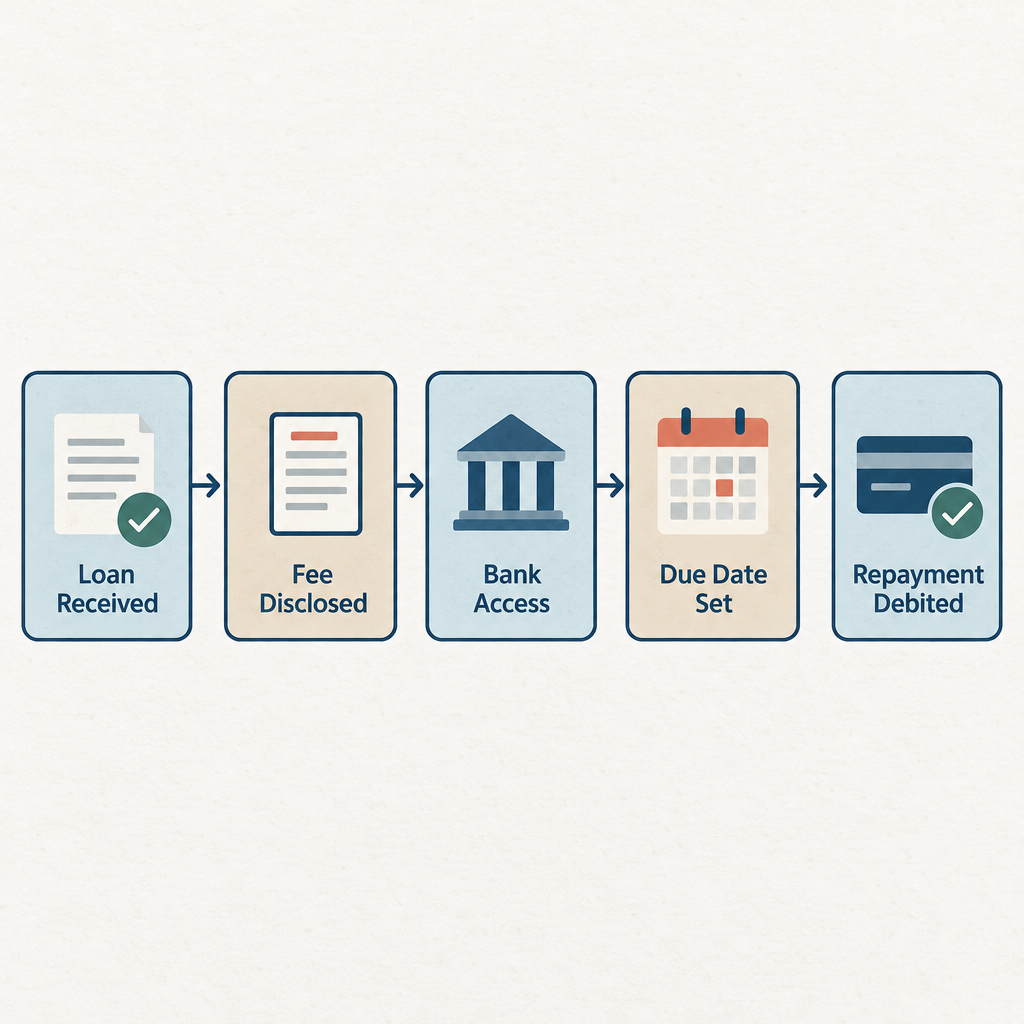
    Flow diagram showing five steps of a payday advance agreement: loan received, fee disclosed, bank access granted, due date set, repayment debited

    A payday advance agreement is short, but every line matters. Here is what you are committing to in a typical contract.

    A finance charge and APR. Under the Truth in Lending Act and Regulation Z (12 CFR 1026), the lender must show you the dollar finance charge and the annual percentage rate before you are bound. If a storefront or website will not show the APR until after you commit, that is a problem.

    Access to your bank account. You hand over a postdated check or sign an ACH authorization. That authorization is the lender’s main collection tool. Under the Electronic Fund Transfer Act and Regulation E (12 CFR 1005.10(e)), a lender cannot make repayment by preauthorized electronic transfer a condition of getting the loan, though in practice most borrowers sign one anyway.

    A single due date. The full principal plus the fee comes out on your next payday. Nothing is spread out unless your state requires an extended payment plan.

    Rollover or renewal terms. In states that allow it, you can pay only the fee on the due date and push the balance to the next pay period. Each rollover costs another full fee. The CFPB’s 2014 analysis of lender data found that four out of five payday loans were rolled over or followed by a new loan within 14 days.

    Returned payment fees. If the debit bounces, the lender may charge its own NSF fee on top of your bank’s fee, and it may keep trying.

    Arbitration and class action waivers. Most agreements require you to settle disputes through private arbitration and give up the right to join a class action. You can sometimes opt out within 30 to 60 days by sending a written notice; check the clause.

    Collection and reporting language. The contract spells out what happens if you default, including referral to a “debt collector” and possible reporting to specialty credit bureaus.

    What a payday advance really costs

    The APR math is simple once you see it. Divide the fee by the amount borrowed, divide by the number of days in the term, then multiply by 365. On a $300 loan with a $45 fee for 14 days: $45 ÷ $300 = 0.15; 0.15 ÷ 14 × 365 = 3.91, or 391% APR.

    Scenario Amount borrowed Fee Term Total repaid APR
    Typical two-week advance $300 $45 ($15 per $100) 14 days $345 391%
    Higher-fee state $500 $100 ($20 per $100) 14 days $600 521%
    California maximum $255 $45 (15% of $300 face) 14 days $300 460%
    $300 rolled over three times $300 $45 × 4 = $180 56 days $480 391%

    The last row is where most of the damage happens. Pew Charitable Trusts research found the average borrower takes out about eight loans of roughly $375 a year and pays around $520 in fees, spending about five months of the year in payday debt. The product is marketed as a two-week fix. The data says it rarely works that way.

    Before you borrow

    The biggest risk is not the first fee. It is paying that fee again every two weeks because the lump-sum repayment leaves you short, until the fees exceed what you originally borrowed.

    Where payday advances are legal, capped or banned

    This is not a nationwide product with one price. State law decides whether a payday advance exists at all and what it can cost.

    • Banned or capped at 36% APR or lower: Arizona, Arkansas, Colorado, Connecticut, Georgia, Illinois, Maryland, Massachusetts, Montana, Nebraska, New Hampshire, New Jersey, New Mexico, New York, North Carolina, Pennsylvania, South Dakota, Vermont, West Virginia and the District of Columbia. In several of these states, general “usury laws” make the typical payday fee a crime for the lender.
    • Allowed with limits: California caps loans at $300 face value, fees at 15% and terms at 31 days under the California Deferred Deposit Transaction Law, overseen by the Department of Financial Protection and Innovation. Florida caps loans at $500, fees at 10% plus a $5 verification fee, bans rollovers and requires a 24-hour cooling-off period between loans, tracked in a statewide database.
    • Lightly regulated: Texas lets “credit access businesses” arrange loans with no meaningful cap on fees, so APRs above 500% are routine there.

    If an online lender offers you a payday advance in a state that bans them, it is either unlicensed or operating under a tribal or out-of-state claim that your state regulator may not recognize. Either way, you lose most of your protections.

    Who a payday advance can make sense for

    We would be lying if we said never. A payday advance can be rational when all of the following are true: the amount is small, you have a specific one-time gap, your next paycheck covers the full repayment plus your normal bills, and every cheaper option on the list below is genuinely unavailable. The avoided cost also has to be real. Paying $45 to avoid a $35 overdraft fee is not a win. Paying $45 to avoid a $150 utility reconnection fee or a car repossession might be.

    If you are reading this because of a sudden expense, our “loans emergency” guide covers the full range of options by speed and cost.

    Cheaper options first

    A credit union payday alternative loan: $200 to $2,000, APR capped at 28% by NCUA rules.
    Your employer’s advance program or a no-fee app advance.
    A hardship plan from the biller itself, or help from 211, LIHEAP or a nonprofit credit counselor.

    Your rights with a payday advance

    Federal law gives you a floor of protection, and some states add more.

    Disclosure. The Truth in Lending Act requires the APR and finance charge in writing before you sign. Missing or wrong disclosures give you grounds for a complaint.

    Limits on repeated debits. The CFPB’s Payday Lending Rule (12 CFR 1041), with payment provisions in effect since March 30, 2025, bars a lender from making a third consecutive attempt to debit your account after two failed attempts unless you give new authorization. The lender must also notify you before an unusual withdrawal.

    Revoking authorization. Under Regulation E, you can revoke an ACH authorization by notifying the lender and your bank. That stops the debits. It does not erase the debt.

    Military borrowers. The Military Lending Act (32 CFR 232) caps the total cost of consumer credit at a 36% Military APR for active-duty service members and their dependents, which effectively shuts them out of conventional payday advances.

    Collection. The Fair Debt Collection Practices Act covers third-party collectors, not the original lender. A collector cannot threaten you with arrest, call before 8 a.m. or after 9 p.m., or discuss your debt with your employer. A bounced check on a payday advance is a civil matter in nearly every state, despite what some collectors imply.

    Extended payment plans. Florida, Washington and several other states require lenders to offer a no-cost extended plan if you cannot repay. Members of the Community Financial Services Association also promise one. Ask before the due date, not after.

    How to check a payday lender

    1. Search the company name in NMLS Consumer Access to see its state licenses.
    2. Confirm the license on your own state regulator’s lookup, such as California’s DFPI.
    3. Read the lender’s complaints in the CFPB consumer complaint database.
    4. Make sure the APR appears on the agreement before you sign anything.
    5. Report problems to the CFPB complaint portal, your state regulator or FTC ReportFraud.

    FAQ

    Is a payday advance the same as a payday loan?

    Yes. Lenders use payday advance, cash advance, deferred deposit and check advance interchangeably for the same two-week lump-sum loan. The word “advance” does not change the legal product or the fee.

    Will a payday advance help my credit score?

    Almost never. Most payday lenders do not report on-time payments to Equifax, Experian or TransUnion, so there is no upside. Defaults can be sold to collectors who do report, so the downside is real.

    What happens if I cannot repay on the due date?

    Ask about an extended payment plan first if your state or the lender offers one. If the debit bounces, expect NSF fees from both the lender and your bank. After two failed attempts, the lender needs fresh authorization to keep trying. Do not take a second advance to cover the first.

    Can I cancel a payday advance after signing?

    Many states give you until the end of the next business day to return the money and cancel at no cost. California and Texas both require this rescission right. Check your agreement for the exact deadline and whether cancellation must be in writing.

    Are online payday advances safe?

    Only if the lender is licensed in your state. Unlicensed online lenders are the source of most complaints about repeated unauthorized debits and threats of arrest. Verify the license before you share your bank details, not after.

  • How credit card APR and interest work

    How credit card APR and interest work

    Credit card APR, short for annual percentage rate, is the yearly interest rate your card issuer charges on any balance you do not pay off by the due date. Issuers apply it as a tiny daily rate, so a 24.99% APR works out to about 0.068% of your balance every day, and that adds up to roughly $20 a month on a $1,000 balance. Pay the full statement balance on time and the purchase APR never touches you at all.

    What APR measuresyearly interest cost
    How it is chargeddaily, on unpaid balance
    Typical purchase APRhigh teens to low 30s
    Federal averageabove 20% (Fed G.19)
    Avoid it bypaying in full each month
    As ofOctober 2026

    What credit card APR actually means

    APR is the number lenders must show you under the Truth in Lending Act and its implementing rule, Regulation Z (12 CFR 1026). It is written as a yearly figure so you can compare cards, but your issuer never charges it once a year.

    Instead, the issuer divides the APR by 365 to get a daily periodic rate. That daily rate is applied to your balance every day of the billing cycle, and the results are added up on your statement as the finance charge.

    For a credit card, APR and the interest rate are the same thing. That is different from a mortgage or a car loan, where the APR includes closing costs and fees on top of the interest rate. A card’s annual fee, late fee or foreign transaction fee is charged separately and is not folded into the APR.

    Most card APRs are also variable. Your rate is built from an index, almost always the U.S. prime rate, plus a fixed margin the issuer sets based on your credit. The prime rate moves with the Federal Reserve’s target rate, so when the Fed raises or cuts rates, your card APR follows within a billing cycle or two.

    The different APRs on one card

    A single card usually carries four or five separate rates. The cardholder agreement lists them in a federally required table often called the Schumer box, and each one applies to a different kind of balance.

    Type of APR What it applies to What makes it different
    Purchase APR Everyday spending Only charged if you carry a balance past the grace period
    Balance transfer APR Debt moved from another card Often a 0% intro rate, plus a 3% to 5% transfer fee
    Cash advance APR ATM withdrawals, cash-like transactions Higher rate, no grace period, plus a fee
    Penalty APR Your whole balance after a serious misstep Can top 29.99%; triggered by payments 60+ days late
    Introductory or promotional APR New purchases or transfers for a set window Expires on a fixed date, then the regular rate applies

    Under Regulation Z (12 CFR 1026.53), when you pay more than the minimum, the issuer must apply the extra to the balance with the highest APR first. That rule matters if you have a cash advance sitting at 29.99% next to purchases at 0%.

    How the grace period lets you skip interest entirely

    Your statement closes, then you have a window before the payment is due. If you paid the previous statement in full, new purchases made during that cycle carry no interest as long as you also pay this statement in full by the due date. That window is the grace period.

    Federal law requires issuers to deliver your statement at least 21 days before the due date (12 CFR 1026.5(b)(2)(ii)), so the grace period on purchases is typically 21 to 25 days.

    Two things kill the grace period. Carry even a small balance into the next cycle and interest starts on new purchases from the day you buy. Take a cash advance and interest starts the same day, grace period or not. Once you lose it, most issuers require two consecutive statements paid in full before it comes back.

    How to calculate credit card interest using APR

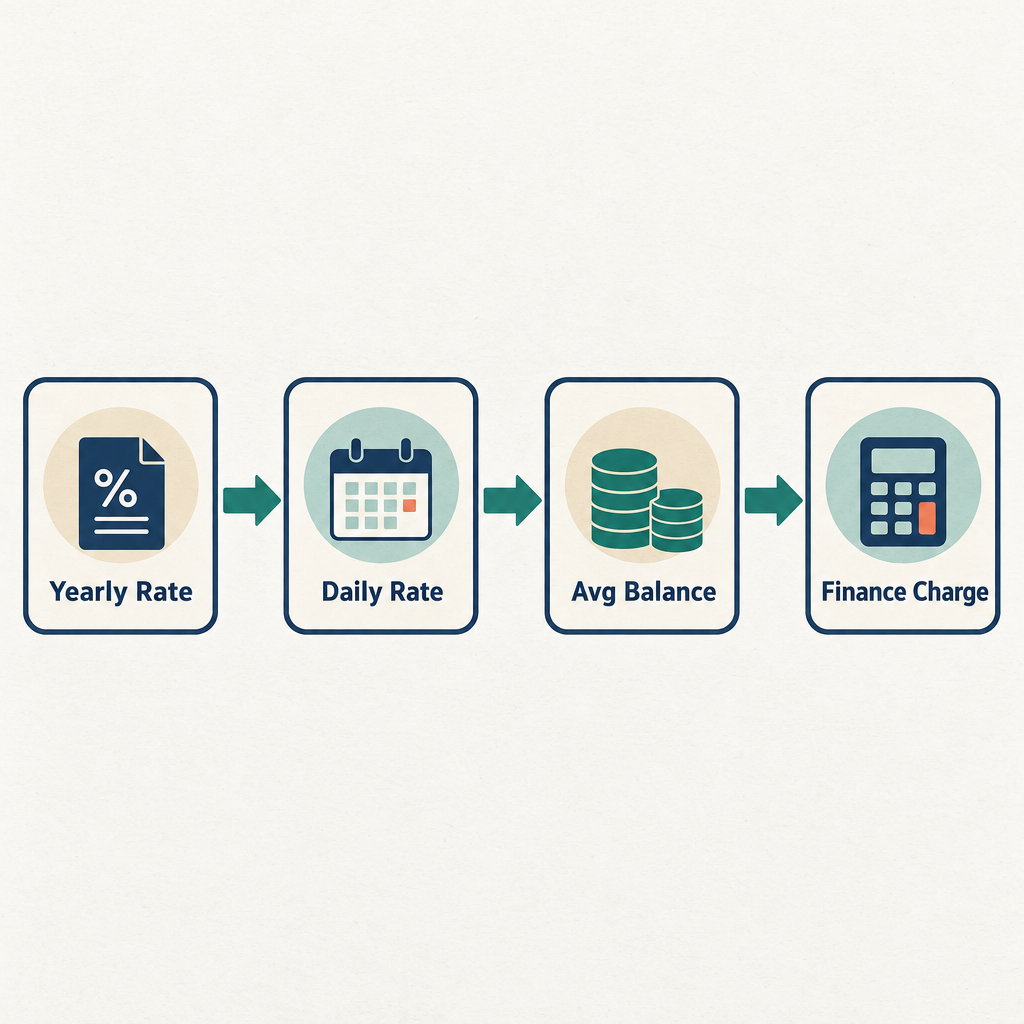
    Four-step flow diagram showing how daily interest is calculated: APR divided into daily rate, daily balances summed, average balance found, then multiplied to get finance charge

    The math behind your finance charge is simple once you see it laid out. Issuers use the average daily balance method, which means every day’s balance counts, not just the number on the statement.

    How to estimate a month of interest

    1. Divide your APR by 365 to get the daily periodic rate (24.99% ÷ 365 = 0.0685%).
    2. Add up your balance at the end of each day in the cycle and divide by the number of days to get the average daily balance.
    3. Multiply the average daily balance by the daily rate, then by the days in the cycle.
    4. Compare the result with the “interest charged” line on your statement to check the issuer’s figure.

    Using those steps, a $1,000 average daily balance at 24.99% APR over a 30-day cycle costs about $20.50. Many issuers compound daily, meaning each day’s interest is added to the balance before the next day’s charge, which nudges that figure slightly higher.

    What carrying a balance really costs

    The headline APR looks abstract. The total you repay does not. Here is what happens to a $1,000 purchase balance at 24.99% depending on how you pay it down, with a cash advance added for comparison.

    Scenario Amount APR and fees Time to pay off Total repaid
    Pay in full by due date $1,000 24.99%, grace period applies 1 month $1,000
    Pay $100 a month $1,000 24.99% About 12 months About $1,120
    Pay $30 a month (near minimum) $1,000 24.99% About 58 months About $1,725
    Cash advance, paid over 12 months $1,000 29.99% plus 5% fee ($50) 12 months About $1,220

    The $30-a-month row is the one that traps people. Nearly $725 in interest on a $1,000 balance, spread over almost five years, is why the CARD Act of 2009 requires every statement to show how long it will take to clear your balance making only minimum payments (12 CFR 1026.7(b)(12)). Look for that box on your next statement.

    The scale is enormous nationally. The CFPB’s 2023 Consumer Credit Card Market Report found cardholders paid more than $100 billion in interest in 2022, and the Federal Reserve’s G.19 consumer credit release has shown the average rate on accounts assessed interest sitting above 20% since 2023.

    Before you carry a balance

    Once you carry a balance, you lose the grace period and pay interest on every new purchase from the day you make it. Minimum payments at a 25% APR can stretch a modest balance into years of repayment and nearly double the original cost.

    What counts as a good APR

    There is no single good number, because your rate is priced on your credit profile. Issuer disclosures for 2025 and 2026 show a consistent pattern: rewards cards for strong credit typically start in the high teens, mainstream cards for fair credit land in the mid to high 20s, and store cards and cards for rebuilding credit often sit at or above 30%.

    A useful benchmark is the federal credit union ceiling. The Federal Credit Union Act caps loan rates at federal credit unions at 15% unless the NCUA board raises the limit, and the board has set that ceiling at 18% for many years. A card rate under 18% is genuinely competitive. Anything above the Fed’s reported average deserves scrutiny.

    Your APR only matters if you carry a balance. If you pay in full every month, a 29.99% card and a 15.99% card cost the same amount of interest: zero. In that case, fees and rewards are the only numbers worth comparing.

    How to lower the APR you already have

    Issuers do cut rates on request, especially for cardholders with on-time payment histories. Call the number on the back of the card, cite your history and any lower offers you have received, and ask for a reduction. A no costs you nothing.

    If you are struggling, ask about a hardship program. Most large issuers run them, and they can temporarily cut the APR to single digits or zero in exchange for a fixed payment plan. Nonprofit credit counseling agencies affiliated with the National Foundation for Credit Counseling can negotiate similar terms through a debt management plan.

    Cheaper options first

    Pay the statement balance in full each month and the purchase APR costs you nothing.
    A credit union card or personal loan often runs under 18%, well below the national card average.
    Issuer hardship programs and nonprofit credit counseling can cut rates without new borrowing.

    A 0% balance transfer can help if you can clear the debt before the promotion ends, but the 3% to 5% transfer fee is real money and the rate jumps on a fixed date. A cash advance is almost never the answer. For true emergencies, a credit union payday alternative loan, capped by the NCUA at 28% APR with an application fee of no more than $20, costs far less than a cash advance and vastly less than a “payday loan“. Compare any “loans emergency” option against your existing card’s purchase APR before borrowing new money.

    State rules and who gets capped rates

    Credit card APRs rarely fall under “usury laws” in your own state. Since the Supreme Court’s 1978 decision in Marquette National Bank v. First of Omaha, a national bank can charge the rate allowed by the state where it is chartered to customers anywhere in the country, under 12 U.S.C. § 85. That is why so many issuers sit in Delaware, South Dakota and Utah, states with no rate cap on cards.

    Two federal laws do cap rates for specific groups. The Military Lending Act limits the military annual percentage rate on cards for active-duty service members and their dependents to 36%, including most fees. The Servicemembers Civil Relief Act caps interest at 6% on debts you took on before entering active duty, as long as you ask the issuer and provide orders.

    Your rights on rate changes

    The CARD Act, enforced through Regulation Z, gives you specific protections against surprise rate hikes.

    • The issuer cannot raise the APR on your existing balance during the first year after opening the account, except when a promotional rate ends, the index on a variable rate rises, or you fall 60 days behind (12 CFR 1026.55).
    • Any rate increase on new purchases requires 45 days’ written notice (12 CFR 1026.9(c)(2)), and you have the right to reject the increase and pay off your existing balance at the old rate.
    • A penalty APR can only hit your existing balance if a payment is at least 60 days late, and the issuer must restore the original rate after six consecutive on-time payments (12 CFR 1026.55(b)(4)).
    • Issuers that raised your rate for any reason must review the account at least every six months and reduce the rate if the reason no longer applies (12 CFR 1026.59).
    • Double-cycle billing, which charged interest on balances you had already paid, is banned (12 CFR 1026.54).

    If an issuer breaks these rules, file a complaint through the CFPB’s online complaint portal. National banks also answer to the Office of the Comptroller of the Currency, and federal credit unions to the NCUA. If an unpaid balance is sold or sent to a “debt collector“, the Fair Debt Collection Practices Act controls what that collector can say and do, and the collector cannot add interest your original agreement did not allow.

    FAQ

    Is APR charged monthly or yearly on a credit card?

    Neither, strictly. The APR is divided by 365 and charged daily on your unpaid balance, then totaled on your monthly statement as the finance charge.

    What is the difference between APR and interest rate on a credit card?

    On a credit card they are the same number. APR only differs from the interest rate on products like mortgages, where upfront fees are rolled into the APR.

    Does APR matter if I pay my balance in full?

    No. Paying the full statement balance by the due date keeps the grace period active, and the purchase APR never applies. Cash advances are the exception, since they accrue interest from day one.

    Why did my credit card APR go up without my doing anything?

    Most card APRs are variable and tied to the prime rate. When the Federal Reserve raises rates, your APR rises automatically, and issuers do not have to give 45 days’ notice for index-driven changes.

    What is a penalty APR and how do I get rid of it?

    A penalty APR, often around 29.99% or higher, can apply after a payment is 60 or more days late. Under Regulation Z the issuer must restore your original rate after six straight on-time payments.

    Can a credit card charge more than my state’s usury limit?

    Usually yes. Federal law lets a national bank export the rate rules of its home state, so a card issued from Delaware or South Dakota is not bound by the cap where you live.

  • Urgent and same day loans with guaranteed approval claims

    Urgent and same day loans with guaranteed approval claims

    Search “urgent loans for bad credit guaranteed approval” and you get pages promising cash in minutes with no questions asked. No licensed lender in the United States can actually guarantee approval, so the phrase tells you more about the advertiser than the loan. This guide explains what those ads really mean, what a same-day loan costs when your credit is poor, and how to get money quickly without paying 400% for it.

    Typical payday APR391% for a 14-day loan
    Bad-credit installment APRroughly 100% to 200%
    Credit union PAL APR cap28% plus $20 fee
    "Guaranteed approval"not offered by any licensed lender
    Payday lending banned or capped at 36%about 20 states plus DC
    As ofOctober 2026

    Before you borrow

    The fastest loans for bad credit are almost always the most expensive, and CFPB research found that about four in five payday loans are rolled over or followed by another loan within two weeks. An urgent loan can turn one bad month into a year of fees.

    What “guaranteed approval” really means

    Every lender has to decide if you can repay. That is not just caution, it is how they stay in business. A company that says yes to everyone either has a hidden catch or is not a lender at all.

    Here is how the common phrases translate once you read the actual disclosures.

    What the ad says What usually happens
    Guaranteed approval A soft pre-screen, then a real review. Many applicants still get declined.
    No credit check No FICO pull, but a check through Clarity Services (Experian) or FactorTrust (TransUnion), which track payday and short-term loans.
    Bad credit OK True, but priced for it: APRs from about 100% to 400% or more.
    Instant decision Automated underwriting in minutes. Funding is a separate step.
    Same-day cash Only if you apply before a cutoff, pass verification, and choose an instant debit card deposit.
    No cosigner, no collateral Standard for payday and most online installment loans. The lender charges more instead of asking for a guarantor.

    The Federal Trade Commission has said for years that no legitimate lender promises approval before seeing an application. Worse, the FTC’s Telemarketing Sales Rule (16 CFR 310.4) makes it illegal to charge an upfront fee for a promised loan. If someone says your loan is approved and you just need to pay a “processing” or “insurance” fee first, that is the signature of a loan scam, not a loan.

    How urgent bad-credit loans actually work

    With a FICO score under 580, which Experian labels “poor,” you are mostly looking at three kinds of credit that will take you.

    Payday loans. A single-payment loan, usually $100 to $500, due on your next payday. The lender takes a post-dated check or authorization to debit your bank account. Fees are quoted per $100 borrowed, not as an interest rate, which hides how expensive they are. Our separate piece on what a “payday loan” is covers the mechanics in more detail.

    Online installment loans for bad credit. Larger amounts, often $500 to $5,000, repaid in fixed payments over 3 to 24 months. These lenders skip FICO and use bank data and income. The trade-off shows up in the APR, which lender disclosures commonly put well into the triple digits, and higher in states with no rate cap.

    Cash advance apps. Apps like EarnIn, Dave, Brigit and Chime’s MyPay front you part of your paycheck, typically $20 to $500 depending on your income and history, with EarnIn going as high as $1,000 per pay period subject to a daily cap. There is no interest in the legal sense, but optional “instant” fees and monthly subscriptions add up. A $100 advance with a $5 express fee repaid in 14 days works out to an APR of about 130% once you do the math the same way a lender would.

    None of these products run a traditional hard credit pull in most cases. That is why they can approve you quickly. It is also why they cost so much: the lender expects a chunk of borrowers to default and prices everyone accordingly.

    What a $500 urgent loan costs

    The table below uses fee structures that appear in actual lender disclosures and the NCUA’s rules for credit unions. Your numbers will vary by state and lender, so always read the Truth in Lending disclosure before you sign.

    Option Amount Cost Term Total repaid APR
    Storefront or online payday loan $500 $15 per $100 ($75) 14 days $575 391%
    Same payday loan rolled over twice $500 $225 in fees 6 weeks $725 391% each time
    Bad-credit installment loan $500 160% APR 6 months about $757 160%
    Credit card cash advance $500 5% fee ($25) plus 29.99% APR 30 days about $538 roughly 90% all-in for one month
    Cash advance app $100 $4.99 express fee 14 days $104.99 about 130%
    Credit union Payday Alternative Loan $500 28% APR plus $20 fee 6 months about $562 28% plus fee

    How the payday APR math works. A $15 fee on $100 is 15% for 14 days. A year has about 26 two-week periods, so 15% times 26 comes to 391%. That is the number Regulation Z requires the lender to print on your contract, even though the counter clerk will only mention “$15 per hundred.”

    The rollover row matters most. If you cannot repay $575 in two weeks, many lenders let you pay the $75 fee and extend. Do that twice and you have paid $150 in rollover fees on top of the original $75, $225 in all, to borrow $500 and still owe the full $500. The CFPB found that most payday revenue comes from borrowers stuck in exactly this loop.

    How to get an urgent loan with bad credit (step by step)

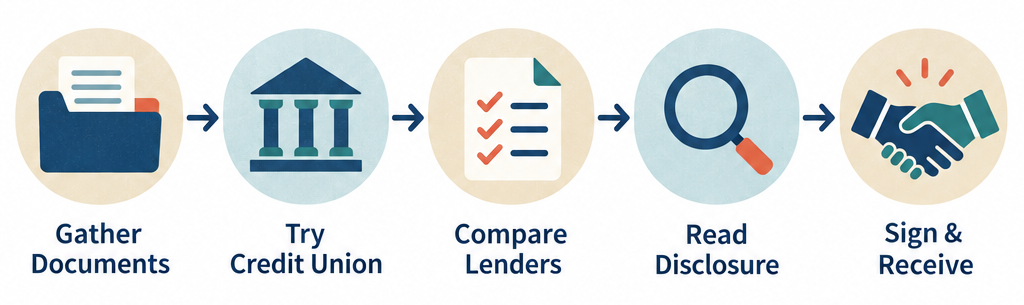
    Flow diagram showing five steps to getting an urgent bad-credit loan: gather documents, check credit union, compare lenders, read disclosure, then sign

    This is a real process, and the order matters. Checking cheaper sources first takes about an hour and can save hundreds of dollars.

    What you need before you start

    • Government ID and Social Security number
    • Proof of income: recent pay stubs, benefit letters, or two months of bank statements
    • An active checking account with online access (most lenders verify it electronically)
    • Your actual credit score, pulled free from Experian, Equifax, or TransUnion at AnnualCreditReport.com, which the Fair Credit Reporting Act guarantees weekly at no charge
    • The exact amount you need and the date you can realistically repay it

    How to borrow fast without overpaying

    1. Call the biller first. Utilities, landlords, hospitals and even the IRS offer payment plans or hardship holds that cost nothing.
    2. Check your employer. Many payroll providers now offer earned wage access with no fee if you accept standard ACH timing.
    3. Call a local credit union and ask for a Payday Alternative Loan. If you are already a member, PAL II has no waiting period.
    4. If you hold a credit card, compare its cash advance APR to the loan quotes. It is usually far cheaper than a payday loan.
    5. Only then look at online bad-credit lenders. Pre-qualify with two or three, which uses a soft inquiry and does not hurt your score.
    6. Verify each lender’s license on NMLS Consumer Access and your state regulator’s site before giving a Social Security number.
    7. Read the TILA disclosure box. Compare the APR and total finance charge, not the monthly payment.
    8. Choose instant debit card funding only if you truly need money today. Standard ACH is often free; instant transfers usually cost a few dollars.

    Expected result

    If you follow the order above, a typical outcome looks like this: a credit union PAL funded in one to two business days at 28% APR, or an app advance of a few hundred dollars within minutes for a $3 to $6 fee. If both fail and you take an online installment loan, expect approval in minutes, funds the same or next business day, and an APR well above 100%.

    How fast is “same day”?

    Funding speed depends on the payment rail, not on how urgent the ad sounds.

    Funding method Typical arrival Usual cost Catch
    Push to debit card (RTP or Visa Direct) Minutes $0 to $6 Your bank must support instant deposits
    Same-day ACH Same business day Usually free Must be approved before the lender’s cutoff, often early afternoon Eastern
    Standard ACH 1 to 3 business days Free Weekends and federal holidays do not count
    In-store cash Immediate Free Storefront payday only, and only in states that allow it

    Apply on a Friday evening and “same day” quietly becomes Tuesday. If the money has to arrive today, the application needs to be finished, verified and approved by lunchtime.

    Common mistakes that make an emergency loan worse

    Borrowing more than the bill. Lenders often approve a higher amount than you asked for. Every extra $100 on a 391% APR loan costs $15 every two weeks.

    Comparing payments instead of total cost. A $126 monthly payment sounds manageable. Six of them on a $500 loan means $757 out the door.

    Applying everywhere at once. Soft pre-qualification is fine. Submitting full applications to five lenders can trigger five hard inquiries. FICO says each one typically costs fewer than five points, but they stack, and each one also shows future lenders you were shopping under stress.

    Trusting reviews over licenses. Star ratings are easy to buy. A state license is not. Look up the company on NMLS Consumer Access and your state’s financial regulator before you trust a single review.

    Paying anything upfront. Legitimate lenders deduct fees from the loan or add them to the balance. Anyone asking for a gift card, wire or crypto payment to “release” funds is running a scam.

    Letting the lender keep debiting. Under 12 CFR 1041, the CFPB’s payday lending rule, a covered lender that fails to collect twice in a row must get fresh written authorization before trying again. Those payment provisions took effect March 30, 2025. If your account keeps getting hit and overdrafting, that may be a violation.

    Where same-day bad-credit loans are available

    Nothing about urgent loans is national. Your state decides which products exist and what they can charge.

    State rule (as of October 2026) Examples What it means for you
    Payday lending banned or capped at 36% APR or lower Arizona, Arkansas, Colorado, Connecticut, Georgia, Illinois, Maryland, Massachusetts, Montana, Nebraska, New Hampshire, New Jersey, New Mexico, New York, North Carolina, Pennsylvania, South Dakota, Vermont, West Virginia, District of Columbia Any “payday loan” offered to you online is likely unlicensed. Credit union and installment options still exist.
    Payday allowed with fee and size limits California ($300 max, fee up to 15% of face amount), Florida ($500 max, 10% fee plus $5 verification fee) Legal but expensive; state database may block a second loan until the first is paid
    Payday allowed with few limits Texas (credit access business model, APRs often above 500%), Nevada, Utah, Idaho The highest costs in the country; shop carefully and verify licensing

    In a 36%-cap state, the online lender promising “urgent loans no credit check guaranteed approval” is often a tribal lender or an offshore operation that argues state law does not apply. Courts and state regulators have repeatedly disagreed. If the lender holds no license in your state, you have far fewer protections when something goes wrong, and your state attorney general’s office will want to hear about it.

    Active-duty service members and their dependents are covered everywhere by the Military Lending Act (10 U.S.C. 987), which caps the Military Annual Percentage Rate at 36% on payday, installment and most other consumer credit. If a lender quotes you more, the loan is void from the start.

    Cheaper options first

    A credit union Payday Alternative Loan: PAL I from $200 to $1,000, or PAL II up to $2,000, both at a maximum 28% APR under NCUA rules.
    Employer earned wage access or a no-fee app advance on standard ACH timing.
    Nonprofit credit counseling through the National Foundation for Credit Counseling, and 211 for local emergency assistance with rent, utilities and food.

    A closer look at Payday Alternative Loans

    Federal credit unions can offer two PAL products under 12 CFR 701.21(c)(7). PAL I runs $200 to $1,000 over one to six months and requires one month of membership. PAL II goes up to $2,000 over one to twelve months with no waiting period. Both cap the APR at 28% and the application fee at $20, and neither allows rollovers. Credit unions generally pull credit, but many approve members with scores in the 500s because they look at your deposit history instead.

    Joining usually costs $5 to $25 for a share account, and membership rules are broader than most people think: where you live, work, worship or attend school often qualifies you.

    Your rights when you borrow

    Fast lenders count on you not reading the fine print. These laws apply even when you are in a hurry.

    Truth in Lending Act and Regulation Z (12 CFR 1026). Before you sign, the lender must disclose the APR, the finance charge in dollars, the amount financed and the total of payments. For online loans this appears as a boxed table before the signature screen. If a lender will not show it until after you commit, walk away.

    Equal Credit Opportunity Act and Regulation B (12 CFR 1002). If you are denied, the lender must tell you within 30 days and give the specific reasons, or tell you how to request them. “Guaranteed approval” sites that go quiet after rejecting you are breaking this rule.

    Fair Credit Reporting Act. You can get your report from each bureau free every week at AnnualCreditReport.com. If a denial was based on a credit report, the adverse action notice must name the bureau and the score used.

    Electronic Fund Transfer Act (15 U.S.C. 1693k). A lender cannot make preauthorized recurring bank debits a condition of the loan. You can revoke an ACH authorization by notifying both the lender and your bank; the bank must honor a stop payment if you give it three business days’ notice.

    Fair Debt Collection Practices Act. If you default and the account is sold, a “debt collector” cannot call before 8 a.m. or after 9 p.m., contact you at work after you say to stop, or threaten arrest. Payday default is a civil matter, not a crime, no matter what a collector says.

    CFPB payday rule (12 CFR 1041). After two consecutive failed withdrawal attempts, a covered lender must stop and get new authorization in writing.

    How to spot a fake lender

    • Approval before any application or income verification
    • Any fee requested before funding, especially by gift card, wire, Zelle or crypto
    • No license number, or a name that does not appear on NMLS Consumer Access
    • Only a Gmail or similar free email address, no physical address, no state disclosures page
    • Pressure to decide in minutes or “lose the offer”
    • A request for your online banking username and password rather than a read-only verification service

    Report suspected scams to the FTC at ReportFraud.ftc.gov and to the FBI’s Internet Crime Complaint Center. Report licensed lenders that break the rules through the CFPB’s complaint portal; companies must respond, and the complaint becomes part of the public database that we and other researchers use.

    Who an urgent bad-credit loan can make sense for

    An expensive short-term loan is defensible in a narrow set of cases: the cost of not paying is higher than the loan’s cost, you have a specific date when money arrives, and the amount is small enough to clear in one payment. Avoiding a $35 overdraft plus a returned-payment fee, keeping a car on the road for a job, or stopping a utility shutoff can fit that description.

    It does not make sense for ongoing shortfalls. If this month’s gap will exist next month too, a two-week loan at 391% guarantees the gap gets bigger. That situation calls for a nonprofit credit counselor, a hardship plan with your creditors, or a longer, cheaper loan from a credit union.

    FAQ

    Who will approve me for a loan when no one else will?

    No lender approves everyone, and the ones who claim to are usually scams or lead generators selling your data. Your best realistic odds with poor credit are a credit union Payday Alternative Loan, a cash advance app that judges you on recurring deposits rather than score, or an online installment lender that uses bank data. Each will still check income and your account history.

    How can I borrow money in an emergency with bad credit?

    Start with sources that do not price by credit score: a payment plan from the biller, your employer’s earned wage access program, or a credit union PAL capped at 28% APR. Then consider a credit card cash advance if you have a card. Online bad-credit lenders should be the last stop because their APRs usually start above 100%.

    How can I get an urgent loan with bad credit?

    Gather ID, proof of income and bank login for verification, then pre-qualify with licensed lenders using soft inquiries. Apply before the lender’s same-day cutoff, usually early afternoon Eastern, and choose debit card funding if you need money within minutes. Confirm the APR on the Regulation Z disclosure before signing.

    Can I borrow money instantly if I have poor credit?

    You can get a decision in minutes, and money can hit a debit card within minutes if the lender supports instant transfers and you pay the express fee. True “instant” funding depends on your bank’s rails, the time of day and completed verification. Standard ACH takes one to three business days and is usually free.

    Does a no-credit-check loan show up on my credit report?

    Most payday and app advances are not reported to Equifax, Experian or TransUnion, so they do not help you build credit. Many are reported to specialty bureaus like Clarity Services and FactorTrust, and if you default and the debt goes to a collector, that collection can appear on your regular reports.

    Is a guaranteed approval loan legal?

    Lending itself is legal when licensed. Advertising “guaranteed approval” is deceptive marketing, and charging a fee before delivering a promised loan violates the FTC’s Telemarketing Sales Rule. Any lender who uses the phrase deserves extra scrutiny of its license and disclosures.

  • Emergency loans: how they work and how to borrow responsibly

    Emergency loans: how they work and how to borrow responsibly

    An emergency loan is any fast borrowing you use to cover a surprise bill, usually a personal loan, a payday loan, a cash advance app or a credit card cash advance. The cheapest versions cost under 30% APR and the most expensive top 400% APR, so the product you pick matters more than how fast the money arrives. This guide explains how emergency loans work, what each type really costs, which states restrict them and what your legal rights are when you borrow.

    Typical amounts$100 to $5,000
    APR range6% to over 400%
    Fastest fundingsame day to next business day
    Cheapest regulated optioncredit union PAL, 28% APR cap
    Military borrowers36% MAPR cap
    Main sourcesCFPB, NCUA, Federal Reserve

    What emergency loans are

    “Emergency loan” is a marketing label, not a legal category. No federal law defines one. When a lender advertises emergency loans, it is selling one of the ordinary products below, often with same-day or next-day funding added as the hook.

    The Federal Reserve’s Survey of Household Economics and Decisionmaking has found for several years running that roughly 37% of US adults could not cover a $400 surprise expense with cash or its equivalent. That gap is the market these lenders serve. Some serve it fairly. Others price the loan at a level that creates the next emergency.

    The main types you will see:

    • Unsecured personal loans from banks, credit unions and online lenders, usually $1,000 to $50,000, repaid in fixed monthly payments over one to seven years.
    • Payday loans, typically $100 to $500, due in full on your next payday with a flat fee.
    • Cash advance apps that front a portion of your paycheck, often $20 to $500, and pull it back on payday.
    • Credit card cash advances, which draw cash against your card’s limit at a higher rate than purchases.
    • Auto title loans, secured by your car, usually for 30 days.
    • Payday alternative loans (PALs), a regulated small loan offered only by federal credit unions.

    A “payday loan” and a personal loan can both be advertised as emergency loans, yet one costs around 400% APR and the other might cost 12%. Reading the actual disclosure, not the headline, is the whole game.

    How emergency loans work, step by step

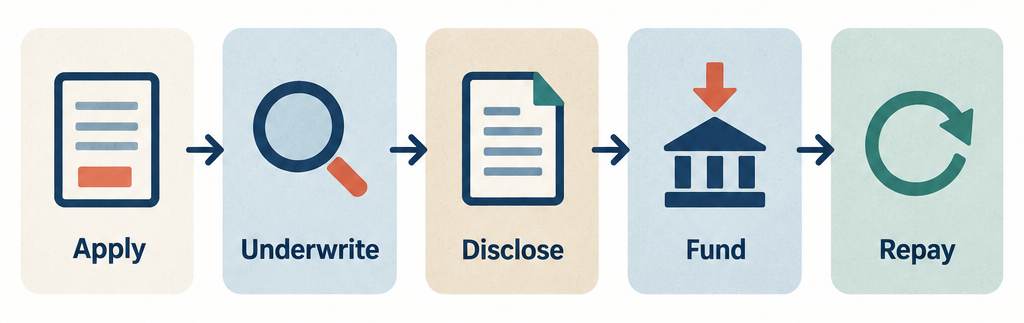
    Flow diagram showing the five steps of an emergency loan: Apply, Underwrite, Disclose, Fund, Repay

    Most emergency lenders follow the same path, and knowing it helps you spot where the costs hide.

    Application. Online lenders ask for identity, income, a bank account and a Social Security number. Many run a soft credit inquiry first, which does not affect your score, then a hard inquiry only if you accept an offer. “No credit check” offers usually mean the lender checks a different database (bank transaction data or a subprime bureau such as Clarity) and prices the loan high to cover the risk.

    Underwriting. Personal loan lenders look at your credit score, debt-to-income ratio and income. Payday lenders mostly want proof of a paycheck and an active checking account. Cash advance apps read your bank history to estimate your next deposit.

    Disclosure. Under the Truth in Lending Act and Regulation Z (12 CFR 1026), any lender offering closed-end consumer credit must give you the APR, the finance charge, the amount financed and the total of payments before you sign. If a lender will not show you the APR, that alone is a reason to walk away.

    Funding. Direct deposit by ACH takes one business day for most lenders. Same-day funding usually means an instant debit card push, and some lenders or apps charge an extra fee for it.

    Repayment. Personal loans are repaid monthly. Payday loans and app advances are repaid in a lump sum from your checking account on payday. That lump-sum structure is why the CFPB found most payday borrowers end up re-borrowing: the full amount plus fee leaves a hole in the next paycheck.

    What an emergency loan really costs

    The table shows what common products cost on a realistic borrowing amount. APR converts every fee into an annual rate so you can compare a two-week loan against a 12-month loan on equal terms. The math in plain words: divide the fee by the amount borrowed, divide by the number of days you have the money, and multiply by 365.

    Product Amount Cost Term Total repaid Approximate APR
    Credit union PAL I $500 28% APR plus $20 application fee 6 months About $562 28% plus fee
    Credit card cash advance $500 5% fee ($25) plus 29.99% APR, no grace period 30 days About $538 Roughly 90% on a 30-day payoff
    Online personal loan, fair credit $1,000 36% APR 12 months About $1,206 36%
    Cash advance app $100 $4.99 express fee, no tip 7 days $104.99 About 260%
    Auto title loan $500 25% monthly finance charge 30 days $625 300%
    Payday loan $500 $15 per $100 14 days $575 391%

    The payday figure is the CFPB’s own standard example. The title loan figure matches the typical 25% monthly charge the CFPB documented in its title lending research, where it also found about one in five title borrowers lost their vehicle to repossession.

    Cash advance apps look cheap in dollars, which is exactly the problem. A $4.99 express fee on a $100 advance for one week works out to roughly 260% APR. The CFPB’s 2024 analysis of earned wage access products found a typical advance cost over 100% APR once express fees and voluntary “tips” were counted. Apps that let you wait two or three business days for free are much cheaper, so the fee is really a charge for speed.

    For personal loans, the Federal Reserve’s G.19 consumer credit release has put the average 24-month personal loan rate at banks in the low double digits during 2025, near 12%. That rate goes to borrowers with good credit. Borrowers with scores below about 640 commonly see 25% to 36%, and most mainstream online lenders stop at 36%.

    Before you borrow

    The biggest risk is not the first fee but the second loan. CFPB research found about four in five payday loans are rolled over or followed by a new loan within 14 days, which turns a $75 fee into hundreds of dollars over a year.

    Who an emergency loan can make sense for

    A regulated emergency loan can be a reasonable choice when all of these are true:

    • The expense is unavoidable and has a real deadline, such as a car repair you need to get to work or a utility shutoff notice.
    • You have a specific plan to repay it from income within the term, not from another loan.
    • The APR is 36% or lower, which is the cap the Military Lending Act sets for service members and the benchmark most consumer advocates use.
    • You have already checked the cheaper options below and they are not available in time.

    It rarely makes sense to borrow at 300% or more. The CFPB’s data shows that borrowers at those rates typically spend more on fees over a year than they originally borrowed.

    Cheaper options first

    Before any loan over 36% APR, run through these. Several are free, and most can be arranged in a day or two.

    Cheaper options first

    A federal credit union PAL is capped at 28% APR and takes a few days to set up.
    Hospital charity care, utility hardship plans and dialing 211 can erase the bill instead of financing it.
    A no-fee paycheck advance from your employer or an app’s free standard-speed option costs nothing.

    1. Credit union payday alternative loans. Under NCUA rules at 12 CFR 701.21(c)(7), a PAL I is $200 to $1,000 over one to six months, with an APR capped at 28% and an application fee of no more than $20. A PAL II goes up to $2,000 over up to 12 months with no minimum membership period. You need to join the credit union, which often requires living or working in its area or a small donation to a partner association.

    2. Ask the biller for a plan. Utilities in most states must offer deferred payment arrangements and cannot disconnect during certain weather conditions. Nonprofit hospitals are required under Internal Revenue Code section 501(r) to have a written financial assistance policy, and many write off bills entirely for households under 200% to 400% of the federal poverty level. Ask for the charity care application before paying anything.

    3. Local and federal assistance. Dialing 211 connects you to the United Way’s directory of local emergency help for rent, utilities and food. The Low Income Home Energy Assistance Program (LIHEAP) covers heating and cooling bills. Catholic Charities, the Salvation Army and St. Vincent de Paul run emergency bill funds in most counties. None of this has to be repaid.

    4. Employer or free app advance. Many employers now offer earned wage access through payroll at no cost to you. If you use a cash advance app, the standard-speed transfer is usually free and arrives in one to three business days.

    5. A 0% credit card or your existing card’s purchase rate. Charging a car repair to a card at 24% APR and paying it off in two months costs far less than any payday product. Avoid the cash advance feature, which carries a fee and starts charging interest immediately.

    6. Retirement account emergency withdrawal. Under the SECURE 2.0 Act, participants in employer plans such as a 401(k), 403(b) or governmental 457(b) that have adopted the provision can take up to $1,000 per year for a personal emergency without the 10% early withdrawal penalty, with the option to repay it within three years. The withdrawal is still taxed as ordinary income, and the provision is generally not available for IRAs. A 401(k) loan, where your plan allows one, lets you borrow up to 50% of your vested balance or $50,000, whichever is less, and the interest goes back into your own account.

    Where emergency loans are restricted by state

    Availability depends on where you live, and no lender can legally offer every product everywhere.

    Payday lending is banned or capped at or near 36% APR in roughly 20 states and the District of Columbia, including New York, New Jersey, Pennsylvania, Massachusetts, Connecticut, Maryland, North Carolina, Georgia, Arizona, Arkansas, Colorado, Illinois, New Mexico, Nebraska, Montana, South Dakota and Vermont. In those states a lender advertising 400% APR loans is either a tribal lender or operating illegally, and state “usury laws” generally make such loans void or uncollectible.

    Auto title loans are legal in only about half of states. Personal installment loans are available everywhere, but the maximum rate a licensed lender can charge varies widely by state and loan size. Cash advance apps operate nationally, though several states, including Connecticut and Maryland, have brought them under their small loan laws.

    If you are on active duty or a dependent, the Military Lending Act caps the Military Annual Percentage Rate at 36% on most consumer credit no matter which state you are in, and it bans mandatory arbitration clauses in those contracts.

    How to check a lender before you sign

    How to check a lender

    1. Search the company on NMLS Consumer Access to confirm it holds a license in your state.
    2. Confirm the license with your state’s banking or financial regulator lookup.
    3. Read the Truth in Lending disclosure and find the APR and total of payments.
    4. Search the CFPB complaint database for the lender’s name.
    5. Refuse any lender that asks for an upfront fee, gift cards or crypto to “release” the loan.

    That last point is the single most common emergency loan scam the FTC reports. A legitimate lender never asks you to pay before funding. Scammers also copy real lenders’ names, so match the license number, not just the brand.

    Your rights as a borrower

    Several federal laws apply to emergency loans, and lenders cannot contract around them.

    Truth in Lending Act and Regulation Z. You are entitled to a written APR and finance charge before you are bound. For loans with a prepayment penalty or balloon payment, that must be disclosed too.

    Equal Credit Opportunity Act. A lender cannot deny or price a loan based on race, sex, marital status, age, national origin, religion or because your income comes from public assistance. If you are denied, you must receive an adverse action notice giving the reason or telling you how to get it.

    Fair Credit Reporting Act. You can pull your reports from all three bureaus free every week at AnnualCreditReport.com, and you can dispute errors, which the bureau must investigate within 30 days. If a lender denies you based on your report, the notice must name the bureau.

    Electronic Fund Transfer Act and Regulation E. A lender cannot require you to repay by automatic debit as a condition of credit (15 U.S.C. 1693k). You can revoke an ACH authorization by notifying the lender and your bank, and your bank must honor a stop payment on a recurring debit if you give it three business days’ notice.

    Fair Debt Collection Practices Act. If the loan goes to a third-party “debt collector,” that collector cannot call before 8 a.m. or after 9 p.m., contact you at work after you say not to, threaten arrest or lie about what you owe. Debt collectors also cannot collect on a loan that was void under your state’s law.

    Military Lending Act and Servicemembers Civil Relief Act. Covered borrowers get the 36% MAPR cap, and the SCRA lets active-duty members reduce pre-service debts to 6% interest on request.

    To complain, use the CFPB complaint portal, which forwards your complaint to the company and tracks its response. Report fraud at FTC ReportFraud or, for online scams, the FBI’s Internet Crime Complaint Center (IC3).

    FAQ

    How fast can I get an emergency loan?

    Cash advance apps and some online lenders can fund within minutes to a debit card, usually for an express fee. Standard ACH funding takes one business day. Credit union PALs can take a few days if you must join first.

    Can I get an emergency loan with bad credit?

    Yes, but the price rises sharply below a 640 score. Licensed personal loan lenders generally cap out at 36% APR. Payday and title lenders accept almost anyone and charge 300% to 400% APR. A credit union PAL is the cheapest widely available option for thin or damaged credit.

    Do emergency loans affect my credit score?

    Personal loans from banks, credit unions and most online lenders report to the bureaus, so on-time payments help and missed ones hurt. Most payday lenders and cash advance apps do not report at all, which means they do not build credit either. Any hard inquiry can lower a score by a few points for up to a year.

    What is the difference between an emergency loan and a payday loan?

    A payday loan is one kind of emergency loan, repaid in a single lump sum on your next payday at a flat fee that works out to about 391% APR. Other emergency loans, such as personal loans and PALs, are repaid in monthly installments at far lower rates.

    Are there emergency loans that are actually free?

    Employer paycheck advances, the standard-speed option on most cash advance apps and the SECURE 2.0 $1,000 retirement emergency withdrawal carry no fee. Charity care, 211 referrals and LIHEAP are grants, not loans, and never need repayment.

  • What usury is and how state usury laws cap interest

    What usury is and how state usury laws cap interest

    Usury is lending money at an interest rate higher than the law allows, and a loan that crosses that line is called usurious. The catch is that there is no single American usury rate: each state sets its own caps, federal banking law lets banks ignore most of them, and a long list of exemptions decides whether a lender’s price is legal or a crime. We walk through what the caps are, who they actually bind, and what a borrower can do with an overpriced loan.

    Federal usury capnone for most loans
    Military cap36% MAPR
    Typical state civil cap6% to 18%
    Typical payday APRaround 391%
    State payday caps near 36%about 20 states plus DC
    Federal credit union cap18% APR

    What usury means today

    In plain words, usury is charging more interest than the maximum rate a state’s legislature has written into law. The word once meant any interest at all, and the Hebrew Bible, the medieval Catholic Church and Islamic law all banned lending at interest in various forms. By the 1700s English law and most American colonies had settled on a different idea: interest is fine, but there is a ceiling. The English cap was 5% for much of the century, and Jeremy Bentham’s 1787 “Defence of Usury” argued the ceiling itself was the problem.

    That older debate still shapes the modern rules. Every state has some statute on the books defining a legal rate of interest, a maximum contract rate, or both. Most also define a higher criminal usury rate that turns the loan from a civil problem into a misdemeanor or felony.

    Three terms come up constantly:

    • Legal rate is the interest a court applies when a contract says nothing about interest, often 6% to 10%.
    • Maximum contract rate is the highest rate two parties can agree to in writing. This is the civil usury line.
    • Criminal usury rate is the point at which the lender can be prosecuted, commonly 20% to 25% in states that have one.

    A loan is usurious when its rate exceeds the contract rate that applies to that lender and that type of loan. The second half of that sentence is where most people get tripped up, because the exemptions are bigger than the rule.

    Why there is no federal usury cap

    Congress has never passed a general interest rate ceiling for consumer loans. Bills to set a national 36% cap have been introduced in nearly every session since 2019, and none has passed as of our latest check. What federal law does instead is regulate disclosure, protect specific groups, and, importantly, let banks export their home-state rate across state lines.

    Federal law What it does about interest Who it covers
    Truth in Lending Act, Regulation Z (12 CFR 1026) Requires the APR and finance charge to be disclosed; sets no cap Most consumer credit
    Military Lending Act (10 U.S.C. § 987, 32 CFR 232) Caps the Military Annual Percentage Rate at 36%, fees included Active-duty servicemembers and dependents
    Servicemembers Civil Relief Act Caps interest on debts taken on before service at 6% while on active duty Servicemembers who request it
    National Bank Act, 12 U.S.C. § 85 Lets national banks charge the rate allowed in the bank’s home state to borrowers anywhere National banks
    12 U.S.C. § 1831d (DIDMCA Section 521, 1980) Extends the same rate exportation to state-chartered FDIC-insured banks State banks
    Federal Credit Union Act, 12 U.S.C. § 1757(5) Caps federal credit union loans at 15%, which the NCUA board may raise; the ceiling has been 18% since 1987 Federal credit unions

    The rate exportation rule is the reason your credit card can carry a 29% APR in a state whose usury statute says 12%. In Marquette National Bank v. First of Omaha Service Corp. (1978), the Supreme Court read the National Bank Act to mean a bank “located” in Nebraska could charge Nebraska’s rate to a Minnesota cardholder. South Dakota and Delaware then repealed their caps for banks in 1980 and 1981, Citibank moved its card operation to Sioux Falls, and the modern credit card industry followed. The Federal Reserve’s G.19 release has shown average APRs on card accounts assessed interest above 20% throughout 2024 and 2025, a figure that would be criminal usury in New York if a non-bank charged it.

    Two more federal rulings matter. Smiley v. Citibank (1996) held that late fees, over-limit fees and similar charges count as “interest” a bank can export. And in 2020 the Office of the Comptroller of the Currency and the FDIC each adopted “valid when made” rules (12 CFR 7.4001(e) and 12 CFR 331) saying a loan that was legal when a bank made it stays legal at the same rate after the bank sells it to a non-bank. That rule was a direct response to Madden v. Midland Funding (2d Cir. 2015), where a debt buyer lost the bank’s rate protection after buying a charged-off account. Both federal rules survived court challenges from state attorneys general.

    States were allowed to opt out of Section 521 when it passed. Iowa and Puerto Rico did so in 1980 and kept their opt-outs. Colorado passed a new opt-out in 2023 aimed at out-of-state bank loans above its own caps, and that law has been tied up in federal litigation since; the practical effect for Colorado borrowers depends on how the appeals end.

    How state usury laws set the cap

    Three-layer flow diagram showing how state usury law applies: general cap, licensed-lender statute, then criminal penalty threshold

    State legislatures write usury rules in three layers: a general cap that applies to anyone not otherwise exempt, special statutes for licensed lenders that override the general cap, and criminal penalties above a higher line. The general cap usually binds only private lenders, family loans, seller financing and unlicensed companies. Licensed consumer lenders, banks, credit unions, pawnbrokers and payday lenders almost always operate under their own statute with its own, higher, ceiling.

    The table below shows the general civil and criminal lines in a handful of states as they stand in the statutes. We include it to illustrate the spread, not as a lookup for any specific loan; the licensed-lender exemptions in each state usually matter more.

    State General contract cap Criminal usury line Key exemptions and notes
    New York 16% (General Obligations Law § 5-501) 25% (Penal Law § 190.40) Loans over $250,000 exempt from civil usury; over $2.5 million exempt from criminal; usurious loans are void
    California 10% for personal, family or household loans (Constitution Art. XV § 1) None as a separate rate; usury is civil Banks, credit unions and California Financing Law licensees exempt; payday loans capped by a separate statute
    Texas 10% default (Finance Code § 302.002), optional ceilings up to 18% or more under Chapter 303 Contract rate above twice the legal cap is criminal Credit access businesses arrange payday and title loans at fees far above the cap
    Florida 18% (Fla. Stat. § 687.02) 25% misdemeanor, 45% felony (§ 687.071) Loans over $500,000 may carry up to 25%
    Georgia 7% if nothing is written; up to 16% by contract on loans under $3,000 (O.C.G.A. § 7-4-2) Payday lending itself is a crime (§ 16-17-1) Any agreed rate on loans of $3,000 or more
    Illinois 9% general rate (815 ILCS 205/4) None separate Predatory Loan Prevention Act (2021) caps consumer loans at 36% APR for all lenders not exempt under federal law
    Massachusetts None stated; 20% is the trigger 20% unless lender registers with the Attorney General (G.L. c. 271 § 49) Registration makes higher rates legal, which is why the cap bites mostly on unregistered lenders
    Delaware, Utah, South Dakota No cap for licensed lenders or banks Not applicable Chosen as home states by card issuers and installment lenders

    A few patterns stand out. New York’s rule that a usurious loan is void, with the borrower owing neither interest nor principal, is the harshest in the country and explains why so many fintech contracts avoid New York governing law. California’s constitutional cap sounds strict until you read the exemption list, which covers almost every company that lends for a living. Texas has a strict-looking statute and some of the most expensive small loans in the country, because the credit access business model treats the lender’s fee as a brokerage charge rather than interest.

    Payday and small-dollar loans

    The sharpest state-by-state divide is on small loans under $1,000. A payday loan in a permissive state typically costs $15 per $100 for two weeks, the example the CFPB itself uses, which works out to a 391% APR. States handle that in one of three ways:

    Approach Examples (as of 2025) What a $300 loan can cost
    Rate cap near 36% APR, payday stores mostly closed Arizona, Colorado, Illinois, Montana, Nebraska, New Mexico, New York, New Jersey, North Carolina, South Dakota, Georgia, Massachusetts, DC Under $10 in interest for two weeks
    Fee-based cap on payday loans California ($300 max loan, fee up to 15% of face amount), Florida ($500 max, 10% fee plus $5 verification), Michigan ($600 max, tiered fees) $45 in California, about $35 in Florida
    No meaningful cap on payday fees Idaho, Nevada, Utah, Wisconsin, Texas via credit access businesses Whatever the contract says; 400% to 600% APR is common

    Voters, not just legislatures, drew many of these lines. South Dakota’s Initiated Measure 21 (2016), Colorado’s Proposition 111 (2018) and Nebraska’s Initiative 428 (2020) each imposed a 36% cap by ballot with more than 70% support. Illinois’s 2021 law and New Mexico’s 2023 law came through the legislature. Surveys by the National Consumer Law Center and the Center for Responsible Lending count roughly 20 states plus the District of Columbia with caps at or near 36% for a typical $500 loan.

    A worked cost example: the same $300 under three regimes

    Usury law is abstract until you price a loan with it. Here is a $300 loan repaid over 14 days under a permissive payday statute, under a 36% APR cap, and from a federal credit union’s payday alternative loan program, which NCUA rules at 12 CFR 701.21(c)(7) cap at 28% APR plus an application fee of no more than $20.

    Loan Amount Fee or APR Term Total repaid
    Payday loan, $15 per $100 $300 $45 fee (391% APR) 14 days $345.00
    Loan under a 36% cap $300 36% APR, about $4.14 interest 14 days $304.14
    Credit union PAL at 28% $300 28% APR, about $3.22 interest, plus up to $20 fee 14 days $303.22 to $323.22

    The APR math is simple division. Take the fee, divide by the amount borrowed, divide by the number of days, and multiply by 365. For the payday loan: $45 divided by $300 is 0.15; 0.15 divided by 14 days is 0.0107 per day; times 365 is 3.91, or 391%. Regulation Z requires the lender to print that figure on the loan agreement, which is why a two-week loan with a “15% fee” shows an APR near 400%. The disclosure does not make the rate legal or illegal; only the state’s statute does that.

    The credit union example shows a wrinkle. A $20 application fee on a two-week, $300 loan adds the equivalent of about 174 percentage points of APR if you annualize it, which is why NCUA excludes that fee from the 28% calculation and why PALs make more sense for loans of a few months than a few days.

    Before you borrow

    A loan priced above your state’s cap is not automatically unenforceable, because the lender may be a bank, a licensed lender or a buyer of bank-originated loans with a legal exemption. Assume you will owe what you signed for unless a court or regulator says otherwise, and price the loan by total dollars repaid, not by the monthly fee.

    Who the caps do not bind

    The list of exemptions explains most of the gap between the statute and the price you are quoted.

    Banks and credit unions. Rate exportation lets any FDIC-insured bank charge its home-state rate nationwide, and federal credit unions follow the NCUA ceiling rather than state law. The 18% federal credit union cap has been extended repeatedly; the NCUA board’s most recent extension runs through September 2026.

    Licensed lenders. Nearly every state has a consumer finance act, small loan act or installment loan act that sets a separate, higher cap for companies it licenses. California’s Financing Law, for example, caps loans of $2,500 to $9,999 at 36% plus the federal funds rate under a 2019 law, while leaving loans of $10,000 and up with no cap at all.

    Commercial and business loans. Usury statutes grew up to protect households, and many states exclude business borrowers outright or set a high floor. New York bars corporations from raising civil usury as a defense (General Obligations Law § 5-521), though they can still assert criminal usury. Florida’s cap rises to 25% above $500,000. Merchant cash advances, which buy a slice of a business’s future receipts, are structured as purchases precisely so that usury law does not reach them; the New York Attorney General and the FTC have both sued cash advance companies on the theory that the “purchase” was really a loan.

    Pawn, rent-to-own and retail installment contracts. Each usually has its own statute. Pawnbroker fees of 20% a month are legal in many states under pawn acts even though the same rate would be criminal usury on a loan.

    Loans sold by banks to non-banks. Under the 2020 valid-when-made rules, a fintech that buys loans originated by a Utah bank keeps the Utah rate. Whether the bank or the fintech is the “true lender” is the open question in most rent-a-bank lawsuits, and state attorneys general in Colorado, Illinois and elsewhere have won settlements forcing rate reductions where they could show the bank bore none of the risk.

    Tribal lenders. Companies owned by federally recognized tribes claim sovereign immunity from state usury laws. Courts have generally held that tribal immunity does not travel with the loan when a non-tribal business runs the operation, and the CFPB and several states have pursued those arrangements.

    What happens when a loan is usurious

    Remedies vary as widely as the caps, so the same loan can carry very different consequences across a state line.

    • Forfeiture of interest. The most common civil remedy. The lender collects principal but no interest. Texas and many other states use this baseline.
    • Multiple damages. Some states award the borrower twice or three times the excess interest. Texas Finance Code § 305.001 allows three times the usurious interest for violations that exceed twice the legal rate.
    • Voiding the loan. New York treats a civilly usurious loan made by a non-exempt lender as void from the start; the borrower keeps the money and owes nothing. Massachusetts courts can void loans made in violation of the criminal statute.
    • Criminal prosecution. Florida’s 45% felony line, New York’s 25% criminal line and Georgia’s ban on payday lending each carry potential jail time for the lender, though prosecutions are rare.
    • Unenforceable collection. Many states say a loan that violates the lending licensing law is void, and that a debt collector cannot lawfully collect it. The CFPB has taken the position that attempting to collect a loan that is void under state law is itself an unfair practice.

    Borrowers raise usury in two ways: as a defense when the lender sues, or as an affirmative claim, sometimes as a class action. Courts also look past labels. A “fee,” “points,” “membership charge” or “tip” can be treated as interest if it is really the price of the money. That is the issue regulators have pressed with earned wage access and cash advance apps, where “tips” and “express fees” can push a $100 advance to the equivalent of a 300% APR. The CFPB said in a 2024 interpretive rule that such charges are finance charges under Regulation Z for disclosure purposes, a position the current CFPB has proposed to withdraw, so that corner of the law is unsettled.

    Your rights as a borrower

    Even where the rate is legal, federal law gives you tools.

    Under the Truth in Lending Act and Regulation Z, you are entitled to see the APR and finance charge in writing before you sign a closed-end loan, and in the account-opening disclosures for a credit card. If the APR on the paper does not match what you are being charged, the lender is in violation regardless of usury law, and TILA allows statutory damages.

    Under the Military Lending Act, covered borrowers get a 36% all-in cap, no mandatory arbitration, and no requirement to allot pay. A lender that charges more cannot enforce the contract. Lenders check the Defense Manpower Data Center database before lending; you can check your own status there.

    Under the CFPB’s payday lending rule, whose payment provisions took effect on March 30, 2025 after the Supreme Court upheld the agency’s funding in May 2024, a payday or vehicle title lender must stop trying to debit your bank account after two consecutive failed attempts unless you give new authorization. That does not cap the rate, but it stops the cascade of overdraft fees that makes a usurious loan more expensive still.

    Under the Fair Debt Collection Practices Act, a third-party collector cannot collect interest or fees that the original contract or state law does not allow. Demanding interest above the state cap on a debt the collector bought is one of the most common FDCPA claims.

    How to check whether a lender can legally charge its rate

    1. Find the lender’s license on NMLS Consumer Access or your state financial regulator’s license lookup.
    2. Identify which statute the license falls under; the licensing statute, not the general usury law, usually sets the cap.
    3. If the lender is a bank, check the FDIC BankFind database and note its home state, because that state’s rate applies.
    4. Compare the APR on your Regulation Z disclosure with the applicable cap.
    5. If the rate exceeds the cap and no exemption fits, file a complaint with your state attorney general and the CFPB.

    Cheaper options and what to do about an overpriced loan

    A usury cap does not help much if the only loan you can get is from a lender the cap does not reach. The options below cost less than almost anything priced above 36%.

    Cheaper options first

    Federal credit union payday alternative loans come in two forms: PAL I runs $200 to $1,000 at no more than 28% APR over one to six months, and PAL II runs up to $2,000 at no more than 28% APR over one to twelve months.
    Employer pay advances and nonprofit emergency assistance usually carry no interest at all.
    Nonprofit credit counseling agencies and creditor hardship plans can lower existing rates without a new loan.

    If you already hold a loan you think is usurious, do not simply stop paying. Pull the loan agreement, note the disclosed APR, and run the license check above. Then complain to your state regulator and through the CFPB’s complaint portal, which forwards the complaint to the company and tracks its response. Many state attorneys general have dedicated rent-a-bank or payday complaint units, and complaints are how they build cases. A legal aid office can tell you whether your state’s remedy is forfeited interest, a void contract or something in between.

    If a collector is pursuing a loan that is void under your state’s law, you can dispute the debt in writing within 30 days of the first notice under the FDCPA, which pauses collection until the collector verifies it.

    Where the law is heading

    Three fights will decide what usury means over the next few years. The first is the federal 36% cap: the Veterans and Consumers Fair Credit Act and similar bills would extend the Military Lending Act’s cap to everyone, and they have bipartisan sponsors but have not reached a floor vote. The second is the valid-when-made and true-lender question, which will be settled lender by lender in state attorney general actions and in cases like the Colorado opt-out litigation. The third is how regulators classify “tips” and “express fees” in app-based advances, which decides whether those products fall under state small-loan caps at all.

    For borrowers the practical rule is older than any of those fights. The number that matters is the APR on the disclosure, the statute that matters is the one your lender is licensed under, and the cheapest credit is almost always the credit you arranged before the emergency.

    FAQ

    What is usury in simple terms?

    Usury is charging interest above the maximum rate a state’s law allows. A loan priced over that limit is usurious, and depending on the state the lender can lose the interest, lose the whole loan, or face criminal charges.

    Is there a federal usury law in the United States?

    No general one. Federal law caps rates only for active-duty servicemembers and their dependents (36% under the Military Lending Act) and for federal credit unions (18% under NCUA rules). Everyone else is governed by state law, and federal banking law lets banks export their home state’s rate nationwide.

    Why can my credit card charge 29% if my state’s usury cap is 12%?

    Because the issuer is a bank, and under 12 U.S.C. § 85 and the Marquette decision a bank may charge the rate allowed in its home state, typically South Dakota, Delaware or Utah, which have no cap. Your state’s usury statute does not reach that bank.

    What is the difference between civil and criminal usury?

    Civil usury is exceeding the contract cap, which usually costs the lender its interest or the loan. Criminal usury is exceeding a higher line, 25% in New York and Florida for example, and exposes the lender to prosecution. A corporation in New York cannot plead civil usury but can plead criminal usury.

    Are payday loans usurious?

    Only where a state has not carved out a separate payday statute. In states with a 36% cap on small loans, a 391% APR payday loan is illegal and often void. In states like California or Florida, a fee-based payday law makes the same loan legal up to a set amount. In Texas, Utah and Nevada, there is no effective cap.

    Do usury laws apply to business loans?

    Often not, or only partly. Many states exempt commercial loans above a dollar threshold, bar corporations from raising usury as a defense, or allow any agreed rate for business purposes. Merchant cash advances are structured as purchases of receivables to stay outside usury law entirely.

    What can I do if I think my loan is usurious?

    Compare the disclosed APR with the cap in the statute your lender is licensed under, verify the license on NMLS Consumer Access or your state regulator’s site, and file complaints with your state attorney general and the CFPB. Legal aid can tell you whether your state’s remedy is forfeited interest, a void loan or multiple damages.

  • Pegged meaning: how a hard peg works for currencies and stablecoins

    Pegged meaning: how a hard peg works for currencies and stablecoins

    Pegged means fixed to something else. A pegged currency or stablecoin is set to trade at a stated rate against another asset, usually the US dollar, and someone promises to keep it there. We explain how a hard peg is held, why pegs break, and what US rules and tax law say about pegged stablecoins.

    Pegged meansfixed exchange rate
    Hard pegone fixed rate, no band
    Soft pegnarrow trading band
    Common anchorthe US dollar
    Stablecoinsnot FDIC or SIPC insured
    Peg breaksUST 2022, USDC 2023 dip

    What pegged means in plain words

    A peg is a wooden pin that holds something in place. That is the whole idea. When we say a currency is pegged, we mean its price is held in place against another currency, a basket of currencies, or a commodity like gold.

    The Saudi riyal is a textbook example. The Saudi Arabian Monetary Authority has held it at 3.75 riyals per dollar since 1986. The Hong Kong dollar is another, pegged at HK$7.80 per US dollar by the Hong Kong Monetary Authority under a system that dates to October 1983, and kept within a trading band of HK$7.75 to HK$7.85 since May 2005.

    In crypto, a pegged token is one designed to track an outside price. A dollar stablecoin is pegged at $1. A tokenized gold product is pegged to an ounce of gold. The word “pegged” tells us the target. It does not tell us how strong the promise is, and that is where the risk lives.

    People also use “pegged” in everyday speech to mean sized up or categorized, as in “we had him pegged as a salesman.” The money meaning and the slang meaning share the same root: something fixed in position. Any dictionary will list both, but in finance the word almost always points to an exchange rate.

    Hard peg versus soft peg

    A hard peg is a single fixed rate backed by a strict mechanism. A soft peg allows the price to drift inside a band before the authority steps in.

    Peg type How it works Real example
    Currency board (hard) Every unit of local money is backed by reserves of the anchor currency, and the board converts on demand at the fixed rate Hong Kong dollar at HK$7.75 to 7.85 per USD
    Fixed rate with intervention (hard) Central bank buys or sells its own currency to hold one rate Saudi riyal at 3.75 per USD
    Band (soft) Currency floats inside a stated range around a central rate Danish krone, held within 2.25% of a central euro rate under ERM II
    Fiat-backed stablecoin (hard in design) Issuer holds cash and Treasury bills and redeems one token for one dollar USDC, USDT
    Crypto-collateralized stablecoin Users lock more crypto than the dollar value they mint, and liquidations protect the peg DAI
    Algorithmic stablecoin Code mints and burns a sister token to push the price back to $1, often with little or no hard collateral TerraUSD before May 2022

    The strength of any peg comes down to one question: what happens when everyone wants out at the same time? A currency board or a fully reserved stablecoin can pay every holder. An algorithmic peg cannot.

    How a hard peg is actually held

    Flow diagram showing how stablecoin arbitrage maintains a hard peg: trader buys discounted token, redeems with issuer, receives dollar, price rises back to peg

    A peg is a promise plus a mechanism. The promise says “one of ours equals one of theirs.” The mechanism is what makes the promise true on a bad day.

    For a national currency, the mechanism is reserves and intervention. If the market pushes the Hong Kong dollar toward the weak side of its band, the HKMA sells US dollars from its reserves and buys Hong Kong dollars until the rate moves back. If traders push it to the strong side, it does the reverse. Interest rates move with that flow, which is the price Hong Kong pays for the peg: it imports US monetary policy.

    For a fiat-backed stablecoin, the mechanism is redemption. Circle, the issuer of USDC, and Tether, the issuer of USDT, both say that an eligible customer can send back tokens and receive dollars one for one. Arbitrage does the rest. If USDC trades at $0.99 on an exchange, a trader can buy it, redeem it for $1.00, and pocket the gap. That buying lifts the price back to $1.

    Notice the weak points. Redemption usually requires an account with the issuer, minimum sizes, and identity checks. Retail holders mostly cannot redeem directly. They rely on exchanges and arbitrage traders, who may step back when the issuer looks shaky.

    Why pegs break

    Every broken peg has the same anatomy: the promise outruns the mechanism.

    Britain left the European Exchange Rate Mechanism on 16 September 1992 after the Bank of England could not defend the pound against sellers led by George Soros’s fund. Argentina abandoned its one-to-one dollar peg in January 2002 after a run on the banks. The Swiss National Bank dropped its 1.20 franc-per-euro floor on 15 January 2015 without warning, and the franc jumped roughly 20% in minutes.

    Crypto has its own list.

    Event What happened Outcome
    TerraUSD (UST), May 2022 Algorithmic peg relied on minting the LUNA token to absorb selling; a wave of redemptions overwhelmed it UST fell to pennies, LUNA went near zero, and estimates of losses ran into the tens of billions of dollars
    USDC, March 2023 Circle disclosed about $3.3 billion of reserves at the failed Silicon Valley Bank USDC dipped below $0.90 over a weekend, then recovered after US regulators guaranteed SVB deposits
    Tether reserves, 2021 The CFTC found Tether had misstated that USDT was fully backed by dollars at all times during 2016 to 2018 $41 million CFTC penalty, plus an $18.5 million settlement with the New York Attorney General

    Terra’s yield pitch deserves a word. Its Anchor lending protocol paid around 20% a year on UST deposits, funded in part from reserves rather than real lending income. A payout that depends on fresh money coming in has the shape of a ponzi scheme even when the code is public. US prosecutors later charged founder Do Kwon with fraud.

    Before you hold a stablecoin

    A dollar stablecoin is not a dollar. It can lose all its value if the issuer fails or the mechanism breaks, and it is not insured by the FDIC or SIPC. Only a bank deposit carries FDIC coverage, up to $250,000 per depositor, per bank, per ownership category.

    US rules for pegged stablecoins

    For years, dollar stablecoins sat in a gap between banking law, securities law and money-transmission law. That changed in July 2025, when the Guiding and Establishing National Innovation for U.S. Stablecoins Act, known as the GENIUS Act, was signed into law.

    The law creates a federal framework for “payment stablecoins.” Issuers must hold reserves at least one to one in cash, insured bank deposits, short-term Treasuries and similar assets, publish monthly reserve reports, and keep reserves separate from company money. It bars issuers from paying interest or yield to holders simply for holding the coin. Its main provisions take effect on a delayed schedule tied to regulators finishing their rules, so as of the law’s passage the market was still in transition.

    Two things the law does not do: it does not make stablecoins FDIC insured, and it does not guarantee the peg. It raises the odds that an issuer can honor redemptions. It does not promise that the token will trade at $1 on every exchange every minute.

    How to check a stablecoin's backing

    1. Find the issuer’s latest monthly reserve report on its own site, and note which accounting firm signed it.
    2. Read the reserve mix: cash and short Treasuries are strongest; loans, commercial paper or crypto are weaker.
    3. Read the redemption terms: who can redeem, minimum size, fees and how long it takes.
    4. Check the issuer’s regulator and any enforcement history with the CFTC, SEC or a state regulator.
    5. Compare the market price against $1 on more than one exchange.

    How the IRS treats pegged stablecoins

    Under IRS Notice 2014-21, the IRS treats virtual currency as property, and the IRS has confirmed that stablecoins count as digital assets. Pegging a token to the dollar does not turn it into a dollar for tax purposes.

    In practice this means every sale, swap or purchase with a stablecoin is a taxable disposal. If you bought USDC at $1.00 and sold at $1.00, the gain is zero, but the transaction still belongs on your return. Buying a stablecoin at $0.97 during a depeg and later selling at $1.00 creates a capital gain. Starting with 2025 transactions, US brokers report digital asset sales on Form 1099-DA, so the IRS will see these trades.

    Safer places for cash you cannot afford to lose

    An FDIC-insured savings or money market deposit account covers up to $250,000 per depositor.
    A Treasury bill bought through TreasuryDirect is backed by the US government.
    An NCUA-insured credit union share account carries the same $250,000 limit.

    FAQ

    What does pegged mean for a currency?

    A pegged currency has an exchange rate fixed by its central bank against another currency, a basket, or a commodity. The bank holds the rate by buying and selling reserves. The Saudi riyal, pegged at 3.75 per US dollar since 1986, is a clear example.

    What is a hard peg?

    A hard peg is one fixed rate with no trading band, held by a strict mechanism such as a currency board or full one-to-one reserves. A soft peg lets the price move inside a range before the authority intervenes.

    Is a stablecoin the same as a pegged currency?

    They share the idea of a fixed value, but a national peg is defended by a central bank with legal authority, while a stablecoin peg is defended by a private issuer’s reserves and redemption promise. Neither is guaranteed, and stablecoins carry no FDIC or SIPC insurance.

    Why did USDC lose its peg in 2023?

    Circle held about $3.3 billion of USDC reserves at Silicon Valley Bank when the bank failed in March 2023. Traders feared a shortfall and sold, pushing USDC below $0.90. The price recovered once federal regulators guaranteed SVB deposits in full.

    Do I owe tax on a stablecoin that stays at $1?

    Yes, each disposal must be reported, because the IRS treats stablecoins as property under Notice 2014-21. The gain is usually zero or a few cents, but the transaction still counts, and brokers now report sales on Form 1099-DA.

  • Transactions per second: how fast blockchains really are

    Transactions per second: how fast blockchains really are

    Transactions per second (TPS) is the number of transactions a network confirms in one second, averaged over some window. For blockchains it is the most quoted speed metric, and also the most abused. Bitcoin handles single digits, Ethereum’s base layer a few dozen, and Solana claims tens of thousands, yet none of those numbers mean what the marketing suggests until you know how they were measured.

    Bitcoin typical TPSabout 3 to 7
    Ethereum base layerroughly 15 to 30
    Solana claimed peak65,000
    Visa stated capacity65,000 messages per second
    Counting methodvaries by chain
    As oflate 2025

    Define TPS: what transactions per second actually measures

    TPS is a throughput figure. Take the total number of transactions a system processed over a period, divide by the number of seconds in that period, and you have it.

    The word “transaction” is doing a lot of work in that sentence. In a bank’s database it might mean one debit. On a blockchain it can mean a payment, a token swap, a contract call, or an internal housekeeping message that moves no money at all.

    So the TPS definition is simple arithmetic, but the inputs are not. Two chains reporting “1,000 TPS” can be describing completely different amounts of useful work.

    TPS outside crypto

    The term predates Bitcoin by decades. Database engineers and performance testers use TPS to measure how many operations a server, payment switch or API can complete under load.

    In load testing, a team ramps up simulated users and watches TPS climb until response times degrade or errors appear. That peak is the system’s practical capacity. Visa uses the same framing when it says VisaNet can handle more than 65,000 transaction messages a second, a figure from the company’s own fact sheet.

    Blockchains borrowed the vocabulary. The difference is that a blockchain’s ceiling is set by consensus rules everyone can read, not by how many servers a company bought.

    How a blockchain’s TPS is set

    Every public blockchain has three dials that determine throughput. Change any one and TPS changes.

    Block size or gas limit. This caps how much data or computation fits in one block. Bitcoin caps block weight at 4 million weight units, which works out to a bit under 1 MB of typical transaction data. Ethereum uses a gas limit, which stood at 30 million for years and was raised in stages during 2025 to 45 million.

    Block time. This is how often a new block is produced. Bitcoin targets ten minutes. Ethereum produces a block every 12 seconds. Solana targets a 400-millisecond slot.

    Transaction size. A simple Bitcoin payment with one input and two outputs takes roughly 140 virtual bytes. On Ethereum a plain ETH transfer costs 21,000 gas, while a token swap through a decentralized exchange can burn 100,000 to 150,000 gas or more.

    Divide capacity per block by transaction size, then divide by block time, and you get a theoretical ceiling. Here is that math for the two largest networks.

    Network Capacity per block Typical transaction Max per block Block time Theoretical TPS
    Bitcoin (pre-SegWit math) 1,000,000 bytes ~250 bytes ~4,000 600 s ~7
    Bitcoin (SegWit payments) ~1,000,000 vbytes ~140 vbytes ~7,000 600 s ~12
    Ethereum, simple transfers 45,000,000 gas 21,000 gas ~2,140 12 s ~178
    Ethereum, DEX swaps 45,000,000 gas ~150,000 gas ~300 12 s ~25

    Notice how Ethereum’s “TPS” swings from 178 to 25 depending on what people are doing. That is why observed throughput sits well below any theoretical figure. Real blocks hold a mix of cheap and expensive transactions, and blocks are not always full.

    The famous “Bitcoin does 7 TPS” line comes from the first row. It was a fair ceiling in 2016. Since the SegWit upgrade in 2017 the practical limit is a bit higher, but typical observed throughput is still in the 3 to 7 range because blocks carry plenty of larger multi-input transactions.

    Theoretical versus live TPS

    Flow diagram showing three levels of blockchain TPS measurement: theoretical maximum, peak observed, and average live throughput

    We think of three different numbers whenever anyone quotes TPS.

    Theoretical maximum. What the rules allow if every block were stuffed with the smallest possible transactions. This is the number in whitepapers and marketing decks.

    Peak observed. The highest sustained rate seen on the live network, usually during a congestion event such as a popular token launch.

    Average live. What the chain actually does on a normal day. This is the only number that tells you what using the network feels like.

    Solana illustrates the gap. The project’s documentation and marketing have long cited a theoretical figure of 65,000 TPS. Explorer data over 2024 and 2025 shows total throughput commonly in the low thousands per second, and a large share of that total consists of validator vote transactions. Strip those out and user transactions typically land somewhere in the hundreds to low thousands.

    That is still far faster than Ethereum’s base layer. It is just not 65,000.

    Why vote transactions matter

    Solana validators vote on the chain’s state by sending transactions, and those votes are counted in the headline TPS on many dashboards. The votes are real work for the network, but they are not payments or trades. A reader comparing Solana’s number to Ethereum’s, where consensus votes travel outside the transaction count, is comparing different things.

    The honest comparison uses “non-vote” or “user” transactions. Most Solana explorers now show both.

    Ethereum rollups and “operations”

    Ethereum’s layer 2 networks introduced another wrinkle. A single transaction on a rollup can bundle several user actions. L2BEAT, the most widely used independent tracker, therefore reports “user operations per second” rather than raw TPS, and the combined figure across Ethereum rollups ran into the hundreds of operations per second during 2025.

    Again, useful data. Again, not directly comparable to a raw transaction count elsewhere.

    TPS across different blockchains

    The table below gives structural facts that do not change often, plus the observed ranges we consider defensible from public explorer data as of late 2025. Live figures move by the hour, so treat the ranges as orientation and check an explorer before relying on them.

    Network Block or slot time Typical observed TPS Claimed or theoretical ceiling Time to strong finality
    Bitcoin ~10 minutes 3 to 7 ~7 to 12 ~60 minutes (6 confirmations)
    Ethereum (layer 1) 12 seconds 15 to 30 25 to ~178 depending on mix ~13 minutes (2 epochs)
    Solana ~400 ms hundreds to low thousands (non-vote) 65,000 ~13 seconds (32 slots)
    Arbitrum One (optimistic rollup) sub-second sequencer tens to hundreds thousands 7-day challenge window for L1 withdrawals
    Base (optimistic rollup) 2 seconds tens to hundreds thousands 7-day challenge window for L1 withdrawals
    Bitcoin Lightning off-chain, instant not meaningfully capped not capped instant between channel partners

    A few observations.

    Bitcoin is slow by design. Ten-minute blocks and a small block size keep the cost of running a full node low, which is the point. Anyone with a modest laptop and a few hundred gigabytes of storage can verify the whole chain.

    Ethereum’s base layer deliberately stopped chasing raw TPS. Since the Dencun upgrade in March 2024, which added cheap “blob” data space for rollups, and the Pectra upgrade in May 2025, which doubled the blob target, the plan has been to scale through layer 2 networks rather than bigger layer 1 blocks.

    Solana’s speed comes from a different trade. Validators need powerful hardware and fast connections, which raises the cost of participating in consensus. Fewer people can run a validator, and the network has had several multi-hour outages between 2021 and February 2024.

    Lightning does not belong on the same axis at all. Payments happen in private channels and only the opening and closing touch the Bitcoin chain, so there is no block limit to divide by.

    Blockchains versus Visa, ACH and FedNow

    The “Visa does 65,000, Bitcoin does 7” comparison is everywhere. It is misleading in both directions.

    Payment rail Settlement model Stated or typical throughput What “final” means
    Visa (VisaNet) Authorization now, settlement in batches later Capacity of 65,000+ messages per second per Visa; average load in the low thousands per second based on reported annual volume Chargebacks possible for months
    ACH Batch files, settled same day or next day More than 30 billion payments a year per Nacha, processed in batches, so per-second rate is not the design goal Returns possible for days to 60 days
    FedNow (launched July 2023) Real-time gross settlement Designed for continuous instant payments Irrevocable on completion
    Bitcoin Global broadcast, probabilistic finality 3 to 7 TPS Practically irreversible after ~6 blocks
    Solana Global broadcast, fast finality Hundreds to low thousands (non-vote) Finalized in ~13 seconds

    Visa’s 65,000 is a capacity claim, not a daily average. The company reports annual volume in the hundreds of billions of transactions, and spreading that across a year works out to an average in the single-digit thousands per second.

    More importantly, a Visa authorization is a promise, not a settlement. Money moves between banks later, and the payment can be reversed. A confirmed Bitcoin or Solana transaction is settlement itself. Comparing a blockchain’s TPS to a card network’s message rate is a bit like comparing a courier’s deliveries to a call center’s phone calls.

    That said, the gap is real for retail payments. Nobody is going to run a coffee shop on Bitcoin’s base layer, which is exactly why Lightning and the Ethereum rollups exist.

    How layer 2 networks raise TPS

    A layer 2 is a separate network that processes transactions off the main chain and periodically posts a compressed record back to it. The main chain, or layer 1, becomes the court of final appeal rather than the place every trade happens.

    Optimistic rollups

    Arbitrum, Optimism and Base batch thousands of transactions, post the data to Ethereum, and assume the batch is valid. Anyone can challenge a fraudulent batch for a set period, typically seven days. Fast and cheap for users, but moving funds back to Ethereum through the standard bridge waits out that window.

    Zero-knowledge rollups zkSync, Starknet, Scroll and others post a cryptographic proof that the batch is valid. No challenge window is needed, so withdrawals to layer 1 can finish in hours. Generating proofs is computationally heavy, which has historically meant higher operating costs for the network.

    State channels

    Lightning is the clearest example. Two parties lock funds on-chain, exchange signed updates privately as often as they like, and settle once. Ideal for repeated small payments between known counterparties.

    Each approach lifts throughput by taking work off the base layer. The cost is new trust assumptions, which we cover under risks.

    Why TPS is the wrong single number

    Throughput tells you how many cars a highway moves per hour. It tells you nothing about how long your own trip takes, whether the road closes in bad weather, or who gets to add lanes.

    Latency and finality. A chain can confirm your transaction in a block within seconds yet not consider it final for minutes. Ethereum includes transactions every 12 seconds but reaches economic finality after about two epochs, roughly 13 minutes. Bitcoin never reaches absolute finality; the convention of waiting six blocks is a risk judgment, not a rule.

    Failed transactions. High TPS counts can include transactions that landed on-chain but did nothing useful. During the memecoin surge on Solana in April 2024, a large share of user transactions failed to execute because of network congestion, even as dashboards showed healthy throughput.

    Fees under load. Ethereum’s base layer processed roughly the same TPS in 2021 as it does today, but during the NFT boom a simple swap regularly cost more than $50 in gas. Throughput did not change; demand did. If you want the background on that boom, our “nft explained” piece covers what was actually being traded.

    Decentralization. The simplest way to raise TPS is to require bigger, faster validators. Every chain that advertises very high numbers has made that trade to some degree. Vitalik Buterin’s “scalability trilemma” framing, where you pick two of scalability, security and decentralization, is a simplification, but it is a useful one.

    Who is counting. We have already seen vote transactions, bundled operations and theoretical ceilings. Always ask what was counted and over what window.

    What TPS means for a US reader

    Most Americans interact with a blockchain’s throughput in two moments: when they move money during a busy period and when they file taxes.

    Congestion and your money

    When a market crashes, everyone tries to transact at once. Base-layer fees spike and transactions queue. During the May 2022 collapse of the Terra ecosystem, and again in the November 2022 FTX failure, users reported long waits and high fees across several networks while trying to move funds.

    If you are considering whether a sell-off has reached the point of forced selling, our “capitulation definition” explainer describes that stage of a market. The practical point here is that in those hours, the network’s advertised TPS is irrelevant. What matters is whether your transaction gets into a block at a fee you can stomach.

    Traders who rely on speed feel this most. A “scalping trading strategy” that depends on getting in and out within seconds is hostage to the chain’s latency and fee market, which is why most high-frequency crypto trading happens on centralized exchanges rather than on-chain.

    Taxes: every fast transaction is still a taxable event

    Under IRS Notice 2014-21, the IRS treats cryptocurrency as property. Every sale, swap or use of crypto to pay for something is a disposal that can trigger a capital gain or loss.

    A high-TPS chain does not change that rule. It changes how many taxable events you can create. Someone who makes 400 token swaps in a month on Solana or Base has 400 disposals to report, each with its own cost basis and holding period.

    Gas fees add another layer. Paying a fee in ETH or SOL is itself a disposal of that ETH or SOL. In practice most tax software adds fees to your cost basis or subtracts them from proceeds, but you still need the records.

    Starting with 2025 transactions, custodial brokers such as US exchanges report gross proceeds on Form 1099-DA, with cost basis reporting phasing in for 2026. Our “1099-da” guide walks through the form. Self-custody wallets and decentralized exchanges do not issue it, and the IRS rule that would have required certain DeFi front-ends to report was repealed by Congress in April 2025. The reporting burden for on-chain activity therefore sits with you.

    One more unsettled area: the IRS has not issued specific guidance on whether bridging the same asset from layer 1 to a layer 2 is a taxable event. Many practitioners treat a like-for-like bridge as a non-taxable transfer. Keep records either way.

    No deposit insurance, no required speed

    No federal law sets a minimum TPS for a blockchain, and no regulator certifies throughput claims. The figures in a project’s marketing are not audited disclosures.

    More broadly, crypto held on-chain or at an exchange is not FDIC insured and not SIPC protected. Both agencies have said so publicly. A fast chain that halts, gets exploited or simply loses user interest can leave holders with tokens worth nothing, and no insurance fund steps in.

    Before you rely on a fast chain

    A high TPS figure says nothing about whether a network stays online, whether your transaction will execute during a rush, or whether the token holds any value. Crypto can lose all of its value and is not FDIC or SIPC insured.

    Risks that scale with throughput

    Outages. Solana’s history shows that pushing hardware to the edge can bring the whole network down. Its February 2024 outage lasted around five hours. Bitcoin and Ethereum have had no comparable base-layer halts in years, partly because they ask less of each node.

    Layer 2 trust assumptions. Most rollups still run a single sequencer operated by the project, and many retain upgrade keys that could change the rules. L2BEAT publicly grades rollups on these points, and as of late 2025 only a minority had reached its most decentralized stage. Your transactions are fast, but a centralized operator sits in the path.

    Bridges. Moving assets between chains to chase throughput means using bridges, which have been the single largest source of crypto theft. The Ronin bridge lost roughly $600 million in March 2022 and the Wormhole bridge about $320 million in February 2022. A high-TPS destination is worthless if the route there is unsafe.

    Spam and inflated metrics. Because TPS is a marketing number, some networks have seen bursts of near-zero-value transactions that lift the count without lifting adoption. A dashboard spike is not proof of real users.

    Validator concentration. Heavy hardware requirements concentrate validators in data centers run by a handful of hosting providers. That is a censorship and availability risk that no TPS chart shows.

    How to check a TPS claim yourself

    You do not need special tools. Every public chain has a block explorer, and the arithmetic takes a minute.

    How to verify a blockchain's TPS

    1. Open a public block explorer for the chain and find the latest blocks.
    2. Note the average time between blocks over the last 20 or so blocks.
    3. Note the number of transactions in each of those blocks, and exclude validator votes if the explorer separates them.
    4. Divide total transactions by total seconds to get live TPS.
    5. Compare that figure with the project’s advertised number and with the theoretical ceiling from its block size and block time.

    If the advertised number is ten or a hundred times what you just calculated, you are looking at a theoretical ceiling or a testnet result, not the live network.

    Common TPS calculation pitfalls

    We see the same mistakes repeated in articles, pitch decks and forum posts.

    Mixing windows. A one-second peak during a token launch is not an average. Insist on the window: one minute, one hour, one day.

    Counting consensus traffic. Validator votes, system transactions and internal calls can double or triple a headline number.

    Quoting testnets. Test networks run on controlled hardware with simulated load. Mainnet, with adversarial traffic and real economic stakes, is always slower.

    Ignoring failures. A transaction that lands but reverts still counts on many dashboards. Useful throughput is lower.

    Comparing settlement to messaging. Visa messages, ACH batches and blockchain confirmations are different units. Line them up only after defining what each one guarantees.

    Treating TPS as speed. Throughput and latency are separate. A chain with 2,000 TPS and 15-minute finality can feel slower for a single withdrawal than one with 30 TPS and quick finality.

    Where blockchain throughput is heading

    Ethereum’s roadmap continues to add blob capacity for rollups, with data-availability sampling in development to let the network carry far more rollup data without raising hardware requirements for ordinary nodes. The stated goal is to scale through layer 2 rather than inflate base-layer blocks.

    Solana’s developers have been working on an alternative validator client and network upgrades aimed at both higher throughput and better resilience under load, after the congestion problems of 2024.

    Bitcoin’s base layer is unlikely to change meaningfully. Throughput growth there happens on Lightning and other second-layer systems.

    None of this tells you what any token will be worth, and we do not make price calls. It does mean that the TPS tables above will keep moving, and the counting conventions will keep shifting with them. The habit worth keeping is to ask three questions of every number: what was counted, over what window, and on which network.

    FAQ

    What is transactions per second in simple terms?

    It is the number of transactions a network confirms every second, averaged over some period. For a blockchain, the ceiling is set by how much fits in a block and how often blocks are produced.

    Which blockchain has the highest TPS?

    Among major networks, Solana consistently shows the highest observed throughput, in the hundreds to low thousands of user transactions per second once validator votes are excluded. Its 65,000 figure is a theoretical ceiling, not a daily average. Several newer chains claim higher ceilings, but claims and live mainnet data are different things.

    Why does Bitcoin only handle about 7 transactions per second?

    Bitcoin produces a block roughly every ten minutes and limits block weight to 4 million units. Divide the roughly 2,000 to 7,000 transactions that fit in a block by 600 seconds and you get single digits. The limit is deliberate, to keep the cost of running a full node low.

    Is a higher TPS always better?

    No. Higher throughput usually requires more powerful validators, which reduces the number of people who can participate in consensus, and it does not guarantee uptime or low fees during a rush. Finality time, fee stability and decentralization matter as much as the raw count.

    Does a blockchain’s TPS affect my US taxes?

    Indirectly. The IRS treats crypto as property under Notice 2014-21, so each swap or sale is a taxable event regardless of the chain. Fast, cheap networks make it easy to rack up hundreds of disposals that all need cost-basis records. Custodial exchanges report proceeds on Form 1099-DA; on-chain and self-custody activity you must track yourself.

    How does TPS differ from finality?

    TPS is how many transactions get processed per second. Finality is how long until a transaction cannot be reversed. Ethereum includes transactions every 12 seconds but finalizes after about 13 minutes, while Bitcoin’s six-confirmation convention takes about an hour. A withdrawal from an optimistic rollup to Ethereum through the standard bridge waits a seven-day challenge window no matter how fast the rollup itself runs.

  • What a Ponzi scheme is and how crypto Ponzi schemes work

    What a Ponzi scheme is and how crypto Ponzi schemes work

    A Ponzi scheme is an investment fraud that pays earlier investors with money collected from newer ones, while the operator claims the “returns” come from a real business. Nothing is actually being invested, so the scheme survives only as long as new deposits outpace withdrawals. Crypto has become the fastest-growing home for this fraud because it combines big return expectations with assets that are hard to verify.

    Named afterCharles Ponzi, Boston, 1920
    Core tricknew money pays old investors
    Largest everMadoff, $64.8 billion on paper
    Crypto examplesBitConnect, OneCoin, PlusToken, Forsage
    US regulatorsSEC, CFTC, DOJ, state securities agencies
    As ofOctober 2026

    Before you put money in

    If an investment promises steady or guaranteed returns, especially in crypto, treat that as the single strongest sign of a Ponzi scheme. Crypto can lose all its value and is not FDIC or SIPC insured, and money handed to a Ponzi operator is usually gone for good.

    Where the word “Ponzi” comes from

    The scheme is named after Charles Ponzi, an Italian immigrant who ran his fraud out of Boston in 1920. He told investors he could profit by buying international postal reply coupons cheaply abroad and redeeming them in the United States at a higher value. He promised a 50% return in 45 days, or 100% in 90 days.

    The coupon trade was real but tiny. Ponzi never bought coupons in any meaningful volume. He simply paid the first investors with deposits from the next wave, and word of mouth did the rest. When the Boston Post started digging in late July 1920 and the arithmetic fell apart that August, investors lost roughly $20 million, a fortune at the time. Ponzi went to federal prison, and his name became the label for every “rob Peter to pay Paul” fraud since.

    He was not the first. Sarah Howe’s Ladies’ Deposit in the 1880s and William “520 Percent” Miller in 1899 ran the same play. Ponzi was simply the one who got famous enough to lend his name to it.

    How a Ponzi scheme works

    Every Ponzi scheme has the same four moving parts, regardless of whether the pitch involves postal coupons, hedge fund trading or a crypto “arbitrage bot”.

    1. A promoter offers returns that are high, consistent or both, backed by a strategy that is vague or “proprietary”.
    2. Early investors receive the promised payments on time. Those payments come from later deposits, not profits.
    3. Satisfied early investors recruit friends and family, giving the promoter free marketing and social proof.
    4. The operator skims money for personal use while encouraging everyone to “reinvest” rather than withdraw.

    The math guarantees collapse. Here is a simplified example of a scheme promising 10% per month, with each investor putting in $10,000 and everyone collecting their returns in cash.

    Month New investors Cash in Owed to all investors Cumulative shortfall
    1 10 $100,000 $10,000 $0
    2 20 $200,000 $30,000 $0
    3 40 $400,000 $70,000 $0
    6 320 $3.2 million $630,000 $0
    12 20,480 $204.8 million $40.9 million $0

    The scheme looks healthy only because recruitment doubles every month. The moment growth slows, or a wave of investors asks for principal back, the cash runs out. In Madoff’s case the trigger was the 2008 financial crisis, when clients requested about $7 billion in redemptions that did not exist. Prosecutors found that Madoff’s firm had not executed a single trade for clients in years, despite account statements showing $64.8 billion in balances. Investors’ actual lost principal came to about $17.5 billion according to the court-appointed trustee, and Madoff received a 150-year sentence in 2009.

    Ponzi scheme vs pyramid scheme vs real investing

    Three-column flow diagram comparing a Ponzi scheme, a pyramid scheme, and a legitimate fund across four labeled rows: source of pay, who recruits, investor return, and collapse trigger

    People use “Ponzi” and “pyramid” interchangeably, but regulators separate them.

    Feature Ponzi scheme Pyramid scheme Legitimate fund
    Who recruits The operator Each participant No recruiting needed
    What investors think they own Shares in a trading strategy A product distributorship Audited assets
    Source of payouts New deposits Recruitment fees Actual returns
    Returns Steady, often guaranteed Depends on your downline Variable, can be negative
    Ends when New money dries up Recruitment stalls Never required to

    Many crypto frauds blend both models: a central “platform” fakes returns like a Ponzi while paying multi-level referral bonuses like a pyramid. The Securities and Exchange Commission treats both as securities fraud when an investment of money is involved.

    How crypto Ponzi schemes work

    Crypto gives a Ponzi operator three advantages that Charles Ponzi never had.

    First, verification is hard. A fund manager who claims to hold Treasury bonds can be checked against a custodian statement. A platform that claims to run a “trading bot” or to stake tokens across chains can show you a dashboard that is nothing more than a web page. The balance you see is a number in a database, not a wallet you control.

    Second, the token itself can be the bait. Operators create a coin, control most of the supply, and tell investors the price can only rise. Paying “returns” in that token costs the operator nothing until people try to sell.

    Third, payments are fast, global and often irreversible, which makes recovery harder once the scheme ends.

    The biggest cases follow the same script:

    • BitConnect promised daily returns from a “volatility software trading bot” and paid referral commissions through a multi-level structure. The platform shut its lending program in January 2018, and the SEC later charged founder Satish Kumbhani, alleging the scheme defrauded retail investors worldwide of about $2 billion, while a separate federal grand jury indictment put the figure at $2.4 billion. Lead US promoter Glenn Arcaro pleaded guilty to conspiracy.
    • OneCoin sold “packages” of a coin that was never even on a blockchain. Co-founder Ruja Ignatova, the self-styled “Cryptoqueen”, disappeared in 2017 and sits on the FBI’s Ten Most Wanted list. Co-founder Karl Sebastian Greenwood was sentenced to 20 years in US federal prison in 2023, with investors losing an estimated $4 billion.
    • PlusToken drew in mostly Chinese and Korean investors in 2018 and 2019 with promises of monthly wallet “dividends” before operators vanished with billions in crypto, which later moved through exchanges and depressed prices when it was sold.
    • Forsage was a smart-contract “matrix” that the SEC charged in August 2022 as a pyramid and Ponzi scheme, alleging it raised more than $300 million. The code paid earlier participants from new ones automatically, which prosecutors argued made the fraud transparent rather than legitimate.

    The scale keeps growing. The FBI’s Internet Crime Complaint Center reported $3.94 billion in losses from crypto investment fraud in 2023, the largest share of the $4.57 billion in investment fraud losses that topped its annual report, and investment fraud losses rose to $5.8 billion in its 2024 report. Many of those complaints involve “pig butchering” schemes that use fake trading platforms to show fictitious gains, which is a Ponzi structure run by a scam compound rather than a single promoter.

    Red flags the SEC tells investors to watch for

    The SEC’s investor education site lists the warning signs below. If you see two or more, stop and verify before sending anything.

    • Returns that are high with little or no stated risk. Every real investment that can gain can also lose.
    • Returns that are suspiciously consistent regardless of market conditions. Madoff reported gains in months when the market dropped.
    • Investments not registered with the SEC or state regulators, and sellers who are not licensed.
    • Strategies described as secret, too complex to explain, or “proprietary AI”.
    • Paperwork errors, missing statements, or a refusal to show audited financials.
    • Difficulty withdrawing money, or pressure to “roll over” rather than cash out.
    • Referral bonuses for bringing in new investors.

    How to check an investment before you commit

    1. Search the person and firm on FINRA BrokerCheck and the SEC’s Investment Adviser Public Disclosure database.
    2. Look up the offering on SEC EDGAR; most legitimate funds and token offerings file something.
    3. Check your state securities regulator’s licensing database through the North American Securities Administrators Association.
    4. For a crypto exchange, confirm it is registered as a money services business in FinCEN’s MSB registrant search.
    5. Ask for audited financial statements naming the auditor, then call the auditor directly.

    What US law says and what you can get back

    A Ponzi scheme violates federal securities law when the investment meets the Howey test from the 1946 Supreme Court case SEC v. W.J. Howey Co.: an investment of money in a common enterprise with an expectation of profit from the efforts of others. That covers nearly every crypto yield platform. Operators face civil action from the SEC, and criminal charges from the Department of Justice under the securities fraud statutes and the federal wire fraud statute (18 U.S.C. 1343). The Commodity Futures Trading Commission can also bring charges under the Commodity Exchange Act when the scheme involves spot crypto or derivatives.

    Recovery runs through a court-appointed receiver or bankruptcy trustee. Two facts surprise most victims. First, recoveries are partial and slow: the Madoff trustee has returned over $14 billion of the $17.5 billion in lost principal, which is unusually high, and it took more than a decade. Most crypto cases return cents on the dollar. Second, “net winners” who withdrew more than they deposited can be sued by the trustee to give the excess back under fraudulent transfer law. Profiting from a Ponzi scheme early does not protect you.

    How the IRS treats Ponzi losses

    The IRS treats crypto as property under Notice 2014-21, so an ordinary drop in a coin’s price is a capital loss. A Ponzi loss is different. Under Revenue Ruling 2009-9 and Revenue Procedure 2009-20, money stolen in a Ponzi scheme is a theft loss from a transaction entered into for profit, which stays deductible under Internal Revenue Code Section 165(c)(2) even though the 2017 tax law suspended most personal theft losses through 2025.

    The safe harbor lets you deduct 95% of your qualified investment in the year the lead figure is charged, or 75% if you are pursuing recovery from third parties, without waiting years to learn the final recovery amount. “Qualified investment” means cash you put in plus any phantom income you reported and paid tax on, minus withdrawals. Keep every statement, since exchanges now report crypto sales on Form 1099-DA and you will need to reconcile what was real against what was fiction.

    Where to report a suspected Ponzi scheme

    • SEC: submit a tip or complaint through the SEC’s Tips, Complaints and Referrals system.
    • CFTC: file a tip for commodity or crypto derivatives fraud.
    • FBI: file at the Internet Crime Complaint Center, IC3, especially for crypto cases with wallet addresses and transaction hashes.
    • FTC: ReportFraud.ftc.gov for consumer-facing schemes.
    • Your state securities regulator, which often moves faster on local promoters.

    Report even if your loss is small. Regulators build cases from patterns, and your complaint can be the one that connects a dozen others.

    FAQ

    What is a Ponzi scheme in simple terms?

    A Ponzi scheme is a fake investment where the operator uses money from new investors to pay returns to earlier ones, instead of earning profits. It collapses when new money stops coming in.

    Why is it called a Ponzi scheme?

    The name comes from Charles Ponzi, who ran a postal reply coupon fraud in Boston in 1920 that collapsed with around $20 million in losses. Similar schemes existed before him, but his became the household name.

    Is Bitcoin itself a Ponzi scheme?

    No. Bitcoin has no operator promising returns and no mechanism that pays old holders from new deposits. It is a volatile asset that can fall sharply or lose all its value, which is a different risk from fraud. Ponzi schemes are built on top of crypto by people who promise yields.

    How is a crypto Ponzi scheme different from a traditional one?

    The structure is identical. Crypto versions are harder to verify because “returns” can be displayed on a dashboard or paid in a token the operator controls, and funds move across borders in minutes. That makes recovery less likely.

    Can I get my money back from a Ponzi scheme?

    Sometimes, partially. Court-appointed receivers and trustees distribute recovered assets, but most crypto cases return a small fraction. You can also claim a theft loss on your federal taxes under the IRS safe harbor in Revenue Procedure 2009-20.

    Can I be sued if I made money in a Ponzi scheme?

    Yes. Trustees routinely sue “net winners” to claw back withdrawals above their original deposits, since that money came from other victims.