
Blog

  • What is an IDO and how token launchpads work

    What is an IDO and how token launchpads work

    An IDO (initial DEX offering) is a token sale run through a decentralized exchange or a launchpad that feeds one, where buyers pay in crypto from their own wallets and the token starts trading on-chain minutes after the sale closes. It is the DeFi successor to the 2017-era ICO, with more automation and, usually, less paperwork. We explain the mechanics, the memecoin version, the US legal picture and what the IRS expects.

    What it isToken sale via DEX or launchpad
    PaymentCrypto from a self-custody wallet
    Typical allocationA few hundred dollars
    LiquidityAdded to a DEX pool at launch
    InsuranceNone, not FDIC or SIPC
    Tax statusProperty under IRS Notice 2014-21

    Before you join an IDO

    Most IDO tokens trade below their sale price within months, and a meaningful share go to zero. There is no deposit insurance, no cooling-off period and usually no one to sue if the team vanishes.

    What an IDO actually is

    The acronym means initial DEX offering. A project creates a new token, sets a sale price and a hard cap, and sells an allocation to the public through a decentralized exchange or a launchpad that routes to one. The first widely cited IDO was Raven Protocol’s sale on Binance DEX in June 2019, and the format spread across Ethereum, BNB Chain, Solana and Polygon from 2020 onward.

    Three things separate an IDO from a traditional stock IPO. There is no underwriter and no registration statement with the SEC. Settlement happens in a smart contract rather than through a broker. And the token gets a trading market the same day, because the project pairs part of the raised funds with new tokens in a liquidity pool.

    How a launchpad sale works, step by step

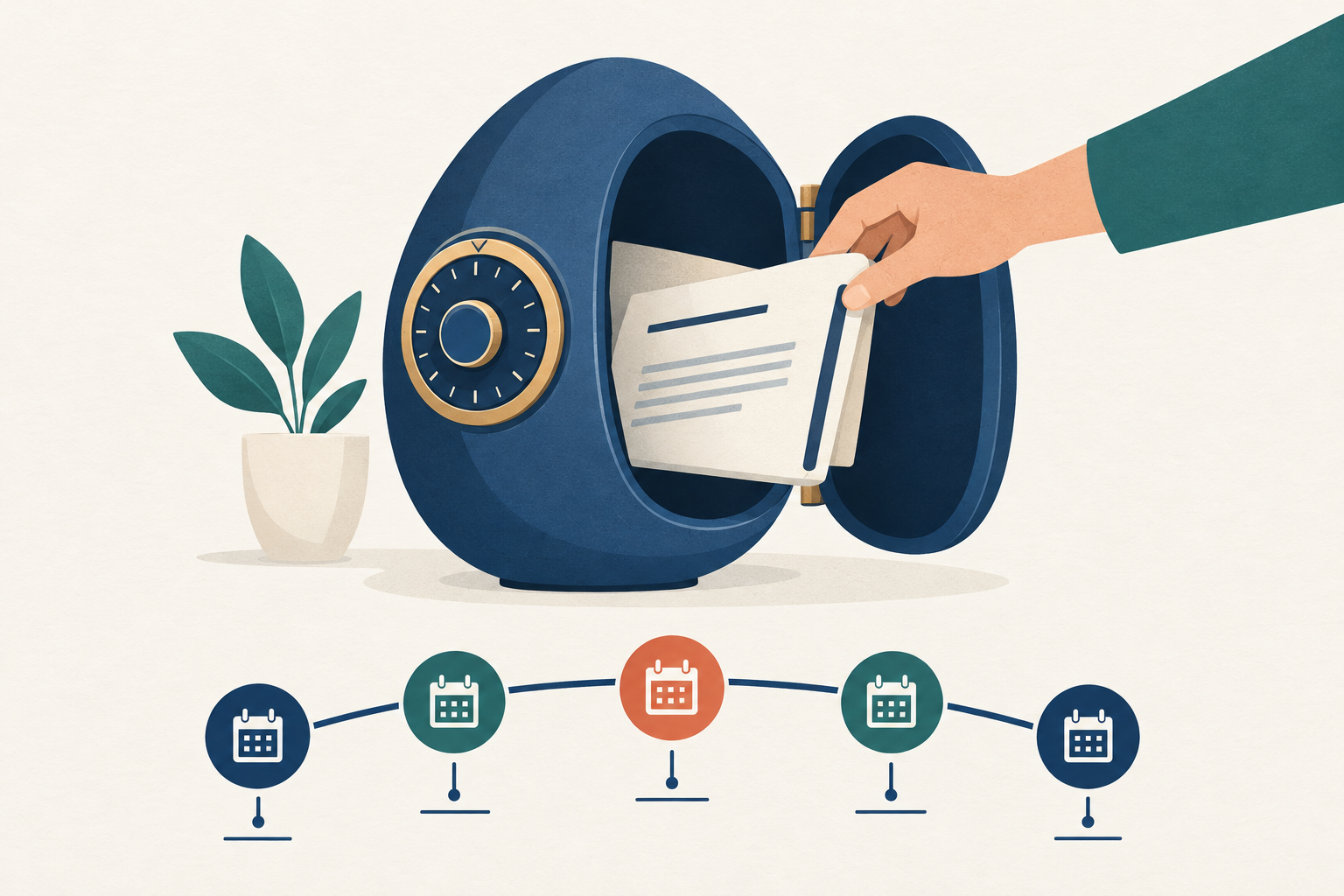
    Five-step flow diagram showing the IDO launchpad process from whitepaper publish through token vesting

    Launchpads such as Polkastarter, DAO Maker and Seedify sit between projects and buyers. They screen (lightly) the projects, run the allocation lottery and host the claim contract. The flow is similar across most of them.

    A typical IDO on a launchpad

    1. The project publishes a whitepaper, tokenomics and sale parameters: price, hard cap, vesting schedule.
    2. The launchpad opens an allowlist. Most require KYC, and most tier allocations by how much launchpad token you have staked.
    3. A lottery or guaranteed round assigns allocations, often $100 to $500 per wallet.
    4. On sale day you send USDC, ETH or SOL to the sale contract from your wallet.
    5. At the token generation event (TGE) the project adds liquidity to a DEX and unlocks a first tranche, often 10% to 25%.
    6. Remaining tokens vest over weeks or months, claimable from the launchpad contract.

    The staking requirement is the launchpad’s business model. To qualify for a decent tier you must buy and lock its native token, which means you are already exposed to one volatile asset before the sale begins.

    IDO vs ICO vs IEO

    Feature ICO (2017 style) IEO IDO
    Who runs the sale Project itself Centralized exchange DEX or launchpad
    Custody of your funds Project’s wallet Exchange account Your own wallet to a contract
    KYC Often none Exchange’s KYC Varies, usually launchpad KYC
    Day-one liquidity Not guaranteed Exchange listing DEX pool at TGE
    Typical vetting None Exchange due diligence Light launchpad screening

    The IDO model fixed the ICO’s worst problem, projects that raised millions and never listed anywhere. It did not fix the quality of the projects, and it added a new failure mode: a liquidity pool the team can drain.

    Memecoin launchpads: IDOs stripped to the bone

    A memecoin launchpad takes the IDO idea and removes the whitepaper, the allowlist and the team. Pump.fun on Solana is the best-known example. Anyone pays a small fee to mint a token, buyers purchase along a bonding curve that raises the price with each buy, and once the curve fills (a fixed SOL threshold) the launchpad moves liquidity to a DEX automatically.

    The pitch is fairness: no presale, no insider allocation, same curve for everyone. The reality is that bots and the creator’s own wallets often buy first and sell into the crowd. Research by on-chain analytics firms has repeatedly found that only a tiny fraction of tokens created on these platforms reach the DEX stage, and fewer still hold any value a month later. Treat a memecoin launchpad as entertainment spending, not investing.

    The risks, in plain terms

    Rug pulls. The team removes the liquidity it added at TGE, leaving holders unable to sell. Locked liquidity (verifiable on a third-party locker) reduces but does not remove this risk, since the team can still dump unlocked tokens.

    Soft rugs. Nobody steals anything. The team simply stops shipping, and the token drifts toward zero.

    Contract exploits. A honeypot contract lets you buy but blocks selling. A hidden mint function lets the deployer create unlimited supply. Neither shows up in a glossy website.

    Vesting cliffs. Private-round investors who paid a fraction of your price unlock their tokens on a schedule. Those unlock dates are sell pressure you can see coming if you read the tokenomics.

    Structural losses. Launchpad staking, gas fees, failed transactions during a gas war and slippage on a thin pool all cost money before the token moves at all.

    Some projects are outright fraud dressed as an IDO. If returns are promised, if referral rewards dominate the pitch, or if “staking yield” comes from new buyers, read about how a crypto “ponzi scheme” operates before sending anything. The same caution applies to launchpads selling NFT mints; our “nft explained” piece covers how those differ from fungible tokens.

    US rules: what is law and what is not

    The SEC has applied the Howey test to token sales since its 2017 DAO Report, and it has brought enforcement actions against ICO issuers including Kik and Telegram. A token sold to raise money for a project whose team promises to build value is a strong candidate for a security, whatever the sale is called. Most launchpads geoblock US IP addresses for exactly this reason, and some exclude US persons in their KYC flow.

    Two newer items matter, and we grade them carefully. In February 2025 the SEC’s Division of Corporation Finance issued a staff statement saying meme coins, as the staff defined them, are generally not securities. That is staff guidance, not a rule, not a court decision and not a safe harbor for the platforms that sell them. Separately, Congress has been working on market-structure legislation (the CLARITY Act passed the House in 2025) that would split oversight between the SEC and the CFTC. Until a bill is signed, that is a proposal, not law.

    Memecoin launchpads have also drawn private lawsuits in US federal courts alleging they sold unregistered securities. Those cases are unresolved, so we would not assume either outcome.

    IRS treatment of IDO tokens

    The IRS treats crypto as property under Notice 2014-21. Three taxable moments follow from that:

    Event Tax consequence
    Paying ETH or SOL into the sale Disposal of the ETH or SOL; gain or loss on it
    Receiving the new token Establishes cost basis (what you paid, in dollars)
    Selling or swapping the token Capital gain or loss, short-term if held a year or less

    Airdropped or reward tokens from a launchpad count as ordinary income at fair market value when you gain control of them, per Revenue Ruling 2023-14’s logic on staking rewards. Report sales on Form 8949 and Schedule D. Centralized brokers now issue Form 1099-DA, but DEXs and launchpads generally do not, since Congress repealed the DeFi broker reporting rule in April 2025. The reporting burden is on you, and wallet-level records are the only defense in an audit.

    FAQ

    What does IDO stand for?

    Initial DEX offering: a token sale conducted on a decentralized exchange or through a launchpad that lists the token on one at launch.

    Is an IDO legal in the United States?

    Running one is risky for the issuer if the token meets the Howey test, and most launchpads block US participants. Buying is not illegal for an individual, but you get none of the disclosures or remedies a registered offering provides.

    How much money do people put into an IDO?

    Launchpad allocations are usually capped between $100 and $500 per wallet, plus the cost of staking the launchpad’s token to qualify.

    Can I lose everything in an IDO?

    Yes. Tokens can go to zero through a rug pull, an exploit or plain failure, and no FDIC or SIPC coverage applies to crypto.

    What is a memecoin launchpad?

    A platform that lets anyone create and sell a token through a bonding curve with no vetting, no allowlist and no roadmap. It is the IDO model with every safeguard removed.

  • What is an installment loan and how does it work

    What is an installment loan and how does it work

    An installment loan is money you borrow in one lump sum and pay back in a set number of scheduled payments, usually monthly, until the balance hits zero. Mortgages, auto loans, student loans and most personal loans all work this way. The structure is simple, but the price ranges from under 10% APR at a credit union to triple digits at some online lenders, so the definition matters less than the math.

    StructureLump sum, fixed scheduled payments
    Common terms3 months to 30 years
    Typical personal loan size$1,000 to $50,000
    APR rangeUnder 10% to 160% or more
    Required disclosureAPR and total of payments
    Governing federal lawTruth in Lending Act

    Installment loan definition in plain words

    “Installment” just means a portion of a debt paid at an agreed time. When you borrow on installment, you agree to a fixed schedule: this much, on this date, for this many months. Each payment covers that month’s interest plus a slice of the principal. By the final payment the account closes.

    That is the core difference from a credit card or a line of credit. Those are revolving credit: you can borrow, repay and borrow again, and your payment changes with your balance. An installment loan is closed-end credit. You get the money once, and the lender tells you the exact payoff date before you sign.

    The term “installment buying” comes from the same idea. Retailers have sold furniture, sewing machines and cars on payment plans since the 1800s, and General Motors created its own finance arm, GMAC, in 1919 so buyers could pay for a car over time. Modern buy-now-pay-later plans split into four payments are the latest version of the same thing.

    How an installment loan works

    Flow diagram showing five steps of an installment loan cycle from application to closed account

    Here is the full cycle for a typical consumer installment loan:

    1. You ask a lender for a specific amount, say $2,000, over a specific term, say 24 months.
    2. The lender checks your credit, income and existing debts, then quotes an interest rate and any fees.
    3. Before you sign, the lender must give you a Truth in Lending disclosure. Under Regulation Z (12 CFR 1026.18), it must show the amount financed, the finance charge, the APR, the total of payments and the payment schedule.
    4. You receive the money, usually by deposit to your bank account within one to five business days.
    5. You make the same payment each month. Early on, most of it is interest. Later, most of it is principal. This is called amortization.
    6. After the last payment the loan is paid in full and reported as closed on your credit file.

    The APR is the number to compare. It is the yearly cost of the loan expressed as a percentage, and under the Truth in Lending Act it has to include interest as well as mandatory fees such as an origination charge. That is why two loans with the same interest rate can have different APRs.

    What the same $2,000 costs at different rates

    Rates on installment loans vary more than on almost any other consumer product. The table below shows the same $2,000 borrowed over 24 months at three rates you might actually be offered, plus a 6-month credit union payday alternative loan for a smaller amount. Figures are rounded to the nearest dollar and assume standard monthly amortization with no extra fees unless noted.

    Loan Amount APR Term Monthly payment Total repaid Cost of borrowing
    Credit union personal loan $2,000 12% 24 months $94 $2,260 $260
    Bank or online lender, fair credit $2,000 36% 24 months $118 $2,834 $834
    High-cost online installment loan $2,000 160% 12 months $343 $4,117 $2,117
    Federal credit union PAL (28% APR plus $20 fee) $1,000 28% 6 months $181 $1,103 $103

    The 160% figure is not hypothetical. Several online installment lenders disclose APRs in that range on their own rate pages, often by partnering with out-of-state banks to get around state caps. At that price you pay back more than double what you borrowed in a single year, and a longer term makes it worse, not better.

    Here is the plain-words version of the APR math. At 36% APR on a 24-month loan, you are paying roughly 3% of the outstanding balance in interest each month. In month one that is about $60 on a $2,000 balance. As the balance falls, the interest portion falls with it, which is why the total interest ($834) is less than 36% of $2,000 times two years ($1,440).

    Before you borrow

    The APR and the term decide what you really pay, and a low monthly payment can hide a very expensive loan. Always read the “total of payments” line on the Truth in Lending disclosure before you sign anything.

    Examples of installment loans

    Consumer installment loans cover a wide range of amounts and terms:

    • Mortgages: $100,000 and up, typically 15 or 30 years, secured by the home.
    • Auto loans: a few thousand to $50,000 or more, usually 36 to 84 months, secured by the vehicle.
    • Federal student loans: Direct Loans default to a 10-year standard repayment plan, with income-driven options that stretch much longer.
    • Unsecured personal loans: typically $1,000 to $50,000 over 1 to 7 years, from banks, credit unions and online lenders.
    • Credit union payday alternative loans (PALs): under NCUA rules, PAL I loans run $200 to $1,000 over 1 to 6 months, and PAL II loans run up to $2,000 over up to 12 months, both capped at 28% APR with an application fee of no more than $20.
    • Small-dollar online installment loans: $300 to $5,000 over 3 to 24 months, often at the highest APRs in the market.
    • Buy-now-pay-later plans: typically four payments over six weeks with no interest if paid on time, though late fees apply.

    A payday loan is not an installment loan in the traditional sense. It is a single balloon payment due on your next payday, usually at $15 per $100 borrowed, which the CFPB calculates at roughly 391% APR on a two-week loan. Some storefront lenders now sell “payday installment loans” that stretch the same pricing over months. Longer is not cheaper when the rate stays that high.

    Installment credit vs. revolving credit

    Feature Installment loan Revolving credit (credit card, line of credit)
    How you get money One lump sum Borrow as needed up to a limit
    Payment Fixed amount, fixed schedule Minimum payment that changes with the balance
    End date Set at signing None while the account stays open
    Rate Usually fixed Usually variable
    Credit score effect Payment history and credit mix Payment history and credit utilization

    For your credit score, both count heavily toward payment history, which FICO weights at 35% of the score. Installment loans do not affect credit utilization the way a card balance does, and having both types counts toward credit mix, which FICO weights at 10%. If you carry a card balance month to month, it is worth understanding how card interest compounds daily; our “credit card apr explained” article walks through that math.

    Pros and cons of installment loans

    Strengths

    • You know the exact payment and payoff date before you commit.
    • Fixed rates protect you if market rates rise.
    • A long term can make a large purchase affordable in monthly terms.
    • On-time payments build positive credit history.

    Weaknesses

    • You cannot re-borrow repaid money without applying again.
    • Origination fees of 1% to 10% are common on personal loans and come out of your proceeds.
    • Some lenders charge prepayment penalties, so paying early does not always save money.
    • A long term at a high APR can cost more in interest than the amount borrowed.
    • Secured loans put the car or home at risk if you fall behind.

    Where installment loans are capped or restricted

    State law, not federal law, sets most price limits on consumer installment loans, and the picture is uneven. Illinois caps consumer loans at a 36% all-in APR under its Predatory Loan Prevention Act, which took effect in 2021. New Mexico adopted a 36% cap on most small loans starting in 2023. Colorado voters capped payday loans at 36% in 2018. Several other states, including Delaware, Utah and Idaho, have no general rate cap on small installment loans, which is why triple-digit APRs are legal there.

    Many high-cost online lenders route loans through a partner bank chartered in a permissive state and argue that state’s rules apply. Courts and state attorneys general have challenged this “rent-a-bank” model with mixed results. The practical point for you: the rate you are offered depends on your state, and a lender that quotes 36% in one state may quote 160% in another.

    Cheaper options first

    Ask your local credit union about a personal loan or payday alternative loan; federal credit unions cap most loans at 18% APR under NCUA rules.
    Call your utility, landlord or medical provider about a hardship or payment plan before borrowing to pay them.
    Nonprofit credit counseling agencies and 211 can point you to local assistance for rent, food and utilities.

    If you are borrowing for a sudden bill, our guide on “loans emergency” compares those options in more detail. And if your credit is thin, be skeptical of “no credit check loans“; most lenders run a soft pull or use bank data, and the trade-off for skipping a hard credit check is usually a much higher price.

    Your rights when you take an installment loan

    • Truth in Lending Act / Regulation Z (12 CFR 1026): the lender must disclose the APR, finance charge, amount financed, total of payments and schedule before you sign.
    • Equal Credit Opportunity Act / Regulation B: a lender cannot deny you based on race, sex, marital status, age, religion, national origin or receipt of public assistance, and must tell you the specific reasons for a denial within 30 days.
    • Fair Credit Reporting Act: you can get a free credit report, dispute errors, and you are entitled to a notice if adverse information in your report led to worse terms.
    • Electronic Fund Transfer Act / Regulation E (12 CFR 1005.10(e)): a lender cannot require you to repay by automatic electronic debit as a condition of getting the loan.
    • Military Lending Act (32 CFR 232): active-duty servicemembers and their dependents cannot be charged more than 36% Military APR on most consumer loans, and the lender cannot require arbitration.
    • Servicemembers Civil Relief Act: interest on debts you took on before active duty is capped at 6% while you serve.
    • Fair Debt Collection Practices Act: if the loan goes to a third-party collector, that collector cannot harass you, call at unreasonable hours or misrepresent what you owe.

    How to check a lender before you sign

    1. Look the company up on NMLS Consumer Access and confirm it holds a consumer lending license in your state.
    2. Search the CFPB complaint database for the lender’s name and read how it responds.
    3. Find the APR and total of payments on the disclosure, and ask whether there is a prepayment penalty.
    4. Confirm the lender will report your payments to the credit bureaus if building credit is a goal.
    5. Walk away from any lender that asks for an upfront fee before funding; that is a classic advance-fee scam.

    If a lender breaks these rules, you can file a complaint with the CFPB, your state attorney general or state banking regulator, and the FTC through ReportFraud.

    FAQ

    What is an installment loan?

    An installment loan is a closed-end loan you receive as a lump sum and repay in fixed, scheduled payments over a set term. Each payment includes interest and principal, and the loan is paid off by a date set when you sign. Mortgages, car loans, student loans and personal loans are all installment loans.

    Are installment loans hard to get?

    It depends on the lender and your credit. Banks and credit unions typically want a FICO score in the mid-600s or higher and a manageable debt-to-income ratio. Online lenders will approve lower scores, but at higher APRs, sometimes above 100%. Credit union payday alternative loans require only that you have been a member for about a month and have a steady income.

    Is installment loan trustworthy?

    The product itself is standard, regulated credit. The lender is what you need to vet. A trustworthy lender is licensed in your state, shows the APR and total cost before you commit, never asks for money upfront, and reports to the credit bureaus. Check NMLS Consumer Access and the CFPB complaint database before you sign.

    What credit score is needed for an installment loan?

    There is no single minimum. Prime rates from banks generally start around a 670 FICO score, and the lowest advertised rates usually require 720 or higher. Scores in the 580 to 660 range can still qualify with many online lenders and credit unions, but expect APRs between 20% and 36%. Below 580, offers tend to be high-cost or secured. A denial must come with specific reasons under the Equal Credit Opportunity Act, so you will know what to fix.

  • Financial dispute resolution options for borrowers

    Financial dispute resolution options for borrowers

    Financial dispute resolution covers every method of settling a money disagreement short of a full trial: a written complaint, regulator mediation, private mediation, binding arbitration and small claims court. For most borrowers the cheapest and fastest route is a dated written dispute under the law that covers the product, followed by a complaint to the Consumer Financial Protection Bureau if the company stonewalls. Arbitration and court come last because they cost time and money, and your loan contract often decides which of the two you can use.

    Cheapest routeWritten dispute, no fee
    CFPB response target15 days
    Credit report dispute30-day investigation
    Small claims limits$2,500 to $25,000
    As ofOctober 2026

    What counts as a financial dispute

    A financial dispute is any disagreement with a lender, bank, card issuer, servicer, debt collector or broker about money you owe or money owed to you. Common borrower cases include fees charged that the contract never disclosed, payments applied late or lost, a loan reported inaccurately to the credit bureaus, and a debt collector chasing a balance you already paid or never owed.

    The amount in play is usually small, which is exactly why the process you choose matters. Here is what a typical disputed loan looks like.

    Amount Fee or APR Term Total repaid
    $500 payday loan $75 fee, about 391% APR 14 days $575
    Same loan, rolled over twice $225 in fees 42 days $725

    The APR math is plain: $75 on $500 is 15% for two weeks, and there are about 26 two-week periods in a year, so 15% times 26 is roughly 391%. If the lender rolled the loan without your consent, the extra $150 in fees is the sum in dispute, and that figure should drive how much time and money you spend recovering it.

    Before you borrow

    Most loan and card contracts contain a mandatory arbitration clause that waives your right to sue in court or join a class action. Read for it before signing, and check whether the contract lets you opt out in writing within 30 to 60 days.

    Route 1: A written dispute under the law that applies

    A four-step flow diagram showing the written dispute process: gather documents, send letter, await response, escalate if needed

    Federal consumer law gives you dated deadlines that force a response, and you need no lawyer to use them.

    • Credit card billing errors: under the Fair Credit Billing Act, write to the issuer within 60 days of the statement; it must acknowledge within 30 days and resolve the matter within two billing cycles, never more than 90 days.
    • Unauthorized or wrong electronic payments: under the Electronic Fund Transfer Act and Regulation E (12 CFR 1005), report within 60 days; the bank generally has 10 business days to investigate or must give provisional credit.
    • Credit report errors: under the Fair Credit Reporting Act, the bureau must investigate within 30 days, or 45 days if you send extra information.
    • Collection claims: under the Fair Debt Collection Practices Act and Regulation F, a written dispute within 30 days of the validation notice means the debt collector must stop collecting until it verifies the debt.

    Send every dispute by a method that gives you proof of delivery, keep copies of statements, contracts and screenshots, and date everything. Those documents become your case file for every later step.

    Route 2: Regulator complaints

    The CFPB complaint portal forwards your complaint to the company, which is expected to respond within 15 days, and if that initial response is not final, the company has up to 60 days to provide a final response. Banks answer to the Office of the Comptroller of the Currency, the Federal Reserve or the FDIC, credit unions to the National Credit Union Administration, and licensed lenders to your state regulator, whose license lookup also tells you whether the company is legally operating at all. Brokers and investment accounts fall under FINRA and the Securities and Exchange Commission.

    Route 3: Mediation

    Mediation is voluntary and non-binding; a neutral mediator helps both parties reach a settlement without ruling on who is right. FINRA runs a mediation program for investor disputes, the American Arbitration Association offers consumer mediation, and many counties have community mediation centers that charge little or nothing. If no deal emerges, you lose nothing but time and keep every other option.

    Route 4: Arbitration

    Arbitration is private and binding: an arbitrator hears both sides, reviews the documents and issues an award. Under the Federal Arbitration Act, a court will enforce that award and will vacate it only on narrow grounds such as fraud or arbitrator misconduct, so you get one real opportunity to present your evidence. AAA’s Consumer Arbitration Rules cap the consumer’s share of filing fees at a few hundred dollars and put the rest on the business, and FINRA’s simplified process for smaller claims is decided on documents alone with no hearing.

    Two groups keep their court rights no matter what the contract says. The Military Lending Act bans mandatory arbitration for active-duty servicemembers and their dependents, and the Servicemembers Civil Relief Act adds protections on rates and default judgments.

    Route 5: Small claims court

    Small claims court is for borrowers whose contract has no arbitration clause, who opted out, or who are being sued. Filing fees vary widely by state, from roughly $20 to $60 in Kentucky to $42 to $300 in Tennessee once local litigation taxes are added, lawyers are usually optional, and the dollar limit ranges from about $2,500 in Kentucky to $25,000 in Tennessee. Judges here will also apply state usury laws, which is why a lender that charged an illegal rate often settles rather than defend it.

    State availability

    A payday loan is banned or capped at 36% in roughly 20 states and the District of Columbia, so a lender collecting payday fees there has a weak position in any forum. Courts will generally strike an arbitration clause that explicitly waives your statutory rights under state lending law, but arbitration can still limit what you recover in practice by barring class actions, capping damages or restricting remedies, and arbitrators are not always bound to apply state law the way a judge would.

    Cheaper options first

    Start with a free written dispute and a CFPB complaint before paying any filing fee.
    Nonprofit credit counseling agencies and legal aid offices handle borrower disputes at no cost.
    Your state attorney general’s consumer office mediates many lender complaints for free.

    How to escalate a borrower dispute

    1. Send a dated written dispute citing the law that applies and keep proof of delivery.
    2. File a CFPB complaint if the deadline passes without a real answer.
    3. Report the company to the state regulator and check its license.
    4. Offer mediation in writing.
    5. Choose arbitration or small claims court based on the contract and the amount at stake.

    FAQ

    What are the three types of dispute resolution?

    Negotiation, mediation and arbitration. Negotiation is direct talks between the parties, mediation adds a neutral who helps but does not decide, and arbitration adds a neutral who issues a binding decision. Court litigation is the fourth, formal option.

    What happens after a dispute resolution hearing?

    The arbitrator issues a written award, which FINRA generally requires within 30 business days of the record closing. The losing party must pay or comply, and under the Federal Arbitration Act you have three months to ask a court to vacate the award on limited grounds.

    How much does it cost to hire a private FDR?

    “FDR” is mostly a UK family-court term. In the US, private mediators bill hourly and the parties usually split the cost, while community mediation centers and regulator programs are often free. Consumer arbitration fees are capped by the forum’s rules, with the business paying most of them.

    What is a financial dispute?

    Any disagreement over money with a lender, bank, servicer, collector or broker, from an undisclosed fee to an inaccurate credit entry. Most are resolved by a written dispute under federal consumer law, and only a minority ever reach arbitration or court.

  • Legit ways to make money fast, including some that pay today

    Legit ways to make money fast, including some that pay today

    Fast money is possible, but the honest version looks like selling things, working shifts that pay quickly, and claiming cash you already own. This list ranks 17 ways to make money fast by how soon the money hits your account, how much you can realistically clear, and what each one costs you. We also show what borrowing instead would cost, so you can compare before you decide.

    Fastest payoutsame day, in cash
    Realistic one-day range$50 to $500
    Typical gig app cash-out feeunder $2
    Payday loan APRabout 391%
    Credit union PAL APR cap28%
    As of2026

    Before you chase fast cash

    Any offer that asks you to pay first, deposit a check and send part of it back, or buy gift cards to “unlock” earnings is a scam. Real work never costs you money up front, and real payouts never need a fee to release them.

    How we ranked these

    We scored every method on four things. Speed to first dollar matters most for someone who needs rent money by Friday. Then we looked at the realistic amount a first-timer can clear in a week, the fees and taxes that eat into it, and the risk of wasting your time or getting scammed.

    Everything here is legal in all 50 states unless we say otherwise. Nothing requires a credit check, and nothing on this list is a loan except one pawn option that we flag clearly.

    Our top pick is selling things you already own, locally, for cash. It beats every app on speed, has no fees, and does not create a tax bill in most cases. The rest of the list fills in once your closet and garage are empty.

    Quick comparison

    # Method First payout Realistic first-week range The catch
    1 Sell items locally for cash Same day $50 to $500+ Buyers haggle and flake
    2 Donate plasma Same day (prepaid card) $100 to $400 as a new donor Health screening, twice-a-week limit
    3 Same-day shift apps 1 to 3 days $100 to $400 Shifts go fast, need photo ID
    4 Food and grocery delivery Same day with instant pay $100 to $500 Gas, car wear, small cash-out fee
    5 Sell gold, silver, jewelry Same day Depends on weight Buyers pay below melt value
    6 Pawn an item (a loan) Same day $20 to $300 typical High interest, you can lose the item
    7 Drive for Uber or Lyft 3 to 10 days $200 to $600 Approval takes days, car costs
    8 Odd jobs and TaskRabbit 1 to 7 days $100 to $400 Physical work, builds slowly
    9 Dog walking and pet sitting 2 to 7 days $50 to $300 Rover keeps 20%
    10 Babysitting Same day if local $60 to $300 Trust takes time to build
    11 Extra shifts or overtime Next paycheck Varies Only if your employer allows it
    12 Tutoring 1 to 7 days $50 to $300 Need a subject you can teach
    13 Online freelance work 5 to 14 days $0 to $500 Platform holds and fees
    14 Paid studies and opinions Same day to 2 weeks $20 to $150 Low hourly rate, screen-outs
    15 Resell online (eBay, Poshmark, Etsy) 3 to 14 days $50 to $400 Fees, shipping, slower
    16 Bank account bonuses 2 to 12 weeks $100 to $300 Direct deposit rules, taxable
    17 Claim money you are owed 2 to 12 weeks $0 to thousands Paperwork, waiting

    Ways that can pay today

    Flow diagram showing four steps from listing an item to receiving cash the same day

    1. Sell things you already own, locally, for cash

    This is the top pick because nothing else is this fast or this free. Facebook Marketplace, Craigslist, and OfferUp charge no fee for local pickup sales. You list in the morning, meet in a public place in the afternoon, and walk away with cash or an instant transfer.

    What sells the same day: working phones and laptops, game consoles, power tools, bikes, furniture, baby gear, and name-brand sneakers. Price 10% to 20% under the other listings in your area and say “pickup today” in the title. Buyers in a hurry search for that.

    Three safety rules. Meet at a police station lot or a busy store entrance. Take cash or a transfer you can see land in your own banking app before you hand over the item. Never accept a check or an overpayment request.

    Taxes are usually not an issue here. The IRS does not tax a loss, and most used household goods sell for less than you paid. If you sell a collectible or an item for more than you paid, that gain is reportable.

    2. Donate plasma

    Plasma centers pay on the day of your visit, typically to a prepaid debit card. Pay varies by city and company, but $30 to $100 per visit is the common range, and most centers run new-donor promotions that stack several hundred dollars across your first month.

    Under FDA rules in 21 CFR 630.15, you can donate plasma no more than twice in a seven-day period. You need a valid government photo ID, proof of address, and a Social Security number. First visits include a physical and a health questionnaire, so plan on two to three hours. Repeat visits take about an hour.

    Plasma pay is taxable income even though centers rarely send a tax form. Keep a simple record of what you received during the year.

    3. Same-day shift apps

    Apps like Instawork, Wonolo, and GigSmart list warehouse, event, catering, and cleaning shifts that start within hours. Many pay the day after the shift, some pay sooner, and the rates usually sit a few dollars above your state minimum wage.

    You will need a photo ID, a smartphone, and reliable transportation. Shifts fill fast, so turn on notifications and claim early. Some shifts classify you as a W-2 employee of the staffing company and some as an independent contractor. Check which one before you accept, because contractors owe self-employment tax and get no overtime.

    Local day-labor halls and temp agencies are the no-app version. Walk in early, bring ID, and ask about daily pay.

    4. Deliver food or groceries with instant cash-out

    DoorDash, Uber Eats, Instacart, and Amazon Flex all let you move earnings to a debit card the same day. DoorDash’s Fast Pay and Uber’s Instant Pay charge a small flat fee per transfer, usually under $2, while standard weekly deposits are free. Approval takes a few hours to a few days depending on how quickly the background check clears.

    Delivery pays best on Friday and Saturday evenings and during bad weather. Gross earnings of $15 to $25 an hour are common in busy metros. Subtract gas and wear on your car and the net is lower. The IRS standard mileage rate exists for exactly this, so track every mile from your first delivery to your last.

    Amazon Flex works a bit differently. You reserve delivery blocks, typically two to four hours, and pay goes out twice a week. It is slower to start but the pay per block is posted before you accept.

    5. Sell gold, silver, or jewelry

    Gold moves at the spot price, and buyers pay a percentage of melt value based on weight and purity. A reputable buyer tests the metal in front of you and quotes a price per gram. Get two or three quotes, because the spread between a local jeweler, a coin shop, and a mail-in buyer can be wide.

    Mail-in gold services pay slower and you lose leverage once the package is gone. Local coin shops usually pay the same day in cash or check. Never sell at a hotel “gold party” event.

    Sterling silver flatware, old class rings, broken chains, and single earrings all count. Gemstones usually add little unless they are certified.

    6. Pawn an item (this one is a loan)

    A pawn shop hands you cash the same day against an item you leave as collateral. No credit check, no income check. If you repay the loan plus interest within the term, usually 30 to 90 days, you get the item back. If you do not, the shop keeps it and the debt ends there. Nothing goes to your credit report either way.

    Pawn interest is set by state law and the range is huge, from a few percent a month in some states to much higher in others. Under the Truth in Lending Act and Regulation Z, the shop must give you a written disclosure of the finance charge and APR. Read it before you sign.

    Pawning is better than a payday loan only because the downside is capped at losing the item. Selling the item outright usually pays more than pawning it.

    Ways that can pay this week

    7. Drive for Uber or Lyft

    Rideshare pays more per hour than delivery in most cities, but it starts slower. You need a car that passes the company’s age and inspection rules, a clean driving record, and a background check that can take several days to clear. After that, instant cash-out works the same way it does for delivery.

    Airport runs, early mornings, and surge pricing after concerts and games move the needle. Full-time drivers in large metros report gross earnings in the $20 to $30 per hour range before expenses. Your real number depends on your city and how much you drive during slow hours.

    Rideshare background checks are consumer reports under the Fair Credit Reporting Act. If you are rejected based on the report, the company must send you a copy and a chance to dispute errors.

    8. Odd jobs through TaskRabbit, Nextdoor, and neighbors

    Moving help, furniture assembly, yard cleanup, snow shoveling, gutter cleaning, and junk hauling all pay the same day in cash or Venmo when you book directly with a neighbor. Post in your local Nextdoor or Facebook group with a short list of what you do and your rate.

    TaskRabbit adds structure and a steady flow of clients, but it takes a few days to get approved and the site collects payment and releases it after the task is complete. Taskers set their own hourly rates, and furniture assembly and moving help are the categories with the most demand.

    Bring your own tools, show up on time, and ask for a review. Three good reviews in your first week turn this into a reliable side income line.

    9. Walk dogs and pet-sit

    Rover connects you with owners who need dog walking, drop-in visits, and overnight boarding. The company keeps 20% of each booking and pays you two days after a service completes. Walks commonly run $15 to $30 and overnight boarding $30 to $75 a night, with you setting the price.

    Getting your first booking takes a few days because owners read profiles and want to meet you. Skip the app and ask neighbors directly if you need money sooner. Cat drop-ins while people travel are the easiest entry point.

    Boarding dogs in your home may violate a lease or a local ordinance, so check first.

    10. Babysit or do evening childcare

    Families pay in cash or by app the same night, and rates of $15 to $25 an hour are normal in most of the country, higher in big cities. Care.com and Sittercity list jobs, but the fastest route is telling every parent you know that you are available this weekend.

    Date-night sitting, school pickup, and overnight care for parents who work hospital shifts fill up first. A CPR certification from the Red Cross or American Heart Association takes a few hours and lets you charge more.

    11. Pick up extra shifts, overtime, or an employer advance

    The quickest raise is more hours at the job you already have. Under the Fair Labor Standards Act, nonexempt employees earn at least one and a half times their regular rate for every hour over 40 in a workweek. Ask your manager for open shifts, holiday coverage, or a temporary second role.

    Also ask payroll about earned wage access. Some employers let you draw part of your earned pay before payday at no cost. That is the cheapest advance in existence. If the option goes through a third-party app that charges express fees or asks for tips, treat it like the cash advance apps in our cost table below.

    12. Tutor a subject you know well

    Parents pay $25 to $50 an hour for in-person help with math, reading, SAT prep, and languages, and they pay by app or cash after each session. Wyzant, Varsity Tutors, and local Facebook parent groups generate leads. College students, teachers, and anyone with a technical background can start this week.

    Online tutoring platforms pay less per hour and hold payment for a week or more. Direct clients pay faster and you keep the whole rate.

    13. Freelance work online

    Upwork, Fiverr, and Freelancer.com let you sell writing, design, data entry, bookkeeping, video editing, and admin work from anywhere. The catch is speed. Upwork holds payment for days after a client approves a milestone, and both big platforms take a percentage of what you earn. Your first client can take a week to land and your first dollar two weeks.

    This is a stronger medium-term answer than a this-week answer. Price competitively on your first three jobs to collect reviews, then raise rates.

    Two scam red flags: a “client” who wants to move the conversation off the platform right away, and any job that sends you a check to buy equipment.

    14. Paid research studies, user tests, and opinions

    UserTesting pays about $10 for a recorded 20-minute website test, and live interviews pay more. Respondent and User Interviews list paid research sessions that often pay $50 to $150 for an hour, though you have to qualify through a screener. University psychology departments and medical schools run paid studies you can find through ClinicalTrials.gov and campus job boards.

    Survey sites that pay for your opinions are the weakest option here. Points add up slowly, cash-out minimums delay payment, and the effective hourly rate often lands below minimum wage. Use them while waiting for something better, not instead of it.

    Ways that pay in two to six weeks

    15. Resell online through eBay, Poshmark, or Etsy

    Online resale reaches more buyers than a local post, but money moves slower and fees take a slice. Poshmark keeps a flat $2.95 on sales under $15 and 20% on sales of $15 or more. Etsy charges a $0.20 listing fee plus a 6.5% transaction fee, then payment processing on top. eBay’s final value fee runs in the low to mid teens as a percentage in most categories, and payouts land in your bank a few days after the sale.

    Shipping, packaging, and returns add cost and time. Clothing, collectibles, electronics, and handmade goods do best. If you need money this week, sell locally first and move the leftovers online.

    16. Bank account bonuses

    Banks pay $100 to $300 to open a checking account and meet a direct deposit requirement within 60 to 90 days. Credit unions and regional banks often match the big names. Read the fine print for monthly fees, minimum balances, and how long you must keep the account open to avoid a clawback.

    The bonus is interest income and the bank sends you a Form 1099-INT if the total reaches $10. Bonuses are slow money, but they are nearly risk-free compared with everything else on this list.

    17. Claim money you are already owed

    Every state treasurer runs an unclaimed property database. Old utility deposits, forgotten bank accounts, uncashed paychecks, and insurance refunds sit there until someone claims them. Search your name at your state’s official site and at MissingMoney.com, which several states feed. Claims take weeks, but they are free.

    Check these too: a federal or state tax refund you never filed for, class action settlements at the official settlement site, a security deposit a landlord still owes you, and pay stubs for unpaid overtime. If you lost work, file for unemployment insurance the same week. Benefits are taxable but they are yours.

    How to vet any fast-cash offer in five minutes

    1. Search the company name plus “scam” and “FTC”.
    2. Confirm you never pay anything up front, including training or equipment.
    3. Refuse any job that sends you a check and asks you to forward money.
    4. Check how and when you get paid, in writing, before you start.
    5. Verify a lender on NMLS Consumer Access and your state regulator’s license lookup.

    If earning is not enough: what borrowing really costs

    Sometimes the number you need is bigger than what one week of hustle can cover. Compare the real cost of each quick borrowing option before you reach for one. The APR figures below use the standard formula: fee divided by the amount, divided by the days, times 365.

    Option Amount Fee or APR Term Total repaid
    Credit union payday alternative loan $300 28% APR plus $20 application fee 3 months About $334
    Credit card cash advance $300 5% fee plus about 30% APR 30 days About $322
    Cash advance app $100 $5 express fee plus $2 tip 10 days $107, about 256% APR
    Payday loan $300 $15 per $100 borrowed 14 days $345, about 391% APR

    The payday math in plain words: $45 on $300 is 15%. A 14-day term fits into a year about 26 times. Fifteen percent times 26 is roughly 391%. The CFPB uses this same example to explain why a payday loan is the most expensive line on the table, and its research found that most payday borrowers roll over or re-borrow within two weeks.

    Cash advance apps look cheap at $7 on $100 until you annualize it. The CFPB’s 2024 analysis of earned wage access products found an average APR above 100% once express fees and tips were counted, and heavy users took more than two dozen advances a year.

    Credit card cash advances have no grace period. Interest starts the day you take the cash, and most issuers charge a higher APR for advances than for purchases.

    The credit union loan wins on cost. The National Credit Union Administration caps payday alternative loans at 28% APR, with an application fee of no more than $20, amounts from $200 to $1,000, and terms of one to six months. You need to be a member, and some credit unions require a month of membership first.

    Cheaper options first

    Ask your employer about a no-fee pay advance before any app.
    Call utilities, landlords, and lenders for a hardship plan; many have one.
    Dial 211 for local rent, food, and utility assistance, and check LIHEAP and SNAP.
    A nonprofit credit counselor can set up a plan at little or no cost.

    Leave retirement money alone if you can. Pulling from a 401(k) or IRA before age 59½ triggers income tax plus a 10% additional tax under Internal Revenue Code Section 72(t) in most cases. A 401(k) loan, if your plan offers one, avoids the penalty but puts your retirement savings at risk if you leave the job and cannot repay quickly.

    State rules that change the picture

    Payday lending is not available everywhere. New York, Pennsylvania, New Jersey, Massachusetts, and a growing group of other states cap small-loan rates at or near 36% APR, which keeps storefront payday lenders out. Those caps come from state usury laws, and the ceiling is different in every state, so a lender that is legal in Texas can be a felony operation in New York.

    Plasma donation is legal in every state, but centers set their own age minimums, usually 18, and a few states require 19. Pawn interest rates and redemption periods are set state by state. Gig driving rules on minimum pay, insurance, and worker classification differ too, with California, Washington, and New York City each having their own regimes. Check your state before you count on a specific rate.

    Members of the military and their dependents get extra protection. The Military Lending Act caps most consumer loans at a 36% military APR, including payday loans and some cash advance products.

    Taxes on fast money

    The IRS taxes income from gig work, freelancing, plasma, tutoring, and resale profits, with or without a tax form. If your net self-employment earnings reach $400 for the year, you file Schedule SE and pay self-employment tax of 15.3% on top of income tax. If you expect to owe $1,000 or more, the IRS wants quarterly estimated payments.

    Tax forms are less common than people think. Under the tax law signed in July 2025, the Form 1099-K threshold for payment apps and marketplaces returned to $20,000 and more than 200 transactions. The same law raises the Form 1099-NEC threshold from $600 to $2,000 for payments made in 2026. Not getting a form does not make the income tax-free. It just means you have to track it yourself.

    Keep mileage, phone, and supply records. Those deductions are the difference between a gig that nets $18 an hour and one that nets $12.

    Your rights while earning fast

    Employees, including temp and shift-app workers paid on a W-2, are covered by the Fair Labor Standards Act. That means at least the federal minimum wage of $7.25 or your higher state minimum, overtime past 40 hours, and pay on the regular schedule your state requires. Unpaid wages can be reported to the Department of Labor’s Wage and Hour Division or your state labor agency.

    Independent contractors on gig apps have fewer protections, but a few still apply. Background checks run by Checkr or similar companies fall under the Fair Credit Reporting Act, so you get a copy of the report and a chance to dispute mistakes before you are deactivated. Deposits to a debit card are electronic fund transfers, and the Electronic Fund Transfer Act gives you the right to dispute errors with your bank within 60 days of the statement.

    If you borrow instead, the Truth in Lending Act requires a written disclosure of the APR and total finance charge before you sign. The Equal Credit Opportunity Act bars lenders from treating you differently because of race, sex, age, marital status, or because your income comes from public assistance.

    Report scams to the FTC at ReportFraud.ftc.gov and to the FBI’s Internet Crime Complaint Center. Complaints about lenders, cash advance apps, and debt collectors go to the CFPB’s complaint portal. The FTC’s 2024 fraud data showed reported losses topping $12.5 billion, with job and business opportunity scams among the fastest growing. Any “investment” that promises daily returns from a stranger online is almost always a ponzi scheme and should be treated as one.

    FAQ

    How to make $1,000 dollars ASAP?

    Stack the fastest items on this list. Sell electronics, tools, and furniture locally for $300 to $500 in a day, donate plasma twice in a week for roughly $100 to $150 at standard rates, more if a new-donor bonus applies, and run delivery or same-day shifts for the rest. One week is realistic for most people with a car and a closet full of things they do not use. Without a car, pair selling with shift apps and odd jobs for neighbors.

    How do I make money right now ASAP?

    Same-day cash comes from three places: selling something locally, a plasma center, and a pawn shop. Delivery apps pay the same day too once you are approved, which can take hours to days. Everything else on this list takes at least a day or two.

    How can I make $100 a day?

    Four to six hours of delivery during peak meal times clears $100 gross in most cities, before gas. Two dog walks and a drop-in visit on Rover get there. A single same-day warehouse or event shift at a few dollars above minimum wage usually lands close. Combining two of these is the most reliable path on days when one is slow.

    How to make $1,000 a day fast?

    No legitimate method on this list produces $1,000 in a day from a standing start. Selling a car, a high-end bike, or a watch can, but that is converting an asset, not earning. Anyone promising $1,000 a day from a phone, a course, or a crypto “opportunity” is selling the promise, not the income. Treat the claim as a red flag and report it if money is requested up front.

  • No credit check loans and how they work

    No credit check loans and how they work

    No credit check loans are small loans where the lender skips the hard inquiry at Equifax, Experian or TransUnion and decides based on your income, bank activity or collateral instead. They are real and legal in most states, but the price for skipping that check is steep: triple-digit APRs are normal, and the cheapest versions are not the ones advertised most loudly. This guide explains what lenders look at instead, what each type actually costs, where state law limits them, and which federal protections still apply to you.

    Typical payday APRaround 400%
    Typical loan size$100 to $1,500
    Credit checksoft pull or none
    Safer benchmark36% APR or less
    Banned or cappedabout 20 states plus DC
    As ofOctober 2026

    What “no credit check” really means

    The phrase does not mean nobody looks at you. It means the lender does not pull a traditional credit report with a hard inquiry, the kind that shows up on your file and can nudge your score down.

    Almost every lender that advertises no credit check for loans still runs some form of screening. The three common methods:

    • Soft inquiry. The lender views your credit file without recording a hard pull. Soft inquiries are visible only to you and do not affect FICO or VantageScore calculations.
    • Alternative data. Specialty consumer reporting agencies such as Clarity Services (owned by Experian), FactorTrust (owned by TransUnion) and Teletrack collect records on small-dollar borrowing, bounced checks and prior payday activity. The CFPB publishes a list of these companies each year, and the Fair Credit Reporting Act covers them the same way it covers the big three.
    • Bank account review. Cash advance apps and many online lenders connect to your checking account through a service like Plaid and read your deposits, balance history and overdrafts directly.

    So “no check credit loans” is more accurately “no hard pull loans.” A lender with a license still has to confirm you have income and a way to repay. A company that promises money with no questions at all is usually a scam, which we cover below.

    Hard pull vs soft pull: why lenders skip the hard one

    A hard inquiry stays on your credit report for two years, and FICO says it counts toward your score for 12 months, usually costing fewer than five points. Lenders skip it for two reasons. Hard pulls cost them money, and many of their customers have scores so low that the report would not change the decision anyway. The pricing already assumes a high default rate.

    What no credit check lenders look at instead

    What they check How they check it Why it matters to the lender
    Steady income Pay stubs, direct deposit history, employer verification Confirms a paycheck is coming before the due date
    Active checking account Bank login or voided check Needed to pull repayment automatically
    Specialty credit files Clarity, FactorTrust, Teletrack Shows other open payday or installment loans and defaults
    Prior loans with the same lender Internal records Repeat customers with clean records get bigger limits
    Collateral Car title, pawned item Lender can seize and sell it if you default
    Identity and residency ID, address, Social Security number Required by state licensing and federal anti-fraud rules

    Because specialty bureaus fall under the Fair Credit Reporting Act, you have the same rights there as with Experian. You can request your file, dispute errors, and the lender must send you an adverse action notice if a report is part of the reason for a denial.

    The five main types and what each one costs

    Two-column comparison chart showing no credit check loan types on the left and their key risk level on the right

    Every product below skips the hard inquiry. They differ enormously in price.

    1. Payday loans

    A payday loan is a single-payment loan, usually $500 or less, due on your next payday. The CFPB reports that fees typically run $10 to $30 per $100 borrowed, and that a common $15 fee per $100 for two weeks works out to an APR near 400%. The loan does not build credit because most payday lenders never report on-time payments to the big three bureaus. They do often report defaults.

    2. Online installment loans

    These spread repayment over three to twelve months with fixed payments. Lenders that skip hard pulls generally price them between roughly 100% and 300% APR depending on the state. Some report payments to the bureaus, which can help your score if you never miss one. The longer term makes each payment look manageable, but it also multiplies total interest.

    3. Cash advance apps

    Apps like Earnin, Dave, Brigit, Chime’s MyPay and EarnIn-style employer programs advance a slice of wages you have already earned, typically $20 to $750. They don’t run credit checks and instead read your bank deposits. Most charge no mandatory interest, but they make money from monthly subscriptions, optional tips and instant-transfer fees of a few dollars. Those small fees produce large APRs on short terms, which is why the CFPB proposed in July 2024 to treat paycheck advances as credit under the Truth in Lending Act. The agency withdrew that proposal in May 2025, so as of October 2026 there is no federal rule requiring these apps to show you an APR. Several states, including California, Connecticut, Kansas, Maryland, Nevada and Wisconsin, have passed their own earned wage access laws.

    4. Auto title loans

    You hand over your car title, keep driving, and borrow a fraction of the vehicle’s value for 30 days at a monthly fee that often equals 25%, or about 300% APR. In a 2016 study, the CFPB found that one in five single-payment title loan borrowers ended up having the vehicle repossessed. Title lending is banned or heavily restricted in more than half the states.

    5. Pawn loans

    A pawnshop lends you a portion of an item’s resale value, commonly 25% to 60%, and holds the item. Fees are set by state law, and in many states they translate to APRs well over 100%. The one genuine advantage: if you don’t repay, you lose the item and nothing else. No collections, no bank garnishment, nothing on your credit report.

    Worked cost examples

    The figures below use representative prices. Your lender’s Truth in Lending disclosure will show the exact APR and finance charge, which it must give you before you sign under Regulation Z (12 CFR 1026).

    Product Amount borrowed Fee or APR Term Total repaid Effective APR
    Payday loan $300 $15 per $100 14 days $345 391%
    Online installment loan $1,000 199% APR 9 months about $1,860 199%
    Cash advance app $100 $4 instant fee, no tip 10 days $104 146%
    Auto title loan $700 25% monthly fee 30 days $875 300%
    Pawn loan $150 20% monthly charge 30 days $180 240%
    Credit union PAL (for comparison) $500 28% APR plus $20 fee 6 months about $562 28% plus fee

    The APR math in plain words: divide the fee by the amount borrowed, then multiply by the number of loan periods in a year. On the payday example, $45 divided by $300 is 15%. A 14-day loan has about 26 periods in a year. Fifteen percent times 26 is roughly 391%. The same arithmetic turns a “small” $4 app fee into 146% because ten days fits into a year 36 times.

    If you want to understand why a 24% credit card looks cheap next to these, our piece on “credit card apr explained” walks through the same math for revolving balances.

    Before you borrow

    The real danger is not the first fee but the rollover: CFPB research found that most payday loan fees are paid by borrowers who take seven or more loans a year, and a single $45 fee repeated every two weeks costs more than $1,100 over a year on a $300 balance you never actually pay down.

    Where no credit check loans are banned or capped

    State law, not federal law, decides whether these products exist where you live and how much they can charge. There is no nationwide no credit check lending market. An online lender that is licensed in Nevada cannot legally charge Nevada rates to a borrower in New York.

    State approach What it means for you Examples
    Payday lending banned or capped near 36% APR Storefront payday loans don’t exist; online lenders must follow the cap or stay out Arizona, Arkansas, Colorado, Georgia, Illinois, Maryland, Massachusetts, Minnesota, Nebraska, New Jersey, New Mexico, New York, North Carolina, Pennsylvania, South Dakota, Vermont, West Virginia, Washington DC
    Payday allowed with limits Caps on loan size, number of rollovers, or a cooling-off period Washington, Florida, Ohio (since 2019 reform), Virginia (since 2021 reform)
    Payday allowed with few limits Triple-digit APRs and repeat rollovers are legal Texas, Utah, Nevada, Idaho, Missouri
    Title lending allowed 30-day title loans at around 300% APR Alabama, Georgia (as “title pawn”), Mississippi, Missouri, Nevada, Tennessee, Texas, Utah

    The count of states with a 36% cap has grown steadily. Illinois passed its Predatory Loan Prevention Act in 2021, New Mexico passed its 36% cap in 2022 with an effective date of January 1, 2023, and Minnesota’s cap took effect in 2024. Check your state’s current rule with its financial regulator before assuming a product you saw advertised is legal where you live.

    Tribal lenders and lenders using “rent-a-bank” arrangements sometimes claim your state’s cap does not apply to them. Courts and state attorneys general have challenged many of these structures. If a lender tells you a cap doesn’t apply, that’s a reason to be more careful, not less.

    Who a no credit check loan can make sense for

    We don’t recommend these products, but we also won’t pretend nobody has a rational reason to use one. A short-term advance can be the least bad option when all four of these are true:

    1. The expense is genuinely unavoidable, like a car repair you need to keep your job.
    2. You have confirmed income arriving before the due date that covers the full payment plus your normal bills.
    3. You have already been turned down for or cannot access the cheaper options below.
    4. You are borrowing once, with no plan to renew.

    A one-time $200 app advance with a $4 fee is a very different decision from a $700 title loan you expect to roll over. If you’re searching for “loans emergency” because the car won’t start tomorrow, the app advance or a pawn loan limits your downside. The title loan puts the car itself at risk.

    Cheaper options to check first

    Cheaper options first

    A federal credit union payday alternative loan caps APR at 28% and lends $200 to $2,000.
    Your employer, utility company and hospital may offer a no-fee advance or payment plan if you ask.
    Nonprofit credit counseling agencies and local assistance programs (211) cost nothing to call.

    Credit union payday alternative loans (PALs)

    Federal credit unions can offer two versions under NCUA rules (12 CFR 701.21). PAL I lends $200 to $1,000 for one to six months to members of at least one month. PAL II lends up to $2,000 for one to twelve months with no waiting period. Both cap the APR at 28% and the application fee at $20. Many credit unions make these without a hard pull, relying on your membership and income instead. You must be eligible to join the credit union, which is often as simple as living in its county.

    Employer and app advances with no fee

    Some employers offer earned wage access through payroll providers at no cost to you. Apps that charge nothing for standard transfers in one to three business days are also far cheaper than the instant option. Waiting two days can turn a 146% APR into 0%.

    Hardship plans and bill negotiation

    Utilities in most states must offer payment arrangements before disconnecting service. Hospitals that are nonprofits must have a financial assistance policy under IRS rules. Landlords, phone carriers and even the IRS offer payment plans. None of these involve a credit check.

    Secured and credit-builder products

    A secured credit card or a credit-builder loan from a credit union won’t fix tomorrow’s emergency, but either one gets you out of the no credit check market within a year. Credit-builder loans in particular report monthly to all three bureaus.

    Help with the pattern, not just the loan

    If you find yourself taking a new advance every pay period, the problem is usually the cash flow gap, not the lender. Nonprofit counseling through the National Foundation for Credit Counseling is free for a first session, and peer programs like “debtors anonymous” exist for people whose borrowing has become compulsive.

    Your rights when you borrow without a credit check

    Skipping the credit check does not skip the law. These federal protections apply whether the lender checked your credit or not.

    Truth in Lending Act and Regulation Z. Before you sign, the lender must disclose the APR, the finance charge in dollars, the amount financed and the total of payments. If you don’t see an APR, you cannot compare the loan and should walk away.

    Equal Credit Opportunity Act (Regulation B, 12 CFR 1002). Lenders cannot deny you based on race, sex, age, marital status, or because your income comes from public assistance. If denied, you get a written reason within 30 days.

    Fair Credit Reporting Act. If a specialty bureau report contributed to a denial, you must be told which one and can get that report free. You can dispute inaccurate items.

    Electronic Fund Transfer Act. Under 15 U.S.C. 1693k and Regulation E, a lender cannot require you to repay by preauthorized electronic debit as a condition of the loan. You can also revoke an authorization you gave, though you still owe the money.

    Military Lending Act. Active-duty servicemembers and their dependents cannot be charged more than a 36% Military APR, and payday, title and refund-anticipation loans at higher rates are simply unlawful for them. The Servicemembers Civil Relief Act separately caps interest at 6% on debts taken on before active duty.

    Fair Debt Collection Practices Act. Third-party collectors cannot threaten arrest, call you at work after you ask them to stop, or contact you before 8 a.m. or after 9 p.m. Defaulting on a civil debt is not a crime anywhere in the United States, no matter what a caller says.

    Federal rules set a floor. Your state may add rollover limits, a right to cancel by the next business day, a free extended payment plan, or a database that blocks a second loan while one is open.

    How to spot a scam lender

    Advance-fee loan fraud is one of the most common complaints the FTC receives, and “guaranteed approval” ads are its favorite bait. Under the FTC’s Telemarketing Sales Rule (16 CFR 310.4), it is illegal for a telemarketer to ask you to pay any fee in advance for a loan they promise or claim is likely. A real lender deducts fees from the loan or adds them to your payments. It never asks for a gift card, wire or crypto payment up front.

    Other red flags: no physical address, no state license number on the website, pressure to decide within minutes, and a request for your online banking password rather than a read-only connection. The claims behind “urgent loans guaranteed approval” ads deserve the same skepticism, because no licensed lender can lawfully approve a loan before it has seen an application.

    How to check a lender before you share your bank details

    1. Search the company name and NMLS ID on NMLS Consumer Access to confirm it holds a license for your state.
    2. Check your state financial regulator’s own license lookup, since some states license small lenders outside NMLS.
    3. Search the CFPB Consumer Complaint Database for the company name and read the most recent complaints.
    4. Confirm the website lists a street address, a phone number that answers, and a Truth in Lending disclosure with an APR.
    5. Report suspected fraud to the FTC at ReportFraud, the CFPB complaint portal, and your state attorney general.

    FAQ

    Can I borrow money without a credit check?

    Yes. Payday lenders, cash advance apps, pawnshops, title lenders and some credit unions all lend without a hard inquiry. Most still verify income and look at your bank activity or a specialty credit file, and the price is usually far higher than a loan that does check credit.

    Where can I borrow money without a credit check?

    The cheapest places are federal credit unions offering payday alternative loans at 28% APR or less, employer-sponsored wage advances, and apps that charge no fee for standard-speed transfers. Storefront payday and title lenders and online installment lenders are the most expensive, and they’re not legal in every state.

    What is the easiest loan to get approved for with no credit?

    A pawn loan is the easiest because approval depends only on the item you bring in. Cash advance apps are next, since they need only a checking account with regular direct deposits. Easiest does not mean cheapest, and pawn means losing the item if you can’t repay.

    Can I get a genuine loan without a credit check?

    Genuine, licensed lenders do offer no credit check loans, but they always ask for something: proof of income, bank access, or collateral. A lender that promises approval before seeing any information, or asks you to pay a fee before funding, is running a scam rather than a loan program.

    Do no credit check loans build credit?

    Rarely. Most payday, title and pawn lenders report nothing to Equifax, Experian or TransUnion when you pay on time. Some online installment lenders and most credit unions do report, so ask before you borrow if building a score is part of the goal.

    What happens if I can’t repay?

    With a pawn loan you lose the item and nothing more. With a title loan the lender can repossess the car. With payday and installment loans the lender may keep attempting debits, send the debt to collections, and in some states sue you. Ask about your state’s extended payment plan rules before the due date, since several states require lenders to offer one free of charge.

  • What a credit union is and how to become a member

    What a credit union is and how to become a member

    A credit union is a not-for-profit financial cooperative owned by the people who keep money in it, and joining usually takes one small deposit plus proof that you fit its membership rules. This explainer covers what a credit union is, who qualifies, what membership actually costs, the loan rate caps that make credit unions cheaper than many lenders, and the federal laws that protect you once you are a member.

    Ownershipmembers, one vote each
    Typical joining deposit$5 to $25
    Federal loan rate cap18% APR
    Payday alternative loan cap28% APR
    Deposit insurance$250,000 per member
    As ofOctober 2026

    What a credit union is

    The credit union definition in federal law is a cooperative association organized to promote thrift among its members and create a source of credit for provident purposes. That language comes from the Federal Credit Union Act, passed in 1934 and still the governing statute for every federally chartered credit union.

    In plain words, a credit union is a bank-like institution that its customers own. When you join, you buy one share, usually priced between $5 and $25, and that share makes you a part owner with one vote at the annual meeting. There are no outside shareholders. Any surplus goes back to members as lower loan rates, higher savings yields, fewer fees, or occasional bonus dividends.

    Credit unions offer most of what a bank does: checking (called a share draft account), savings (a share account), certificates (the credit union version of a CD), credit cards, auto loans, mortgages, personal loans and mobile banking. Many smaller ones also offer services banks rarely bother with, such as free financial counseling or small emergency loans.

    The National Credit Union Administration (NCUA) charters and supervises federal credit unions. State-chartered credit unions answer to their state regulator, and nearly all of them also carry NCUA insurance. NCUA data shows roughly 4,400 federally insured credit unions serving more than 140 million members as of 2025.

    Credit union vs bank: the differences that matter

    Feature Credit union Bank
    Who owns it Members Shareholders
    Profit goal Return value to members Return profit to investors
    Who can use it People who meet eligibility rules Anyone
    Deposit insurance NCUSIF, up to $250,000 FDIC, up to $250,000
    Federal cap on loan rates 18% APR for federal credit unions No federal cap for most loans
    Federal income tax Exempt Taxed
    Primary regulator NCUA or state regulator OCC, FDIC, Federal Reserve or state

    The tax exemption is real, and it is why credit unions can run thinner margins. Federal credit unions are exempt under Internal Revenue Code section 501(c)(1), and state-chartered ones under section 501(c)(14). The trade-off is that credit unions must restrict who can join, which brings us to eligibility.

    Who can join: the field of membership

    Every credit union has a “field of membership,” a set of rules approved by its regulator that says who is eligible. The Federal Credit Union Act allows three basic types.

    Single common bond. One employer, one union, one church, one association. The classic example is a credit union that serves employees of a hospital or a school district.

    Multiple common bond. Several unrelated groups under one roof. A credit union might serve employees of 300 different companies plus members of a dozen associations.

    Community. Anyone who lives, works, worships or attends school in a defined geographic area, often a county or a metro region. These are the easiest to qualify for if you live in the right place.

    Most credit unions also extend eligibility to the family of a member. “Family” is usually defined broadly to include spouses, parents, children, siblings, grandparents, grandchildren and anyone living in the member’s household. If your sister belongs, you likely qualify too.

    The association route

    Here is the part many people miss. A large share of credit unions include one or more associations in their field of membership, and some of those associations exist mainly so people can join. You pay a one-time membership fee or donation, often $5 to $20, to a nonprofit the credit union partners with, and that makes you eligible. The credit union will tell you on its eligibility page which associations count. Check the fee before you commit; you are paying it on top of the share deposit.

    Once a member, always a member

    Most federal credit unions adopt a bylaw provision that keeps you eligible even after you leave the employer, move out of the area or drop the association. As long as you keep your share account open with the minimum balance, your credit union membership continues for life. Ask about this before you join if you expect to move.

    How to become a member

    Five-step flow diagram showing the process to join a credit union: Find, Gather, Prove, Deposit, Add Services

    Joining is a short process, usually online, that takes about 15 minutes.

    How to join a credit union

    1. Find a credit union whose field of membership you fit, using the NCUA’s Credit Union Locator or the credit union’s own eligibility page.
    2. Gather a government photo ID, your Social Security number or ITIN, and a current address.
    3. Provide proof of eligibility if asked: a pay stub, an address in the service area, a relative’s membership, or an association receipt.
    4. Pay the par value share deposit, typically $5 to $25, into a savings account to open your membership.
    5. Add checking, a card or other services once the share account is open.

    Two things to know before step four. First, the share deposit is yours, but it usually has to stay in the account to keep your membership active. Second, many credit unions screen new members through ChexSystems or Early Warning Services, the same consumer reporting agencies banks use. Under the Fair Credit Reporting Act you can request a free copy of your ChexSystems report and dispute errors, which matters if a past overdraft is blocking you. Some credit unions offer a “second chance” checking account for people with a rough ChexSystems history.

    What membership costs

    The honest answer: usually almost nothing. The share deposit is refundable when you close the account. Monthly fees on basic checking are often zero, and when they exist they tend to be lower than at large banks. Where credit unions really separate from other lenders is on loan pricing, because of two federal caps.

    The Federal Credit Union Act sets a 15% ceiling on loan rates but lets the NCUA board raise it temporarily. The board has held the ceiling at 18% APR since 1987, renewing it in 18-month blocks. That cap applies to credit cards, personal loans and nearly every other loan a federal credit union makes. State-chartered credit unions follow their own state’s usury laws instead, which are often similar or stricter.

    The second cap covers Payday Alternative Loans, or PALs, which the NCUA created so members have a cheaper substitute for a payday loan. Under 12 CFR 701.21(c)(7), a PAL I is $200 to $1,000 with a one to six month term, and a PAL II is up to $2,000 with a one to twelve month term. Both carry a maximum APR of 28% and an application fee of no more than $20. PAL I requires one month of membership first; PAL II does not.

    A worked example: PAL vs payday loan

    Product Amount Fee or APR Term Total repaid
    Credit union PAL $500 28% APR plus $20 fee 6 monthly payments About $562
    Storefront payday loan $500 $15 per $100 borrowed (about 391% APR) 14 days $575
    Credit union personal loan $1,000 18% APR 12 monthly payments About $1,100

    Here is the math in plain words. At 28% APR, the monthly rate is 28 divided by 12, or about 2.33%. A $500 loan paid over six months works out to roughly $90 a month, so you pay around $42 in interest, plus the $20 fee, for a total near $562. The payday loan costs $75 for two weeks, which sounds smaller, but a $75 charge on $500 for 14 days is a 391% annual rate. If you roll it over twice, you have paid $225 in fees and still owe the original $500.

    A credit union credit card at the 18% cap compares the same way. If you want to see how that rate turns into a monthly charge, “credit card apr explained” walks through the daily interest math.

    Before you borrow

    A credit union loan is still a loan. Missing payments damages your credit report, and the credit union can take money from your share accounts to cover a defaulted balance, a right it reserves in most loan agreements. Borrow only what you can repay on schedule.

    Credit unions for military members

    Service members, veterans and their families have some of the largest fields of membership in the country open to them. Navy Federal Credit Union, the biggest credit union in the US by assets, serves active duty, reserve and retired members of every branch, Department of Defense and Coast Guard civilians, veterans, and their family and household members. Pentagon Federal Credit Union opens its doors to anyone who makes a small savings deposit, so military affiliation is not required. Service Credit Union, Andrews Federal Credit Union and Security Service Federal Credit Union also serve military communities and typically have branches on or near bases.

    A note on USAA: it is a bank and insurer, not a credit union, though it serves a similar population.

    Two federal laws add protection for military borrowers at any lender, credit unions included. The Military Lending Act caps the Military Annual Percentage Rate at 36% on most consumer credit extended to active duty service members and their dependents, and it bans mandatory arbitration on those loans. The Servicemembers Civil Relief Act caps interest at 6% on debts you took on before entering active duty, once you give the lender written notice and a copy of your orders.

    Cheaper options first

    Ask your credit union about a PAL before any payday or online installment loan.
    Many employers and some credit unions offer no-fee small advances or hardship plans.
    Nonprofit credit counseling agencies can set up a debt management plan at little or no cost.

    State availability and insurance

    Credit unions exist in every state and the District of Columbia, but the specific one you want may not serve your area. Community charters are geographic, so a credit union in Ohio generally cannot take a member in Texas unless that person qualifies through an employer, an association or a family tie.

    Insurance is the other state wrinkle. Every federal credit union is insured by the National Credit Union Share Insurance Fund, which covers up to $250,000 per member, per credit union, per ownership category, backed by the full faith and credit of the United States. Most state-chartered credit unions carry the same NCUA insurance. A small number of state credit unions in a handful of states are privately insured instead, with no federal backing. Those credit unions must disclose this at the branch and on their website under federal rules. Before you deposit, confirm NCUA coverage using the NCUA’s Research a Credit Union tool.

    Your rights as a credit union member

    Credit unions follow nearly the same consumer protection rules as banks.

    • Truth in Lending Act and Regulation Z (12 CFR 1026) require clear disclosure of the APR, finance charge and payment schedule on every loan and credit card.
    • Truth in Savings Act, applied to credit unions through NCUA regulation 12 CFR Part 707, requires disclosure of dividend rates, fees and minimum balances on share accounts.
    • Electronic Fund Transfer Act and Regulation E limit your liability for unauthorized debit card and electronic transactions when you report them promptly, and give you dispute rights.
    • Equal Credit Opportunity Act bars the credit union from denying you a loan based on race, sex, religion, national origin, age, marital status or receipt of public assistance.
    • Fair Credit Reporting Act governs how the credit union reports your accounts to credit bureaus and gives you the right to dispute errors.
    • Fair Debt Collection Practices Act does not usually cover the credit union collecting its own loans, but it does apply to any third-party debt collector the credit union hires.

    You also hold governance rights no bank customer has: one vote per member for the board of directors, the right to attend the annual meeting, and the right to nominate candidates.

    Where to complain

    For a federal credit union with under $10 billion in assets, file with the NCUA Consumer Assistance Center. Credit unions above $10 billion are supervised by the Consumer Financial Protection Bureau, which takes complaints about any credit union through its complaint portal. State-chartered credit unions answer first to the state regulator that chartered them. Suspected fraud goes to the FTC at ReportFraud and, for online scams, the FBI’s IC3.

    FAQ

    Can anyone join a credit union?

    Almost everyone can join some credit union, but not every credit union. Between community charters, family eligibility and association-based routes, most people can find at least one they qualify for. The restriction is on which credit union, never on whether you qualify for any.

    Is my money safe in a credit union?

    Yes, if the credit union is federally insured. The NCUSIF protects up to $250,000 per member per ownership category, the same level as FDIC coverage at a bank. Verify coverage on the NCUA website before you deposit.

    Does joining a credit union affect my credit score?

    Opening a share account does not involve a credit inquiry at most credit unions. Applying for a loan or credit card triggers a hard inquiry just as it would anywhere else.

    What does credit union membership cost per year?

    Usually nothing beyond the one-time share deposit, which stays in your account and is returned if you close it. Some accounts carry monthly fees if you fall below a minimum balance, so read the fee schedule the credit union must give you under Truth in Savings rules.

    Can I keep my membership if I change jobs?

    At most credit unions, yes. The common “once a member, always a member” bylaw keeps your membership active as long as your share account stays open with the minimum balance.

  • Credit cards for bad credit and what to expect

    Credit cards for bad credit and what to expect

    You can get a credit card with a FICO score under 580, and the cheapest route is almost always a secured card with no annual fee and a $200 deposit. Unsecured cards marketed to people with bad credit usually cost $75 to $200 or more in first-year fees for a $300 limit, and the fees eat part of that limit before you spend a dollar. This ranking puts the lowest-cost options first and explains what each one really charges, what the law caps, and how to use any of them to move your score up.

    Bad credit FICO range300 to 579
    Cheapest optionno-fee secured card
    Typical starting deposit or limit$200 to $300
    Unsecured first-year fees$75 to $200 plus
    Federal fee cap25% of initial limit

    Before you apply

    The biggest risk with a bad-credit card is paying for credit you barely get: a card with a $300 limit and $170 in year-one fees leaves you $130 to spend and a new bill to miss. A missed payment on a card meant to rebuild your credit does more damage than having no card at all.

    What “bad credit” means to a card issuer

    Issuers do not use the phrase “bad credit” in their underwriting. They use score bands and the details inside your credit reports. FICO, whose scores most card issuers pull, publishes these ranges on its own site. VantageScore, used by many free score apps, labels the bands differently, which is why your “free score” and the score an issuer sees can land in different categories.

    Score band FICO 8 range VantageScore 4.0 range What card issuers typically offer
    Poor / Very Poor 300 to 579 300 to 600 Secured cards, high-fee unsecured cards
    Fair 580 to 669 601 to 660 Secured cards, some no-fee unsecured starter cards
    Good 670 to 739 661 to 780 Most mainstream cards
    Very Good / Excellent 740 to 850 781 to 850 Premium rewards cards, lowest APRs

    The score is only half the story. Two people with a 560 can get very different answers. A 560 caused by a single charged-off account from four years ago reads differently from a 560 with three accounts 60 days late right now. Issuers also look at recent inquiries, open collections, bankruptcy dates and whether you have any history at all. Someone with no credit file is a different case from someone with damaged credit, even though both get pushed toward the same cards.

    Under Regulation Z (12 CFR 1026.51), an issuer must also consider your ability to make the required minimum payments before opening the account. That is why every application asks for income. You can include income you have “reasonable expectation of access to,” which for most adults means wages, benefits, retirement income and, if you are 21 or older, a spouse’s or partner’s income you regularly use.

    The ranking, cheapest first

    We ranked by total first-year cost for a cardholder who pays in full, then by what happens if you carry a balance, then by how the card helps you move on to something better. Every option below reports to all three national credit bureaus. If a card does not report to Equifax, Experian and TransUnion, it cannot rebuild your credit, no matter what the marketing says.

    1. Secured cards with no annual fee

    A secured card holds a cash deposit as collateral. Your deposit normally becomes your credit limit. Put down $200, get a $200 limit. The deposit sits in an account at the bank and comes back to you when you close the card in good standing or when the issuer “graduates” you to an unsecured card.

    Discover’s published terms for the Discover it Secured list no annual fee, a $200 minimum deposit, 2% cash back at gas stations and restaurants on up to $1,000 in combined purchases each quarter, 1% on everything else, and automatic account reviews beginning at seven months to see if you qualify to get your deposit back. Capital One’s Quicksilver Secured, by the issuer’s disclosure, carries no annual fee, a $200 deposit and 1.5% cash back on purchases. Both carry variable purchase APRs near 30% at the time of writing, which only matters if you carry a balance.

    Strengths: zero fees if you pay in full, a deposit you get back, rewards on a card that most people with a 520 can qualify for, and a built-in path to an unsecured card from the same issuer.

    Weaknesses: you need $200 in cash you can live without, the APR is high, and Discover and Capital One still check your credit report. A recent bankruptcy that has not been discharged, or an unpaid balance owed to the same issuer from a prior charged-off card, can get you declined even for a secured product.

    2. Secured cards with a reduced deposit

    Capital One’s Platinum Secured is the main card in this category. Capital One’s disclosure states that, depending on your creditworthiness, a deposit of $49, $99 or $200 gets you an initial $200 credit limit. You can add deposits up to a $1,000 limit before the account is opened. There is no annual fee, and the issuer says it automatically considers you for a higher limit after six months.

    Strengths: the lowest cash outlay of any mainstream secured card, no annual fee, no foreign transaction fee.

    Weaknesses: no rewards, and the smaller deposit tiers are assigned by the issuer, not chosen by you. Many applicants with scores below 550 are assigned the full $200 deposit anyway.

    3. Credit union secured cards

    Credit unions are nonprofit, member-owned, and regulated by the National Credit Union Administration, which caps the interest rate federal credit unions can charge at 18% (the NCUA board has extended that temporary ceiling repeatedly; it is scheduled through at least September 2026 under the most recent extension). Many federal credit unions offer secured cards with APRs in the 12% to 18% range and no annual fee, roughly 10 to 15 percentage points below the big banks’ secured cards.

    Strengths: the lowest APR you will find anywhere in this category, plus a relationship with a lender that also offers payday alternative loans and small personal loans later.

    Weaknesses: you must qualify for membership, which can require living in a county, working for an employer, or joining an association. Credit union secured cards often have smaller rewards programs or none, and some require a $250 or $500 deposit instead of $200. Online application systems at smaller credit unions can be clunky.

    4. Deposit-free builder cards tied to a checking account

    Chime’s Credit Builder Visa works differently from a classic secured card. There is no credit check and no annual fee, and Chime states the card has no interest because you can only spend money you have already moved into the Credit Builder account. The card is issued by Stride Bank, N.A., Member FDIC. The catch is that you need a Chime Checking Account with a qualifying direct deposit of at least $200 to open it.

    Strengths: no fees, no interest, no hard inquiry, reports to all three bureaus, no fixed $200 deposit upfront.

    Weaknesses: utilization reporting is unusual. Chime reports the balance but does not report a traditional credit limit, which some scoring models treat as a zero limit and some ignore. You have to move your banking to a fintech, and if your employer’s direct deposit setup changes, so does your eligibility.

    5. No-credit-check secured cards with a small annual fee

    OpenSky’s Secured Visa does not pull your credit report at all. The issuer’s disclosure lists a $35 annual fee and a $200 minimum deposit. OpenSky also offers a Plus version with no annual fee but a $300 minimum deposit. First Progress secured cards from Synovus Bank charge annual fees in the $29 to $49 range depending on the version, with the higher-fee versions paired with lower APRs.

    Strengths: approval does not depend on your score, so these work for people with a bankruptcy that was discharged recently, a fresh charge-off, or an active collection that would block a Discover or Capital One application.

    Weaknesses: $35 to $49 a year for a card that is otherwise identical to a free secured card. You are paying the fee to skip the credit check, so only do that if you have actually been declined for the no-fee options or know your report has a recent bankruptcy.

    6. Unsecured “starter” cards with a $0 to $59 annual fee

    Mission Lane’s Visa is the clearest example here. Its published terms list an annual fee of $0 to $59, set at the time of approval based on your profile, and a variable APR in the high 20s to mid 30s. Initial limits run $300 to $1,000, and the issuer reviews accounts for limit increases after as little as seven months of on-time payments. Similar cards exist from several fintech partners of Celtic Bank, Sutton Bank and WebBank.

    Strengths: no deposit, limits that can start above $300, and some versions with no annual fee at all.

    Weaknesses: you have no control over which fee tier you get until after approval. The APR is punishing if you carry a balance, and many of these cards offer no rewards. These issuers decline more applicants in the 500 to 550 range than the secured cards do.

    7. High-fee unsecured cards for terrible credit

    This is the category where the ads say “$1,000 credit limit” and “instant approval.” The cards include Indigo and Milestone (Celtic Bank, serviced by Concora Credit), PREMIER Bankcard (First PREMIER Bank), Fortiva and Aspire (The Bank of Missouri), and Reflex, FIT and Surge (Celtic Bank, serviced by Continental Finance). Every one of them is a legitimate, licensed bank product. Every one of them is also the most expensive way to get a credit card.

    A representative fee stack, drawn from these issuers’ published cardholder agreements, looks like this:

    Fee type Typical range disclosed When it is charged
    Program or processing fee $55 to $95 one time Before the account opens, so not counted in the 25% cap
    Annual fee, year one $75 to $175 Charged to the card on opening, reduces available credit
    Annual fee, year two onward $45 to $125 Billed on the anniversary
    Monthly servicing or maintenance fee $6.25 to $12.50 per month Often waived in year one, then charged monthly
    Credit limit increase fee Up to 25% of the increase When the issuer raises your limit
    Purchase APR 29.99% to 36% On any balance carried past the due date

    Strengths: these issuers approve people the other six categories reject, including applicants with multiple active collections, a score in the 400s, or a bankruptcy in the past year.

    Weaknesses: the fees. A $300 limit with $170 in combined first-year fees is $130 of usable credit at a cost that, expressed as a percentage, would embarrass a payday loan storefront. Limit increases cost money. Customer service complaints about these issuers, in the CFPB’s public complaint database, cluster around fees the cardholder says were not clear and difficulty closing the account.

    If you are considering one of these, read the fee table in the Schumer box on the application page, add the program fee to the first-year annual fee, and subtract the total from the credit limit. That number is what the card actually lets you spend in month one.

    What a bad-credit card really costs

    The APR on these cards only bites if you carry a balance, and the fees only bite if you choose a card that has them. The table below shows four realistic first-year scenarios. The APRs are stated rates used for illustration, not a quote from any issuer.

    Scenario Amount used Fees APR and payment Interest paid Total repaid Cost of credit
    No-fee secured card, paid in full monthly $300 per month $0 29.99%, paid in full $0 $300 per month $0
    No-fee secured card, balance carried $500 once $0 29.99%, $50 per month about $83 about $583 over 12 months $83
    Unsecured starter card with $75 annual fee, balance carried $200 once $75 35.99%, $25 per month about $32 about $307 over 10 months plus $75 fee $107
    High-fee unsecured card, paid in full monthly $130 per month (what is left of a $300 limit) $95 program fee plus $75 annual fee 36%, paid in full $0 $130 per month plus $170 in fees $170

    Here is the plain-words math on the second row. A 29.99% APR means the issuer charges roughly 2.5% of your balance each month (29.99 divided by 12). On $500, that is about $12.50 in the first month. As you pay the balance down, the monthly interest shrinks, which is why the total comes to around $83 rather than $150. If you only paid the minimum, usually $25 or 3% of the balance, the payoff would stretch past three years and the interest would top $200. We walk through the full calculation in “credit card apr explained.”

    The fourth row is the one that matters for anyone searching for a credit card for the worst credit. You pay $170 to get $130 of spending room, with zero interest because you paid in full. Expressed as a percentage of the credit you actually received, that is a 131% charge in year one. A secured card gives you $300 of room for $0, and your deposit comes back.

    Cheaper options first

    A no-fee secured card from Discover, Capital One or a credit union costs nothing if you pay in full.
    Becoming an authorized user on a relative’s long-standing, low-balance card adds history for free.
    A credit union payday alternative loan, capped at 28% APR by the NCUA, covers a cash need without a fee-heavy card.

    The federal fee cap and what it leaves out

    The Credit Card Accountability Responsibility and Disclosure Act of 2009, implemented in Regulation Z at 12 CFR 1026.52(a), limits the fees an issuer can charge during the first year after an account opens to 25% of the initial credit limit. On a $300 limit, that is $75. The cap covers annual fees, monthly maintenance fees and similar account charges.

    Two gaps make the cap weaker than it sounds. First, late fees, over-the-limit fees and returned payment fees are excluded. Second, the CFPB amended the rule in 2013, after litigation brought by First Premier Bank, so that fees paid before the account opens do not count. That is why “program fees” and “processing fees” are collected before your card is issued: a $95 program fee plus a $75 annual fee on a $300 limit is legal because only the $75 lands inside the capped window.

    Late fees have their own federal rule. Regulation Z limits penalty fees to a “safe harbor” amount the CFPB adjusts for inflation, long set at $30 for a first late payment and $41 for another within six billing cycles; in March 2024 the CFPB issued a final rule cutting that safe harbor to a flat $8 for larger card issuers. The CFPB’s 2024 rule that would have cut large issuers’ late fees to $8 never took effect; a federal court in Texas vacated it in April 2025. So expect the $30 and $41 figures to apply, and expect a late payment to also raise your APR to a penalty rate on many subprime cards.

    If you or your spouse is on active duty, the Military Lending Act caps the total cost of consumer credit, including most fees, at a 36% Military Annual Percentage Rate. Several of the high-fee cards in category seven cannot be sold to covered borrowers on their standard terms. Issuers check the Defense Department’s database at application, but it never hurts to ask.

    The credit limit you will actually get

    Advertised limits are ceilings, not promises. In practice:

    • Secured cards: your deposit, usually $200 to $1,000, with some issuers allowing up to $2,500 or $5,000 if you can fund it.
    • Unsecured starter cards: $300 to $1,000 at opening, with $300 to $500 most common for scores under 580.
    • High-fee unsecured cards: $300 to $700 at opening. The “$1,000 credit limit” in the card’s name is a maximum reached after fee-paid increases and on-time history.

    The limit matters for your score because of utilization, the share of your available credit you are using. Scoring models reward balances under about 30% of the limit, and the best outcomes show up under 10%. On a $300 limit, that means keeping the reported balance under $90, and ideally under $30. The reported balance is whatever shows on your statement date, not what you owe at the due date. Paying most of the balance a few days before the statement closes keeps the reported number low even if you use the card heavily during the month.

    Graduation is the other reason limits matter. Discover reviews secured accounts from month seven. Capital One reviews Platinum Secured accounts at six months. Mission Lane reviews at seven months. An unsecured graduation from the same issuer gets you a higher limit without a new hard inquiry, and it keeps the account’s age, which is worth more to your score than a brand-new card.

    Using the card to raise your score

    Flow diagram showing four steps to rebuild credit: make small purchase, pay in full, bureau reports, score improves

    Payment history is 35% of a FICO score and utilization is about 30%, so a rebuilding card has exactly two jobs: pay on time every month, and keep the balance low. Everything else is optional.

    A rebuilding routine that works

    1. Set up autopay for at least the minimum the day the account opens, so a forgotten due date can never create a late mark.
    2. Put one small recurring charge on the card, such as a $15 streaming subscription, and nothing else for the first three months.
    3. Pay the full statement balance each month. Interest on these cards runs 25% to 36%, so carrying a balance costs more than any reward earns.
    4. Pull your free reports at AnnualCreditReport.com, which the Fair Credit Reporting Act entitles you to weekly, and confirm the new account appears at all three bureaus with the correct limit.
    5. At month six or seven, ask the issuer about a limit increase or graduation before applying anywhere else.

    Do not apply for three or four cards in a week hoping one sticks. Each application creates a hard inquiry, and FICO says a single inquiry typically costs fewer than five points, but a cluster of them on a thin, damaged file reads as desperation to the next underwriter. Pick the one card you are most likely to get, usually a secured card, and stop there.

    State availability and where to look

    Secured cards from Discover, Capital One and the big banks are offered in all 50 states and the District of Columbia. Credit union cards depend on the credit union’s field of membership, which can be a single county. Fintech-partnered cards sometimes exclude a handful of states; the exclusions appear in fine print on the application page, and they shift as issuers change bank partners, so check the current page rather than a review.

    The high-fee unsecured issuers in category seven route their cards through banks chartered in Utah, South Dakota and Missouri, states with no usury cap, which under federal law lets the bank export its home-state rate nationwide. That is why a 36% APR card can be sold to you in a state that caps small loan rates at 18%. Your state’s cap on a payday loan does not apply to a bank-issued credit card.

    If you were turned down everywhere, your state regulator’s license lookup, the FDIC’s BankFind tool and NMLS Consumer Access are the right places to confirm that any issuer you have not heard of is a real, supervised bank or a licensed partner before you share a Social Security number.

    Your rights as a bad-credit cardholder

    The same federal laws cover a $300 subprime card and a $30,000 premium card.

    Under the Truth in Lending Act and Regulation Z (12 CFR 1026), the issuer must give you the Schumer box before you apply, 45 days’ notice before raising your APR or fees on an existing account, and the right to reject a rate increase and pay off the balance under the old terms. The issuer cannot raise the APR on an existing balance in the first year unless you are 60 days late, and it must apply payments above the minimum to the highest-rate balance first.

    Under the Equal Credit Opportunity Act, a denial must come with a written adverse action notice within 30 days that states the specific reasons, such as “delinquent past or present credit obligations” or “insufficient income.” Under the Fair Credit Reporting Act, that notice must also tell you which bureau’s report was used, give you the score the issuer saw, and remind you that you can get a free copy of that report within 60 days. Read those reasons. They tell you exactly what to fix.

    Under the Electronic Fund Transfer Act and Regulation E, if you set up autopay from a checking account, you can stop a recurring debit by notifying your bank at least three business days before the scheduled date, and the issuer cannot condition approval on autopay.

    If an account charges off and goes to a debt collector, the Fair Debt Collection Practices Act controls how that collector can contact you, what it must disclose, and your right to dispute the debt in writing within 30 days of its first notice. We cover the details in “debt collector.”

    Complaints go to the CFPB’s consumer complaint portal, which forwards them to the issuer and requires a response within 15 days in most cases. For a suspected scam, the FTC’s ReportFraud site and the FBI’s IC3 portal take reports.

    Red flags that separate a card from a scam

    Every legitimate card for low credit scores is issued by an FDIC-insured bank or an NCUA-insured credit union, and that name appears in the Schumer box. Watch for these signs that something is wrong:

    • Any request for a fee paid by gift card, wire, cash app or crypto before approval. Real issuers charge program fees to the card or to a debit card after approval.
    • “Guaranteed approval” paired with a request for your Social Security number before you see any terms. The same language shows up in “urgent loans guaranteed approval” marketing for a reason.
    • A card that does not name its issuing bank, or names a bank you cannot find in FDIC BankFind.
    • A “card” that only works at one online store, sometimes called a merchandise or catalog card. These rarely report to the bureaus in a way that helps.
    • A monthly “credit repair” subscription bundled with the application. Under the Credit Repair Organizations Act, a credit repair firm cannot collect payment before it has performed the service.

    FAQ

    What is the easiest card to get with bad credit?

    A no-credit-check secured card is the easiest, because approval depends on your deposit rather than your score. OpenSky and Chime’s Credit Builder fall into that group, and OpenSky charges $35 a year for the privilege. The easiest card with a credit check is usually a secured card from Capital One or Discover, which approve many applicants in the 500 to 580 range who do not have a pending bankruptcy or a prior charge-off with the same bank.

    Can I get a $1,000 credit card with bad credit?

    Yes, through a secured card where you deposit $1,000; Capital One’s Platinum Secured allows deposits up to that amount before opening. Some unsecured cards that put “$1,000 credit limit” in their name, such as the Milestone Mastercard $1,000 Credit Limit, open at the full $1,000 for approved applicants, while others, such as the Surge Mastercard, open anywhere from $300 to $1,000 and carry an annual fee that can equal 25% of the minimum $300 limit. If you need $1,000 of credit on day one with a score under 580, the deposit route is the only reliable one.

    What credit card can I get with a 500 score?

    A 500 FICO score sits at the low end of the “poor” band. Realistic options are secured cards (Discover it Secured, Capital One Platinum Secured, a credit union secured card), no-credit-check secured cards (OpenSky), deposit-free builder cards (Chime Credit Builder), and the high-fee unsecured cards from issuers such as First PREMIER Bank and Celtic Bank. Mainstream unsecured cards and most no-fee starter cards decline at 500. If there is a recent bankruptcy or an unpaid charge-off on your report, start with the no-credit-check secured options.

    How to get $2,000 dollars fast with bad credit?

    A credit card is the wrong tool for this. No bad-credit card opens with a $2,000 limit unless you deposit $2,000, and cash advances on these cards carry fees of 3% to 5% plus interest from day one. Safer routes for a cash need: a credit union payday alternative loan ($200 to $2,000, APR capped at 28% by NCUA rule, membership required), a hardship plan or advance from your employer, a no-fee earned wage access app, a nonprofit credit counseling agency’s hardship referral, or local assistance through 211. A payday loan will produce $2,000 only in a handful of states and at APRs near 400%, so it belongs at the bottom of the list.

    Will a secured card hurt my score when I open it?

    The hard inquiry can shave a few points for a few months, and a brand-new account lowers your average account age. Both effects are small and fade. Within six months of on-time payments and low reported balances, most people with damaged credit see a net gain, because the new positive history and lower utilization outweigh the inquiry.

    Should I close a high-fee card once I qualify for something better?

    Usually yes, once the better card is open and you have confirmed it is reporting. The high-fee card’s annual and monthly fees will keep arriving, and the account’s age, typically a year or two at that point, is not worth $100 or more a year to preserve. Pay the balance to zero, call to close, get the closure confirmed in writing, and check your reports 60 days later to make sure it shows as “closed by consumer” with a zero balance.

  • Best cash advance apps compared by fees, limits and speed

    Best cash advance apps compared by fees, limits and speed

    A cash advance app lets you pull a few hundred dollars forward from your next paycheck, usually for a subscription, an express fee or a “tip” rather than stated interest. We ranked the apps that publish their terms, worked out what each one actually costs on a typical two-week advance, and set the whole category next to the cheaper options a credit union or your employer may already offer.

    Typical advance$20 to $500
    Mandatory fees$0 to $40 per advance
    Express delivery$0.99 to $15
    Effective APRoften 65% to 230%
    Credit checknone for most apps
    Repaymentyour next payday

    Key takeaways

    • No app on this list charges stated interest, but almost all of them earn money from express fees, monthly subscriptions or default tip prompts. A $3.99 fee on a $100 advance repaid in 14 days works out to an APR above 100%.
    • The cheapest advances come from the bank you already use. Chime MyPay and Varo Advance only serve their own account holders, and that is exactly why they can afford to charge so little.
    • Advances are small. The headline “up to $500” or “up to $750” figure is a ceiling that new users rarely reach. The FTC has sued or settled with Brigit, Cleo, FloatMe and Dave over the gap between advertised and actual amounts.
    • Nothing here builds credit. Apps do not report to Equifax, Experian or TransUnion, so paying on time gains you nothing, and most apps also do not run a hard credit check.
    • Repayment is automatic. The app debits your linked account on payday, and the biggest hidden cost is the overdraft that debit can trigger at your bank.

    How we ranked these cash advance apps

    We compared apps on six criteria: total cost of a typical advance, whether a free delivery option exists, how clearly the fee is disclosed before you accept, the realistic advance limit for a new user, delivery speed, and the company’s record with regulators. We only included apps that publish fee schedules and that operate under a licensed bank partner or a state registration. Each app got a real weakness in its write-up, because every one of them has at least one.

    Figures below come from each app’s published fee disclosure and terms at the time of writing. Apps change pricing often and quietly, so read the exact fee on the confirmation screen before you tap accept.

    Best cash advance apps compared at a glance

    Rank App Max advance Mandatory cost Free delivery? Instant delivery fee Needs its own bank account?
    1 EarnIn (Cash Out) $150/day, $750/pay period $0 Yes, 1 to 3 business days $2.99 to $5.99 No
    2 Chime (MyPay) $500 $0 Yes, by next day $2 to $5 (3% of amount) Yes, Chime checking with direct deposit
    3 Varo (Advance) $500 $0 to $40 flat, by amount Instant is standard Included in flat fee Yes, Varo Bank account with direct deposit
    4 Cash App (Borrow) $200 5% flat No separate tiers Included Yes, active Cash App account
    5 MoneyLion (Instacash) $500, higher with RoarMoney $0 Yes, 1 to 5 business days $0.49 to $8.99 No
    6 Dave (ExtraCash) $500 $1/month plus 5% (min $5, max $15) No under current pricing Included in 5% fee No
    7 Current (Paycheck Advance) Scaled to deposit history $0 Yes, standard delivery Varies by amount Yes, Current account with direct deposit
    8 Brigit (Instant Cash) $250 $9.99 or $14.99/month Yes, 1 to 3 business days $0.99 to $3.99 No
    9 Empower (Cash Advance) $400 $8/month Yes, 1 to 2 business days $1 to $8 No

    Klover, Albert and Cleo also offer advances. They did not make the ranked list because their published limits for new users are low, their subscription plus express pricing lands near the top of the cost range, and in Cleo’s case the FTC reached a $17 million settlement with the company in 2025 over advertised advance amounts and cancellation practices.

    Before you borrow

    The real risk with a cash advance app is not the fee on the first advance. It is the loop: the app debits your full balance on payday, your check is short, and you take another advance the same day. CFPB research found the average user takes more than two dozen advances a year.

    What a cash advance app really costs

    Flow diagram showing how a cash advance fee is calculated: advance amount, fee added, days until repayment, then effective rate result

    Apps do not quote an APR, so you have to compute it yourself. The math is simple: divide the fee by the amount, then multiply by 365 divided by the number of days until repayment. A $3.99 fee on $100 for 14 days is 3.99 divided by 100, times 26.07, which comes to about 104%.

    That is the number to compare against a credit union loan or a credit card cash advance, because it puts a 14-day product and a 12-month product on the same scale. The CFPB’s July 2024 data spotlight on paycheck advance products found the typical advance was a little over $100 and that the average effective APR, for users who paid a fee or tip, was above 100%.

    App and scenario Amount Fees you pay Days to repay Total repaid Effective APR
    EarnIn, standard delivery, no tip $100 $0 14 $100.00 0%
    EarnIn, Lightning Speed at $3.99, no tip $100 $3.99 14 $103.99 104%
    EarnIn, Lightning Speed plus $5 tip $100 $8.99 14 $108.99 234%
    Chime MyPay, instant $500 $5.00 14 $505.00 26%
    Varo Advance, top tier $500 $40.00 30 $540.00 97%
    Cash App Borrow $200 $10.00 28 $210.00 65%
    MoneyLion Instacash, Turbo at $8.99 $500 $8.99 14 $508.99 47%
    Dave ExtraCash, 5% fee plus $1 membership $200 $11.00 14 $211.00 143%
    Dave ExtraCash at the $15 fee cap plus $1 $500 $16.00 14 $516.00 83%
    Brigit Plus, standard delivery $250 $9.99 14 $259.99 104%
    Empower, subscription plus $8 instant fee $300 $16.00 14 $316.00 139%
    Credit union PAL, 28% APR plus $20 application fee $500 about $44 90 about $544 28% stated
    Storefront payday loan at $15 per $100 $500 $75.00 14 $575.00 391%

    Two things stand out. First, the gap between apps is large: Chime’s $5 instant fee on $500 is a third of Dave’s capped fee on the same amount, and one fifteenth of what a payday loan charges. Second, every app that charges a percentage or a subscription gets more expensive as the advance gets smaller, which is backwards from how most credit works. A $9.99 monthly plan to borrow $50 is an APR near 520%.

    The tip line matters more than it looks. EarnIn and MoneyLion present a tip slider on the confirmation screen, and the CFPB’s 2024 analysis treated tips as part of the cost because so few users set them to zero. You can. Nothing in either app’s terms penalizes a $0 tip.

    The 9 cash advance apps, ranked

    1. EarnIn Cash Out: top pick for borrowing against hours you already worked

    EarnIn is our top pick because it is the only app with no subscription, no mandatory fee and no requirement to move your bank account. You connect a checking account that receives direct deposit, add your employer and either a work address or a timesheet, and EarnIn tracks earnings as you go. Cash Out lets you pull up to $150 a day and $750 per pay period, repaid by a debit on payday.

    Standard delivery takes one to three business days and costs nothing. Lightning Speed delivers in minutes for $2.99 to $5.99 depending on the amount. The tip prompt defaults to a dollar figure, so set it to zero every time if you want the free product. The app also has a Balance Shield feature that auto-advances when your balance drops below a threshold you set, which is convenient and also the fastest route into the repeat loop described above.

    Weaknesses: new users start well below the $750 ceiling and limits rise slowly. Earnings verification can fail for tipped, gig or irregular-hours workers. EarnIn paused or limited service in Connecticut after that state brought earned wage access under its small loan law in 2023, so the app is not available everywhere.

    2. Chime MyPay: cheapest option if your paycheck already lands at Chime

    MyPay is a feature of Chime’s checking account, not a standalone app. Members with a qualifying direct deposit can access up to $500 of pay before payday. Delivery by the next day costs nothing. Instant delivery costs 3% of the amount, with a $2 minimum and a $5 cap, which still makes it one of the cheapest instant advances in the market. Chime repays itself from the direct deposit when it arrives.

    Chime is a financial technology company, not a bank. Deposits are held at The Bancorp Bank, N.A. or Stride Bank, N.A., both FDIC members, and that is who you are actually banking with.

    Weaknesses: you have to move your direct deposit to Chime to use it, and switching banks to get a cheap advance is a big step for a small benefit. Your limit is set by Chime’s read of your deposit history, and new members typically see far less than $500. If your employer’s pay date slips, the repayment and the deposit can land out of order.

    3. Varo Advance: flat fees with no subscription and no tips

    Varo Bank, N.A. is a chartered bank, which makes it unusual on this list. Varo Advance lets qualifying account holders with direct deposit borrow $20 to $500 and repay within 30 days. The fee is a flat amount tied to the advance size, shown in the app before you accept. There is no monthly plan, no express surcharge and no tip screen.

    That flat fee schedule is the honest part. The fee on a large advance is not cheap, but it is printed in the app before you accept and it never changes based on how fast you want the money.

    Weaknesses: you need a Varo account with recent qualifying direct deposits. Small advances are a bargain and large ones are not, so the product rewards borrowing $20 and punishes borrowing $500. The 30-day term is longer than most apps’, which helps cash flow but makes it easy to forget the debit.

    4. Cash App Borrow: the “money app cash advance” most people are searching for

    When readers search for a money app cash advance they usually mean Cash App. Borrow is Cash App’s small loan feature: up to $200 for eligible users, a flat 5% fee, and four weeks to repay. A $200 loan costs $10, a 65% APR, with no tip prompt and no subscription. Repayment can be weekly or in a single payment at the end.

    Borrow is a loan, not an earned wage product, so it is disclosed as one. Late balances accrue a 1.25% weekly finance charge after a short grace period, which is the one way the price can climb.

    Weaknesses: Borrow is invitation-only. Cash App enables it based on your account activity and location, and there is no way to apply. Limits start low. The late charge compounds weekly, so a $200 balance left alone for three months costs noticeably more than the headline 5%.

    5. MoneyLion Instacash: biggest advances without switching banks

    Instacash advances run up to $500 for users who link an outside checking account, and MoneyLion advertises higher limits for people who move their direct deposit to its RoarMoney account. No subscription is required for Instacash itself. Standard delivery is free and takes one to five business days to an external bank. Turbo delivery costs $0.49 to $8.99 depending on the amount and where it is going, and there is an optional tip.

    The published Turbo fee for a $500 advance is lower than Dave’s capped fee, which is why MoneyLion ranks above Dave despite similar limits.

    Weaknesses: the five-day standard window to an outside bank is the slowest free option on the list, so most users end up paying for Turbo. The app aggressively cross-sells its paid membership, credit builder loan and investing products. The CFPB sued MoneyLion in 2022, alleging its membership fees pushed loans to servicemembers over the Military Lending Act’s 36% cap; the company contested the case.

    6. Dave ExtraCash: a bigger limit at a higher price

    Dave advertises ExtraCash advances up to $500 and charges a $1 monthly membership. Under the pricing Dave has published most recently, each advance carries two mandatory charges: the monthly membership fee plus a 5% service fee on the amount, with a $5 minimum and a $15 cap. Dave dropped tips in early 2025. A $100 advance costs $5 plus the membership dollar. A $500 advance costs the capped $15.

    That structure is simpler than the old mix of express fees and tips, and the $15 cap makes Dave reasonable on large advances. It also means there is no longer a free slow option; check the current terms, because this is the fee structure that changed most recently.

    Weaknesses: on small advances the $5 minimum is steep, a 130% APR on $100 over two weeks. In November 2024 the FTC, later joined by the Department of Justice, sued Dave over its “up to $500” advertising and the way it disclosed express fees and tips. Dave disputed the claims. Whatever the outcome, the complaint lays out the gap between advertised and typical advance amounts in detail.

    7. Current Paycheck Advance: best for existing Current members with steady deposits

    Current is another fintech checking account, with deposits held at partner banks. Paycheck Advance lets members who direct deposit their pay access a portion of it early, with the limit set by the size and consistency of their deposit history. Standard delivery is free; instant delivery carries a fee that scales with the amount. Repayment comes out of the next deposit.

    Weaknesses: like Chime and Varo, this only works if your pay already goes to Current. Limits for new members are modest, and Current publishes the instant fee inside the app rather than on a public schedule, so you cannot price it before you open an account.

    8. Brigit Instant Cash: budgeting alerts bundled with a small advance

    Brigit’s advance is only available on a paid plan: Plus at $9.99 a month or Premium at $14.99 a month. Advances run from $50 up to $250 (Brigit advertises higher amounts for some longer-tenured members). Standard delivery is free in one to three business days, and instant delivery costs $0.99 to $3.99. The plan also includes overdraft prediction alerts, credit monitoring and a credit builder product.

    Weaknesses: the subscription is the whole problem. Paying $9.99 to borrow $100 once in a month is a 260% APR before any express fee. In November 2023 Brigit paid $18 million to settle FTC allegations that it advertised “up to $250” to users who could not get that amount and made the subscription hard to cancel, which the FTC pursued under the FTC Act and the Restore Online Shoppers’ Confidence Act.

    9. Empower Cash Advance: easy approval, expensive bundle

    Empower advances up to $400 for $8 a month, with free delivery in one to two business days or instant delivery for $1 to $8. Approval leans on bank account cash flow rather than a credit score, and the app does a decent job showing the fee before you accept.

    Weaknesses: the subscription stacks with the express fee, so a $300 instant advance can cost $16 for two weeks, a 139% APR. Empower also pushes its Thrive line of credit, which is a separate product with its own cost, in the same screens where you manage advances.

    Apps that did not make the cut

    Klover offers advances up to about $200 and makes money partly by asking you to share shopping and transaction data for points, with express fees that vary widely by amount and bank. Albert bundles advances into a paid subscription and has changed its limits and plan pricing repeatedly. Cleo charges a monthly plan and settled with the FTC in March 2025 for $17 million over deceptive advance amounts. FloatMe paid $3 million to the FTC in early 2024 over similar claims. Beem, Grant, VANSi and similar names that appear in app store search results publish thin or shifting fee information, which is enough on its own to leave them off a ranked list.

    Cheaper options first

    Ask your employer about an earned wage program; many pay the provider’s fee so your advance is free.
    Check a credit union’s payday alternative loan: $200 to $1,000 at a 28% APR ceiling under NCUA rules.
    Big banks now offer small-dollar loans with flat fees: Bank of America Balance Assist charges $5, U.S. Bank Simple Loan charges $6 per $100.

    Cheaper ways to get the same money

    Everything in the ranked list is a last-mile product. Before you connect a bank account to any of them, price these.

    Option Amount Cost Term Who qualifies
    Employer earned wage access (DailyPay, Payactiv, etc.) Portion of hours worked $0 if your employer pays the fee; otherwise a few dollars Next payday Employees of participating companies
    Credit union payday alternative loan (PAL) $200 to $1,000 Max 28% APR, application fee up to $20 1 to 6 months Members of a participating federal credit union
    Bank of America Balance Assist $100 to $500 $5 flat 3 monthly installments Existing checking customers
    U.S. Bank Simple Loan $100 to $1,000 $6 per $100 3 monthly installments Existing checking customers with direct deposit
    Wells Fargo Flex Loan $250 or $500 $12 or $20 flat 4 monthly payments Existing customers invited in the app
    Huntington Standby Cash $100 to $1,000 0% with autopay, otherwise 1% a month 3 monthly payments Existing checking customers
    Nonprofit credit counseling hardship plan Varies Free or low cost Varies Anyone; look for NFCC member agencies
    Utility and rent hardship programs, 211 referrals Bill-specific $0 Varies Income-based

    The NCUA’s payday alternative loan rule, 12 CFR 701.21(c)(7)(iii), sets the PAL terms above: $200 to $1,000, one to six months, a 28% APR ceiling, an application fee of no more than $20, and one month of membership before borrowing. PAL II loans under the same regulation go up to $2,000 for up to 12 months with no membership waiting period. A $500 PAL at 28% for three months costs about $24 in interest plus the application fee, which is less than a single month of Brigit Premium plus two express fees.

    An employer-based program is different from a consumer app in one key way: the employer or payroll provider verifies the hours, so there is no bank-account scraping and often no fee to you at all. If your workplace offers one, it beats every consumer app in this article on cost. For readers comparing a paycheck loan from a lender against this kind of employer program, the difference in price is usually several hundred percentage points of APR.

    How a cash advance app decides what you get

    None of these apps run a hard credit inquiry, which is why they can claim “no credit check.” What they do instead is read your bank account. You grant access through Plaid or a similar aggregator, and the app looks at how often direct deposits land, how large they are, how low your balance dips between paydays, and whether you have bounced payments. EarnIn goes further and ties the advance to verified hours worked.

    That is why limits start small. The app has no credit report to lean on, so it tests you with $25 or $50 and raises the ceiling as it watches you repay. Advertised maximums describe long-tenured users with large, steady deposits. The FTC’s complaints against Brigit, Cleo and Dave all turned on this point: most users never saw the headline amount.

    Gig workers, tipped employees and anyone paid by paper check or irregular transfers tend to get the lowest limits or get declined, because the model cannot find a predictable paycheck to borrow against.

    Where cash advance apps are regulated

    There is no single federal rule for this category, and the picture has shifted twice in two years.

    At the federal level, the CFPB issued an advisory opinion in 2020 saying a narrow kind of employer-integrated, no-fee earned wage product was not “credit” under the Truth in Lending Act. In July 2024 the Bureau proposed an interpretive rule going the other way, stating that paycheck advance products are credit under Regulation Z (12 CFR 1026) and that expedite fees and tips count as finance charges that must be disclosed with an APR. In May 2025 the CFPB withdrew that proposed rule along with dozens of other guidance documents. As a result, federal treatment is unsettled, and no app currently shows you an APR because none is required to.

    States have filled the gap, and they disagree with each other.

    State What the law does Effect on apps
    Nevada 2023 law (SB 290) created the first earned wage access license; providers must offer a free option, cannot require tips and cannot pursue collections or report to credit bureaus Apps operate under license; not treated as loans
    Missouri 2023 registration law modeled on Nevada’s Similar to Nevada
    Wisconsin, Kansas, South Carolina 2024 licensing laws with free-option and no-mandatory-tip rules Similar to Nevada
    Connecticut 2023 law counts app fees and tips as interest under the small loan act Several apps, including EarnIn, limited or paused service
    California DFPI rules effective February 2025 require providers to register and report advances as loans, with fees and tips tracked as charges Apps must register with DFPI; no fee cap yet
    Maryland 2025 law adds licensing and fee limits for earned wage access New rules; check the Commissioner of Financial Regulation

    Several more states, including Indiana and Arkansas, passed licensing laws in 2025, and the list keeps growing. The practical takeaway: an app available to a friend in Nevada may not serve you in Connecticut, and an app’s fee in California is reported to a regulator while the same fee in Texas is not. Check your state regulator’s license lookup before assuming a product is available or overseen where you live.

    Your rights when you use a cash advance app

    Even without a settled federal rule, several laws already apply to the mechanics.

    Electronic Fund Transfer Act and Regulation E (12 CFR 1005). The app repays itself by debiting your account. You have the right to revoke that authorization, and your bank must honor a stop payment on a preauthorized debit if you give notice at least three business days before the scheduled transfer. If the app debits more than you authorized, Regulation E’s error resolution rules require your bank to investigate. Blocking a debit does not cancel the debt, but it can stop an overdraft cascade.

    Military Lending Act (10 U.S.C. 987, 32 CFR 232). Active-duty servicemembers and dependents are “covered borrowers,” and credit extended to them carries a 36% cap on the Military APR, which includes fees and subscription charges connected to the credit. The CFPB’s case against MoneyLion is built on this rule.

    Truth in Lending Act and Regulation Z. Because most apps structure advances as non-recourse (they say they will not sue or send a debt collector if you do not repay), they argue no finance charge exists. If a product does charge a fee that is mandatory for the credit, TILA disclosures may be required, and Cash App Borrow, which is structured as a loan, does disclose on those terms.

    Federal Trade Commission Act, Section 5. Deceptive advertising of advance limits and dark-pattern cancellation flows are what drove the Brigit, Cleo, FloatMe and Dave actions. The Restore Online Shoppers’ Confidence Act covers the subscription side.

    Fair Credit Reporting Act. Apps generally do not furnish payment data to the credit bureaus, so an advance does not help or hurt your score. Apps that bundle a “credit builder” product are furnishing data on that product, not the advance.

    Fair Debt Collection Practices Act. Most apps state they will not refer unpaid advances to collections. If one does, the collector is bound by the FDCPA’s limits on calls, threats and disclosures to third parties.

    State small loan and usury laws. In states like Connecticut, and increasingly California, tips and express fees are counted as charges on a loan. That means state rate caps and licensing can apply.

    Where to complain: the CFPB complaint portal for problems with debits, fees or disclosures; the FTC’s ReportFraud site for deceptive advertising and cancellation traps; your state financial regulator for licensing questions.

    How to check a cash advance app before you connect your bank

    1. Find the fee page on the app’s website and write down the subscription, express fee and tip default.
    2. Compute the APR: fee divided by amount, times 365, divided by days to payday.
    3. Search the company name on the CFPB complaint database and read the most recent 20 complaints.
    4. Check your state regulator’s license or registration lookup, and NMLS Consumer Access if the product is a loan.
    5. Confirm there is a free delivery option and that the tip can be set to $0.
    6. Read the repayment section: which account is debited, on what date, and how to revoke authorization.

    How to choose the right cash advance app for you

    Start with where your paycheck already goes. If it lands at Chime, Varo or Current, their in-house advances are cheaper than anything that requires linking an outside bank. Switching banks just to get a cheaper advance is rarely worth it; the savings on a $200 advance are a few dollars, and the hassle of moving direct deposit and autopays is real.

    If you want to keep your current bank, EarnIn is the lowest-cost outside app provided you accept the one-to-three-day wait and set the tip to zero. MoneyLion is the next cheapest for instant delivery on larger amounts. Dave makes sense only when you need $400 or more quickly, because the $15 cap makes large advances cheaper than its small ones.

    Avoid any subscription-based app unless you will use the other features every month. Paying $9.99 or $14.99 for budgeting alerts you could get free from your bank is the most common way these apps quietly cost more than a payday advance from a storefront on a per-dollar basis.

    Think about repayment before speed. A next-day free delivery with a payday that falls on a Friday is fine. An instant delivery that triggers a debit the day before rent is a problem. Line the advance date, the debit date and your other automatic payments up on a calendar before you accept.

    Things to consider before using a cash advance app

    Overdrafts at your own bank. The app debits the full advance on payday whether or not your balance covers it. If the deposit is late or smaller than expected, your bank’s overdraft fee, often $35, lands on top of the app fee. Several apps claim to check your balance first and delay the debit if it would overdraw you, but that is a courtesy in the terms, not a right.

    The repeat cycle. CFPB data shows the typical user does not take one advance. They take two dozen or more a year, and each one shortens the next paycheck by the amount advanced plus fees. The arithmetic only ends when you skip a cycle, which means living on a short check once. Budgeting for that skipped cycle is the real exit plan.

    Data access. Connecting the app means granting continuous read access to your bank transactions. Some apps, Klover most openly, monetize that data. Read the privacy policy for the words “sell,” “share” and “affiliates,” and revoke the connection in your bank’s or Plaid’s settings when you stop using the app.

    Subscription cancellation. Cancel inside the app, not just by deleting it. The FTC’s cases against Brigit and Cleo centered on users who thought they had canceled and kept getting charged.

    Non-recourse is not free money. Most apps say they will not sue or send a debt collector. They will, however, close your account, keep retrying the debit for weeks, and block future advances. Unpaid balances do not affect your credit score, but they do affect your relationship with the one app that was helping.

    What it is not. A cash advance app is not a payday loan, which carries stated interest, a signed loan agreement and, in states that allow it, APRs around 400%. It is also not a loan you can build credit with. Treat it as a bridge for a single short gap, priced in the triple digits for anything beyond the free tier, and look at the cheaper options table before you reach for it twice.

    FAQ

    What are the best cash advance apps right now?

    By total cost, Chime MyPay and Varo Advance are cheapest for people who already bank there, and EarnIn is cheapest for anyone who wants to keep their existing bank and can wait one to three business days. MoneyLion and Dave offer the largest limits for outside-bank users at a higher price. Subscription apps like Brigit and Empower cost the most per dollar borrowed.

    Which cash advance app gives you the most money?

    EarnIn’s published ceiling is $750 per pay period, and MoneyLion advertises up to $1,000 for users who move direct deposit to RoarMoney. In practice new users on every app start between $25 and $100, and the ceiling only applies after months of consistent deposits and on-time repayment.

    Do cash advance apps check your credit?

    Not with a hard inquiry. They read your linked bank account for deposit patterns and balance behavior instead. Because they do not check credit, they also do not report to the credit bureaus, so repaying on time will not raise your score.

    Are cash advance apps cheaper than a payday loan?

    Usually, but not always. A payday loan at $15 per $100 over two weeks is about a 391% APR. A free, slow-delivery advance from EarnIn or Chime is 0%. A subscription app used once a month for a small advance can top 500%, which is worse than the storefront product it is marketed against.

    What happens if I cannot repay a cash advance app?

    Most apps state they will not charge late fees, sue or send the debt to a collector. They will keep attempting the debit, which can overdraw your bank account, and they will suspend your access. Cash App Borrow is the exception on this list: it is a loan and adds a 1.25% weekly finance charge on late balances.

    Can I stop a cash advance app from debiting my account?

    Yes. Under Regulation E you can revoke a preauthorized debit by notifying your bank at least three business days before the scheduled transfer, and you can revoke the app’s authorization in its settings. Stopping the debit does not erase what you owe, but it can prevent an overdraft fee while you sort out the timing.

    Is a cash advance app available in every state?

    No. Connecticut brought these products under its small loan law in 2023 and several apps limited service there. Nevada, Missouri, Wisconsin, Kansas, South Carolina, California and Maryland each require licensing or registration under different rules, and more states added laws in 2025. Check the app’s availability page and your state regulator before assuming you qualify.

  • Debtors Anonymous and how the support program works

    Debtors Anonymous and how the support program works

    Debtors Anonymous is a free, member-run twelve-step fellowship for people who cannot stop borrowing or spending money they do not have. It is not a credit counselor, a lender or a debt settlement firm, and it offers no financial product of any kind. This profile explains how the program works, what happens at a meeting, what it can and cannot do for your debt, and how it compares with the regulated options.

    Founded1968, New York City
    CostFree, voluntary contributions
    Core goalNo new unsecured debt
    FormatIn-person, phone, online
    OversightMember-run nonprofit, not a regulated service

    What Debtors Anonymous is

    Debtors Anonymous, usually shortened to DA, grew out of Alcoholics Anonymous. A group of AA members in New York began meeting in 1968 to talk about money the way they talked about drinking. The Debtors Anonymous name came later, in 1976. The fellowship now runs hundreds of registered groups across the United States and abroad, supported by a General Service Office in Needham, Massachusetts, and an annual World Service Conference.

    The program treats compulsive debting as a disease rather than a math problem. The only requirement for membership, according to DA’s own literature, is a desire to stop incurring unsecured debt. Nobody checks your credit report at the door. Nobody asks how much you owe.

    DA borrows its structure from AA almost wholesale: Twelve Steps, Twelve Traditions and Twelve Concepts for service. On top of those it adds its own Twelve Tools, Twelve Signposts of compulsive debting and Twelve Promises of recovery.

    How DA defines debting

    This is the part newcomers most often get wrong. DA does not ask members to pay off everything and live cash-only forever. It asks members to stop taking on new unsecured debt, one day at a time.

    Type of obligation Counts as “debting” in DA Why
    Credit card balance you cannot pay in full Yes Unsecured borrowing
    Payday loan, cash advance app, personal loan Yes Unsecured borrowing
    Borrowing $20 from a friend Yes Unsecured, even if informal
    Mortgage or auto loan Generally no Secured by collateral
    Student loan Members decide; often yes Unsecured, though treated case by case
    Paying a utility bill after the due date Yes, in many groups Using a creditor’s money without permission

    The “no new unsecured debt” line is why a member in DA cannot treat a payday loan or an emergency cash advance as a quick fix. The program’s answer to a cash crunch is a spending plan, a pressure relief meeting and, if needed, a request for help from people who are not creditors.

    Secured debt such as a mortgage is usually considered outside the definition. Groups vary on student loans and medical bills. Members are encouraged to decide with a sponsor rather than argue the line in a meeting.

    How Debtors Anonymous works

    Flow diagram showing the four-stage DA program process: Track Records, Pressure Relief, Spending Plan, Action Steps

    A DA meeting looks like any other twelve-step meeting. Someone reads the preamble and the Steps, a member shares their story for ten to twenty minutes, and then the floor opens for shares of about three minutes each. There is no cross-talk. Nobody gives financial advice during the meeting itself.

    Meetings run in three formats: in-person at churches, libraries and community centers; by telephone conference line; and online by video. Phone and online meetings mean DA is reachable from every state, including rural areas with no local group.

    The real work happens outside the meeting through the Twelve Tools. The ones members use most are these.

    Tool What it involves in practice
    Meetings Attending regularly, often several a week early on
    Record maintenance Writing down every dollar in and out, every day
    Sponsorship Working the Steps with a longer-term member
    Pressure relief groups Two experienced members review your numbers with you
    Spending plan A monthly plan built from your records, including savings and debt repayment
    Telephone and internet Calling or messaging members between meetings
    Literature DA pamphlets, the Twelve Steps and Twelve Traditions book, and the story collection “A Currency of Hope”
    Awareness Noticing vagueness, fear and avoidance around money as they happen
    Service Chairing meetings, treasurer duties, literature orders
    Anonymity No last names, no reporting who attends

    Record maintenance

    New members are asked to track spending to the penny for at least thirty days before anything else. Many find this harder than the meetings. The point is to replace vagueness, which DA treats as the central symptom, with facts.

    Pressure relief groups

    After a stretch of records and a few weeks without new debt, a member asks two others who have been in the program longer to sit down with them. The pair review income, expenses and debts, then help draft a spending plan and an action plan. The action plan might include calling a creditor, asking for a raise, selling something or applying for a hardship program.

    The two members are volunteers. They are not accountants, attorneys or licensed counselors, and DA’s literature says so plainly. Their advice carries no professional liability.

    The spending plan

    A DA spending plan is a monthly budget with a particular emphasis: basic needs come first, then savings, then debt repayment. The order matters. DA teaches that self-deprivation leads back to debting, so members are told not to starve themselves to pay creditors faster.

    Members who owe money contact creditors with a repayment proposal they can actually keep. Creditors are under no obligation to accept it, and some do not.

    What the Twelve Promises describe

    The Twelve Promises are read at many meetings. In paraphrase, they describe hope replacing despair, clarity replacing vagueness, living within our means without being defined by them, a prosperous life free of fear and resentment, feeling that we are enough, fellowship replacing isolation, a sense that there is enough to share, an end to comparing ourselves with others, gratitude replacing regret, moving from denial into reality, honesty guiding our actions, and trusting a power greater than ourselves as the source of abundance.

    Notice what the Promises do not say. They never promise a debt will be forgiven, a score will rise or a creditor will settle. DA is explicit that the program changes the member, not the balance sheet, and that the balance sheet follows.

    What DA cannot do for your debt

    Before you join

    DA stops new debt from piling up but has no power over the debt already there. Interest keeps running, collectors keep calling and statutes of limitations keep ticking while you work the program, so the legal and financial side of your debt still needs handling.

    DA does not negotiate with creditors, consolidate balances, lower interest rates, or stop collection calls. Those jobs belong to you, to a licensed nonprofit credit counselor, or to a bankruptcy attorney.

    It also does not satisfy legal requirements. Under 11 U.S.C. § 109(h), anyone filing Chapter 7 or Chapter 13 bankruptcy must complete credit counseling from an agency approved by the U.S. Trustee Program within the 180 days before filing. DA is a fellowship, not an approved agency, so attendance does not count.

    If a debt collector is contacting you, the Fair Debt Collection Practices Act still governs what they can and cannot do regardless of your DA membership. Our separate guide to what a debt collector may and may not do covers the specifics.

    What the debt costs while you work the program

    A spending plan has to face the interest math. Here is the same $5,000 credit card balance at a 24% APR, which is a common rate for cardholders with damaged credit, under three realistic scenarios. Interest compounds monthly at 2%.

    Scenario Monthly payment APR Months to pay off Total repaid
    Keep card, pay $150 a month $150 24% about 56 about $8,330
    DA spending plan frees $250 a month $250 24% about 26 about $6,450
    Debt management plan, creditor cuts rate (illustrative) $150 8% about 38 about $5,670

    The math behind the first row: 24% divided by 12 is 2% a month, so the first month’s interest alone is $100 of the $150 payment. Only $50 reduces the balance. That is why minimum-style payments take years. The third row assumes a creditor concession through a nonprofit debt management plan; actual concessions vary by creditor and are never guaranteed. How card interest is calculated is covered in our piece on credit card APR explained.

    The lesson DA members draw from this table is the second row. Stopping new charges and redirecting money found in the records does more than any trick.

    Who DA can make sense for

    The program fits people whose core problem is behavior: repeated borrowing, shopping to manage feelings, chronic vagueness about balances, or using one card to pay another. It fits people who have tried budgets and consolidation before and ended up back in the hole.

    It is a weaker fit for someone whose debt came from a single event, such as a medical bill or job loss, and who simply needs a repayment structure. Those readers usually get more from a nonprofit credit counselor than from a weekly meeting.

    Business owners have a dedicated branch, Business Debtors Anonymous, with the same Steps applied to cash flow and invoicing.

    Free help alongside DA

    Nonprofit credit counseling agencies offer free budget sessions and can propose a debt management plan.
    Hardship programs from your own card issuer or servicer often lower rates without a third party.
    Legal aid offices and 211 can connect you with local assistance for rent, utilities and food.

    How to attend a first meeting

    Finding and attending a DA meeting

    1. Go to the official site, debtorsanonymous.org, or call the General Service Office toll-free at 800-421-2383.
    2. Use the meeting finder to filter by state, phone or online.
    3. Pick a meeting marked open or for newcomers; some groups run beginner meetings.
    4. Arrive a few minutes early and tell the chair you are new.
    5. Collect phone numbers from a few members and start a spending record that night.

    Many groups also hold a short newcomer welcome after the main meeting. You do not have to share at your first meeting.

    Availability by state

    DA groups exist in every state, but density varies. New York, California, Massachusetts and Illinois have the most in-person meetings. Rural states may have none, which is why the phone and video lists matter.

    DA is not licensed in any state because it offers no service that triggers licensing. By contrast, nonprofit credit counselors, debt management plan providers and debt settlement companies are licensed or registered in most states through the banking or financial regulator, and many states cap the fees a debt management plan can charge. Before paying anyone for debt help, check your state regulator’s license lookup. Debt settlement companies that sell by phone are also covered by the FTC’s Telemarketing Sales Rule, 16 CFR 310.4(a)(5), which bans advance fees before a debt is actually settled.

    DA compared with other debt help

    Option Cost Regulated by Changes your debt Best for
    Debtors Anonymous Free, optional contributions None, self-governed No Behavior change, support
    Nonprofit credit counseling and DMP Free counseling; state-capped DMP fees State regulators, IRS nonprofit rules Yes, through creditor concessions Unsecured debt with steady income
    Debt settlement company Percentage of enrolled debt FTC Telemarketing Sales Rule, state laws Yes, with credit damage Last resort before bankruptcy
    Bankruptcy attorney Court filing fee plus attorney fees Federal bankruptcy court Yes, discharge or repayment Debt beyond ability to repay
    Underearners Anonymous Free None, self-governed No Income and time problems

    Readers under heavy collection pressure can use DA and a licensed counselor at the same time. Members frequently do.

    Your rights while you work the program

    Joining DA changes nothing about your legal protections, and it helps to know them while working a spending plan.

    Under the Fair Debt Collection Practices Act, third-party collectors cannot call before 8 a.m. or after 9 p.m. in your time zone, cannot threaten action they do not intend to take, and must stop contacting you at a given address or number if you tell them in writing. Under the Fair Credit Reporting Act, you can dispute inaccurate accounts with the credit bureaus, which must investigate, generally within 30 days. The Truth in Lending Act and Regulation Z require card issuers to show you the APR and the minimum-payment payoff time on every statement, which is useful data for a spending record.

    Complaints about collectors, card issuers or counseling firms go to the CFPB complaint portal. Suspected scams go to the FTC at ReportFraud. Any group that charges a fee, promises to erase debt or asks for payment before delivering a result is not DA and should be reported.

    FAQ

    Is Debtors Anonymous legit?

    Yes. DA is a long-running nonprofit fellowship, organized since 1976 under that name, with a General Service Board, published literature and a public meeting directory. It charges nothing and sells nothing beyond literature at cost. The caution is about scope: it is peer support, not professional advice, and its volunteers carry no license or liability.

    What are the 12 Promises of Debtors Anonymous?

    The Promises describe the changes members report after working the Steps: hope replacing despair, clarity replacing vagueness, living within our means, prosperity without fear or resentment, self-worth, fellowship, a sense of enough, freedom from comparison, gratitude, honesty, living in reality rather than denial, and trust in a higher power as the source of abundance. None of them promises a specific financial outcome.

    What is the difference between Debtors Anonymous and Underearners Anonymous?

    DA focuses on stopping unsecured debt. Underearners Anonymous, founded in 2005, focuses on the habit of earning less than you need and on frittering away time, a pattern its members describe as being “time drunk.” Many people attend both. If your bills are covered but your income keeps falling short of your skills, UA addresses that more directly.

    What are 12 signs of compulsive debting?

    DA’s Twelve Signposts, paraphrased: vagueness about your balances and obligations; borrowing small items and money without returning them; poor saving habits and surprise at predictable bills; compulsive shopping and unused purchases; struggling to meet basic obligations; feeling more “grown up” when buying on credit than with cash; living in money chaos, such as paying one card with another; living on the edge with no insurance or paycheck to paycheck; embarrassment in normal money conversations; overworking or underearning; self-deprivation to pay creditors; and a quiet belief that someone will bail you out.

    Does DA cost anything?

    No. There are no dues or fees. Meetings pass a basket for voluntary contributions under the Seventh Tradition, usually a dollar or two, to cover rent and literature. Nobody is turned away for giving nothing.

    Can I use DA and a debt management plan at the same time?

    Yes, and many members do. DA handles the behavior; the counselor handles the creditors. The spending plan you build in DA should include the DMP payment as a fixed line item.

  • Where you can spend bitcoin and what you can buy with crypto

    Where you can spend bitcoin and what you can buy with crypto

    You can spend bitcoin on electronics, gift cards, hotel stays, bills, charity gifts and burgers, but almost never by handing bitcoin straight to the store. Most US purchases run through a payment processor, a crypto debit card or a gift card, and the merchant gets dollars. Each route has its own fees, and every purchase is a taxable sale in the eyes of the IRS.

    Direct merchant acceptancerare in the US
    Common routesprocessors, cards, gift cards
    Who gets paid in bitcoinusually nobody, merchant gets USD
    Tax treatmentevery purchase is a sale
    Insurancenot FDIC or SIPC covered
    As ofearly 2026

    How spending bitcoin actually works

    Flow diagram showing four routes for spending bitcoin: payment processor, crypto debit card, gift card, and direct merchant acceptance

    Bitcoin is a network for sending value without a bank. Nothing in US law stops a business from taking it. Nothing requires a business to take it either. The US dollar is legal tender under 31 U.S.C. 5103, and a store can refuse any other form of payment.

    So when you see “we accept bitcoin,” read the fine print. In nearly every case one of four things is happening behind the counter.

    A processor converts it. Companies like BitPay, Coinbase Commerce and Crypto.com Pay sit between you and the store. You send crypto to the processor at a locked exchange rate. The merchant receives dollars, usually minus a processing fee around 1 percent, which the merchant pays. BitPay locks its quoted rate for a short window, roughly 15 minutes, so you are not exposed to a price swing while you confirm.

    A card converts it. Crypto debit cards from Coinbase, Crypto.com and BitPay sell your crypto at the moment you tap, then push dollars through the Visa or Mastercard network. The merchant never knows crypto was involved.

    A gift card converts it. Services like Bitrefill and BitPay’s gift card marketplace sell retailer gift cards for crypto. You then spend the gift card like anyone else.

    The merchant keeps it. A small number of businesses, mostly independent shops, hold the bitcoin they receive. Many of these use the Lightning Network, a second layer on top of bitcoin built for small, fast payments with fees that are typically a fraction of a cent.

    Understanding which route a store uses matters, because it decides what fees you pay and what happens if something goes wrong.

    Before you spend

    On-chain bitcoin payments are final. There is no chargeback, no issuer dispute and no “undo” if you send to the wrong address or get scammed. Crypto itself can lose all of its value, and nothing you hold in a wallet or exchange is FDIC or SIPC insured.

    1. Online retailers that take crypto through a processor

    This is where the biggest brand names sit. The list changes often, so treat any directory as a starting point and confirm on the checkout page before you load a wallet.

    Retailers that have run crypto checkout through BitPay for years include Newegg for electronics and the Dallas Mavericks for tickets and merchandise. AMC Theatres added bitcoin, ether and several other coins at its online checkout in late 2021. Namecheap has taken bitcoin for domains and hosting since 2013. Privacy-focused services such as ExpressVPN, NordVPN and Mullvad accept crypto, and Mullvad accepts it without even asking for an email.

    Shopify stores can turn on crypto payments with a few clicks through Coinbase Commerce, BitPay or Crypto.com Pay. That means thousands of small online shops accept bitcoin without advertising it loudly. Look for the crypto option on the payment page rather than the homepage.

    Big names drop out too. Tesla paused bitcoin payments in May 2021 after a few months. Expedia stopped in 2018. Microsoft has turned bitcoin top-ups on and off for its store over the years. Always check the current state of the checkout, not a blog post from three years ago.

    2. Gift cards, the workaround for everything else

    Amazon, Walmart, Target, Uber, DoorDash, Starbucks and most major US chains do not accept crypto directly. Gift cards are how people spend bitcoin at them anyway.

    Bitrefill lists gift cards and phone top-ups for hundreds of US brands and accepts bitcoin, Lightning, ether, USDC and others. BitPay’s wallet app and browser extension sell gift cards from a similar range of retailers. Coinsbee is another option with a large catalog.

    The trade-offs are real. Gift cards are non-refundable once delivered. Some brands cap the card value or limit how many you can buy per day. Prices track the dollar face value, so you are not getting a discount unless the service runs a promotion. And a gift card is only as safe as the retailer behind it: if the chain goes bankrupt, the card may become worthless.

    3. Crypto debit cards for everyday spending

    A crypto debit card is the closest thing to “spending bitcoin anywhere.” The Coinbase Card (Visa), Crypto.com Visa Card and BitPay Card (Mastercard) all let you fund purchases from a crypto balance. Tap at a gas station, grocery store or restaurant, and the card issuer sells enough crypto to cover the dollar amount.

    Three things to know before relying on one:

    • Every swipe is a sale. Buy a $4 coffee and you have a taxable disposition of a tiny slice of bitcoin. More on the tax rules below.
    • You pay a spread. Card issuers convert at their own rate, which includes a margin over the market price. Read the fee schedule on the issuer’s site, since terms change and vary by card.
    • Availability varies by state. The BitPay Card, for example, is issued to US residents in states where its banking partner operates, and some cards exclude New York or other states. Check the issuer’s eligibility page.

    Do not confuse these with crypto rewards credit cards such as the Gemini Credit Card. Those bill you in dollars and pay rewards in crypto. You are not spending bitcoin with them.

    4. Bills, rent and credit card balances

    BitPay’s Bill Pay feature lets US users pay credit card statements, car loans, mortgages and some utilities from a crypto balance. Spritz Finance offers a similar bill-pay service. In both cases the biller receives dollars; you are simply funding the payment with crypto.

    This can be useful if most of your savings sit in crypto and a bill is due. It is a poor idea if you are selling at a loss under pressure or paying a fee on top of a balance that is already costing you interest. If you are behind on debts and a debt collector is calling, you have rights under the Fair Debt Collection Practices Act regardless of how you pay, and a nonprofit credit counselor costs nothing to consult.

    5. Travel, cars and real estate

    Travala.com books hotels and flights for bitcoin and dozens of other coins. CheapAir has accepted bitcoin for flights since 2013. Several private jet and cruise brokers accept crypto as well, usually through BitPay.

    For cars, a few dealers accept crypto, almost always by converting it through a processor at signing. Real estate deals in crypto do happen, but the title company or escrow agent typically converts to dollars and the transaction must still be reported like any other sale. Expect extra paperwork and a counterparty who wants to know where the coins came from, since money transmitters and escrow firms carry anti-money-laundering obligations under the Bank Secrecy Act.

    6. Restaurants and local shops

    Steak ‘n Shake launched bitcoin payments through the Lightning Network at all of its US restaurants on May 16, 2025. That is the largest US food chain to do so at the counter rather than through a gift card.

    Beyond that, local acceptance is a patchwork. BTC Map, a community-maintained directory, shows independent merchants that take bitcoin and Lightning, with a heavy concentration in cities like Austin, Miami and Nashville. Coinmap is an older directory with similar coverage. Both are community data, so a pin on the map can be stale. Call ahead.

    The Lightning route is where bitcoin feels like cash. Scan a QR code, confirm in your wallet, done in seconds for a fee under a penny. Wallets like Cash App, Strike, Phoenix and Wallet of Satoshi support it, though Wallet of Satoshi and some other custodial Lightning wallets have restricted US users in the past. Check the app’s current terms.

    7. Donations and causes

    Charities were early adopters because of a tax quirk explained below. Save the Children, the American Cancer Society, United Way and many others accept crypto through The Giving Block. Donor-advised funds such as Fidelity Charitable accept bitcoin donations. The Wikimedia Foundation, by contrast, stopped taking crypto in 2022 after a community vote.

    Open-source projects, including some bitcoin developers, run on donations too. Verify the address on the project’s official site, since fake donation pages are a common scam.

    What each route costs

    Fees depend on the route, not just the coin. Here is how a hypothetical $100 purchase compares.

    Route Who converts Typical fee you pay Reversible?
    On-chain payment to processor Processor Network fee (varies with congestion, can exceed $5 when busy) No
    Lightning payment Processor or merchant Usually under $0.01 No
    Crypto debit card Card issuer Conversion spread set by issuer, plus any card fees Card purchase yes, crypto sale no
    Gift card bought with crypto Gift card seller Network fee, sometimes a small markup No
    Bill pay service Service Service fee plus network fee No

    Bitcoin’s base-layer fee is the wild card. It depends on how crowded the network is that hour, not on the amount you send. Paying $20 for a $15 purchase has happened during busy periods. For anything small, Lightning or a card beats an on-chain transfer.

    Taxes: every purchase is a sale

    Under IRS Notice 2014-21, the IRS treats cryptocurrency as property, not currency. Spending it is a disposition, the same as selling it for dollars. You owe capital gains tax on the difference between what you paid for the coins and their fair market value when you spent them.

    Step Amount
    Bought 0.005 BTC $300 (your cost basis)
    Spent it on a monitor when 0.005 BTC was worth $450
    Capital gain $150
    Held more than one year Long-term rate (0%, 15% or 20% by income)
    Held one year or less Taxed as ordinary income

    Losses work the other way. Spend coins worth less than you paid and you have a capital loss you can use against gains, and up to $3,000 a year against other income.

    You report each disposition on Form 8949 and Schedule D. Starting with 2025 transactions, exchanges and other brokers send you a 1099-DA showing gross proceeds, and cost basis reporting on that form phases in for later years. The IRS also requires you to track basis wallet by wallet under Revenue Procedure 2024-28, so a card that sells slivers of bitcoin a dozen times a week creates a dozen taxable lots. Most card issuers and exchanges export a transaction history; keep it.

    There is no de minimis exemption in current law. Bills have been introduced in Congress to exempt small purchases, a 2025 Senate proposal set the line at $300, but as of this writing none has passed. Until one does, the coffee counts.

    Sales tax still applies based on the dollar value of what you bought. Paying in bitcoin does not change what the state collects.

    Donations are the exception that makes charities popular. Give appreciated crypto you have held more than a year directly to a qualified charity and you deduct the fair market value without paying capital gains on the appreciation. Gifts over $5,000 require a qualified appraisal on Form 8283, and the IRS confirmed in Chief Counsel Advice 202302012 that an exchange price printout does not count as one.

    Your rights, and where they stop

    A bitcoin payment is not an electronic fund transfer from a bank account, so the error-resolution and unauthorized-transfer protections of the Electronic Fund Transfer Act and Regulation E generally do not reach it. If you use a crypto debit card, the dollar purchase at the merchant runs on the card network and the issuing bank’s dispute rules apply to that leg. The crypto sale that funded it is still final.

    The consumer-protection laws that do apply are the general ones. Processors like BitPay are licensed money transmitters, and you can confirm a license on NMLS Consumer Access or your state regulator’s lookup. A merchant that takes your bitcoin and never ships is still liable for the goods under state consumer law, and you can report it to the FTC at ReportFraud and to the FBI’s IC3.

    Lower-cost ways to pay

    Use Lightning or a card for small purchases; on-chain fees can swamp a $20 order.
    Buy only the gift card you need today, since cards are non-refundable.
    If a bill is the reason you are spending, call the biller about a hardship plan before selling crypto at a loss.

    Before you pay a merchant in crypto

    1. Confirm the crypto option exists on today’s checkout page, not in an old announcement.
    2. Note which processor handles it and check its license on NMLS Consumer Access.
    3. Compare the locked exchange rate to the current market price.
    4. Match the network: send bitcoin to a bitcoin address, Lightning to a Lightning invoice. Mixing them loses the money.
    5. Save the receipt with the dollar value and date for your tax records.

    Scams that target people trying to spend crypto

    A real merchant never asks you to pay bitcoin to a personal wallet address in a text message. Fake “crypto stores” with prices far below market, fake charity pages and “pay with bitcoin for a discount” offers on marketplaces are classic theft patterns, because the payment cannot be reversed. Anyone promising guaranteed returns if you “spend” crypto on an investment product is describing a ponzi scheme. Verify the business, verify the address on its official site, and walk away if the only accepted payment is crypto.

    FAQ

    Where can I buy things with bitcoins in the US?

    Directly at merchants that use processors like BitPay or Coinbase Commerce, such as Newegg, AMC Theatres and Namecheap; indirectly almost anywhere through gift cards from Bitrefill or BitPay, or with a crypto debit card.

    How do you spend bitcoins at a store that does not accept them?

    Buy a gift card for that retailer with crypto, or use a crypto debit card that sells your bitcoin and pays the store in dollars.

    Does spending bitcoin trigger taxes?

    Yes. The IRS treats crypto as property, so each purchase is a sale with a capital gain or loss. There is currently no exemption for small purchases.

    Are crypto purchases protected like credit card purchases?

    No. On-chain payments are final with no chargeback. A crypto debit card gives you the card network’s dispute process for the merchant charge, but not for the crypto sale that funded it.

    Why do merchants stop accepting bitcoin?

    Price volatility, low customer demand and compliance costs. Tesla, Expedia and Wikimedia all dropped it, which is why you should check a checkout page rather than a list.