

We do not lend money or arrange loans. Rates and rules change and differ by state, so check the lender's own disclosure before you sign.
Chime caps the instant fee on a $500 MyPay advance at $5. For most members, Dave charges a mandatory $25 on the same $500 ExtraCash advance, before any membership fee. Cash advance apps rarely quote interest, so the price sits in express fees, service fees, subscriptions and tip prompts. We compared apps that publish their limits and fees on their own fee or terms pages as of November 2026, worked out what each costs on a two-week advance, and put them next to the cheaper options a credit union or employer may already offer.
Run the numbers
Key takeaways
- None of these apps charges stated interest. The cost comes from instant fees, service fees, memberships and tips. A $5.99 fee on a $100 advance repaid in 14 days works out to about a 156% APR.
- EarnIn’s standard delivery and Chime’s next-day MyPay delivery cost $0. Dave charges a mandatory 5% fee on every ExtraCash advance ($5 minimum). In August 2026 Dave finished removing its old $15 cap: most members now have no cap, and some grandfathered members have a $20 cap.
- Advertised limits are ceilings. Chime says most new MyPay users start between $40 and $100.
- Advances do not build credit. The automatic debit on payday can still overdraw your bank account.
- Since the CFPB’s December 2025 advisory opinion, state law and each company’s own terms decide most of your protections.
How we picked
We ranked apps on five criteria, weighted in this order. Total cost of a typical advance counted most. Then came the realistic limit for a new user, delivery speed and whether a free option exists, what happens if you cannot repay, and the company’s complaint and regulatory record. We only ranked apps that publish their limits and fees on their own website, fee schedule or help center, and every figure below was checked against those pages in November 2026. US Financer takes no money from these companies, so the order reflects cost and borrower protections only. Every app gets a real weakness, because every one has at least one.
Apps change pricing often, and the fee on the confirmation screen is the one that binds you. Read it before you tap accept.
Best cash advance apps compared at a glance
EarnIn is the cheapest option if you keep your current bank. Chime MyPay is the cheapest instant advance if your paycheck already lands at Chime. Dave offers fast delivery but charges a fee on every advance.
| Rank | App | Advertised limit | Mandatory cost | Free delivery? | Instant fee | Own bank account needed? | Fees checked |
|---|---|---|---|---|---|---|---|
| 1 | EarnIn (Cash Out) | Up to $200/day, $1,000 between paydays | $0 (tips optional) | Yes, standard transfer | $3.99 up to $75; $5.99 above $75 | No | Nov 2026 |
| 2 | Chime (MyPay) | Up to $500 | $0 | Yes, within 24 hours | 3% of amount, $2 minimum, $5 maximum | Yes, Chime checking with qualifying direct deposit | Nov 2026 |
| 3 | Dave (ExtraCash) | Up to $500 | 5% per advance ($5 min; no cap for most members, $20 cap for some grandfathered members), plus membership of up to $5/month | Yes, to Dave Checking | 1.5% to an outside debit card | No, but free transfers go to Dave Checking | Nov 2026 |
MoneyLion, Brigit, Empower (now Tilt), Varo, Cash App Borrow, Current, Klover, Albert and Cleo also offer advances. They are not ranked here because they did not meet the published-terms test above when we checked in November 2026. Several also have regulatory records worth knowing, covered further down.
Before you borrow
The fee on your first advance is rarely the real danger. The bigger risk is a cycle: the app takes the full advance back on payday, your paycheck comes up short, and you take another advance the same day. The CFPB’s 2024 data spotlight on paycheck advance products found that users took more than two dozen advances a year on average.
What a cash advance app really costs
The apps do not show an APR, so you have to work it out. Divide the fee by the amount borrowed, then multiply by 365 divided by the number of days until repayment. That puts a 14-day advance on the same scale as a credit union loan or a credit card.
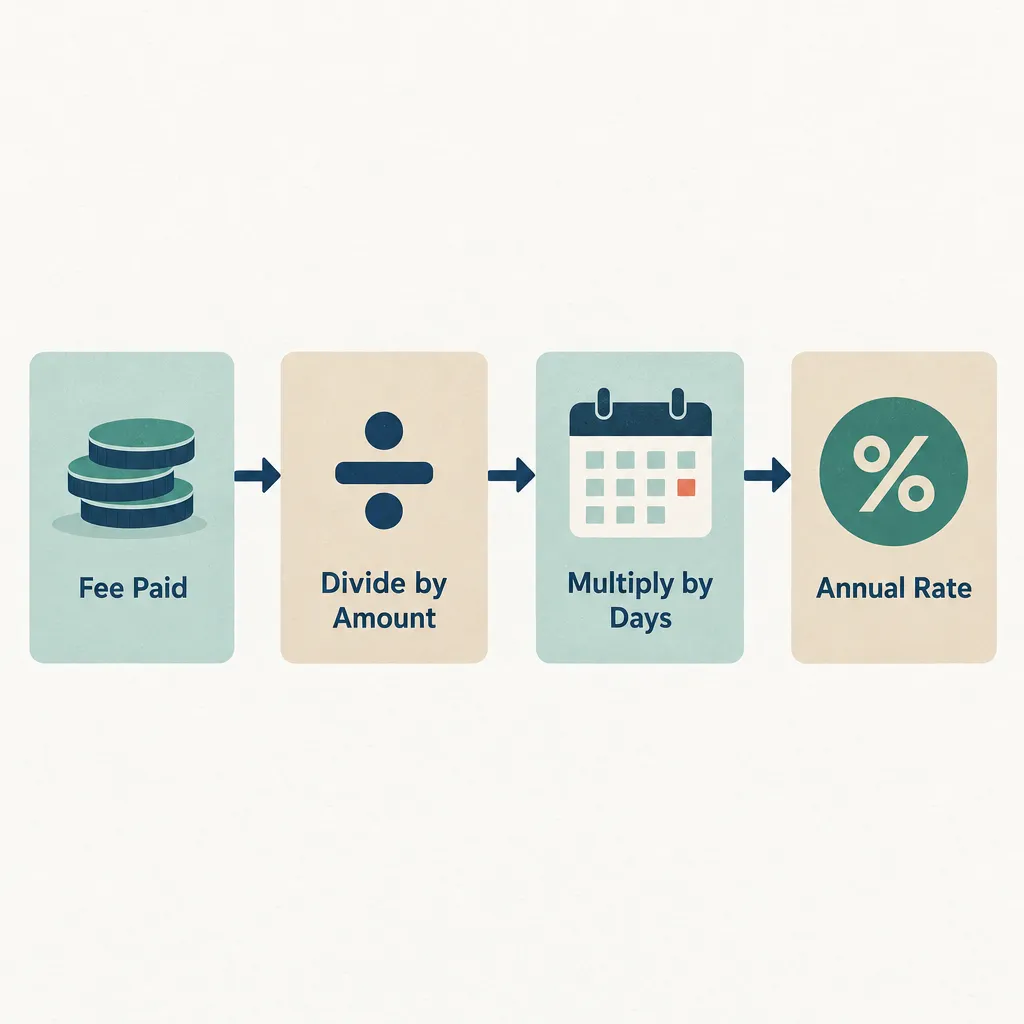
Here is the math for an EarnIn advance of $100 with a $5.99 Lightning Speed fee, repaid in 14 days:
- Fee divided by amount: $5.99 ÷ $100 = 0.0599.
- Periods in a year: 365 ÷ 14 = 26.07.
- Annualized: 0.0599 × 26.07 = 1.562, or about 156% APR.
The CFPB’s July 2024 data spotlight found the typical advance was a little over $100. For users who paid a fee or tip, the average effective APR was above 100%. The table applies the same formula to every row and assumes 14 days to repay unless stated otherwise.
| App and scenario | Amount | Fees you pay | Days | Total repaid | Effective APR |
|---|---|---|---|---|---|
| EarnIn, standard delivery, $0 tip | $100 | $0 | 14 | $100.00 | 0% |
| EarnIn, Lightning Speed, $0 tip | $50 | $3.99 | 14 | $53.99 | 208% |
| EarnIn, Lightning Speed, $0 tip | $100 | $5.99 | 14 | $105.99 | 156% |
| EarnIn, Lightning Speed plus $5 tip | $100 | $10.99 | 14 | $110.99 | 287% |
| Chime MyPay, instant (3% hits $2 minimum) | $50 | $2.00 | 14 | $52.00 | 104% |
| Chime MyPay, instant (3%) | $100 | $3.00 | 14 | $103.00 | 78% |
| Chime MyPay, instant (3% capped at $5) | $500 | $5.00 | 14 | $505.00 | 26% |
| Dave ExtraCash, 5% fee ($5 minimum) | $100 | $5.00 | 14 | $105.00 | 130% |
| Dave ExtraCash, $5 fee plus $5 membership | $100 | $10.00 | 14 | $110.00 | 261% |
| Dave ExtraCash, 5% with no cap (most members) | $500 | $25.00 | 14 | $525.00 | 130% |
| Dave ExtraCash, grandfathered member at $20 cap | $500 | $20.00 | 14 | $520.00 | 104% |
| Dave ExtraCash, $25 fee plus 1.5% to outside debit card | $500 | $32.50 | 14 | $532.50 | 169% |
| Credit union PAL, 28% APR plus $20 application fee | $500 | $43.55 | 3 months | $543.55 | 28% stated |
| Storefront payday product at $15 per $100 | $500 | $75.00 | 14 | $575.00 | 391% |
How the rows add up. Chime’s 3% of $500 is $15, which the $5 cap cuts to $5. Dave’s 5% of $500 is $25. Most members no longer have a cap, so they pay the full $25. Grandfathered members on the $20 cap pay $20. Dave’s outside-card fee is 1.5% of $500, or $7.50, so $25 + $7.50 = $32.50. The Dave membership row assumes this is your only advance that month, so the whole $5 belongs to it.
Two patterns stand out. First, the spread is wide. Chime’s $5 instant fee on $500 is a fifth of the $25 Dave now charges most members, and one fifteenth of the $75 a storefront payday lender charges at $15 per $100. Second, flat minimums and subscriptions make small advances the most expensive per dollar, which is the opposite of how most credit works. A $9.99 monthly plan used for a single $50 advance over 14 days comes to 9.99 ÷ 50 × 26.07, about 521% APR.
The tip line matters more than it looks. EarnIn shows a tip prompt before you confirm, and the CFPB’s 2024 analysis counted tips as part of the cost because so few users set them to zero. You can set yours to $0. EarnIn says tips are optional and that it charges no mandatory fees.
The 3 cash advance apps, ranked
1. EarnIn Cash Out: top pick if you want to keep your bank
EarnIn ranks first because it has no subscription and no mandatory fee, and it does not make you move your bank account. You link a checking account that receives your pay, EarnIn verifies your earnings, and Cash Out lets you access part of that pay before payday. EarnIn’s site advertises up to $200 a day and up to $1,000 between paydays, and it says limits vary by user. Your actual Daily Max appears in the app before each Cash Out. EarnIn takes the money back from your account on payday.
Standard transfers are free. Lightning Speed delivers in minutes. EarnIn’s help center lists the fee at $3.99 for amounts of $75 or less and $5.99 for more than $75 up to $150. The fee for larger amounts is shown before you confirm. EarnIn’s terms say Lightning Speed may not be available at all times or to all customers, and pricing and availability vary by state.
Weaknesses:
- New users start well below the advertised ceiling, and limits rise slowly.
- Earnings verification can fail if you earn tips, do gig work or work irregular hours.
- The tip prompt appears on every Cash Out, so a “free” product only stays free if you set it to $0 each time.
2. Chime MyPay: cheapest instant advance for Chime customers
MyPay is a feature of Chime’s checking account, not a separate app. Members with qualifying direct deposits can access up to $500 of their pay before payday. Delivery within 24 hours is free. Instant delivery costs 3% of the amount, with a $2 minimum and a $5 maximum, which makes it one of the cheapest instant options on the market as of November 2026. Chime takes the advance back from your next direct deposit.
Chime is a financial technology company, not a bank. Its accounts are held at The Bancorp Bank, N.A. or Stride Bank, N.A., both FDIC members.
Weaknesses:
- Your pay has to arrive at Chime. Moving your direct deposit just to get a cheaper advance is a big change for a small benefit.
- Chime says most members start between $40 and $100, and the $500 ceiling takes time to reach.
- If your employer pays late, the repayment and your paycheck can hit the account in the wrong order.
3. Dave ExtraCash: fast, but every advance costs money
Dave advertises ExtraCash advances up to $500. Dave’s fee schedule, last updated July 6, 2026, charges 5% of each advance with a $5 minimum, and its product page lists a monthly membership fee of up to $5. Dave told investors on its third-quarter 2026 earnings call that by late August 2026 it had finished moving existing members off the old $15 cap. Most members now have no cap at all. Some grandfathered members have a $20 cap. Instant transfers to a Dave Checking account are free. Sending the money to an outside debit card adds 1.5% of the amount. Dave dropped tips and its old express fees when it moved to this pricing in 2025.
With no cap, the 5% fee now grows with the size of the advance. A $500 advance costs $25 for most members, the same 130% APR over 14 days as a $100 advance at the $5 minimum. Below $100, the $5 minimum makes Dave more expensive per dollar. A $100 advance costs $5 (130% APR), or $10 (261%) if the membership fee is counted against it.
Weaknesses:
- There is no fee-free way to take an advance. The 5% fee applies to every advance.
- The membership fee adds up even in months when you do not borrow.
- The FTC announced its lawsuit against Dave on November 5, 2024. It targeted Dave’s “up to $500” advertising, express fees that the complaint said ranged from $3 to $25, tips and a $1 monthly membership fee the FTC said was charged without consumers’ consent. The Department of Justice filed an amended complaint in December 2024 seeking civil penalties. Dave disputes the claims, and public reporting through October 2026 shows no settlement. The City of Baltimore filed a separate consumer protection suit over ExtraCash in January 2026.
Did you know?
Dave’s own fee schedule, last updated July 6, 2026, describes the ExtraCash charge as 5% of each “overdraft” amount. ExtraCash is structured as an overdraft on a Dave account, not as a loan, and that is the product the City of Baltimore’s 2026 lawsuit targets.
Other apps you will see in app stores
These apps are unranked. What follows is their regulatory record, not a fee comparison. If you are considering one, check the fee shown in the app against the formula above.
- MoneyLion (Instacash): agreed to pay $1.75 million to settle a CFPB lawsuit over its membership program. New York Attorney General Letitia James separately sued MoneyLion and DailyPay, calling their advances illegal high-interest loans. That case was still unresolved in the most recent reporting.
- Brigit: paid $18 million in November 2023 to settle FTC allegations that it advertised advance amounts most users could not get and made its subscription hard to cancel.
- Cleo: settled with the FTC for $17 million in March 2025 over advertised advance amounts and cancellation practices.
- FloatMe: paid $3 million to the FTC in early 2024 over similar advertising claims.
- Empower: rebranded its cash advance product as Tilt in 2025 and charges a monthly subscription for it.
- Cash App Borrow, Varo Advance and Current: advance or small-loan features tied to each company’s own account. Cash App Borrow is the product many people mean when they search for a “money app cash advance.”
Cheaper options first
Ask your employer about earned wage access: many employers pay the provider’s fee, so your advance costs nothing.
Ask a federal credit union about a payday alternative loan: $200 to $1,000 under PAL I or up to $2,000 under PAL II, at no more than 28% APR under NCUA rules, plus an application fee of up to $20 that is not counted in that rate.
If your bank offers a small-dollar loan to existing customers, check its fee disclosure.
Cheaper ways to get the same money
A credit union payday alternative loan or an employer-paid wage advance usually costs less than any consumer app. Check these before you connect a bank account to anything in the ranked list.
| Option | Amount | Cost | Term | Who qualifies |
|---|---|---|---|---|
| Employer earned wage access (DailyPay, Payactiv and others) | Part of wages already earned | $0 if your employer covers the fee | Next payday | Employees of participating employers |
| Credit union PAL I | $200 to $1,000 | Up to 28% APR, application fee up to $20 | 1 to 6 months | One month of membership at a federal credit union |
| Credit union PAL II | Up to $2,000 | Up to 28% APR, application fee up to $20 | 1 to 12 months | Credit union members, no waiting period |
| Bank small-dollar loans (Bank of America Balance Assist, U.S. Bank Simple Loan, Wells Fargo Flex Loan, Huntington Standby Cash) | Set by the bank | Flat fee or low rate in the bank’s disclosure | Monthly installments | Existing checking customers |
| Nonprofit credit counseling hardship plan | Varies | Free or low cost | Varies | Anyone; look for NFCC member agencies |
| Utility and rent hardship programs, 211 referrals | Bill-specific | $0 | Varies | Usually income-based |
The NCUA’s rule at 12 CFR 701.21(c)(7)(iii) sets the PAL terms in the table. Here is what a $500 PAL I at 28% APR, repaid in three equal monthly payments, adds up to:
- Monthly rate: 28% ÷ 12 = 2.333%.
- Monthly payment on $500 over three months at that rate: $174.52.
- Total of payments: $174.52 + $174.52 + $174.51 = $523.55 (the last payment is a cent lower because of rounding), so interest is $23.55.
- Add the maximum $20 application fee: total cost $43.55, total repaid $543.55.
That is less than the $50 in fees on two $500 Dave advances at 5% with no cap, and the repayment is spread over three months instead of two weeks.
Employer programs work differently from consumer apps. The employer or payroll provider confirms your hours, so the provider does not need to read your bank account and often charges you nothing. If your workplace offers one, it beats every consumer app on cost. Compared with a paycheck loan from a storefront lender, the gap is usually several hundred percentage points of APR.
How a cash advance app decides what you get
These apps do not run a hard credit inquiry. Instead they read your bank account, which is why they can say “no credit check.” You give access through Plaid or a similar service. The app then looks at how often your direct deposits arrive, how large they are, how low your balance falls between paydays, and whether payments have bounced. EarnIn also ties the advance to earnings it has verified.
This is why limits start small. With no credit report to go on, the app tests you with $40 or $100 and raises the limit as it watches you repay. The advertised maximums describe long-time users with large, steady deposits. The FTC’s cases against Brigit, Cleo and Dave all turned on this gap: most users never got the headline amount.
Gig workers, tipped employees and anyone paid by paper check or irregular transfers tend to get the lowest limits or be declined. The model cannot find a predictable paycheck to borrow against.
Where cash advance apps are regulated
Federal regulators now treat one narrow type of earned wage product as something other than credit. Everything else is left to the states, and states disagree.
Federal rules
In 2020 the CFPB issued an advisory opinion saying that a narrow kind of employer-integrated, no-fee earned wage product was not credit under the Truth in Lending Act. In July 2024 the Bureau proposed an interpretive rule going the other way: paycheck advance products would count as credit under Regulation Z (12 CFR 1026), and expedite fees and tips would count as finance charges. That proposal never took effect.
On December 23, 2025, the CFPB issued a new advisory opinion. It says that “Covered EWA” is not credit under the Truth in Lending Act, and it withdrew the 2024 proposal. Covered EWA means employer-partnered programs repaid through payroll deduction and limited to wages already earned. The opinion also says optional expedite fees and voluntary tips are not finance charges. An advisory opinion is the agency’s interpretation, not a statute, and it does not decide state usury questions. Apps that repay themselves by debiting your bank account generally fall outside the Covered EWA definition. The National Consumer Law Center and other consumer advocates point to federal court decisions that have treated these advances as credit.
The practical result: none of these apps is required to show you an APR, which is why you have to calculate it yourself.
State rules
| State | What the law or enforcement does | Effect on apps |
|---|---|---|
| Nevada | 2023 law (SB 290) created an earned wage access license; providers must offer a no-cost option and cannot require tips | Apps operate under a license and are not treated as loans |
| Missouri | 2023 registration law modeled on Nevada’s | Similar to Nevada |
| Wisconsin, Kansas | 2024 licensing laws with free-option rules | Similar to Nevada |
| Connecticut | 2023 law brought earned wage access under the state’s small loan law, counting fees and tips toward its rate limits | Some apps limited or changed their service there |
| New York | The Attorney General sued MoneyLion and DailyPay, calling their advances illegal high-interest loans | Case ongoing in the most recent reporting |
| Maryland | The City of Baltimore sued Dave in January 2026 under state consumer protection law | Case pending in federal court over removal |
More states have passed licensing laws since, and the list keeps growing. An app that works for a friend in Nevada may not serve you in Connecticut. Before assuming a product is available or regulated where you live, check your state financial regulator’s license lookup.
Your rights when you use a cash advance app
Federal law has not settled whether these advances are credit, but several laws already cover how they work.
Electronic Fund Transfer Act and Regulation E (12 CFR 1005). The app repays itself by debiting your account. You can revoke that authorization. Your bank must honor a stop-payment order on a preauthorized debit if you give notice at least three business days before the scheduled transfer. If the app debits more than you authorized, Regulation E’s error resolution rules require your bank to investigate. Blocking a debit does not cancel what you owe, but it can stop a chain of overdrafts.
Military Lending Act (10 U.S.C. 987, 32 CFR 232). Active-duty servicemembers and their dependents are “covered borrowers.” Consumer credit extended to them is capped at a 36% Military APR, which includes most fees and charges tied to the credit.
Truth in Lending Act and Regulation Z. Most apps make their advances non-recourse, meaning they promise not to sue you or send a debt collector if you do not repay. On that basis they argue the advance is not credit and has no finance charge. A product structured as a loan has to give TILA disclosures, including an APR.
Federal Trade Commission Act, Section 5. The FTC used this ban on deceptive practices in its Brigit, Cleo, FloatMe and Dave cases, which targeted misleading advance limits and hard-to-cancel subscriptions. The Restore Online Shoppers’ Confidence Act covers the subscription side.
Fair Credit Reporting Act. Advance apps generally do not report payments to the credit bureaus, so an advance neither helps nor hurts your score. If an app bundles a “credit builder” product, it reports on that product, not on the advance.
Fair Debt Collection Practices Act. Most apps say they will not send unpaid advances to collections. If a third-party collection agency does contact you, the FDCPA limits its calls, bans threats and restricts what it can tell other people.
State small loan and usury laws. In states such as Connecticut, express fees and tips count as loan charges, so state rate caps and licensing rules apply.
Where to complain:
- The CFPB complaint portal for problems with debits, fees or disclosures.
- The FTC’s ReportFraud site for deceptive ads or subscriptions you cannot cancel.
- Your state financial regulator for licensing questions.
- The FBI’s IC3 if a fake “advance app” asks for upfront payment or your bank login.
How to check a cash advance app before you connect your bank
- Find the app’s fee page or terms and write down the subscription or membership fee, the instant fee, any mandatory fee and whether tips are requested.
- Work out the APR: fee divided by amount, times 365 divided by the days until payday.
- Search the company in the CFPB complaint database and read the 20 most recent complaints.
- Check your state regulator’s license or registration lookup, and NMLS Consumer Access if the product is a loan.
- Confirm that a free delivery option exists and that the tip can be set to $0.
- Read the repayment section: which account gets debited, on what date, and how to revoke the authorization.
How to choose the right cash advance app for you

Start with where your paycheck goes now. If it lands at Chime, MyPay’s $5 maximum instant fee is hard to beat. Switching banks only to get that fee rarely pays off: on a $200 advance the savings are a few dollars, while moving your direct deposit and autopays takes real work.
If you want to keep your bank, EarnIn is the lowest-cost choice, provided you accept standard delivery and set the tip to $0. Dave makes most sense when you need cash quickly and already use Dave Checking. Since Dave removed its $15 fee cap for most members in August 2026, its 5% fee grows with the size of the advance, so a $500 advance now costs most members $25. Count the membership fee in the cost, and take free delivery to Dave Checking if you have that account.
Be wary of any subscription you only pay to get an advance. A monthly fee charged for budgeting alerts your bank already provides for free is the most common way these apps end up costing more per dollar than a storefront payday advance.
Plan the repayment date before you think about speed. A free next-day advance with repayment on a Friday payday works fine. An instant advance whose debit lands the day before rent is due does not. Before you accept, put the advance date, the debit date and your other automatic payments on one calendar.
Things to consider before using a cash advance app
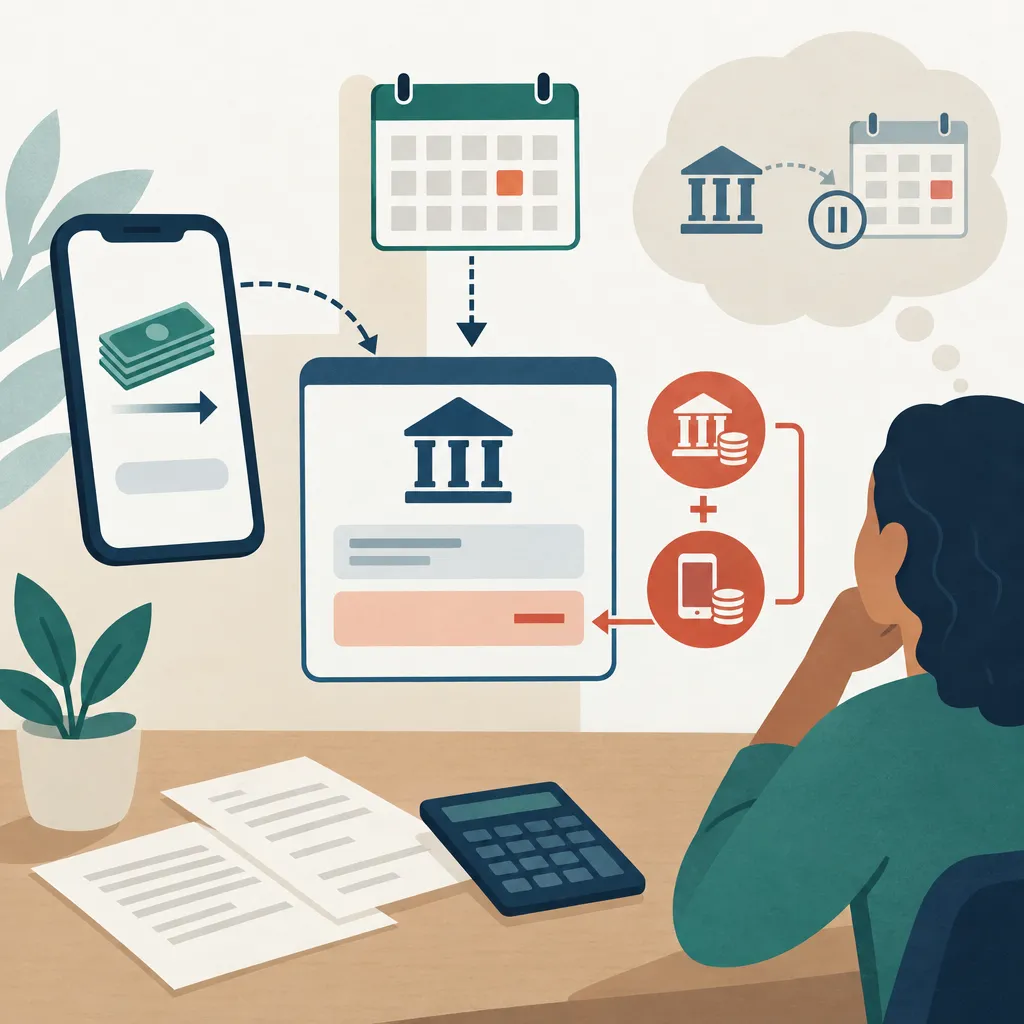
Overdrafts at your own bank. The app debits the full advance on payday whether or not your balance covers it. If your paycheck is late or smaller than expected, your bank’s overdraft fee lands on top of the app’s fee. Some apps say they will check your balance and delay the debit if it would overdraw you. That is a courtesy written into the terms, not a legal right.
The repeat cycle. The CFPB’s data shows users average more than two dozen advances a year. Each one shrinks the next paycheck by the advance plus fees. The only way out is to skip a cycle and live on one short paycheck. Planning for that one short month is your real exit plan.
Data access. Connecting an app gives it ongoing read access to your bank transactions. Search the privacy policy for “sell,” “share” and “affiliates.” When you stop using the app, remove its access in your bank’s settings or in Plaid’s portal.
Cancelling a membership. Cancel inside the app; deleting it does not end the subscription. The FTC’s cases against Brigit and Cleo involved users who thought they had cancelled and kept getting charged.
Non-recourse is not free money. Most apps promise not to sue or send collections. They can still close your account, keep retrying the debit and block future advances.
What it is not. A cash advance app is not a payday loan, which comes with a signed loan agreement, stated finance charges and, in states that allow it, APRs near 400%. It also will not build your credit. Use one for a single short gap, expect triple-digit APRs on anything beyond the free tier, and check the cheaper options table before you use it a second time.
FAQ
What are the best cash advance apps right now?
As of November 2026, EarnIn costs the least if you want to keep your current bank and can wait for a free standard transfer. Chime MyPay has the cheapest instant delivery if your paycheck already arrives at Chime, at 3% with a $5 maximum. Dave delivers quickly but charges a mandatory 5% fee on every advance, plus a membership of up to $5 a month. The fee has a $5 minimum, and since August 2026 most members have no maximum.
Which cash advance app gives you the most money?
EarnIn advertises up to $200 a day and up to $1,000 between paydays. Chime MyPay and Dave ExtraCash both advertise up to $500. New users usually start far lower. Chime says most members start between $40 and $100, and higher limits come only after months of steady deposits and on-time repayment.
Do cash advance apps check your credit?
Not with a hard inquiry. They read your linked bank account for deposit patterns and balance behavior instead. They also do not report advances to the credit bureaus, so repaying on time will not raise your score.
Are cash advance apps cheaper than storefront payday lending?
Usually, though not always. A $500 storefront advance at $15 per $100 for two weeks costs $75, about a 391% APR. A free standard advance from EarnIn or Chime costs 0%. A $9.99 subscription used for one $50 advance comes to about 521% APR, worse than the storefront product it competes with.
What happens if you cannot repay a cash advance app?
Most apps say they will not charge late fees, sue or send the balance to collections. They will keep trying the debit, which can overdraw your bank account, and they will suspend your access to future advances. Read the app’s repayment terms before you borrow, because they set out exactly what it can do.
Can you stop a cash advance app from debiting your account?
Yes. Under Regulation E you can stop a preauthorized debit by telling your bank at least three business days before the scheduled transfer. You can also revoke the app’s authorization in its settings. Stopping the debit does not erase what you owe, but it can prevent an overdraft fee while you sort out the timing.
Is a cash advance app available in every state?
No. Connecticut brought these products under its small loan law in 2023, and some apps changed or limited service there. Nevada, Missouri, Wisconsin and Kansas require licensing or registration under their own rules, and more states have passed laws since. EarnIn’s terms note that Lightning Speed pricing and availability vary by state. Check the app’s availability page and your state regulator before assuming you qualify.
Laws and regulations referenced
- Truth in Lending Act, 15 U.S.C. 1601
- Regulation Z, 12 CFR Part 1026
- Fair Debt Collection Practices Act, 15 U.S.C. 1692
- Fair Credit Reporting Act, 15 U.S.C. 1681
- Electronic Fund Transfer Act, 15 U.S.C. 1693
- Regulation E (electronic transfers), 12 CFR Part 1005
- Military Lending Act, 10 U.S.C. 987
- Military Lending Act rule, 32 CFR Part 232
Links go to the official text on government sites.
Check, verify or complain
Sources
- lendingtree.com › personal › payday alternative loan lendingtree.com

Dana writes US Financer's guides to payday loans, personal and installment loans, bad credit borrowing and cash advance apps. Every piece starts from what a loan really costs, works the numbers in a table, and checks what the lender's own disclosure and your state's rules…
Ruth is US Financer's standards editor. Every article goes through her checks before and after it is published: each rate, fee, cap, deadline and rule is matched against its primary source, every law named is linked to its official text, and anything that cannot be…
What changed
- Nov 24, 2026 Updated.
- Nov 13, 2026 Facts re-checked against official sources and updated; sources and links refreshed.
- Oct 15, 2026 First published.
Comments are closed