Payday lending is legal in Alabama. The Alabama Deferred Presentment Services Act, Ala. Code § 5-18A-1 and following, caps a payday loan at $500 and the fee at 17.5% of the amount borrowed, which works out to about 456% APR on a two-week loan. Car title loans are also legal and far more expensive, because Alabama treats them as pawn transactions with a 25% monthly charge.
Run the numbers
Payday and short-term loans in Alabama
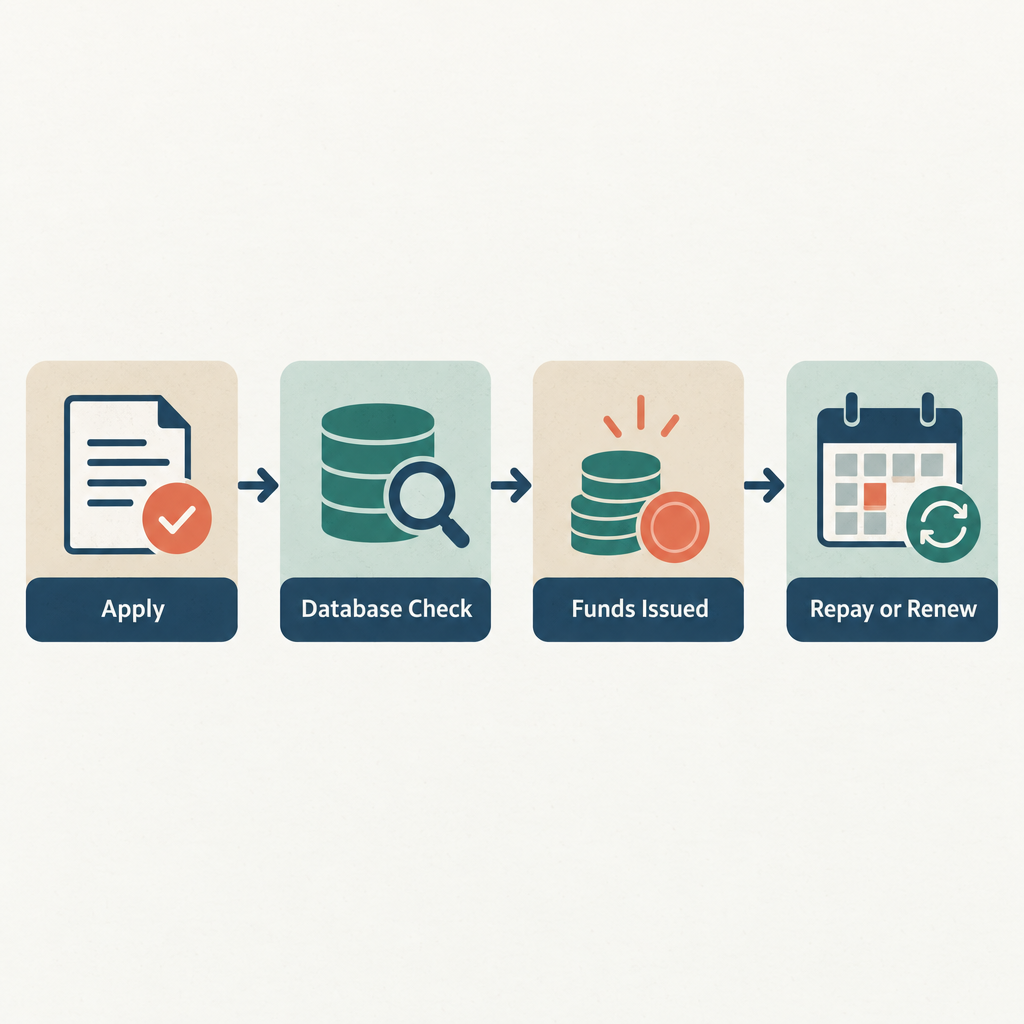
Alabama legalized payday lending in 2003 with the Deferred Presentment Services Act. The law calls the product a “deferred presentment transaction”: you write a check or authorize a debit for the loan amount plus the fee, and the lender agrees to hold it until your next payday. The lender must hold a license from the State Banking Department’s Bureau of Loans, and every store or website serving Alabama residents needs its own license under § 5-18A-3.
The main limits are in § 5-18A-12 and § 5-18A-13:
- Maximum loan: $500. That is a total across all payday lenders, not per store, and the state database (more on that below) enforces it.
- Maximum fee: 17.5% of the amount advanced, or $17.50 for every $100 borrowed.
- Term: at least 10 days and no more than 31 days.
- Rollovers: the lender may renew or extend a loan one time. After that the loan has to be paid in full.
- Cooling-off period: once a borrower has completed two consecutive transactions, the lender cannot write a new one until the next business day. In practice this means you can walk out of one payday loan and into another the following day, which is why consumer groups in the state call the cooling-off rule largely symbolic.
- Returned checks: if your check bounces, the lender can charge one returned-item fee, which the Act limits to a single charge, and cannot pile on additional penalties.
- No criminal threats: the Act bars a licensee from threatening or pursuing criminal bad-check prosecution over an unpaid payday loan. A lender can sue you in civil court, but a bounced payday check is not a crime in Alabama.
The payday loan fee is not called interest, but Regulation Z (12 CFR 1026) still requires the lender to disclose it as an APR. Here is what the math looks like.
| Loan amount | Fee at 17.5% | Term | Total repaid | APR |
|---|---|---|---|---|
| $100 | $17.50 | 14 days | $117.50 | 456% |
| $300 | $52.50 | 14 days | $352.50 | 456% |
| $500 | $87.50 | 14 days | $587.50 | 456% |
| $500 | $87.50 | 31 days | $587.50 | 206% |
| $500 rolled over once | $175.00 | 28 days | $675.00 | 456% |
The APR math in plain words: a $52.50 fee on $300 is 17.5% of the principal. A 14-day term fits into a year about 26 times, so 17.5% × 26 equals roughly 456%. Stretching the same fee over the full 31 days allowed by law brings the APR down to about 206%, but you still pay $87.50 to borrow $500 for a month.
The statewide payday database
Since August 2015, every Alabama payday lender has had to check a central database before issuing a loan. The Banking Department created the database by regulation under Ala. Admin. Code chapter 155-2-2, and the Alabama Supreme Court upheld the department’s authority to do so after lenders sued to block it. Before the database, borrowers could hold several $500 loans from different stores at once, and the $500 cap existed only on paper.
The database does two things for you. It stops a licensed lender from issuing a loan that would push you past $500 outstanding, and it gives the state a yearly count of loans, borrowers and fees. The Banking Department posts those reports on its website at banking.alabama.gov, and Alabama Arise and the Southern Poverty Law Center have used them for years to argue that most fee revenue comes from borrowers who renew or re-borrow rather than from one-time users.
Reform efforts, and where they stand
Alabama’s payday law has not been meaningfully tightened since 2003. The most common proposal, backed by Alabama Arise and a bipartisan group of legislators, would extend the minimum loan term to 30 days so the fee is spread over a month rather than two weeks. A 30-day bill passed the Alabama Senate in 2018 but died in the House, and similar bills have been filed in most sessions since without becoming law. A separate 36% APR cap has also been introduced repeatedly and has not passed. As of this writing, the 2003 limits above are the law, and nothing pending changes them. Check the Legislature’s site for the current session before relying on anything newer.
Car title loans in Alabama
Alabama has no title loan statute. Instead, the Alabama Supreme Court held in Floyd v. Title Exchange and Pawn of Anniston (1993) that a loan secured by a car title is a pawn transaction, so title lenders operate under the Alabama Pawnshop Act, Ala. Code § 5-19A-1 and following. That decision shapes everything about the product.
Under § 5-19A-7, a pawnbroker may charge up to 25% of the amount financed per 30-day period. That is 300% APR, and it applies to any size loan, because the Pawnshop Act has no maximum loan amount and no ability-to-repay requirement. A pawn transaction runs 30 days, the borrower has a further 30-day period after maturity to redeem the car, and if you do not, the vehicle becomes the lender’s property. The Act does not require the lender to return any surplus if the car is worth more than you owed. If you pledged a $6,000 truck for a $1,500 loan and default, you lose the whole truck.
| Title loan | Monthly charge at 25% | Months carried | Total interest | Total repaid |
|---|---|---|---|---|
| $1,000 | $250 | 1 | $250 | $1,250 |
| $1,000 | $250 | 3 | $750 | $1,750 |
| $1,000 | $250 | 6 | $1,500 | $2,500 |
| $2,500 | $625 | 3 | $1,875 | $4,375 |
Title lenders are licensed as pawnbrokers by the State Banking Department. Because the product sits under pawn law, the payday database, the $500 cap, the one-rollover limit and the criminal-prosecution ban in the Deferred Presentment Act do not apply. Alabama is one of a shrinking number of states where a 300% title loan with no surplus protection remains fully legal, and the Center for Responsible Lending and Alabama Appleseed have both documented repossession rates in the state that run well into the thousands of vehicles per year.
Installment and personal loans in Alabama
Alabama has three overlapping rate laws for installment loans. Which one applies depends on the loan size and the lender’s license.
| Loan size | Governing law | Maximum charge |
|---|---|---|
| $1,500 or less (licensed small lender) | Alabama Small Loan Act, § 5-18-15 | 3% per month on the first $200 of unpaid balance, 2% per month on the rest |
| $2,000 or less (consumer finance license) | Alabama Consumer Credit Act, § 5-19-3 | $15 per $100 per year on the first $750, $10 per $100 per year above $750 (add-on basis) |
| More than $2,000 | § 5-19-3 and § 8-8-5 | No cap; any rate agreed in writing |
| Any loan with no written rate | § 8-8-1 | 8% per year |
A couple of points on reading that table. The Small Loan Act rate is a monthly rate on the declining balance, so a $1,000 loan costs about $22 in the first month and the finance charge falls as you pay it down, for a blended APR in the mid-20s. The Consumer Credit Act, which Alabama lenders call the “Mini-Code,” states its ceiling as an add-on charge per year. Add-on rates understate the real cost: because you pay the balance down over the term but the charge is computed on the original amount, the disclosed APR on a 12-month Mini-Code loan runs roughly double the headline “$15 per $100” figure. Regulation Z requires the lender to disclose the true APR, so look at that line of the contract, not the add-on rate.
Above $2,000 there is no state cap at all. Alabama’s general usury laws in § 8-8-5 let lenders charge whatever rate a borrower signs for on loans of $2,000 or more, which is why online installment lenders routinely offer Alabama residents $2,500 loans at 100% to 200% APR. Those loans are legal if the lender is licensed under the Consumer Credit Act. Before accepting one, run the numbers with a personal loan calculator and compare the total repaid against a credit union installment loan.
Both the Small Loan Act and the Mini-Code are administered by the Bureau of Loans within the State Banking Department. Lenders under either law need a state license, and the Small Loan Act carries penalties for making loans without one.
Online and tribal lenders
Alabama law follows the borrower, not the lender. Under § 5-18A-3, anyone offering deferred presentment services to Alabama residents, including through a website, must hold an Alabama license, and the Consumer Credit Act applies the same way to online installment lenders. A licensed online lender is bound by the $500 payday cap, the 17.5% fee and the database check just like a storefront.
The gray area is lenders owned by federally recognized tribes. These lenders claim sovereign immunity from state regulation and frequently charge 400% to 700% APR on installment loans with no Alabama license. Federal courts have reached mixed results on whether tribal immunity shields the lender from state law, and Alabama’s Banking Department cannot easily force an unlicensed tribal lender to refund fees. What you can do is refuse to borrow from any lender that does not appear in the state’s license records, and report any that contact you.
How to check a lender's Alabama license
- Search the lender’s exact legal name in NMLS Consumer Access, which lists state-licensed payday, small loan and consumer finance companies.
- Cross-check the Bureau of Loans licensee lists on the State Banking Department’s website, which cover deferred presentment, small loan, consumer credit and pawnshop licenses.
- Confirm the physical address on the website matches the licensed location. Lenders registered only in another state or offshore are not licensed to lend to you.
- If the lender is not listed, do not sign. File a complaint with the Bureau of Loans and the CFPB.
Debt collection and wage garnishment in Alabama
Alabama does not separately license third-party debt collectors, so the federal Fair Debt Collection Practices Act, 15 U.S.C. § 1692 and following, is your main protection. Under the FDCPA, a collector cannot call before 8 a.m. or after 9 p.m., contact you at work once you say your employer forbids it, discuss your debt with third parties, or threaten arrest or lawsuits it does not intend to file. The Act covers collection agencies and debt buyers, not the original payday lender collecting its own loan, though the Deferred Presentment Act’s ban on criminal threats still binds the lender directly.
If a lender or collector sues and wins, Alabama garnishment limits are in Ala. Code § 6-10-7, which exempts 75% of your wages. That matches the federal Consumer Credit Protection Act ceiling of 25% of disposable earnings, or the amount by which weekly pay exceeds 30 times the federal minimum wage, whichever is less. Alabama also exempts a set dollar amount of personal property under § 6-10-6 and a homestead amount under § 6-10-2, both of which the Legislature indexed to inflation in 2015 and which adjust every three years, so check the current figures with the Alabama State Treasurer or a legal aid office before a hearing.
Timing matters too. The statute of limitations on a written contract in Alabama is six years under § 6-2-34, and three years for an open account under § 6-2-37. A collector can still ask you to pay an older debt, but it cannot win a lawsuit on it if you raise the time limit as a defense. Legal Services Alabama offers free help with collection suits for low-income residents, and a formal financial dispute resolution process through the CFPB or small claims court is often cheaper than ignoring a summons.
Federal rules that apply in Alabama
Four federal laws sit on top of the state rules. The Truth in Lending Act and Regulation Z require every lender, including payday and title lenders, to disclose the finance charge and APR in writing before you sign. The Military Lending Act, 10 U.S.C. § 987 and 32 CFR part 232, caps the total cost of credit at a 36% Military Annual Percentage Rate for active-duty service members and their dependents, which effectively makes both Alabama payday loans and title loans off-limits to them. The Fair Debt Collection Practices Act covers collectors as described above. And the CFPB’s payday lending rule, 12 CFR part 1041, whose payment provisions took effect March 30, 2025, bars a lender from making a third attempt to debit your bank account after two consecutive failed attempts unless you give new authorization. The rule’s ability-to-repay requirements were revoked in 2020 and never took effect.
Help that costs less
Cheaper options first
Federal credit unions can offer payday alternative loans under NCUA rules: PAL I covers $200 to $1,000 and PAL II covers up to $2,000, both at no more than 28% APR.
Ask your utility, landlord or hospital for a hardship or payment plan before borrowing to pay them.
Dial 211 for Alabama’s referral line to local emergency assistance for rent, utilities and food.
Federal credit unions in Alabama can make payday alternative loans under 12 CFR 701.21(c)(7): $200 to $1,000 for one to six months, or up to $2,000 for up to 12 months, with an APR no higher than 28% and an application fee capped at $20. A $500 PAL repaid over three months costs roughly $25 in interest and fees, against $87.50 for a single two-week payday loan. You usually need to be a member for at least a month, so joining before an emergency is the practical move.
Real assistance programs in the state include the Alabama Department of Human Resources, which runs SNAP, the Family Assistance (TANF) program and child care subsidies; the Low Income Home Energy Assistance Program, which the Alabama Department of Economic and Community Affairs funds through local community action agencies for power and heating bills; and Alabama 211, which connects callers to county-level rent, utility and food programs. Nonprofit credit counseling agencies approved by the Department of Justice can set up a debt management plan if you already have several payday or installment loans outstanding.
How to file a complaint
The Alabama State Banking Department, Bureau of Loans, licenses and examines payday lenders, title lenders operating as pawnbrokers, small loan companies and consumer finance companies. Its complaint form is on banking.alabama.gov, and it can order refunds and revoke licenses. The Consumer Financial Protection Bureau accepts complaints about any lender or collector, forwards them to the company, and publishes the response in its public complaint database. For unlicensed or offshore lenders, add a report to the FTC at ReportFraud and, if money was taken from your account without authorization, to the FBI’s Internet Crime Complaint Center.
Before you borrow
A $500 Alabama payday loan costs $87.50 every two weeks you carry it, and the state’s own database reports show most fee revenue comes from repeat borrowing, not one-time use. A title loan at 25% a month can cost more than the loan itself in four months and ends with the lender keeping your whole car if you default.
FAQ
How many payday loans can you have at once in Alabama?
You can have $500 outstanding in total, across all lenders. Since 2015 the statewide database blocks any licensed lender from issuing a loan that would put you over that limit, so splitting loans between stores no longer works.
Can a payday lender have you arrested in Alabama?
No. The Deferred Presentment Services Act specifically prohibits lenders from threatening or using criminal prosecution over an unpaid payday loan. Any lender or collector who says otherwise is violating state law and, if it is a third-party collector, the FDCPA.
Are title loans legal in Alabama, and what do they cost?
Yes. Under the Pawnshop Act, as applied by Floyd v. Title Exchange and Pawn, a title lender can charge up to 25% per 30 days, or 300% APR, with no cap on the loan amount. If you default, the lender keeps the car and any excess value.
Is a 36% rate cap coming to Alabama?
Not yet. Bills to cap rates at 36% APR and to lengthen the minimum payday loan term to 30 days have been filed repeatedly since 2018. None has become law as of this writing. By comparison, texas payday loan laws leave fees similarly uncapped at the state level, while california payday loan laws limit payday loans to $300 and have placed a 36%-plus-federal-funds-rate ceiling on installment loans between $2,500 and $10,000.
How much of my paycheck can be garnished for a payday loan in Alabama?
After a court judgment, up to 25% of your disposable earnings under Ala. Code § 6-10-7 and the federal Consumer Credit Protection Act, or less if your weekly take-home pay is close to 30 times the federal minimum wage. Social Security, SSI and most public benefits cannot be garnished for consumer debt.
What is the difference between an installment loan and a payday loan in Alabama?
A payday loan is a single-payment loan of $500 or less due within 31 days with a 17.5% fee. An installment loan is repaid in scheduled payments over months, and its rate depends on size: tiered caps under the Small Loan Act and Mini-Code up to $2,000, and no state cap above that.
Laws and regulations referenced
- Truth in Lending Act, 15 U.S.C. 1601
- Regulation Z, 12 CFR Part 1026
- Fair Debt Collection Practices Act, 15 U.S.C. 1692
- Military Lending Act, 10 U.S.C. 987
- CFPB payday lending rule, 12 CFR Part 1041
Links go to the official text on government sites.
Check, verify or complain
Sources
- consumerfinance.gov › consumer tools › educator tools › servicemembers › answers › category › money t… consumerfinance.gov · primary source
- consumerfinancemonitor.com › 2020 › 07 › 07 › cfpb issues final rule rescinding payday loan rule ability… consumerfinancemonitor.com
- legalclarity.org › usurious contracts in alabama laws limits and consequences legalclarity.org
- cash-advance.us › locations › alabama cash-advance.us
- alarise.org › blog posts › alabama supreme court clears way for statewide payday loan… alarise.org
- library.nclc.org › article › rule bounced payday and high cost loan payments now effect library.nclc.org

Elena writes about getting through a money emergency, assistance programs, budgeting on a tight income, banking basics and borrower rights. Her guides list the cheaper options first and link the agency or program that can actually help.

Ruth is US Financer's standards editor. Every article goes through her checks before and after it is published: each rate, fee, cap, deadline and rule is matched against its primary source, every law named is linked to its official text, and anything that cannot be…
Comments are closed