

General information, not legal advice. Laws change, so confirm with the official statute, your state regulator or a licensed attorney before you act.
Since January 1, 2021, licensed lenders in Virginia haven’t been allowed to make the classic two-week payday loan. Payday-style borrowing is still legal, but only as a state-licensed “short-term loan” repaid in installments over 4 to 24 months. These loans top out at $2,500. They can cost no more than 36% simple annual interest plus a monthly maintenance fee of up to $25, and interest plus maintenance fees can never exceed 50% or 60% of what you borrowed. Separately, a lender may add a returned-payment fee of up to $25 or a late charge of up to $20, but only if a payment bounces or arrives late. An online lender that charges Virginians triple-digit APRs without a Virginia license is breaking these rules.
Run the numbers
Key takeaways
- Licensed short-term loans in Virginia max out at $2,500, last 4 to 24 months and cost at most 36% interest plus up to $25 a month.
- Interest and maintenance fees together are capped at 50% of the loan for $1,500 or less and 60% above $1,500. The only other permitted charges are a returned-payment fee of up to $25 and a late charge of up to $20.
- You can hold only one short-term loan at a time. Active-duty service members, their spouses and their dependents can’t get one at all.
- Loans from unlicensed online or “tribal” lenders that charge more than Virginia allows may be unenforceable. Check the SCC license before you borrow or pay.
- Unpaid payday debt is civil debt, not a crime. A lender has 5 years to sue on a signed written contract.
Fact-checked
We checked these key facts against the sources named, on November 13, 2026:
- For example, on a $1,000 consumer finance loan the processing fee can be $60 (6%) (source: law.lis.virginia.gov)
- The math is simple. $30 is 15% of $200, and 15% repeated across 26 two-week periods in a year is about 391% (source: oag.state.va.us)
- Separately, a lender may add a returned-payment fee of up to $25 or a late charge of up to $20, but only if a payment bounces or arrives late (source: law.lis.virginia.gov)
- Today a licensed lender must offer a loan you repay over months, under the caps in § 6.2-1816.1 and § 6.2-1817 and the SCC regulation 10VAC5-200-80 (source: law.lis.virginia.gov)
- Under § 6.2-1817, that fee is the lesser of $25 or 8% of the originally contracted amount, and it can’t be added to the balance that earns interest (source: law.lis.virginia.gov)
Are payday loans legal in Virginia in 2026?
Yes, but not in the old form. The two-week balloon payday loan is gone. In its place is a regulated installment “short-term loan” that only lenders licensed by the Virginia State Corporation Commission (SCC) may make. The Fairness in Lending Act of 2020 rewrote Code of Virginia Title 6.2, Chapter 18 (§ 6.2-1800 et seq.). Every licensed payday lender now has to make an installment loan with capped prices.
The SCC’s Bureau of Financial Institutions publishes the figures each year. As of December 31, 2025, five short-term lenders held licenses and ran 20 offices across the Commonwealth. They reported 16,205 loans during 2025. In 2024, four licensed lenders made 16,489 loans totaling $15.0 million.
Are payday loans illegal in Virginia?
No. The old structure is what’s illegal: a loan due in full on your next payday, with a flat fee that works out to several hundred percent APR. Today a licensed lender must offer a loan you repay over months, under the caps in § 6.2-1816.1 and § 6.2-1817 and the SCC regulation 10VAC5-200-80. An unlicensed company that lends to Virginians at payday-style rates is breaking state law.
Can you still get a payday loan in Virginia?
Yes. You can borrow from one of the licensed short-term lenders, a licensed consumer finance company, or a bank or credit union. Some websites say payday loans are “not available in Virginia”. That usually means the site’s lender network doesn’t lend under Virginia’s caps. It doesn’t mean small loans are banned.
Be extra careful with ads for “same day payday loans in Virginia” or “no credit check loans in VA”. Licensed lenders must verify your income and check the state database before lending. A lender that promises to skip every check is a warning sign.
What changed: from the 2002 payday law to the 2020 Fairness in Lending Act
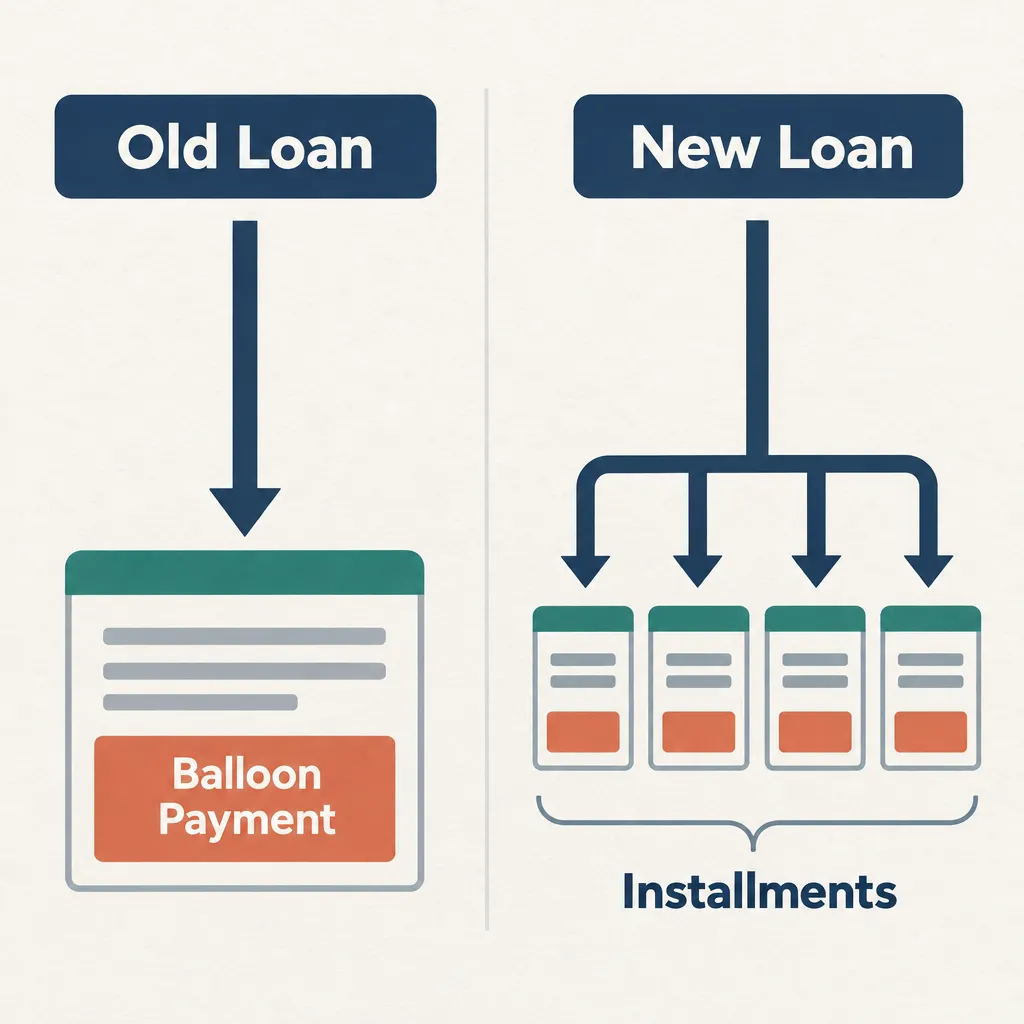
Virginia moved from allowing two-week balloon loans of up to $500 to requiring installment loans of up to $2,500 with limits on total cost. One bill made the change, and it took effect at the start of 2021.
- 2002: Legislation effective July 1, 2002 authorized licensed payday lending in Virginia. Lenders charged a flat fee on a loan of up to $500, due in a single payment. Under the old § 6.2-1816, the minimum term was twice your pay cycle, so usually about two weeks to a month.
- 2002 to 2020: The Office of the Attorney General’s consumer page still shows a typical example from that era: a $200 two-week loan with a $30 fee, which equals a 391% APR. The math is simple. $30 is 15% of $200, and 15% repeated across 26 two-week periods in a year is about 391%.
- 2017: The Attorney General created a Predatory Lending Unit in March 2017. That year the office announced a settlement with CashCall over Western Sky online loans. It was worth about $15.3 million in restitution and debt relief for Virginians, plus $100,000 in penalties and fees.
- 2020: The General Assembly passed the Fairness in Lending Act as HB 789 and SB 421. According to the Pew Charitable Trusts, Virginia had been one of only six states where payday lenders could operate under open-end credit statutes with no interest rate limit.
- January 1, 2021: The law took effect. Short-term loans became installment loans with a $2,500 ceiling, a 36% interest cap, capped monthly fees and a limit on total cost. Under the SCC’s rules, payday loans made before that date can still be collected under their original terms, if those terms were legal when the loan was made.
Old payday loan vs. today’s short-term loan
| Feature | Pre-2021 payday loan | 2021 to present short-term loan |
|---|---|---|
| Repayment | One lump sum, minimum term of twice your pay cycle | Installments over 4 to 24 months |
| Price | Flat fee (e.g., $30 per $200) | 36% simple interest plus monthly maintenance fee |
| Typical APR | 391% on the AG’s $200 example | Roughly 80% to 180% effective, depending on size and term |
| Total cost ceiling | None tied to principal | 50% of principal ($1,500 or less), 60% above |
| Maximum loan | $500 | $2,500 |
| Number of loans | Repeat borrowing common | One at a time, checked against a state database |
| Governing law | 2002 payday statute | Fairness in Lending Act; § 6.2-1800 et seq.; 10VAC5-200-80 |
Why car title lenders disappeared
Title loans are still legal in Virginia on paper, but nobody holds a license to make them. The SCC’s 2025 annual summary reports no licensed motor vehicle title lenders at year-end 2025. The 2020 reform put title loans under nearly the same limits as short-term loans. Under § 6.2-2216, a title lender may charge up to 36% simple annual interest plus a monthly maintenance fee of the lesser of 8% of the original loan amount or $15, along with certain other limited charges. According to Pew’s summary of the law, repossession and sale fees are capped at 5% of the original loan amount. Pew notes that before the reform, title loans in Virginia carried interest of roughly 180% to 264%.
Did you know?
According to the SCC’s 2025 annual summary, Virginia had zero licensed car title lenders at the end of 2025. Before the 2020 reforms, title lending had been a large business in the state.
The rules every licensed short-term loan must follow
Every licensed short-term loan in Virginia must stay within a $2,500 limit, a 4-to-24-month term, 36% interest plus a capped maintenance fee, and a 50% or 60% ceiling on total interest and fees. The rules come from Chapter 18 of Title 6.2 and from the borrower pamphlet the SCC prescribes in 10VAC5-200-80. Every licensed lender has to give you that pamphlet, in the exact wording the regulation sets.
| Rule | Limit | Source |
|---|---|---|
| Maximum loan | $2,500 | § 6.2-1816.1; 10VAC5-200-80 |
| Term | 4 to 24 months (shorter only if each payment is at most 5% of gross or 6% of net monthly income) | 10VAC5-200-80 |
| Interest | 36% simple annual | 10VAC5-200-80 |
| Maintenance fee | Lesser of $25 or 8% of original loan, per month | § 6.2-1817; 10VAC5-200-80 |
| Total interest and maintenance fees | 50% of principal ($1,500 or less); 60% (above $1,500) | 10VAC5-200-80 |
| Returned payment | Up to $25 if your check or electronic payment bounces (closed account or insufficient funds) | § 6.2-1817 |
| Late charge | Up to 5% of the payment, max $20, if paid more than 7 days late | § 6.2-1817; 10VAC5-200-80 |
| Cashing the loan check | No fee allowed | 10VAC5-200-80 |
| Loans at once | One short-term loan; none while holding a title loan | § 6.2-1816; 10VAC5-200-80 |
| Military borrowers | Prohibited | 10VAC5-200-80 |
| Security | Post-dated checks only; no PINs or remotely created checks | 10VAC5-200-80 |
Loan amount and term limits
A licensed lender can’t lend you more than $2,500. The loan must run at least 4 months and no more than 24 months. Shorter loans have one exception: the lender may set a term under 4 months only if each payment is no more than 5% of your verified gross monthly income or 6% of your verified net monthly income. The exception is there so that a short loan can’t turn back into the old payday balloon.
The pamphlet also requires a written loan agreement, signed by both you and an authorized representative of the lender. If a “lender” sends money with nothing for you to sign, or only a click-through screen that never states the APR and finance charge, it isn’t following Virginia’s process.
Interest, maintenance fees and the 50%/60% total-cost ceiling
Interest is capped at 36% a year, charged as simple interest on the unpaid balance. On top of that, the lender may charge a monthly maintenance fee. Under § 6.2-1817, that fee is the lesser of $25 or 8% of the originally contracted amount, and it can’t be added to the balance that earns interest. Section 6.2-1817.1 lets the SCC adjust the $25 figure for inflation by regulation. As of November 2026, the pamphlet still says $25.
The cap that protects you most applies to the total. However long the loan runs, interest plus maintenance fees can never exceed 50% of the principal on loans of $1,500 or less, or 60% on larger loans.
Check the cap yourself
Add up the interest and every monthly maintenance fee in your contract. If the total is more than 50% of the amount borrowed (loans of $1,500 or less) or 60% (above $1,500), the lender is over Virginia’s limit.
Other fees a licensed lender may charge
Besides interest and the maintenance fee, a licensed short-term lender may charge only two fees, and both depend on something going wrong with a payment. A lender that adds an “application”, “processing”, “origination” or “verification” fee is charging something the law doesn’t allow.
- Returned payment fee: up to $25. Under § 6.2-1817, the lender may charge a deposit item return fee of no more than $25 if your check or electronic payment comes back because you closed the account or didn’t have enough funds. Your own bank may charge its own NSF or overdraft fee for the same failed payment, so one bounced payment can cost you twice.
- Late charge: up to 5% of the payment, never more than $20. It applies only when a payment is more than 7 days past due. On a $134.18 payment, 5% is $6.71. A late charge only reaches the $20 cap on payments of $400 or more.
- Cashing the loan check: free. If the lender pays you by check, the pamphlet says neither the lender, an affiliate, nor anyone working in the lender’s office may charge you to cash it.
Here’s a worked example. You miss the third payment on the SCC’s $500 example loan, the payment bounces, and you pay 10 days late. The lender may add $25 for the return and $6.71 as a late charge, which is $31.71 on top of the $170.90 scheduled cost.
One loan at a time and the state database check
You may have only one short-term loan outstanding from any licensee, and you can’t take one while you have a motor vehicle title loan. After you complete a written application, and before it lends, the licensee must send your details to a state database and verify your income. Expect to show identification so the lender can submit your identifying information for that check.
If the database says you’re ineligible, the lender must tell you so. It must also give you the database provider’s toll-free number, and you can call that number to learn the specific reason. The pamphlet notes that the SCC’s Bureau of Financial Institutions can’t tell you whether you’re eligible, so the provider is the place to ask.
This is why legitimate “bad credit installment loans” in Virginia still involve a check of some kind. A licensed lender may not care much about your credit score, but it must confirm your income and look up your existing loans.
What a lender can and can’t take as security
A licensed short-term lender may take a check as security, post-dated no earlier than the first payment date. It may not ask for your debit card PIN, accept authority to write remotely created checks on your account, or take other access to your bank account outside the pamphlet’s rules. If a company asks for your online banking login or an open-ended debit authorization, it isn’t acting like a Virginia licensee.
Did you know?
The SCC’s required borrower pamphlet (10VAC5-200-80) says a licensed short-term lender can’t ask for your debit card PIN or for authority to write checks on your account.
Military members, spouses and dependents
Virginia goes further than federal law here. Licensed lenders may not make short-term loans to active-duty service members on orders longer than 30 days. The ban also covers their spouses, their dependent children under 18, and anyone who got more than half their support from such a member in the past 180 days. If your spouse is in the military, that rule is why you were turned down. It’s a flat ban, not a credit decision.
What a Virginia short-term loan really costs
A licensed $500 loan over five months costs $170.90 in interest and maintenance fees. That’s far cheaper than the old payday model, but it still works out to an effective APR above 100%, because the 36% headline rate leaves out the maintenance fee.
The first two rows below are the SCC pamphlet’s own examples. The other rows are US Financer calculations that assume level monthly payments, the maximum allowed fee, and no late or returned-payment charges. Effective APR is the rate you’d see if the maintenance fees were counted as interest.
| Amount borrowed | Months | Interest | Maintenance fees | Total cost | Fee cap applied |
|---|---|---|---|---|---|
| $500 | 5 | $45.90 | $125.00 | $170.90 (about 128% effective APR) | No (cap $250) |
| $1,000 | 10 | $172.30 | $250.00 | $422.30 (about 84% effective APR) | No (cap $500) |
| $300 | 4 | about $22.84 | $96.00 ($24/month, the 8% limit) | about $118.84 (about 178% effective APR) | No (cap $150) |
| $1,500 | 24 | about $626 | $600 | Capped at $750 | Yes, 50% |
| $2,500 | 24 | about $1,043 | $600 | Capped at $1,500 | Yes, 60% |
Why “36%” isn’t the whole price
The maintenance fee is a flat amount, so it hits small loans hardest. On the $500 example, each $25 monthly fee equals 5% of the original loan every month. The SCC’s figures give a payment of about $134.18 a month. Repaying $500 that way over five months works out to roughly 10.7% a month, or about 128% a year. The old two-week loan cost 391% APR, so the reform cut the price a lot. Even so, a short-term loan is still among the most expensive legal credit in Virginia.
There’s an honest case for the product. A $500 loan that costs $170.90 and is paid off on schedule beats a string of $35 overdraft fees or a disconnected utility with a reconnection charge. The case falls apart when the loan covers a gap that will come back next month. In that situation, the 50% cost cap means you may pay half the loan amount just to keep borrowing.
How to check a lender’s math against the cap
- Find the “amount financed” and “finance charge” in the Truth in Lending disclosure.
- Multiply the amount financed by 0.50 if it’s $1,500 or less, or by 0.60 if it’s more.
- Compare that figure with the finance charge plus any maintenance fees listed separately.
- Check that the monthly maintenance fee is no more than 8% of the original loan and no more than $25.
- Look for any fee other than the $25 returned-payment fee or the late charge of up to $20. Anything else isn’t allowed.
- If any number is over a limit, keep the contract and file a complaint with the SCC before paying the excess.
Other legal small-loan options in Virginia
Most legal installment loans in Virginia come from three other sources: open-end credit plans, consumer finance loans, and banks or credit unions. Each has its own price rules, and consumer finance loans are often cheaper than short-term loans for amounts above a few hundred dollars.
| Product | Governing law | Rate/fee cap | Licensed providers (latest) |
|---|---|---|---|
| Short-term loan | Title 6.2, Ch. 18; 10VAC5-200-80 | 36% + up to $25/month; 50%/60% total | 5 lenders, 20 offices (Dec. 31, 2025) |
| Motor vehicle title loan | Title 6.2, Ch. 22; § 6.2-2216 | 36% + lesser of 8% or $15/month | 0 (year-end 2025) |
| Open-end credit plan | Title 6.2, Ch. 3 (as amended 2020) | 36% + up to $50 annual participation fee | Not reported separately by the SCC |
| Consumer finance loan | Title 6.2, Ch. 15; § 6.2-1520 | 36%; processing fee of greater of $50 or 6%, max $150; $20 late fee after 10 days | 27 companies, 231 offices (Dec. 31, 2025) |
| Credit union PAL | Federal NCUA rule, 12 CFR 701.21(c)(7) | 28% max; application fee up to $20 (PAL I only) | Federal credit unions that choose to offer them |
Open-end credit plans
Before 2021, some lenders used “open-end” lines of credit to get around payday rules. The Fairness in Lending Act closed that gap. According to Pew’s summary, open-end plans are now capped at 36% interest plus an annual participation fee of no more than $50.
Consumer finance installment loans
Consumer finance companies are a major source of traditional installment loans in Virginia. Under § 6.2-1520 as amended in 2020, they lend $300 to $50,000 over 6 to 120 months. They may charge a single annual interest rate of no more than 36%, plus a loan processing fee of the greater of $50 or 6% of principal, never more than $150. The processing fee isn’t counted toward the 36% cap. A $20 late fee is allowed on a payment that isn’t received within 10 days of its due date, and only once per scheduled payment.
For example, on a $1,000 consumer finance loan the processing fee can be $60 (6%). On a $2,500 loan it hits the $150 ceiling. Those fees are one-time charges, unlike the short-term lender’s monthly maintenance fee. Over several months, that’s the main reason a consumer finance loan usually costs less.
The SCC counted 27 licensed consumer finance companies operating 231 offices at the end of 2025. That’s down from 29 companies but up from 228 offices in 2024. Every loan must disclose its APR under the Truth in Lending Act. When you compare installment loans in Virginia, put the APR and the total of payments side by side, not the monthly payment.
Banks and credit unions
Banks and credit unions are chartered and supervised separately, so these Virginia licensing counts don’t include them. Federal credit unions can offer Payday Alternative Loans under the NCUA’s rule. PAL I loans run $200 to $1,000 for one to six months. PAL II loans go up to $2,000 for up to 12 months. Both are capped at 28% APR with an application fee of no more than $20.
Online, tribal and “too good to be true” lenders
An online lender needs a Virginia license to make short-term or consumer finance loans to Virginians, and claiming a tribal affiliation doesn’t change Virginia’s limits. If an unlicensed lender charges more than Virginia law allows, the loan can be unenforceable. Federal courts have ordered millions in damages over these schemes.
The starting point is § 6.2-303, which sets Virginia’s general contract interest limit at 12% a year. Licensed lenders may charge more only because a licensing statute allows it. A company without the license gets no such exception.
Is a tribal loan legal in Virginia?
Usually not, if it charges triple-digit rates to Virginians. In the “rent-a-tribe” model, a non-tribal lender makes loans in a tribe’s name to claim sovereign immunity. Courthouse News reported that lenders in one such case charged rates above 700%. In that case, the U.S. Court of Appeals for the Fourth Circuit, which covers Virginia, upheld $44 million in damages against a non-tribal lender. The Virginia Poverty Law Center (VPLC) points out that even when a tribe-affiliated lender is immune from suit, its loans are often illegal, and it can’t enforce the loan in court if you stop paying.
Do I have to repay an illegal online loan?
VPLC’s position is that an unlicensed “e-loan shark” can’t enforce a loan that violates Virginia law. That still doesn’t stop the lender from pulling money from your bank account. Before you pay more, talk to VPLC or the Attorney General’s Consumer Protection Section. Under the Electronic Fund Transfer Act and Regulation E, you can also tell your bank to stop future automatic debits. CashCall/Western Sky is the best-known case: the Attorney General’s January 2017 settlement included about $15.3 million in refunds and debt relief for Virginians.
If you already owe an online lender
If you owe an online lender charging triple-digit APRs, contact the Virginia Poverty Law Center or the Attorney General’s Consumer Protection Section before you pay more. The loan may not be enforceable.
Red flags of an unlicensed lender
- It doesn’t appear on the SCC’s license lookup under the right license type.
- It advertises “no credit check” or “guaranteed approval” while promising same-day cash. Licensed lenders must check the state database and verify income.
- It asks for your online banking username and password, your debit card PIN, or an open-ended ACH authorization.
- It charges an application, origination or “verification” fee on a short-term loan.
- Its contract names a tribe, a foreign country or another state’s law as governing, or requires arbitration somewhere far away.
- The disclosed APR is above 36% with no Virginia license behind it, or there’s no Truth in Lending disclosure at all.
Cash advance apps and earned wage access in Virginia
As of November 2026, Virginia has no law written specifically for earned wage access (EWA) or cash advance apps, so their legal status is unsettled. Licensing bills were introduced in earlier sessions, including 2023 and 2025, but none became law, and the 2026 session’s wage legislation didn’t take up the issue. Congress has a federal EWA bill, H.R. 9330, but it’s only a proposal.
VPLC argues that advances funded by fees or tips can work like payday loans. The industry argues they aren’t credit. Until the legislature or a court settles it, watch three things: the express-transfer fee on each advance, the “optional” tip, and how often you go back for another advance. A $5 fee on a $100 advance repaid in a week works out to about 260% APR. An EWA benefit paid for by your employer, with no fee to you, is a different and far cheaper product.
If you can’t repay a payday or short-term loan
Missing a payment on a payday or short-term loan is a civil matter, not a crime, and you can’t be jailed for owing the debt. A licensed lender can add only what Chapter 18 and the pamphlet allow. It can report the debt, send it to collections or sue you.
What a missed payment adds to your balance
On a licensed short-term loan, a late payment can add a late charge of up to 5% of the payment, never more than $20. That charge applies only once the payment is more than 7 days past due. If a check or electronic payment bounces, the lender may also charge up to $25. No other penalty fees are allowed. If you see one, the lender has gone over Virginia’s rules. Call the lender before the due date. Some licensees will move a payment date, and a payment made within the 7-day window doesn’t trigger the late charge.
Can you get in trouble for not paying back a payday loan?
Only in civil court. The lender or a debt buyer can sue in General District Court. If it wins a judgment, including a default judgment because you didn’t respond, it can seek wage garnishment or a bank levy. Failing to show up in court is treated very differently from failing to pay, so always answer court papers.
If a lender says it will “press charges” over a check it agreed to hold as security for the loan, that’s a pressure tactic. Under the Fair Debt Collection Practices Act, a third-party collector can’t threaten arrest or criminal action it has no legal basis or intention to take.
Can a payday loan come after you after 7 years?
Generally not in court. Under § 8.01-246, a lender has 5 years to sue on a signed written contract and 3 years on an unwritten or unsigned one. The 7-year figure you may have heard comes from a different law: the Fair Credit Reporting Act’s limit on how long most negative items stay on your credit report. A collector may still contact you about a debt that’s too old to sue on. Get legal advice before you make a “good faith” payment, because a payment or a written acknowledgment can affect the timeline.
Dealing with collectors and garnishment
Ask the collector for written validation of the debt. Under the FDCPA and the CFPB’s Regulation F (12 CFR 1006), you have 30 days after the validation notice to dispute it.
If a creditor gets a judgment, Virginia’s § 34-29 limits garnishment to the lesser of two amounts: 25% of your weekly disposable earnings, or the amount above 40 times the higher of the federal or Virginia minimum hourly wage. At Virginia’s 2026 minimum of $12.77, that protects the first $510.80 of weekly disposable pay. The General Assembly amended § 34-29 in 2026, and a revised version takes effect July 1, 2027, so check the current text if your case runs past that date.
Federal rules that apply everywhere
Three federal laws protect you in every state, including Virginia:
- Truth in Lending Act and Regulation Z (12 CFR 1026): every consumer loan must disclose the APR, finance charge and total of payments before you sign.
- Military Lending Act: a 36% Military Annual Percentage Rate cap on most consumer credit to active-duty members and their dependents, counting most fees. Virginia’s short-term loan rule is stricter: it bans these loans to covered military households outright.
- Fair Debt Collection Practices Act: bars harassment, false threats and misleading statements by third-party collectors.
Help that costs less
The cheapest options don’t involve a high-cost lender at all. Look into these first:
- Credit union PALs: 28% APR maximum, often from a credit union you can join locally.
- 211 Virginia: a free statewide referral line for rent, utility, food and emergency help from local agencies.
- Virginia Department of Social Services: SNAP, TANF and the Energy Assistance Program for heating and cooling bills. You apply through your local department of social services, which may also run emergency assistance.
- Hardship plans: most utilities, hospitals and landlords offer payment plans if you ask before the due date.
- Nonprofit credit counseling: for debt relief in Virginia, a debt management plan through a nonprofit agency usually costs far less than debt settlement. Virginia licenses credit counseling agencies under Title 6.2, Chapter 20. The FTC’s Telemarketing Sales Rule bans debt settlement companies from charging upfront fees on plans sold by phone.
Cheaper options first
Ask your credit union about a Payday Alternative Loan (28% APR cap).
Call 211 Virginia for local rent, utility and food assistance.
Ask your employer whether it offers a no-fee pay advance.
How to check a lender’s license and file a complaint
Check any lender on the SCC’s license lookup before you sign. Complain to the SCC about licensed lenders and to the Attorney General about unlicensed ones. The SCC’s Bureau of Financial Institutions licenses and examines short-term lenders, consumer finance companies and other nondepository lenders. At the end of 2025, it regulated 26,300 nondepository licensees. The Office of the Attorney General of Virginia, led by Attorney General Jay Jones, enforces the consumer protection laws through its Consumer Protection Section and Predatory Lending Unit.
How to check a Virginia lender
- Go to the SCC website and open “Regulated Financial Institutions – Verify a License”.
- Search the company’s exact legal name, not just its brand name or app name.
- Confirm the license type, such as short-term lender or consumer finance company.
- Confirm the license is active and the address matches the contract.
- If it isn’t listed, call the Bureau of Financial Institutions at (800) 552-7945 before you sign.
To complain about a licensed lender’s fees or conduct, file with the SCC’s Bureau of Financial Institutions. For unlicensed and online lenders, use the Attorney General’s Consumer Protection Section at (800) 552-9963. You can also file through the CFPB’s complaint portal. Include the lender’s name, your signed agreement and TILA disclosure, your payment history, bank statements showing debits, any late or returned-payment fees charged, and copies of collection messages. Readers outside Virginia can compare these rules with our guides to Maryland payday loan laws and California payday loan laws.
FAQ
What is the maximum interest rate on a payday loan in Virginia?
A licensed short-term loan can charge 36% simple annual interest plus a monthly maintenance fee of the lesser of $25 or 8% of the original loan (§ 6.2-1817). Interest and maintenance fees together can’t exceed 50% of the principal on loans of $1,500 or less, or 60% above that.
What fees can a Virginia short-term lender charge besides interest?
Only three charges beyond interest are allowed: the monthly maintenance fee, a returned-payment fee of up to $25 if your check or electronic payment bounces, and a late charge of up to 5% of the payment (maximum $20) once a payment is more than 7 days late. Cashing the lender’s loan check must be free.
How much can I borrow with a short-term loan in Virginia?
Up to $2,500 under § 6.2-1816.1, repaid over 4 to 24 months. Before 2021 the limit was $500. A lender also has to verify your income, so you may be offered less than the maximum.
How many payday loans can you have at once in Virginia?
One. A licensee must check a state database and can’t make you a short-term loan while you have another short-term loan or a motor vehicle title loan outstanding. If you’re turned down, the lender must give you the database provider’s toll-free number so you can find out why.
Can I get a $500 loan same day in Virginia with bad credit?
Possibly, from a licensed short-term lender or consumer finance company, which may weigh your income more than your credit score. Under the SCC’s own example, a $500 loan would cost up to $170.90 over five months, plus any late or returned-payment fees. Lenders that advertise “no credit check” still have to run the database and income checks, and a credit union PAL is far cheaper if you qualify.
Can you go to jail for not paying a payday loan in Virginia?
No. Unpaid loan debt is civil. The lender can sue and, after winning a judgment, seek garnishment within § 34-29’s limits. Ignoring a court summons can lead to a default judgment, so respond to any court papers.
Are online payday loans legal in Virginia?
Only if the lender holds the right SCC license and stays within Virginia’s caps. Online and tribal lenders that charge Virginians hundreds of percent without a license are breaking state law, and their loans may be unenforceable.
Before you borrow
Even a fully legal Virginia short-term loan can cost up to half of what you borrow, about 128% effective APR on a $500 loan, before any late or bounced-payment fees. An unlicensed online lender can drain your bank account directly, so confirm the SCC license and try a credit union or assistance program first.
Laws and regulations referenced
- Code of Virginia Title 6.2, Chapter 18 (Short-Term Loans)
- Code of Virginia Title 6.2, Chapter 15 (Consumer Finance Companies)
- Truth in Lending Act, 15 U.S.C. 1601
- Regulation Z, 12 CFR Part 1026
- Fair Debt Collection Practices Act, 15 U.S.C. 1692
- Regulation F (debt collection), 12 CFR Part 1006
- Fair Credit Reporting Act, 15 U.S.C. 1681
- Electronic Fund Transfer Act, 15 U.S.C. 1693
- Regulation E (electronic transfers), 12 CFR Part 1005
- Military Lending Act, 10 U.S.C. 987
Links go to the official text on government sites.
Check, verify or complain
Sources
- 10VAC5-200-80. Short-term lending pamphlet text law.lis.virginia.gov · official source
- Code of Virginia Title 6.2, Chapter 18. Short-Term Loans law.lis.virginia.gov · official source
- Code of Virginia § 6.2-1817 Authorized fees and charges law.lis.virginia.gov · official source
- Code of Virginia § 6.2-1816.1 law.lis.virginia.gov · official source
- Code of Virginia § 6.2-1816 law.lis.virginia.gov · official source
- Code of Virginia Chapter 18 full text (incl. § 6.2-1817.1) law.lis.virginia.gov · official source
- Code of Virginia § 6.2-2216 Motor vehicle title loans law.lis.virginia.gov · official source
- Code of Virginia § 34-29 Maximum portion of disposable earnings subject to garnishment law.lis.virginia.gov · official source
- SCC Bureau of Financial Institutions 2025 Summary scc.virginia.gov · official source
- SCC 2025 Annual Report of Licensees scc.virginia.gov · official source
- SCC Bureau of Financial Institutions 2024 Summary scc.virginia.gov · official source
- Virginia AG: Settlement with Internet Lender Advance Financial (2020) oag.state.va.us · official source
- Virginia AG: Payday Lenders oag.state.va.us · official source
- Virginia AG: CashCall to Refund Millions to Virginia Consumers (2017) oag.state.va.us · official source
- H.R.9330 Earned Wage Access Consumer Protection Act congress.gov · official source
- Va. Code § 8.01-246 law.lis.virginia.gov · official source
- Pew: Virginia Fairness in Lending Act of 2020 Reforms Small Credit pewtrusts.org
- Courthouse News: Fourth Circuit Sides With Virginia Borrowers in Rent-a-Tribe Lending Scheme courthousenews.com
- VPLC: E-Loan Sharking vplc.org
- NCSL: Earned Wage Access 2025 Legislation ncsl.org
- McGuireWoods: Virginia's General Assembly Passes Slate of Wage-and-Hour Bills (2026) mcguirewoods.com
- VPLC: People are struggling but workplace payday loans are not the answer vplc.org
- Virginia's SB 1252: Potential Impact on Banks and Fintechs consumerfinancialserviceslawmonitor.com
- Earned wage access legislation likely to return wvtf.org

Elena writes about getting through a money emergency, assistance programs, budgeting on a tight income, banking basics and borrower rights. Her guides list the cheaper options first and link the agency or program that can actually help.
Ruth is US Financer's standards editor. Every article goes through her checks before and after it is published: each rate, fee, cap, deadline and rule is matched against its primary source, every law named is linked to its official text, and anything that cannot be…
What changed
- Nov 13, 2026 First published.
Comments are closed