

Crypto can lose all of its value and is not protected by FDIC or SIPC insurance. This is education, not investment advice.
An IDO (initial DEX offering) is a token sale run through a decentralized exchange or a launchpad that feeds one. Buyers pay in crypto from their own wallets, and the token starts trading on-chain minutes after the sale closes. It took over from the 2017-era ICO in DeFi, with more automation and usually less paperwork. This guide covers how the sales work, why projects use them, the checks to run before buying, the memecoin version, the US legal picture as of November 2026 and what the IRS expects.
The word has other meanings too. Ido is a constructed language derived from Esperanto, a Japanese surname, and the Spanish past participle of “ir” (“gone”), which in the slang phrase “estar ido” means spaced out. In crypto, IDO always means an initial DEX offering.
PROPOSEDRelated consumer alert, Nov 25, 2026
House committee advances Strategic Bitcoin Reserve bill with 20-year holding ruleRun the numbers
Key takeaways
- An IDO sells a new token through a DEX or launchpad, and trading starts as soon as the sale closes.
- Launchpads usually require KYC and staking their own token, and many exclude US persons.
- The main risks are rug pulls, contract exploits, vesting unlocks and fees. None of these losses are insured.
- As of November 2026, no US market-structure law has passed, and the SEC’s token offering rule is still only a proposal.
- The IRS treats IDO tokens as property, and DEXs and launchpads generally send you no tax form.
Before you join an IDO
Most IDO tokens trade below their sale price within months, and a meaningful share go to zero. There is no deposit insurance, no cooling-off period and usually no one to sue if the team vanishes.
What is an IDO?
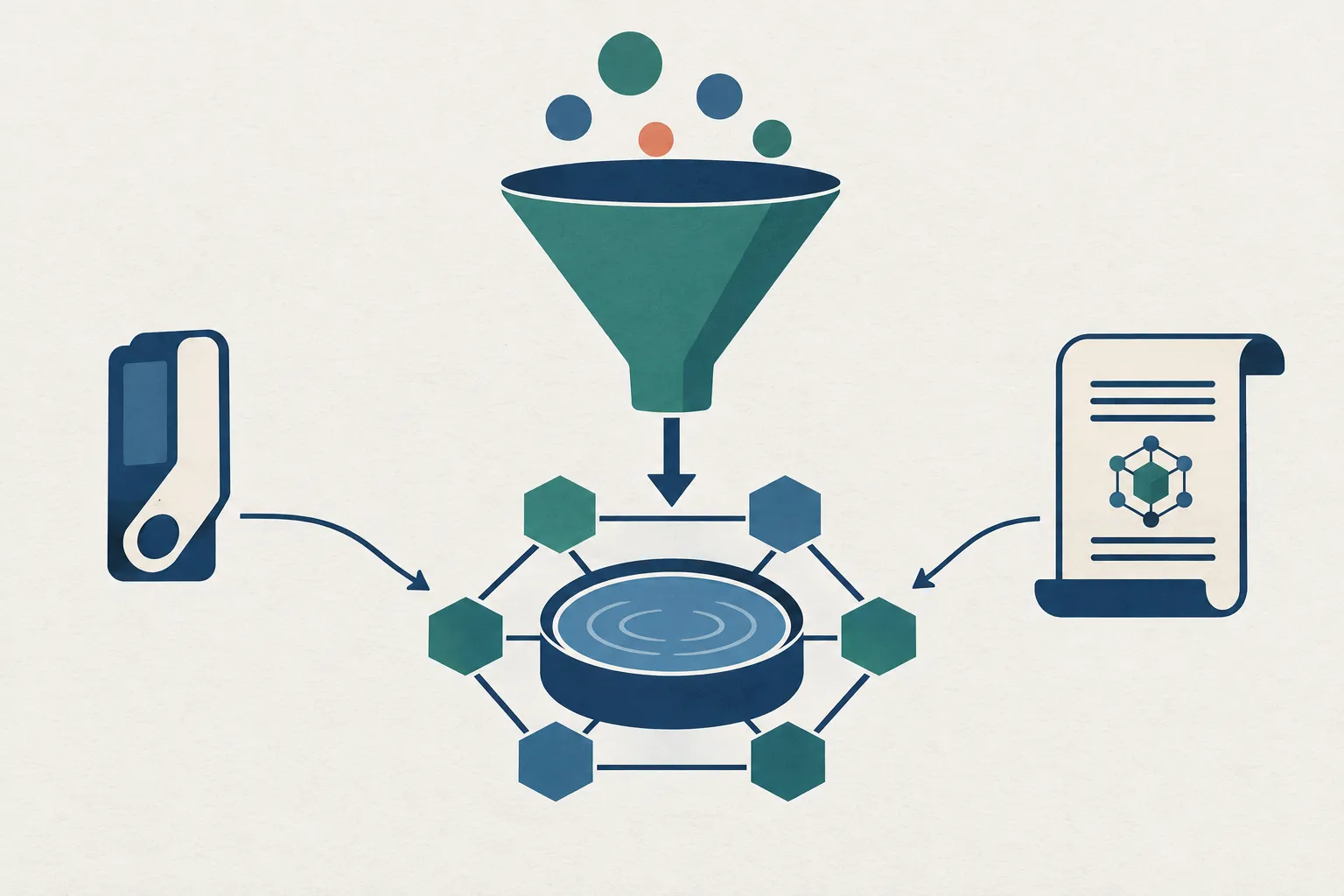
An IDO is a public token sale settled by a smart contract on a decentralized exchange, with a trading pool created at launch. A project creates a new token, sets a sale price and a hard cap, and sells an allocation to the public through a DEX or a launchpad that routes to one.
The first widely cited IDO was Raven Protocol’s sale on Binance DEX in June 2019. The format then spread across Ethereum, BNB Chain, Solana and Polygon from 2020 onward. The “first” label is contested, since at least one earlier project says it described the idea in a 2018 whitepaper. Raven’s June 2019 sale was still the one that made the term stick.
Did you know?
According to Raven Protocol’s own sale announcement, the June 17, 2019 IDO on Binance DEX offered 300 million RAVEN tokens, 3% of total supply, with a hard cap of 15,000 BNB (about $500,000 at the time).
An IDO differs from a stock IPO in three ways:
- No gatekeepers. There is no underwriter and no registration statement filed with the SEC.
- Settlement. It happens in a smart contract, not through a broker.
- Day-one trading. The token gets a market the same day, because the project pairs part of the money raised with new tokens in a liquidity pool.
Why do crypto projects use IDOs?
Projects use IDOs because they get a live trading market on launch day without asking a centralized exchange for permission. The sale, the liquidity and the token distribution all run through smart contracts the team controls.
- Same-day DEX liquidity. Part of the money raised goes into a pool with new tokens at the token generation event (TGE), so the token can be traded right away.
- No centralized exchange listing fee or exclusivity. Anyone can create a DEX pool. No exchange negotiates listing terms, lockups or exclusive launch rights.
- Community distribution through launchpad tiers. Small allocations spread across thousands of wallets create a base of holders who have a reason to promote the project.
- Faster time to market. A launchpad sale can be organized in weeks. Exchange due diligence and listing reviews take longer.
For buyers, every one of those advantages means fewer gatekeepers checked the project before it reached you.
How does an IDO launchpad sale work?
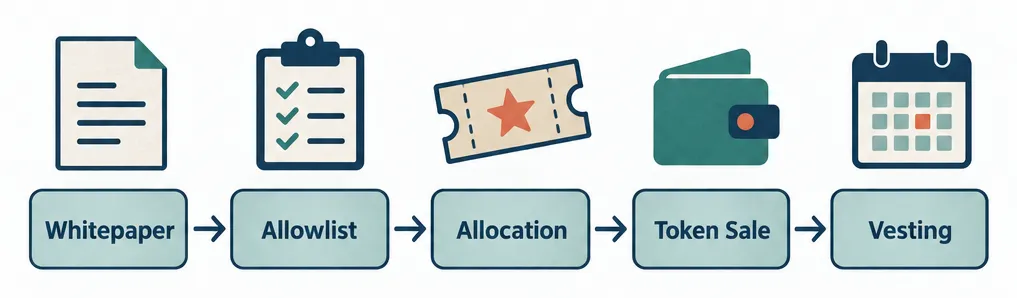
A launchpad sale runs in six stages: the project publishes its terms, buyers qualify through KYC and staking, a lottery or tier system hands out allocations, buyers pay on sale day, the token lists at TGE, and the rest unlocks over time. Most launchpads follow this pattern.
Launchpads such as Polkastarter, DAO Maker and Seedify sit between projects and buyers. They do some light screening of projects, run the allocation lottery and host the claim contract. Seedify focuses mainly on gaming projects. DAO Maker uses a tiered model it calls a Strong Holder Offering.
A typical IDO on a launchpad
- The project publishes a whitepaper, tokenomics and sale terms: price, hard cap and vesting schedule.
- The launchpad opens an allowlist. Most require KYC, and most set allocation tiers by how much of the launchpad’s own token you have staked.
- A lottery or guaranteed round assigns allocations, often $100 to $500 per wallet.
- On sale day you send USDC, ETH or SOL to the sale contract from your wallet.
- At TGE the project adds liquidity to a DEX and unlocks a first tranche, often 10% to 25%.
- The remaining tokens vest over weeks or months and are claimed from the launchpad contract.
The staking requirement is how the launchpad makes money. To reach a decent tier you must buy and lock its native token, so you hold one volatile asset before the sale even begins.
A worked example of what a small allocation really costs
Here is a hypothetical $300 allocation on an Ethereum-based launchpad. The point is that the costs come in layers. The gas figures are illustrative and change with network conditions.
| Cost item | Example amount | Notes |
|---|---|---|
| Allocation paid in USDC | $300 | Buys tokens at the sale price |
| Launchpad token staked to qualify | $1,000 | Locked, and its price can fall while locked |
| Gas for staking, sale and claims | $15 to $60 | Each vesting claim is a separate transaction |
| Slippage selling into a thin pool | 1% to 5% of sale value | Higher on small pools |
| Total capital at risk | About $1,315 to $1,360 | Only $300 of it buys the new token |
The token has to rise well above its sale price before the fees, the risk on your staked tokens and the slippage are covered. Losses on the staked launchpad token often outweigh any gain on the allocation itself.
What is the difference between an IDO, ICO and IEO?
The difference is who runs the sale and who holds your money. An ICO is run by the project itself. An IEO is run by a centralized exchange that holds your funds. An IDO runs through a DEX or launchpad contract that you pay from your own wallet.
| Feature | ICO (2017 style) | IEO | IDO |
|---|---|---|---|
| Who runs the sale | Project itself | Centralized exchange | DEX or launchpad |
| Custody of your funds | Project’s wallet | Exchange account | Your own wallet to a contract |
| KYC | Often none | Exchange’s KYC | Varies, usually launchpad KYC |
| Entry requirement | Usually none | Often holding the exchange’s token | Usually staking the launchpad’s token |
| Day-one liquidity | Not guaranteed | Exchange listing | DEX pool at TGE |
| Typical vetting | None | Exchange due diligence | Light launchpad screening |
The IDO model fixed the ICO’s worst problem: projects that raised millions and never listed anywhere. It did not fix the quality of the projects, and it added a new way to fail, a liquidity pool the team can drain.
Memecoin launchpads: IDOs stripped to the bone
A memecoin launchpad keeps the IDO idea but drops the whitepaper, the allowlist and any identified team. Pump.fun on Solana is the best-known example. Anyone pays a small fee to create a token. Buyers purchase along a bonding curve, which raises the price with each buy. Once the curve fills (a fixed SOL threshold), the launchpad moves the liquidity to a DEX automatically.
The pitch is fairness: no presale, no insider allocation and the same curve for everyone. In practice, bots and the creator’s own wallets often buy first and sell to later buyers. On-chain analytics firms have repeatedly found that only a tiny fraction of tokens created on these platforms ever reach the DEX stage, and fewer still hold any value a month later. Treat money spent on a memecoin launchpad as entertainment spending, not investing.
What are the risks of an IDO?
The main IDO risks are rug pulls, contract exploits, vesting unlocks and fees, and none of them are insured. Some losses come from theft. Others come from how the token’s supply and liquidity are set up.
Rug pulls. The team withdraws the liquidity it added at TGE, so holders can’t sell. Locked liquidity (which you can verify on a third-party locker) lowers this risk but doesn’t remove it, because the team can still dump its unlocked tokens.
Soft rugs. Nothing is stolen. The team simply stops working on the project, and the token drifts toward zero.
Contract exploits. A honeypot contract lets you buy but blocks selling. A hidden mint function lets the deployer create unlimited supply. A polished website won’t reveal either one.
Vesting cliffs. Private-round investors who paid a fraction of your price unlock their tokens on a schedule. Those unlock dates bring selling pressure you can see coming if you read the tokenomics.
Structural losses. Launchpad staking, gas fees, failed transactions during a gas war and slippage on a thin pool all cost money before the token’s price moves at all.
Platform risk. Launchpads, bridges and claim contracts are software too, and they have been hacked. A loss at the platform level can hit buyers who did nothing wrong.
Some projects are outright fraud dressed up as an IDO. If returns are promised, if referral rewards dominate the pitch, or if “staking yield” is paid out of new buyers’ money, read about how a crypto Ponzi scheme operates before sending anything. The same caution applies to launchpads selling NFT mints, which are collectible tokens with even thinner resale markets than fungible ones.
Before you buy: 7 checks
These checks won’t make an IDO safe. They catch the most common traps, and each takes minutes with free public tools.
- Verify the contract address from the project’s official channel. Copy it from the project’s website, its verified social account or the launchpad’s sale page, then confirm it matches on the block explorer. Fake tokens copy names and tickers exactly.
- Check for an audit and read its findings. Look for unresolved high or critical issues, and confirm that the audited code matches the contract address that was actually deployed. An audit badge alone tells you nothing.
- Confirm the liquidity lock on a third-party locker and when it expires. A lock that ends a week after launch protects very little. “Liquidity locked” claims that don’t come with a verifiable lock record should count as unverified.
- Read the vesting and unlock schedule. Write down when the team, advisors and private-round investors unlock, and how much. Compare their price and unlock dates with yours.
- Check for mint, blacklist and pause functions. On Ethereum-style chains, read the verified contract on a block explorer such as Etherscan, or run it through a token-scanner tool. On Solana, check on Solscan whether the mint authority and freeze authority have been revoked.
- Confirm the launchpad does not exclude US persons in its terms. Many launchpads list the United States as a restricted jurisdiction. If yours does, the sale is not open to you, and joining anyway breaks the terms and leaves you with no remedy if your allocation is voided.
- Record every wallet transaction for taxes. Save the date, the transaction hash, the amounts, the US dollar value at the time and the gas paid for every stake, purchase, claim and sale.
Keep a cost-basis log from day one
Under IRS guidance, your basis includes fees and other acquisition costs in US dollars. Write down the gas paid on the purchase and each claim when it happens, because rebuilding these figures a year later from a block explorer is slow and error-prone.
What do US rules say about IDOs?
As of November 2026, no federal statute governs IDOs specifically. The SEC still applies the Howey test to token sales, and several big changes are still at the proposal stage. Below, each item is labeled by status: settled law, agency guidance or proposal.
Settled enforcement history. The SEC has applied the Howey test to token sales since its 2017 DAO Report, and it brought enforcement actions against ICO issuers including Kik and Telegram. A token sold to fund a project whose team promises to build its value is a strong candidate for a security, whatever the sale is called. Many launchpads block US IP addresses for this reason, and some exclude US persons during KYC.
Agency guidance (official, but not law). In February 2025, the SEC’s Division of Corporation Finance issued a staff statement saying meme coins, as the staff defined them, are generally not securities. That is staff guidance, not a rule, and it gives the platforms that sell meme coins no safe harbor. On March 17, 2026, the SEC and CFTC issued a joint interpretation that sorts crypto assets into five categories: digital commodities, digital collectibles, digital tools, stablecoins and digital securities. Only digital securities are treated as securities outright.
Did you know?
The SEC’s Regulation Crypto Assets proposal, published in the Federal Register in August 2026, would let qualifying projects raise up to $75 million in 12 months without full registration. As of November 2026 it is still only a proposal.
Proposals (not law). On August 18, 2026, the SEC proposed Regulation Crypto Assets. It would create offering exemptions and a conditional safe harbor for token sales that meet disclosure conditions. The comment period closed on October 20, 2026, and no final rule has been adopted. In Congress, the CLARITY Act, a market-structure bill that would split oversight between the SEC and the CFTC, passed the House in July 2025 and cleared the Senate Banking Committee 15 to 9 on May 14, 2026. A Senate procedural vote on September 15, 2026 failed 49 to 50, short of the 60 votes needed. A motion to reconsider keeps the bill technically alive, but until a bill is signed it is a proposal, not law.
Courts. Memecoin launchpads have also faced private lawsuits in federal court. In August 2026, a judge in the Southern District of New York dismissed the unregistered-securities claims in the consolidated class action against Pump.fun’s operator, but allowed racketeering claims against the company and its founders to go forward. That is a ruling on a motion to dismiss, about specific tokens and specific pleadings. It does not settle whether launchpad tokens in general are securities, and the case is still open.
State rules add another layer. State securities regulators can bring their own actions against unregistered offerings sold to residents, and money transmitter rules differ from state to state.
How are IDO tokens taxed in the US?
The IRS treats crypto as property under Notice 2014-21. That means joining an IDO can create a taxable event when you pay, sets your cost basis when you receive the token, and creates a gain or loss when you sell or swap it.
| Event | Tax consequence |
|---|---|
| Paying ETH or SOL into the sale | Disposal of the ETH or SOL, with a gain or loss on it |
| Paying a stablecoin such as USDC | Also a disposal, usually with little or no gain |
| Receiving the new token | Sets your cost basis (the dollar value paid, plus fees) |
| Selling or swapping the token | Capital gain or loss, short-term if held a year or less |
Airdropped or reward tokens from a launchpad count as ordinary income at fair market value when you gain dominion and control over them. The IRS applied that standard to airdrops in Revenue Ruling 2019-24 and to staking rewards in Revenue Ruling 2023-14. Report sales on Form 8949 and carry the totals to Schedule D.
Centralized brokers issue Form 1099-DA. For 2025 sales they reported gross proceeds. Starting with 2026 transactions, they must also report cost basis for covered assets bought on or after January 1, 2026 and held at the same broker, on forms sent in early 2027. In April 2025, Congress used the Congressional Review Act to repeal the 2024 IRS regulations that would have extended broker reporting to DeFi platforms. The IRS says existing broker reporting rules remain in effect for custodial brokers, so whether a particular DEX or launchpad sends a form depends on its activities and the rules that apply.
Two practical points follow. If you move IDO tokens to a centralized exchange and sell them there, the exchange may report the proceeds with a blank basis. A blank basis does not mean zero, and the correct figure comes from your own records. You must report your taxable transactions yourself, and the IRS expects adequate records, including dates, amounts, fair market values and basis.
FAQ
What does IDO stand for in crypto?
Initial DEX offering: a token sale held on a decentralized exchange, or through a launchpad that lists the token on one at launch.
Does IDO mean anything outside crypto?
Yes. Ido is a constructed language created in the early 1900s as a reformed version of Esperanto. It is also a Japanese surname. In Spanish, “ido” is the past participle of “ir” (to go), meaning “gone,” and “estar ido” is slang for being spaced out or absent-minded. In crypto, IDO means an initial DEX offering.
Is an IDO legal in the United States?
Running an IDO is legally risky for the issuer if the token meets the Howey test, and many launchpads exclude US participants in their terms. Buying a token is not illegal for an individual, but you get none of the disclosures or legal remedies a registered offering provides. The SEC’s new offering exemptions are still a proposal as of November 2026.
How much money do people put into an IDO?
Launchpad allocations are usually capped at $100 to $500 per wallet. On top of that comes the cost of staking the launchpad’s token to qualify, which often ties up more money than the allocation itself.
Is an IDO the same as a presale?
Not quite. A presale is an earlier, often private round at a lower price, usually with longer vesting. The IDO is the public sale that ends with the token trading on a DEX. Presale buyers’ unlocks are often a major source of selling pressure after an IDO.
Can you lose everything in an IDO?
Yes. Tokens can go to zero through a rug pull, an exploit or plain failure, and no FDIC or SIPC coverage applies to crypto. The launchpad tokens you staked to qualify can also lose value at the same time.
Do launchpads send a tax form?
Generally no. The 2025 repeal revoked the 2024 DeFi broker regulations, not every broker reporting obligation, and whether a particular DEX or launchpad has to issue a form depends on its activities and the rules that apply. You still owe tax on gains, and you have to work out basis and proceeds from your own wallet records.
How can you tell if an IDO is a scam?
Red flags include promised returns, rewards paid mainly for referrals, an anonymous team with no audit, unlocked or short-lock liquidity, and a contract with active mint or blacklist functions. You can report suspected crypto fraud to the SEC’s tips portal, the FTC at ReportFraud, and the FBI’s Internet Crime Complaint Center (IC3).
What is a memecoin launchpad?
A platform that lets anyone create and sell a token through a bonding curve, with no vetting, no allowlist and no roadmap. It is the IDO model with every safeguard removed. Before putting money into any IDO, run the seven checks above. If the project fails even one of them, walking away is the cheapest choice.
Laws and regulations referenced
- IRS Notice 2014-21 (virtual currency is property)
- IRS Revenue Ruling 2019-24 (hard forks and airdrops)
- IRS Revenue Ruling 2023-14 (staking rewards)
- IRS Form 1099-DA, Digital Asset Proceeds From Broker Transactions
- IRS Form 8949, Sales and Other Dispositions of Capital Assets
- IRS Schedule D (Form 1040), Capital Gains and Losses
- Digital Asset Market Clarity Act, H.R. 3633 (a bill, check its current status)
Links go to the official text on government sites.
Check, verify or complain
Sources
- rsmus.com › insights › tax alerts › 2025 › congress nullifies irs crypto reporting regu… rsmus.com
- coinmarketcap.com › academy › article › what is an initial dex offering ido and why do we nee… coinmarketcap.com
- cryptonews.com › cryptocurrency › best crypto launchpads cryptonews.com
- kommunitas.net › blog › how to participate in ido kommunitas.net
- cryptopotato.com › what is an initial dex offering ido how is it different than ico ieo cryptopotato.com

Owen explains how crypto works for US readers: coins and tokens, buying and selling, wallets and self-custody, staking and DeFi. He sticks to how things work and what they cost, never price calls, and checks platform fees and licensing against the companies' own disclosures.
Ruth is US Financer's standards editor. Every article goes through her checks before and after it is published: each rate, fee, cap, deadline and rule is matched against its primary source, every law named is linked to its official text, and anything that cannot be…
What changed
- Nov 25, 2026 Updated.
- Oct 15, 2026 First published.
Comments are closed