

General information, not legal advice. Laws change, so confirm with the official statute, your state regulator or a licensed attorney before you act.
Hawaii repealed payday lending on January 1, 2022, so no lender can legally make you a two-week, single-payment payday loan. What you can get instead is a licensed small-dollar installment loan under Hawaii Revised Statutes (HRS) Chapter 480J. These loans go up to $1,500, last 2 to 12 months and carry no more than 36% annual interest plus a capped monthly fee. Total charges can never be more than half of what you borrowed.
SCAM ALERTRelated consumer alert, Nov 21, 2026
Hawaii DLNR warns of fake water use permit payment emails targeting Maui residentsRun the numbers
Your money, in brief
- Single-payment payday loans are no longer legal in Hawaii. Only licensed 480J installment loans of up to $1,500 are allowed.
- The real cost is 36% interest plus a monthly maintenance fee of $25 to $35, so on a $500 loan the fees can cost more than the interest.
- You can cancel a 480J loan by the third business day, and you can pay it off early with no penalty.
- A loan from an unlicensed lender, including an online lender, is void and uncollectable under Hawaii law.
- Debt is civil, so you can’t be arrested for not paying. Lenders generally have six years to sue (HRS 657-1).
Fact-checked
We checked these key facts against the sources named, on November 26, 2026:
- On a $1,000 loan, the lender can collect at most $500 in interest and fees combined (source: data.capitol.hawaii.gov)
- A federal credit union payday alternative loan costs at most 28% APR plus a fee of up to $20 (source: federalregister.gov)
- In short, you get $1,500 at most, a term of 2 to 12 months, 36% interest and one capped monthly fee (source: pewtrusts.org)
- Its 2026 regulatory agenda, published in July 2026, lists a reconsideration of what remains of the rule (source: sheppard.com)
- Licensed financial services loan companies follow their own rate rules under HRS 412:9-301 and 412:9-302 (source: data.capitol.hawaii.gov)
Are payday loans legal in Hawaii? The short answer for 2026
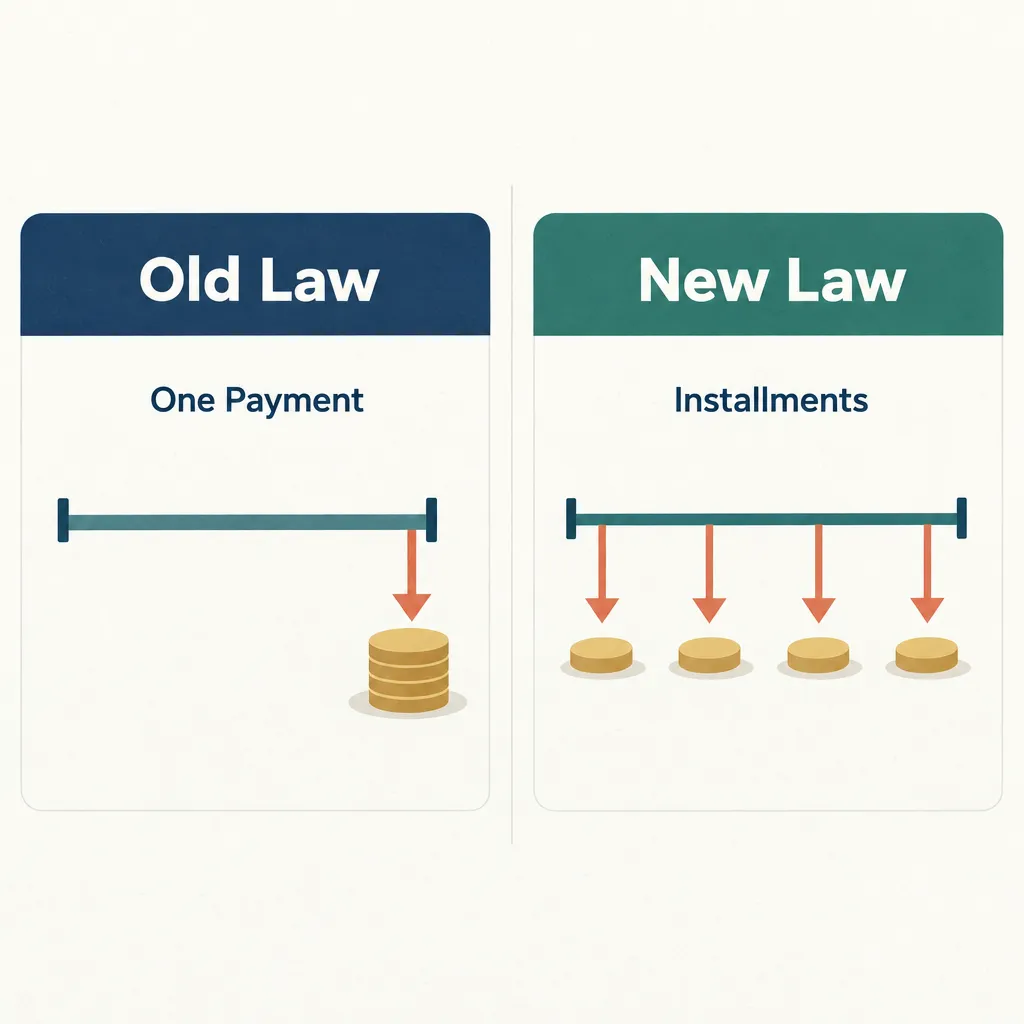
No. Act 56 of 2021 (House Bill 1192), signed under Gov. David Ige, ended deferred-deposit “payday” lending under the old HRS Chapter 480F as of January 1, 2022. It put a new kind of loan in its place: the small-dollar installment loan, licensed by the Hawaii Division of Financial Institutions (DFI) under HRS Chapter 480J.
Websites still advertise “payday loans in Honolulu.” If the lender is legal, it’s actually offering a 480J installment loan, and you repay it over several months instead of handing over a post-dated check.
What changed on January 1, 2022
Under the old law, a lender could take your personal check and hold it until your next payday for a single fee. The Pew Charitable Trusts’ consumer finance team worked with Hawaii lawmakers on the reform. Pew reported that payday APRs in Hawaii reached about 460%. It also found that borrowing $500 for four months under the old system could cost $700 in finance charges.
| Feature | Payday law (HRS 480F, pre-2022) | HRS 480J installment loan (2026) |
|---|---|---|
| Loan structure | One payment, held check | Fully amortized installments |
| Maximum loan | Check of up to $600 | $1,500 |
| Term | Up to 32 days | 2 to 12 months |
| Price | Fee of up to 15% of the check | 36% interest plus capped monthly fee |
| Typical APR | Up to about 460% (Pew) | Far lower; see cost table below |
| Total-cost ceiling | None | 50% of principal |
| Cancellation right | None | Rescind by third business day |
| Who regulates | DFI | DFI (license under 480J) |
Did you know?
According to the Pew Charitable Trusts’ 2021 analysis, a $500 loan repaid over four months could cost $700 in finance charges under Hawaii’s old payday law. The same loan under the new rules costs no more than $158.
Hawaii’s small-dollar installment loan rules (HRS Chapter 480J)
Chapter 480J sets every price and term limit for small loans in Hawaii. In short, you get $1,500 at most, a term of 2 to 12 months, 36% interest and one capped monthly fee. Total charges can’t go above 50% of the loan, and almost no other fees are allowed.
| Rule | Limit | Statute | Changed by Act 116 (2025)? |
|---|---|---|---|
| Maximum loan | $1,500 | HRS Chapter 480J | No |
| Term | At least 2 months (loans of $500 or less) or 4 months (larger loans); at most 12 months | HRS 480J-5 | No |
| Interest | Up to 36% a year | HRS 480J-5 | No |
| Monthly maintenance fee | $25 to $35 by loan size | HRS 480J-5 | Yes: now prorated daily |
| Total loan charges | No more than 50% of principal | HRS 480J-5 | No |
| Origination fee | Banned | HRS 480J-2 | No |
| Insufficient-funds fee | $25 maximum, no other NSF-related fees | HRS Chapter 480J | No |
| Convenience fee | Now allowed | HRS 480J-2 (as amended) | Yes: added |
| Renewals | One renewal only | HRS Chapter 480J | No |
| Wait between loans | No 3-day wait | Act 116 (2025) | Yes: wait repealed |
| Right to rescind | By the third business day | HRS 480J-3(9), 480J-6 | No |
| Prepayment penalty | Banned | HRS Chapter 480J | No |
How much you can borrow and for how long
You can borrow up to $1,500. Loans of $500 or less must run at least two months, and larger loans at least four months. No loan can run longer than 12 months. Every loan has to be fully amortized, so each payment pays down part of the principal. The lender can’t leave a large balloon payment at the end.
Interest and monthly maintenance fees
The 36% rate in advertising is only part of the price. HRS 480J-5 also lets the lender charge a monthly maintenance fee on top of the interest, set by the size of the original loan. The fee is charged monthly in arrears, after each month of the loan has passed.
| Original principal | Max monthly maintenance fee | Proration |
|---|---|---|
| Under $300 | $25 | Daily for partial months (since 2025) |
| $300 to $699.99 | $30 | Daily for partial months (since 2025) |
| $700 or more | $35 | Daily for partial months (since 2025) |
Lenders can’t charge the maintenance fee to active-duty service members and dependents covered by the Military Lending Act. That keeps their loans within the federal 36% all-in limit.
The 50% lifetime cost cap
Total loan charges can’t be more than 50% of what you borrowed, no matter how long the loan runs. On a $1,000 loan, the lender can collect at most $500 in interest and fees combined. The cap matters most on longer loans, as the cost table below shows.
Fees lenders cannot charge
Under HRS 480J-2, an installment lender can’t charge an origination fee or any loan charge that Chapter 480J doesn’t expressly allow. If a payment bounces, the lender can charge you $25 at most. It can’t add any other fee because of the insufficient funds.
Did you know?
HRS 480J-2 bans origination fees on Hawaii small-dollar loans outright. In many mainland states, origination fees are a standard part of an installment loan’s price.
Renewals and taking out a new loan
You can renew a 480J loan only once. After that, you have to repay the debt in cash or its equivalent. The rule targets the cycle of rolling debt over that made payday loans so expensive. Since 2025, a lender no longer has to wait three days after you pay off one loan before making you another.
What changed in 2025: Act 116
Act 116 (Senate Bill 1367, CD1) made four changes to Chapter 480J. Gov. Josh Green signed it on May 29, 2025.
- Daily proration of maintenance fees. If you pay off partway through a month, the lender can charge the fee only for the days the loan was actually open. Before, paying off early in a month could still cost you a full month’s fee.
- A convenience fee. Lenders may now charge a convenience fee. This is a narrow exception to the rule that only listed charges are allowed.
- No three-day wait. The rule that made lenders wait three days after full repayment before making a new loan is gone.
- A sunset date. Act 116 is repealed on June 30, 2030. On that date, HRS 480J-2 and 480J-5 go back to their pre-2025 wording unless the Legislature acts first.
Daily proration helps you directly. Dropping the three-day wait cuts the other way, because it removes a pause that gave borrowers time to think before taking on new debt.
Pay off early when you can
Hawaii bans prepayment penalties, and maintenance fees are now prorated daily. If you clear the loan mid-month, you pay the fee only for the days you actually borrowed.
What a legal loan really costs in Hawaii
A legal Hawaii loan usually costs much more than 36% suggests, because the monthly fee comes on top of the interest. Some pages show only the interest on a $500, six-month loan ($53.79). The full legal cost of that loan is about $234.
The examples below are our own calculations from the statutory limits. They assume the maximum 36% rate, the maximum fee tier and equal monthly payments.
| Scenario | Interest (36%) | Maintenance fees | Total charges | 50% cap | Old payday cost |
|---|---|---|---|---|---|
| $250 over 2 months | $11.31 | $50 ($25 × 2) | $61.31 | $125 | n/a |
| $500 over 4 months | $38.05 | $120 ($30 × 4) | $158.05 | $250 | $700 (Pew) |
| $500 over 6 months | $53.80 | $180 ($30 × 6) | $233.80 | $250 | n/a |
| $1,000 over 6 months | $107.60 | $210 ($35 × 6) | $317.60 | $500 | n/a |
| $1,000 over 12 months | $205.55 | $420 ($35 × 12) | $500 (capped; uncapped would be $625.55) | $500 | n/a |
| $1,500 over 12 months | $308.32 | $420 ($35 × 12) | $728.32 | $750 | n/a |
$500 over 4 months
A 36% annual rate is 3% a month. A fully amortized $500 loan at 3% a month over four months has payments of about $134.51, or $538.05 in total, so the interest is $38.05. Add a $30 fee each month and each payment rises to about $164.51. Total charges come to $158.05, which matches Pew’s “no more than $158.”
The Truth in Lending Act requires fees like these to count in the finance charge behind the disclosed APR. Counted that way, the effective rate on this loan is about 144%. That’s far below the old 460%, but it isn’t 36%.
$1,000 and $1,500 examples
On a 12-month, $1,000 loan, interest and fees would add up to about $625. The 50% cap cuts that to $500, so the lender has to waive the rest. On a $1,500 loan over 12 months, charges come to about $728, just under the $750 cap, for an effective APR of roughly 80%.
Old payday loan vs. today’s installment loan
Because of how the fees work, short, small loans have the highest effective APR, while longer, larger loans cost the most in dollars. That’s usually the answer when a borrower says, “The loan says 36%, but I’m paying way more than that.” Check your disclosure: the finance charge and APR in the Truth in Lending box should include the fees.
Add up the fees, not just the rate
Before you sign, multiply the monthly maintenance fee by the number of months and add the interest. On a $500 loan, the fees alone can be three times the interest.
Your rights as a borrower in Hawaii
Chapter 480J gives you rights the old payday law never did. You can cancel quickly, pay off early for free and get a written contract. If the lender has no license, you can walk away from the loan.
Canceling a loan within three business days
Under HRS 480J-6, you can rescind (cancel) the loan by the end of the third business day after it’s made. HRS 480J-3(9) requires your written agreement to tell you about this right. In practice, you return the loan money and tell the lender in writing. Keep proof of both.
Paying off early
You can repay all or part of the loan at any time with no penalty. With daily proration, paying early saves you interest and part of the maintenance fee too.
If a lender isn’t licensed
A small-dollar installment loan made by a lender without a Hawaii license is void and uncollectable under Act 56. The lender can’t legally collect the principal, the interest or the fees. This applies to storefront, online and out-of-state lenders alike. Living in Hawaii is what matters, not where the lender is based or whether it says another state’s law applies. If a lender without a license is debiting your account, the steps in the online-lenders section below explain how to stop it. The rest of this page refers back to this section rather than repeating it.
Car title loans in Hawaii
No Hawaii law authorizes car title loans. A loan secured by your car is still a consumer loan, so the state’s interest limits apply. Under HRS 478-4, consumer credit is generally capped at 12% a year. Financial institutions regulated under HRS Chapter 412 may charge up to 24%. Licensed financial services loan companies follow their own rate rules under HRS 412:9-301 and 412:9-302.
None of these laws allow the triple-digit prices that title lenders charge in some mainland states. A website offering you a title loan at 25% a month is a warning sign. Under HRS 478-5, a lender that charges interest above the lawful rate forfeits all of the interest and can recover only the principal.
Installment and personal loans in Hawaii, including bad credit
For more than $1,500, a personal loan in Hawaii falls outside Chapter 480J, and the rules that apply depend on the type of lender and the transaction, including the general usury law and its exemptions and the rules for financial institutions under Chapter 412. DFI’s guidance on usury says lenders charging more than the HRS Chapter 478 limits may need a license and must follow the higher-rate provisions of HRS 412:9-301 and 412:9-302.
If you have bad credit, you’ll most likely see these options in Hawaii:
- Licensed 480J lenders: up to $1,500, often with a soft or limited credit check, priced at the legal maximum.
- Credit unions: payday alternative loans and small personal loans, often cheaper but open only to members.
- Banks and licensed finance companies: larger amounts, usually with a full credit check.
“No credit check” ads are marketing. A legal lender still checks your income, your bank history or some other data source. You pay for the extra risk through the highest rates the law allows.
What a licensed 480J lender will ask for
A licensed lender that doesn’t pull a full credit report still has to confirm who you are and whether you can repay. You can expect to be asked for:
- Proof of age and identity: a government-issued photo ID showing you are at least 18.
- A checking account in your name: this is where the loan is deposited and where the payments usually come from, so lenders often ask for recent statements or access to verify the account.
- Verifiable income: pay stubs, benefit letters or bank deposits that show regular income.
- Contact details and a Hawaii address: the loan falls under Chapter 480J because you live in Hawaii.
Watch for a lender that asks for something different, such as a fee paid up front, a gift card or your online banking password. A legitimate 480J lender can’t charge an origination fee, so a demand for money before you get the loan is a scam red flag, not a fee.
Online, out-of-state and tribal lenders offering payday loans in Hawaii
Living in Hawaii doesn’t stop online lenders from advertising to you. Hawaii law applies to loans made to Hawaii residents, and loans made without a 480J license are void, as explained in the borrower rights section above. Some tribal-affiliated lenders claim sovereign immunity from state law. That claim doesn’t make a 400% APR loan legal in Hawaii, and it doesn’t stop you from complaining to state and federal regulators.
To confirm whether an online lender is licensed before you share your bank details, follow the five steps in “How to check a Hawaii lender’s license and file a complaint” below.
If you already have a high-APR online loan
- Look up the lender on DFI’s list and in NMLS Consumer Access. If it isn’t licensed, the loan is void under Chapter 480J.
- Revoke your ACH authorization in writing with the lender. Under the Electronic Fund Transfer Act’s Regulation E (12 CFR 1005.10), you can also tell your bank to stop preauthorized payments if you notify it at least three business days before a scheduled payment.
- Dispute the debt in writing and keep copies of every message.
- File complaints with DFI, the DCCA Office of Consumer Protection and the Consumer Financial Protection Bureau (CFPB).
Stop the automatic withdrawals
Send a written revocation to the lender and a stop-payment request to your bank, and keep dated copies. If debits keep coming after you’ve revoked, you can dispute them with your bank as unauthorized.
Debt collection, lawsuits and wage garnishment in Hawaii
Not paying a loan is a civil matter. A lender can sue you, but it can’t have you arrested over the debt. Federal law and Hawaii law both limit what collectors can do. Our guide to debt collection rights covers the federal rules in more detail.
Can you be arrested?
No. You can’t be jailed for owing consumer debt. A collector who threatens arrest may be breaking the Fair Debt Collection Practices Act. Third-party collectors also fall under Hawaii’s collection agency law (HRS Chapter 443B), and creditors collecting their own debts fall under HRS Chapter 480D. The one real court risk is ignoring a court order, such as a summons to appear after a judgment.
How long can a lender come after you?
Under HRS 657-1, a lender generally has six years from the date of default to sue on a contract debt. After that, the debt is time-barred, although collectors may still contact you. Under HRS 657-24, signing a written acknowledgment or a new promise to pay can restart the clock. Get advice before you sign anything about an old debt. Other states set different deadlines, and our statute of limitations on debt by state guide lists them.
Wage garnishment limits
Only a creditor that has won a court judgment can garnish your wages. Hawaii’s limit under HRS 652-1 is usually lower than the federal one.
| Weekly disposable earnings | Maximum garnished under HRS 652-1 |
|---|---|
| First $100 | 5% |
| Next $100 | 10% |
| Everything above $200 | 20% |
For example, on $700 in weekly disposable earnings, the most that can be garnished under Hawaii law is $5 + $10 + $100 = $115. Federal law generally caps garnishment at the lesser of 25% of disposable earnings or the amount by which weekly disposable earnings exceed 30 times the federal minimum wage. When the two rules differ, the one that protects more of your pay applies.
What to do if you’re sued
Respond by the deadline on the summons. If you don’t, the lender can get a default judgment against you. Ask the lender to prove it has a Hawaii license and that the debt isn’t time-barred. The Legal Aid Society of Hawaii helps eligible residents with consumer cases.
Federal rules that apply everywhere
Three federal laws apply on top of Hawaii’s rules.
- Truth in Lending Act / Regulation Z (12 CFR 1026): every lender must disclose the APR and the total finance charge before you sign.
- Fair Debt Collection Practices Act: third-party debt collectors can’t threaten, harass or lie to you.
- Military Lending Act: caps the Military Annual Percentage Rate (MAPR), which counts most fees, at 36% for active-duty service members and covered dependents. That matters in Hawaii, which has large Army, Navy, Marine Corps and Air Force installations. Because the maintenance fee can’t be charged to service members, 480J loans stay within the cap.
The CFPB payday lending rule in 2026
All that remains of the CFPB Payday Lending Rule (12 CFR 1041) is its payment provisions, which took effect March 30, 2025. The ability-to-repay rules were rescinded in 2020. Under the payment provisions, a covered lender that fails twice in a row to withdraw a payment can’t try again without your new authorization. It also has to send notices before withdrawals. The CFPB said it would not prioritize enforcing these provisions. Its 2026 regulatory agenda, published in July 2026, lists a reconsideration of what remains of the rule. As of November 2026, that reconsideration hasn’t been finalized.
Which states have banned payday loans? Hawaii compared with other states
Twenty states plus Washington, D.C., cap payday loan rates at around 36% APR including fees, or use other limits that keep high-cost payday lending out, according to the Center for Responsible Lending (CRL). Hawaii ended single-payment payday loans in 2022. Because it allows a monthly fee on top of 36% interest, though, it’s usually counted as a reform state, not one of the all-in 36% cap states. Our state-by-state payday loan laws hub covers each state’s current rules.
Outright ban vs. a 36% cap
Few states have a law that says “payday loans are illegal.” Most block them in one of two ways:
- No authorizing law: some states never passed a payday loan law, or repealed theirs, so lenders have to follow the general small-loan or usury caps.
- An all-in rate cap: other states let lenders make the loans but cap the APR, fees included, at about 36%. At that price, the two-week payday model can’t make money, so storefronts close.
Hawaii is a third type. It repealed the authorization for payday loans and created a new installment product. As the cost table above shows, that product’s all-in APR can still be well above 36%.
| Approach | States | What borrowers see |
|---|---|---|
| Cap of about 36% APR with fees, or no payday law (CRL’s count: 20 states plus DC) | Arizona, Arkansas, Colorado, Connecticut, Georgia, Illinois (2021), Maryland, Massachusetts, Minnesota (2024), Montana, Nebraska (2020), New Hampshire, New Jersey, New Mexico (2023), New York, North Carolina, Pennsylvania, South Dakota, Vermont, West Virginia, District of Columbia | No legal storefront payday loans; small loans priced near 36% |
| Payday lending replaced by installment loans with fees on top of interest | Hawaii (2022), Virginia (2020), Ohio (2018) | Longer, cheaper loans, but effective APRs above 36% on small, short loans |
| Single-payment payday loans still allowed | Most remaining states, including Nevada and Idaho | APRs of roughly 140% to 662%, according to CRL’s state map |
Minnesota’s 2024 law sets a 36% all-in cap but allows rates of 37% to 50% only when the lender meets strict ability-to-repay requirements. Nebraska’s cap came from a 2020 ballot measure, and Illinois’ came from its Predatory Loan Prevention Act of 2021.
Hawaii’s western neighbors
Hawaii’s approach is closest to Ohio’s and Virginia’s: affordable installments with a fee on top, not a pure 36% all-in cap. Western states vary widely. Our guides to Nevada payday loan laws and Idaho payday loan laws cover two states that still allow much higher-cost loans. Our Oregon payday loan laws guide covers a state whose caps are closer to Hawaii’s model.
Help that costs less: financial assistance in Hawaii
Before you take a 480J loan, check options that cost less or nothing at all. A federal credit union payday alternative loan costs at most 28% APR plus a fee of up to $20. Military relief societies, payment plans and some employer pay programs cost even less.
Cheaper options first
A credit union PAL is capped at 28% APR with at most a $20 application fee. Military relief societies make interest-free loans. Utilities and landlords often agree to payment plans before charging late fees.
| Option | Cost | Limits | Who it fits |
|---|---|---|---|
| Federal credit union PAL I | Max 28% APR; fee up to $20 | $200 to $1,000; 1 to 6 months | Members of at least one month |
| Federal credit union PAL II | Max 28% APR; fee up to $20 | Up to $2,000; 1 to 12 months | New or existing members |
| Navy-Marine Corps Relief Society, Army Emergency Relief, Air Force Aid Society | Often interest-free loans or grants | Emergency needs | Service members and families |
| Employer pay advance | Often free | Depends on employer | Employees with a program |
| Earned wage access (EWA) through your employer | Free standard transfer; flat expedite fee (CFPB average $3.18 when paid) or optional tip | Part of wages already earned; repaid from next paycheck | Workers whose employer offers EWA |
| Payment plan with utility or landlord | Usually free | Case by case | Anyone behind on bills |
The PAL limits come from the National Credit Union Administration (NCUA) rules at 12 CFR 701.21(c)(7). Our guide to credit union payday alternative loans explains how to qualify. Aloha United Way’s 211 line connects you to rent, utility and food help across the islands. The Hawaii Department of Human Services runs the Low Income Home Energy Assistance Program. On Oahu, Honolulu Community Action Program and Catholic Charities Hawaii offer emergency help. Nonprofit credit counselors, such as members of the National Foundation for Credit Counseling, can go over a repayment plan with you.
Earned wage access in Hawaii
Earned wage access lets you draw part of the pay you’ve already earned before payday, usually through an app your employer works with. Free standard transfers can be the cheapest option on this page. Expedite fees and tips add up quickly, though.
The CFPB’s July 2024 data spotlight looked at eight employer-partnered EWA providers. When workers paid a fee, it averaged about $3.18 per transaction, and workers paid an average of $68.88 a year in fees. The CFPB calculated an illustrative APR of 109.5% for a typical transaction. Here is the math on a single advance:
| Advance | Fee | Repaid from paycheck in | Total repaid | APR equivalent |
|---|---|---|---|---|
| $100 | $3.18 expedite fee | 14 days | $103.18 | About 83% |
| $100 | $3.18 expedite fee | 7 days | $103.18 | About 166% |
| $100 | $0 (standard transfer) | 14 days | $100 | 0% |
The APR is the fee divided by the advance, multiplied by 365 and divided by the number of days: 3.18 ÷ 100 × 365 ÷ 14 ≈ 83%.
The regulators disagree on what EWA is. On December 23, 2025, the CFPB issued an advisory opinion saying employer-partnered “covered EWA” isn’t credit under the Truth in Lending Act and Regulation Z, and that optional expedite fees and voluntary tips aren’t finance charges. The opinion isn’t binding on states. The National Consumer Law Center argues these products are loans. As of November 2026, Hawaii has no EWA-specific law. A 2024 bill, SB 2664, would have treated earned wage advances and other fintech cash advances as loans under Hawaii’s rate limits, but it was deferred in committee. Direct-to-consumer cash advance apps that aren’t tied to your employer fall outside the CFPB’s covered-EWA definition.
How to check a Hawaii lender’s license and file a complaint
Before you give a lender your bank details, check that it appears on DFI’s list of authorized small-dollar installment lenders and holds a current Hawaii license in NMLS Consumer Access. DFI, part of the Department of Commerce and Consumer Affairs (DCCA), licenses and supervises small-dollar lenders. The DCCA Office of Consumer Protection handles unfair or deceptive practices, and the CFPB takes complaints about lenders and collectors nationwide.
DFI’s most recent published list of authorized lenders is dated February 8, 2024, and includes Money Mart. A company that isn’t on that list and doesn’t show a Hawaii license in NMLS can’t legally make you a 480J loan.
How to check a lender
- Find the company’s full legal name and NMLS ID in its loan agreement or on its website.
- Search the name on DFI’s list of authorized small-dollar installment lenders.
- Confirm a current Hawaii license in NMLS Consumer Access.
- Compare the contract against the 480J limits: $1,500 maximum, 36% interest, capped fees, no origination fee.
- If anything is missing or wrong, file complaints with DFI, the Office of Consumer Protection and the CFPB.
If it’s a scam, such as an “advance fee” to get a loan, also report it to the FTC at ReportFraud and to the FBI’s Internet Crime Complaint Center (IC3).
Before you borrow
Even a legal Hawaii loan can cost up to half of what you borrow in charges, and the monthly fee makes short loans far more expensive than “36%” suggests. If the lender isn’t on DFI’s list, don’t give it your bank account.
FAQ
Can I still get a payday loan in Hawaii, or did they get rid of them?
They got rid of them. Single-payment payday loans have been illegal since January 1, 2022. The legal replacement is a licensed 480J installment loan of up to $1,500, repaid over 2 to 12 months.
Which states have banned payday loans?
According to the Center for Responsible Lending, 20 states plus Washington, D.C., cap payday rates at around 36% APR including fees or otherwise keep high-cost payday loans out. Those states include New York, Pennsylvania, North Carolina, Illinois and Minnesota. Hawaii ended single-payment payday loans in 2022 but allows fees on top of 36% interest, so it’s grouped with reform states like Virginia and Ohio.
Is Money Mart still doing loans in Hawaii, and what do they charge now?
Money Mart appears on DFI’s February 2024 list of authorized small-dollar installment lenders. Every licensed lender, Money Mart included, is bound by the same Chapter 480J limits: 36% interest, a maintenance fee of up to $35 a month, and total charges capped at 50% of principal. Check your own disclosure for the exact figures.
An online lender approved me at 400% APR even though I live in Hawaii. Is that legal, and do I have to pay it back?
It isn’t legal for a Hawaii resident. A loan made without a Hawaii 480J license is void and uncollectable, as the borrower rights section explains. Revoke the ACH authorization, keep records, and file complaints with DFI and the CFPB.
Are earned wage access and cash advance apps legal in Hawaii?
Yes. Hawaii has no law that bans or licenses them specifically, and the CFPB’s December 2025 advisory opinion says employer-partnered EWA isn’t credit under federal lending law. They aren’t free by default, though: an expedite fee of $3 on a $100 advance repaid in two weeks works out to an APR of about 78%.
What do I need to qualify for a small-dollar loan in Hawaii?
Licensed lenders typically ask for photo ID showing you’re 18 or older, a checking account in your name, proof of regular income and a Hawaii address. A lender that asks for an upfront fee is a red flag, because 480J lenders can’t charge origination fees.
Can a payday lender have me arrested or garnish my wages if I can’t pay?
It can’t have you arrested, because unpaid debt is a civil matter. To garnish your wages, it first has to sue you and win a judgment. HRS 652-1 then limits garnishment to 5% of the first $100 of weekly disposable earnings, 10% of the next $100 and 20% of the rest.
My old payday debt went to collections years ago. Can they still sue me?
Generally only within six years of default under HRS 657-1. Under HRS 657-24, a written acknowledgment or a new promise to pay can restart that clock, so check the dates before you agree to anything.
I’m military in Hawaii. Do the rules apply to me differently?
Yes. The Military Lending Act caps your all-in MAPR at 36%, and Hawaii lenders can’t charge you the 480J maintenance fee. Before you borrow, ask your base’s relief society about an interest-free loan, which is usually the cheaper option.
Laws and regulations referenced
- Hawaii Revised Statutes, Chapter 480J (Installment Loans)
- Hawaii Revised Statutes, Chapter 480F (Check Cashing; deferred deposit section 480F-4 repealed)
- Truth in Lending Act, 15 U.S.C. 1601
- Regulation Z, 12 CFR Part 1026
- Fair Debt Collection Practices Act, 15 U.S.C. 1692
- Electronic Fund Transfer Act, 15 U.S.C. 1693
- Regulation E (electronic transfers), 12 CFR Part 1005
- Military Lending Act, 10 U.S.C. 987
- CFPB payday lending rule, 12 CFR Part 1041
Links go to the official text on government sites.
Check, verify or complain
Sources
- Hawaii DFI: 2021 New Law, Small Dollar Loans / Installment Loans cca.hawaii.gov · official source
- Governor's Message 1216 (Act 116, SB1367), 2025 data.capitol.hawaii.gov · official source
- Session Laws of Hawaii 2025, Act 116 data.capitol.hawaii.gov · official source
- SB1367 HD1 CD1 (2025) data.capitol.hawaii.gov · official source
- HB1048 (2025) Relating to Installment Loans data.capitol.hawaii.gov · official source
- HRS 480J-2 data.capitol.hawaii.gov · official source
- HRS Chapter 480J data.capitol.hawaii.gov · official source
- HRS 480J-3 data.capitol.hawaii.gov · official source
- DFI List of Small Dollar Installment Lenders Authorized to Do Business (02.08.2024) cca.hawaii.gov · official source
- HRS 657-1 data.capitol.hawaii.gov · official source
- HRS 652-1 data.capitol.hawaii.gov · official source
- HRS 478-4 data.capitol.hawaii.gov · official source
- HRS 478-5 data.capitol.hawaii.gov · official source
- Hawaii DFI: Usury & Consumer Loans cca.hawaii.gov · official source
- HB1048 HD1 (2025) data.capitol.hawaii.gov · official source
- Pew Charitable Trusts: Hawaii Adopts Comprehensive Payday Lending Reform pewtrusts.org
- CNBC: Hawaii enacts new restrictions on payday loan rates and repayments cnbc.com
- NCLC: Rule on bounced payday and high-cost loan payments now in effect library.nclc.org
- CFPB releases 2026 regulatory agenda detailing planned rulemakings consumerfinanceserviceslawmonitor.com
- ABA Banking Journal: CFPB will not enforce small-dollar rule bankingjournal.aba.com
- MoneyLion - Online Payday Loans in Hawaii (May 2026) moneylion.com
- Orrick InfoBytes - CFPB will not enforce payday lending rule infobytes.orrick.com
- Sheppard Mullin - CFPB 2026 regulatory agenda payday rule NPRM sheppard.com
- Middle Investments - Hawaii Payday Loan Laws middleburginvestments.com

Elena writes about getting through a money emergency, assistance programs, budgeting on a tight income, banking basics and borrower rights. Her guides list the cheaper options first and link the agency or program that can actually help.
Ruth is US Financer's standards editor. Every article goes through her checks before and after it is published: each rate, fee, cap, deadline and rule is matched against its primary source, every law named is linked to its official text, and anything that cannot be…
What changed
- Nov 26, 2026 First published.
Comments are closed