

General information, not legal advice. Laws change, so confirm with the official statute, your state regulator or a licensed attorney before you act.
Payday loans are legal in Washington, but only from lenders licensed by the Department of Financial Institutions, and with tight limits. You can owe no more than $700 or 30% of your gross monthly income, whichever is less, across all payday loans at once. The fee is capped at 15% of the first $500 and 10% of the amount above $500, which works out to a 391% APR on a 14-day, $500 loan.
Run the numbers
Key takeaways
- The $700 cap counts every payday loan you owe at once, and a statewide database enforces it.
- You can take no more than 8 payday loans in any 12-month period.
- If you can’t repay, ask for a no-fee installment plan on or before the due date: at least 90 days for loans of $400 or less, at least 180 days for loans over $400.
- A lender can’t threaten jail or criminal charges. A small loan from an unlicensed lender can’t be collected in Washington under RCW 31.45.105.
- A 2026 bill to raise the cap to $1,200 plus inflation (SB 6250) did not pass, so the $700 limit still applies.
Fact-checked
We checked these key facts against the sources named, on November 25, 2026:
- Total fees in 2024 came to $17,038,938 (source: dfi.wa.gov)
- PAL I loans run from $200 to $1,000 over one to six months (source: americascreditunions.org)
- If you can’t find it, call DFI at 1-877-RING-DFI (1-877-746-4334) (source: dfi.wa.gov)
- DFI’s 2024 Payday Lending Report puts the average loan at $471.29 and the average fee at $59.37 (source: dfi.wa.gov)
- A $700 loan has a lower APR than a $500 loan because the last $200 is charged at 10% instead of 15% (source: app.leg.wa.gov)
Washington payday loan laws at a glance (2026)
Washington regulates payday loans, which state law calls “small loans,” under RCW 31.45 (Check Cashers and Sellers) and the Department of Financial Institutions’ rules in WAC 208-630. The rules below are current as of November 2026. None of them changed in the 2026 legislative session.
| Rule | Limit | Statute or rule | What it means for you |
|---|---|---|---|
| Maximum amount | $700 or 30% of gross monthly income, whichever is less | RCW 31.45.073 | The cap covers all your outstanding payday loans combined |
| Maximum fee | 15% of the first $500, 10% of the amount from $500 to $700 | RCW 31.45.073 | $75 on a $500 loan, $95 on a $700 loan |
| Maximum term | 45 days | RCW 31.45.073 | The due date can’t be set later than 45 days out |
| Loan count | 8 payday loans in any 12 months | RCW 31.45.073 | Your ninth loan in a year will be refused |
| Refinancing | No new loan to pay off an old one from the same lender or an affiliate | RCW 31.45.073 | Rollovers are banned |
| Statewide database | Every loan is reported | RCW 31.45.093 | Lenders check your total debt and loan count before lending |
| Cancellation | Right to cancel within one day | RCW 31.45, WAC 208-630 | Return the money by the deadline and you owe no fee |
| Installment plan | At least 90 days ($400 or less), at least 180 days (over $400), no fee to enter | RCW 31.45.084, WAC 208-630 | You can pay off the loan over time without a new fee |
| Returned payment and default fees | $25 NSF fee; $25 default fee if an installment is more than 10 days late | RCW 31.45, WAC 208-630 | These are the only extra charges the rules allow |
| Collection conduct | No criminal threats or harassment | RCW 31.45.082 | A lender can’t say you’ll be charged with check fraud |
| Unlicensed loans | Uncollectible and unenforceable in Washington | RCW 31.45.105 | A loan of up to $700 from an unlicensed lender can’t be enforced here |
How much you can borrow
You can owe no more than $700 or 30% of your gross monthly income, whichever is less, under RCW 31.45.073. The limit applies to your total payday debt across every lender, not loan by loan.
Most of the extra rules exist to stop people from stacking loans. Before Washington’s 2009 reform, borrowers could take loans from several stores at once. The 2009 law, which took full effect in 2010, created the income test, the 8-loan yearly limit and the statewide database lenders use to track outstanding loans.
The 30% income test, worked out
The lender uses your gross pay, meaning your pay before taxes. Multiply it by 0.30 and compare the result with $700. The lower number is your cap.
| Gross monthly income | 30% of income | Your maximum payday debt |
|---|---|---|
| $1,500 | $450 | $450 |
| $2,000 | $600 | $600 |
| $2,333 | $700 | $700 |
| $4,000 | $1,200 | $700 |
Anyone earning about $2,333 a month or more hits the flat $700 cap. Below that, your income sets the limit.
Work out your own cap first
Multiply your gross monthly pay by 0.30. If the result is under $700, that is the most you can owe across all payday loans combined. Knowing this before you walk in saves you from a refused application.
Why a second lender will turn you down
Every licensed lender has to check the Washington payday loan statewide database before making a loan and report the loan once it’s made (RCW 31.45.093). If a $500 loan already sits in the database against your name, a second store can lend you at most $200, and only if your income allows it.
Readers often ask: “Why did the store deny me for having another loan when I paid it off?” Usually the payoff hasn’t been recorded yet, or you’ve used up your 8 loans for the past 12 months. Ask the lender which reason the database gave. If your loan really is paid, the lender that made it has to close it in the system. If that doesn’t happen, DFI’s complaint line can sort it out.
What a payday loan really costs in Washington
The most a licensed lender can charge is 15% of the first $500 you borrow plus 10% of anything above $500, under RCW 31.45.073. On a short loan, that flat fee becomes a very high APR.
The 15%/10% fee formula
The math is simple. For loans up to $500, multiply the amount by 0.15. For loans above $500, take $75 and add 10% of the amount over $500. A $650 loan costs $75 plus $15, so $90.
The Truth in Lending Act and Regulation Z (12 CFR 1026) make the lender state the finance charge and the APR in writing before you sign. To work out APR yourself, divide the fee by the loan amount, divide by the number of days in the term, then multiply by 365.
APR at 14 days vs. 45 days
The table below shows the maximum fee at four loan sizes, worked out for a two-week loan and for the 45-day maximum term.
| Loan amount | Maximum fee | Total to repay | APR if 14 days | APR if 45 days |
|---|---|---|---|---|
| $100 | $15 | $115 | 391% | 122% |
| $300 | $45 | $345 | 391% | 122% |
| $500 | $75 | $575 | 391% | 122% |
| $700 | $95 | $795 | 354% | 110% |
Here is the math on the $500 loan: $75 divided by $500 is 15%. Over 14 days, 15% × (365 ÷ 14) is about 391%. Stretch the same fee over 45 days and the APR falls to about 122%, because you’re paying the same $75 for more than three times as long.
A $700 loan has a lower APR than a $500 loan because the last $200 is charged at 10% instead of 15%. That doesn’t make it cheap. You still pay $95 in fees, and you have to repay $795 in one go.
DFI’s 2024 Payday Lending Report puts the average loan at $471.29 and the average fee at $59.37. That fee is about 12.6% of the average loan, a little under the 15% maximum. At the cap, a $471 loan would cost about $70.
Did you know?
According to DFI’s 2024 Payday Lending Report, Washington borrowers paid $17,038,938 in payday loan fees across 286,993 loans that year.
Fees that can be added: $25 NSF, $25 default
Only two charges can be added on top of the loan fee. If your check or debit bounces, the lender can charge a $25 NSF fee. If you’re on an installment plan and miss a payment by more than 10 days, the lender can charge a $25 default fee. Your own bank may charge its own overdraft or returned-item fee too, and that charge is separate from the lender’s limits.
The 8-loan limit and the ban on rollovers
You can take no more than 8 payday loans in any rolling 12-month period, counting every licensed lender, under RCW 31.45.073. A lender also can’t make you a new loan to pay off a loan you already owe it or one of its affiliates.
Every loan counts toward the 8, including small ones and loans you repaid early. The window is rolling. It looks back 12 months from the day you apply, not from January 1.
Some websites call the 8-loan limit a “cooling-off period.” It isn’t one. A cooling-off period is a mandatory waiting time between loans, which some states require. Washington doesn’t make you wait a set number of days between loans. It caps the total number per year and blocks rollovers instead.
The rollover ban is what stops the classic payday cycle of paying only the fee and carrying the balance forward. People ask: “How do I get out of the cycle of taking a new payday loan every paycheck?” In Washington, the legal route out is the installment plan described below. Once you’re on a plan, you can’t take another payday loan until it’s paid off, which forces the cycle to stop.
Your rights as a borrower
Washington gives you a one-day right to cancel, written cost disclosures, and protection from harassment and criminal threats. The collection rules are in RCW 31.45.082.
Cancel within one day
Under RCW 31.45 and DFI’s rules, you can cancel a payday loan within one day and owe no fee. You cancel by giving back the full amount you borrowed by the deadline the lender has to disclose. If you have second thoughts the morning after, return the cash.
What lenders can’t do when collecting
RCW 31.45.082 limits how a licensed payday lender can collect. In short, a lender can’t:
- Threaten you with jail, criminal prosecution or check fraud charges over an unpaid loan.
- Harass you, use abusive language or contact you in ways meant to intimidate.
- Charge collection fees beyond those the law allows, such as the $25 NSF fee.
A lender can still sue you in civil court, like any other creditor. It can’t turn a civil debt into a criminal matter.
Another common question: “The collector says I’ll be charged with check fraud. Can they do that?” No. A payday loan check is a promise to repay, not a fraudulent check. Write down the date, time, caller and exact words, then file a complaint with DFI.
Document every threat
If a lender or collector threatens jail or criminal charges, write down the date, time and wording right away and file a DFI complaint. Washington law prohibits those threats, and notes you made at the time carry more weight than a memory weeks later.
Can’t repay? How to get a no-fee installment plan
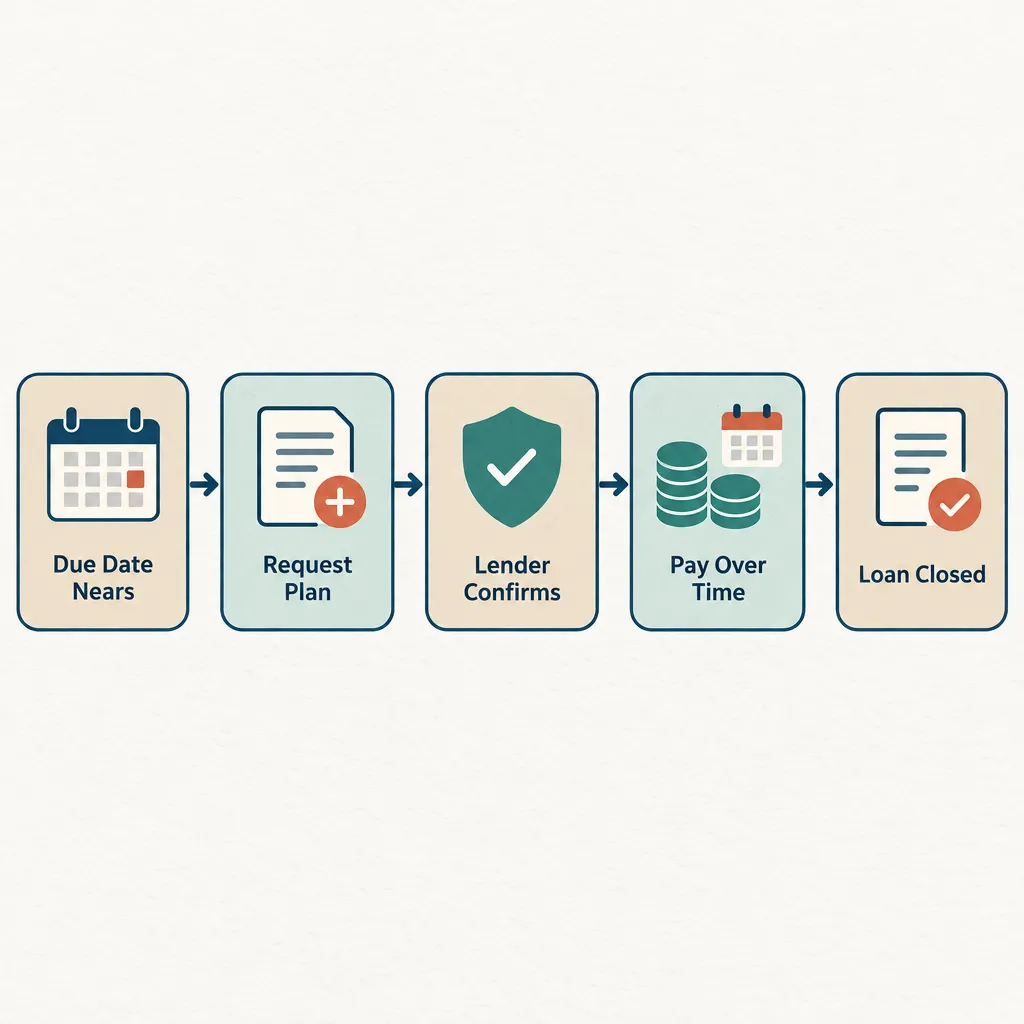
If you can’t repay on time, Washington law gives you the right to turn your payday loan into an installment plan with no fee to set it up, as long as you ask on or before the due date. The rules are in RCW 31.45.084 and WAC 208-630, and DFI explains them in its check casher FAQs.
Who qualifies and when to ask
Any borrower with an outstanding loan from a licensed Washington payday lender can ask. The one firm deadline is timing: you must ask on or before the due date. If you wait until after the lender has deposited your check or run the debit, you may lose the easiest route.
So the answer to “I can’t pay my payday loan on the due date. Can I get a payment plan or will they cash my check?” is that you can get a plan if you ask before the deadline. Ask early.
Plan length by loan size
| Loan size | Minimum plan length | Fee to enter | Default fee |
|---|---|---|---|
| $400 or less | At least 90 days | $0 | $25 if an installment is more than 10 days late |
| Over $400 | At least 180 days | $0 | $25 if an installment is more than 10 days late |
As an example, take a $500 loan with a $75 fee, so you owe $575. On a 180-day plan with payments every two weeks, that’s about 13 payments of roughly $44, instead of $575 at once. The lender can’t add a new fee for the plan.
What you need before you ask
- Your loan agreement or receipt, with the loan number and due date.
- The lender’s legal name and branch phone number.
- Your pay schedule, so you can suggest installment dates that match your paydays.
- A way to keep a record: email, a letter you photograph, or notes from the call.
Step by step: asking for the plan
- Contact the lender before the due date. Call or visit, and follow up in writing if you can.
- Use clear words. For example: “I’m asking to convert my loan, number [Loan number], to an installment plan under Washington law. I can’t repay the full amount on [Due date].”
- Ask for the schedule in writing. It should show each payment amount and date and add up to what you owe.
- Check that no new fee was added. The total should equal your original loan plus the original fee.
- Keep a copy. Store the signed plan and any emails where you can find them.
- Set reminders for each installment. A payment more than 10 days late can trigger the $25 default fee.
Expected result: a written plan that spreads what you owe over at least 90 or 180 days, with no added charge and no lump-sum deposit of your check on the original due date.
Common mistakes and what goes wrong
- Asking after the due date. The right attaches to requests made on or before it.
- Taking a new payday loan to cover the old one. The rollover ban blocks this, and you can’t take a new payday loan while you’re on a plan.
- Accepting a “renewal” that charges a new fee. That isn’t the installment plan the law gives you. Report it to DFI.
- Missing a payment silently. If an installment will be late, call before the 10-day grace runs out.
Put the request in writing
Ask for the installment plan on or before your due date, in writing if you can, and keep a copy. The lender cannot charge a fee to set it up.
What happens if you miss an installment
If an installment goes unpaid for more than 10 days, the lender can charge one $25 default fee and treat the loan as in default. It can then try to collect the rest, send the debt to a collector or sue. It still can’t threaten criminal charges, and the RCW 31.45.082 conduct rules still apply.
What happens if you don’t pay a payday loan in Washington
Not paying a payday loan is a civil matter, not a crime. The lender can try to collect, hand the account to a collection agency or sue you. Your wages can be garnished only after a court judgment.
Can you go to jail?
No. You can’t be jailed for failing to repay a payday loan, and RCW 31.45.082 bars lenders from threatening criminal action. The only way jail comes into a debt case is if someone ignores a court order, such as an order to appear. That’s why you should never ignore a court summons, even for a debt you dispute.
How long can they come after you?
A payday loan agreement is a written contract, and Washington’s statute of limitations on written contracts is six years under RCW 4.16.040. After that, a lawsuit on the debt can generally be dismissed if you raise the time limit as a defense. Making a payment can complicate the timing, so get legal advice before paying on a very old debt.
If a lender wins a lawsuit, it gets a judgment, and that lasts much longer than the debt itself. A judgment lets it ask the court for a writ of garnishment against your wages or bank account.
On consumer debts, RCW 6.27.150 protects the greater of 80% of your weekly disposable earnings or 35 times the state minimum hourly wage. At Washington’s 2026 minimum wage of $17.13, that floor is $599.55 a week. Federal benefits such as Social Security also get extra protection in bank accounts under federal rules (31 CFR part 212).
Debt collectors and the FDCPA
If a third-party collection agency takes over your loan, the federal Fair Debt Collection Practices Act applies. It bans false threats, harassment and misleading statements, and it gives you the right to dispute the debt in writing. Washington’s own Collection Agency Act (RCW 19.16) also requires collection agencies to be licensed by the Washington Department of Licensing and limits what they can do.
Decision guide: “I can’t repay”
| Who you owe | What the law says | First thing to do |
|---|---|---|
| A DFI-licensed payday lender | Installment plan right, fee caps and the RCW 31.45.082 collection rules apply | Ask for an installment plan on or before the due date |
| An unlicensed online lender | Small loans of up to $700 are uncollectible and unenforceable in Washington (RCW 31.45.105) | Confirm the license status, then report the lender to DFI |
| A tribal online lender | The lender claims tribal immunity, and DFI generally can’t act against it | Get free legal advice from CLEAR, and know your bank-authorization rights |
| A collection agency | FDCPA and RCW 19.16 apply | Send a written dispute or ask for validation, and keep copies |
| Anyone who has sued you | A court deadline applies | Respond to the summons; call CLEAR or a legal aid office |
Online, unlicensed and tribal lenders
Every lender making payday loans to Washington residents needs a DFI license, including online lenders. If an unlicensed lender makes you a small loan, RCW 31.45.105 says the loan is uncollectible and unenforceable in Washington.
This matters because the licensed market is small. DFI listed only 8 licensed payday lenders as of December 31, 2025. Many of the “same day payday loans Washington state” ads you see online come from companies with no Washington license at all.
Did you know?
Under RCW 31.45.105, as DFI’s consumer guide explains, a small loan of up to $700 made by an unlicensed lender to a Washington resident cannot be collected or enforced in Washington.
How to verify a license in 2 minutes
How to check a lender
- Find the lender’s exact legal name in its loan agreement or website footer.
- Search that name in DFI’s Verify a License tool on the DFI website.
- Check that the license type covers payday or small loans and that its status is active.
- If you can’t find it, call DFI at 1-877-RING-DFI (1-877-746-4334).
- For federal registrations, check NMLS Consumer Access as well.
A real license shows the exact company name and an active status. A brand name or website that doesn’t match any licensed company is a warning sign.
Tribal lenders DFI has warned about
Some online lenders say they’re owned by Native American tribes and argue that state lending laws don’t apply to them. DFI has issued consumer alerts saying lenders linked to these tribes are not licensed in Washington:
- Otoe-Missouria Tribe, including American Web Loan and WithU Loans
- Rosebud Sioux Tribe
- Habematolel Pomo of Upper Lake
- Mechoopda Indian Tribe
- Fort Belknap Indian Community
Big Picture Loans, which says it’s owned by the Lac Vieux Desert Band of Lake Superior Chippewa Indians, is a well-known example of this model. In Williams v. Big Picture Loans (2019), a federal appeals court ruled that the company shared the tribe’s immunity from suit.
So, are tribal loans legal in Washington? The honest answer is that it’s contested. Washington law requires a license, and tribal lenders don’t hold one. They argue tribal sovereignty puts them outside state reach. In practice, DFI says it generally can’t help with complaints about tribal lenders.
A reader asks: “I borrowed from a tribal lender. Do I have to pay it back?” Washington’s uncollectible-loan rule is real. Whether it can be enforced against a tribal lender depends on facts a free legal aid lawyer should review. Don’t assume either way. Call the CLEAR hotline before you decide what to do.
If an unlicensed lender is debiting your account
Another reader asks: “An online lender keeps taking money from my account. Is it even licensed in Washington?” Check the license first. Then use your federal rights:
- Revoke the authorization with the lender in writing. Keep a copy.
- Tell your bank to stop the payments. Under the Electronic Fund Transfer Act and Regulation E (12 CFR 1005.10), you can stop recurring electronic payments by telling your bank at least three business days before the next scheduled debit.
- Report the lender to DFI and the CFPB. Include the loan agreement and bank statements showing the debits.
Watch for the "tribally owned" line
Before you borrow online, look up the lender’s exact legal name in DFI’s Verify a License tool or call 1-877-746-4334. If the website says the lender is “tribally owned,” DFI generally can’t help you if something goes wrong.
Car title loans
Washington has no law that allows the triple-digit car title loans sold in some other states. A lender making a consumer loan secured by your vehicle needs a license under the Consumer Loan Act (RCW 31.04) and has to stay within its 25% annual interest cap.
Payday loans in Washington can’t be secured by your car, either. The fee caps in RCW 31.45.073 apply to small loans. If a company offers you a “title loan” online at a high rate, treat it the way you would any unlicensed lender: check DFI’s license lookup before you hand over your title or a spare key.
Installment and personal loans
Installment loans in Washington state from licensed nonbank lenders are capped at 25% a year, figured as simple interest, under RCW 31.04.105. DFI licenses these consumer loan companies. Lenders without a license that aren’t banks or credit unions generally fall under the state usury law, RCW 19.52.020.
Banks and credit unions are exempt from Consumer Loan Act licensing. Out-of-state national banks can generally charge the rates their home state allows, which is why some credit cards and bank loans cost more than 25%.
In 2024 the Legislature passed SB 6025, the Predatory Loan Prevention Act. It targets arrangements meant to get around Washington’s rate limits, such as a nonbank marketing a loan that a partner bank technically makes. If a company calls its product “loans for bad credit in Washington State” and quotes rates far above 25%, ask who the lender of record is and check its license.
“No credit check” ads deserve the same caution. Licensed lenders usually run a soft check or use alternative data such as bank-account history. A “guaranteed approval” claim is marketing, not a legal status.
Washington payday lending by the numbers
DFI’s annual payday lending reports show a market that’s shrinking slowly. Washingtonians took 286,993 payday loans worth about $135 million in 2024, down from 2023.
| Measure | 2023 | 2024 | Change |
|---|---|---|---|
| Number of payday loans | 298,571 | 286,993 | Down 11,578 (about 3.9%) |
| Total loan volume | $141,821,891 | About $135 million | Down about 5% |
| Average loan | $475 | $471.29 | Down about $3.71 |
| Average fee | $60.74 | $59.37 | Down $1.37 |
DFI’s 2023 report also showed dollar volume up 4% from 2022, so 2024 reversed that rise. Total fees in 2024 came to $17,038,938.
Over the longer run, the average loan barely moved. It was $412 in 2009 and $471 in 2024, according to figures the Statewide Poverty Action Network cited in 2026. That’s a rise of about 14% over 15 years, slower than general inflation.
Recent and pending changes
The $700 cap survived a 2026 attempt to raise it. Meanwhile, the federal payday rule’s payment protections remain on the books, though the CFPB plans to revisit them.
The 2026 bill to raise the $700 cap
SB 6250, with companion bill HB 2361 in the House, would have raised the small-loan cap from $700 to $1,200. DFI would then have adjusted it for inflation and published the new figure. The Senate Business, Trade & Economic Development Committee passed a substitute version 7-2 on February 4, 2026. It went to the Senate Rules Committee and was placed on the Rules “X” file on February 26, 2026, which means it wasn’t brought up for a floor vote. The Statewide Poverty Action Network lists it as dead, and the $700 cap stays in RCW 31.45.073.
Supporters argued that the cap hasn’t changed since the 2009 reform and that inflation has eroded what $700 buys. Opponents, including the Statewide Poverty Action Network, pointed to the small rise in the average loan, from $412 to $471, as evidence that borrowers don’t need bigger loans. They also argued that a higher cap would mean bigger lump-sum payments for the people least able to make them. Bills can be reintroduced in a future session, so watch for this one again.
The federal payday rule: what still applies
The CFPB’s Payday Rule, at 12 CFR part 1041, includes payment provisions. A lender can’t try to debit your account again after two attempts in a row have failed unless you give new authorization, and it has to send notice before certain withdrawals. In March 2025 the CFPB said it wouldn’t prioritize enforcing those provisions, but it didn’t repeal them. Its 2026 regulatory agenda planned a proposal to reconsider them, targeted for July 2026. As of mid-October 2026, the rule text in 12 CFR part 1041 had not been changed.
Federal rules that apply everywhere
Three federal laws protect you whatever your state’s rules say:
- Truth in Lending Act and Regulation Z: the lender must disclose the finance charge and APR in writing before you sign.
- Military Lending Act: active-duty service members and their dependents can’t be charged more than a 36% Military Annual Percentage Rate (32 CFR part 232) on covered loans, payday loans included.
- Fair Debt Collection Practices Act: third-party collectors can’t harass you, lie or make false threats, and you can dispute the debt in writing.
How Washington compares with other states
Washington is a middle-ground state. It allows payday loans but caps their size, number and price more tightly than states with few limits. It doesn’t go as far as states that cap small-loan rates around 36% or ban payday lending outright.
Voters in Montana, South Dakota, Colorado and Nebraska approved 36% rate caps at the ballot box, which ended traditional payday lending there. Arkansas has a constitutional interest cap that pushed payday lenders out, which our guide to Arkansas payday loan laws covers. New Jersey and Maryland have never allowed high-cost storefront payday loans.
Washington’s neighbors differ sharply. Oregon payday loan laws cap interest and set a minimum term of 31 days, while Idaho payday loan laws set no rate cap at all. That gap is why online lenders often target borders, and why checking a license matters.
Cheaper options to try first
Before you take a payday loan, look for cheaper help. Several options cost much less, and some cost nothing.
Cheaper options first
A credit union payday alternative loan is capped at 28% APR under NCUA rules.
Utilities and many landlords will set up payment plans if you ask before you fall behind.
DSHS emergency programs and Washington 211 can help with rent, utilities and basic needs.
- Credit union payday alternative loans (PALs). Federal credit unions can offer PALs under NCUA rules, capped at 28% APR with an application fee of no more than $20. PAL I loans run from $200 to $1,000 over one to six months. PAL II loans go up to $2,000 over up to 12 months. A $500 PAL at 28% for three months costs about $23 in interest, compared with $75 for one two-week payday loan.
- DSHS emergency cash. The Washington DSHS Consolidated Emergency Assistance Program (CEAP) helps families and pregnant people facing an emergency who lack money for basic needs. Diversion Cash Assistance offers up to $2,000 once in 12 months to families who qualify for TANF but don’t need monthly cash. AREN helps TANF families with housing or utility emergencies.
- Washington 211. Dialing 211 connects you with local rent, utility and food programs, including energy assistance through the state Department of Commerce.
- Employer or no-fee advances. Some employers offer paycheck advances at no cost. Ask HR before you pay a lender.
- Nonprofit credit counseling. Agencies that are members of the National Foundation for Credit Counseling offer budget help and debt management plans, often free or at low cost.
The honest counterpoint is that these options take time. A PAL usually requires credit union membership, and DSHS programs have eligibility rules. If you need cash today and qualify for none of them, a licensed Washington payday loan with a plan to use the installment option is safer than an unlicensed online loan with no protections.
How to file a complaint
File payday and consumer loan complaints with the Washington State Department of Financial Institutions, online through its website or by phone at 1-877-RING-DFI (1-877-746-4334). Use the CFPB for federal issues, and legal aid if you’ve been sued.
Include these items in your complaint:
- The lender’s exact name, website and any license number.
- Your loan agreement, receipts and installment plan, if you have one.
- Bank statements showing debits or fees.
- A dated timeline of calls, threats or debits, with the exact wording where you can.
- What you want: a refund, a stop to the debits or a corrected database record.
Other places to report:
- CFPB: the online complaint portal or 855-411-2372, for lenders, collectors and federal rule issues.
- Washington Attorney General’s Office, Consumer Protection Division: for deceptive practices.
- Northwest Justice Project’s CLEAR hotline: 1-888-201-1014 for free civil legal advice if you qualify. WashingtonLawHelp.org has self-help guides.
- FTC ReportFraud: for scam lenders asking for upfront fees.
FAQ
Can you go to jail for not paying a payday loan in Washington?
No. An unpaid payday loan is a civil debt, and RCW 31.45.082 bars lenders from threatening criminal charges. The lender can sue, but only a court judgment allows garnishment. Always answer a court summons.
How long can a payday lender come after you in Washington?
Generally six years from the default, the statute of limitations for written contracts under RCW 4.16.040. A court judgment lasts much longer, so the deadline that matters most is whether the lender sues within those six years.
How many payday loans can you have at once in Washington?
As many as you like, as long as your total stays under $700 or 30% of your gross monthly income, whichever is less. You’re also limited to 8 loans in any 12 months (RCW 31.45.073). The statewide database enforces both limits.
Are online and tribal payday loans legal in Washington?
Online payday lenders need a DFI license, just like stores. Unlicensed small loans are uncollectible in Washington under RCW 31.45.105. Tribal lenders claim immunity from state law, and DFI has warned that several tribe-affiliated lenders aren’t licensed here.
Can a payday lender garnish my wages in Washington?
Only after it sues and wins a judgment. Even then, RCW 6.27.150 protects the greater of 80% of your disposable earnings or 35 times the state minimum wage each week ($599.55 at the 2026 rate).
What states have banned payday loans?
Several states block high-cost payday loans through rate caps or bans, including New Jersey, Maryland, Arkansas, Colorado, Montana, South Dakota and Nebraska. Washington isn’t one of them. It allows payday loans with the limits described above.
Before you borrow
A two-week payday loan in Washington can cost 391% APR, and the full balance is due in one payment. If you can’t repay it on time, ask for the no-fee installment plan before the due date, and never borrow from a lender that doesn’t appear in DFI’s license lookup.
The most useful thing you can do today is look up any lender in DFI’s Verify a License tool and work out your own 30% cap. Those two checks show what you can legally borrow and whether Washington’s protections will cover you if repaying gets hard.
Laws and regulations referenced
- Revised Code of Washington Chapter 31.45 (Check Cashers and Sellers, including small loans)
- Revised Code of Washington Chapter 31.04 (Consumer Loan Act)
- Truth in Lending Act, 15 U.S.C. 1601
- Regulation Z, 12 CFR Part 1026
- Fair Debt Collection Practices Act, 15 U.S.C. 1692
- Electronic Fund Transfer Act, 15 U.S.C. 1693
- Regulation E (electronic transfers), 12 CFR Part 1005
- Military Lending Act, 10 U.S.C. 987
- CFPB payday lending rule, 12 CFR Part 1041
Links go to the official text on government sites.
Check, verify or complain
Sources
- Payday Loans in Washington: Rules, Limits & Your Rights (DFI) dfi.wa.gov · official source
- DFI 2024 Payday Lending Report dfi.wa.gov · official source
- DFI 2023 Payday Lending Report dfi.wa.gov · official source
- DFI Division of Consumer Services Stats at a Glance, December 2025 dfi.wa.gov · official source
- DFI Check Cashers and Sellers FAQs dfi.wa.gov · official source
- DFI Consumer Alert: Rosebud Sioux Tribe Not Licensed in Washington State dfi.wa.gov · official source
- Senate Bill Report SB 6250 lawfilesext.leg.wa.gov · official source
- Senate Bill Report SB 6250 as of January 29, 2026 lawfilesext.leg.wa.gov · official source
- SB 6250 Bill Summary, Washington State Legislature app.leg.wa.gov · official source
- Chapter 31.04 RCW, Consumer Loan Act app.leg.wa.gov · official source
- RCW 31.04.105 lawfilesext.leg.wa.gov · official source
- RCW 6.27.150 Exemption of earnings app.leg.wa.gov · official source
- Third Substitute House Bill 1169 Session Law (2018) lawfilesext.leg.wa.gov · official source
- Final Bill Report SB 6025 (2024) lawfilesext.leg.wa.gov · official source
- DSHS Consolidated Emergency Assistance Program (CEAP) dshs.wa.gov · official source
- DFI Consumer Loan Companies dfi.wa.gov · official source
- DFI Payday Lending Reports dfi.wa.gov · official source
- DFI alert: Habematolel Pomo of Upper Lake not licensed in Washington dfi.wa.gov · official source
- Statewide Poverty Action Network: Oppose HB 2361 povertyaction.org
- CFPB Releases 2026 Regulatory Agenda consumerfinancialserviceslawmonitor.com
- NCLC: Rule on Bounced Payday and High-Cost Loan Payments Now in Effect library.nclc.org
- Poverty Action Bill Tracker povertyaction.org
- CFPB Plans Limited Enforcement of Payday Lending Rule natlawreview.com
- Washington Payday Loan Laws: The 2026 Legislative Guide debthammer.org
- Guide to payday loans (WashingtonLawHelp) washingtonlawhelp.org

Elena writes about getting through a money emergency, assistance programs, budgeting on a tight income, banking basics and borrower rights. Her guides list the cheaper options first and link the agency or program that can actually help.
Ruth is US Financer's standards editor. Every article goes through her checks before and after it is published: each rate, fee, cap, deadline and rule is matched against its primary source, every law named is linked to its official text, and anything that cannot be…
What changed
- Nov 25, 2026 First published.
Comments are closed