

SCAM ALERTConsumer alert, published October 27, 2026
Indiana Toll Road officials are warning drivers in northern Indiana about a text message scam that claims you owe an overdue balance, WSBT in South Bend reported on October 26, 2026. The texts ask you to click a link to pay. Police say the Toll Road will never text you for payment.
What is happening
According to WSBT, Indiana Toll Road officials and Indiana State Police are flagging a new round of fake toll texts. Indiana State Police supplied a screenshot of one message. The report did not give a dollar amount.
This is not the first wave. The Indiana Attorney General’s office posted a warning on the State of Indiana website, which WBIW republished on March 18, 2026. It said thousands of Hoosiers were getting texts, supposedly from a court, saying they must pay toll road fines immediately or appear for a hearing. The Attorney General’s office says these come from impostors running a phishing scam.
The problem is national. In an alert dated April 12, 2024 (Alert Number I-041224-PSA), the FBI’s Internet Crime Complaint Center said it had received over 2,000 complaints since early March 2024 about texts posing as a road toll collection service, from at least three states. That FBI alert does not name the Indiana Toll Road.
How the scam works
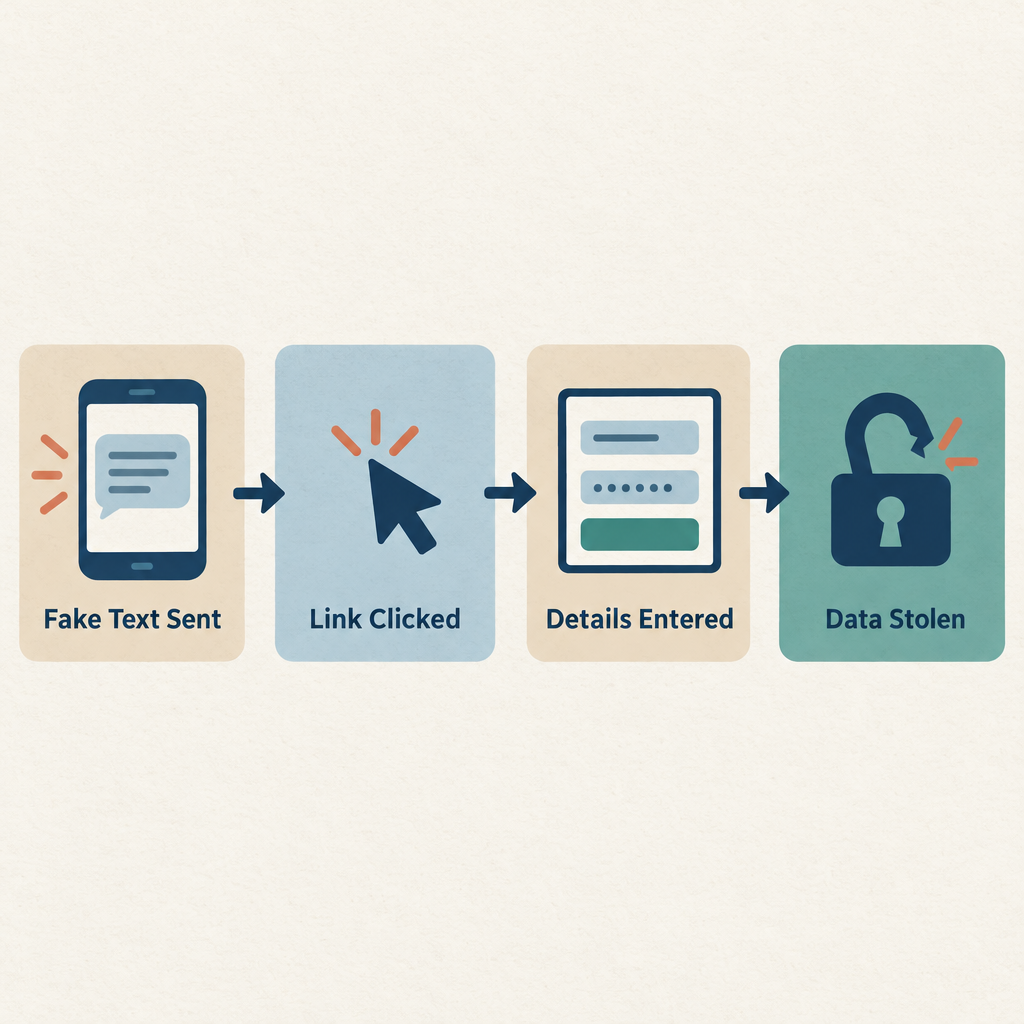
The text says you have unpaid tolls and need to pay now. WSBT reported that the latest version claims an overdue balance and asks you to click a link.
The FBI said the link is built to look like the state’s toll service name. The sending phone numbers change from state to state. The FBI’s sample text, as quoted in news coverage of its alert, claimed an outstanding toll of $12.51 and warned of a $50.00 late fee.
Earlier Indiana versions, according to the Indiana Toll Road Concession Company as reported by IndyStar, warned of late fees of up to $35 unless the person paid through a link.
The court-style version described by the Attorney General’s office in March 2026 uses official-sounding language and an image of Indiana’s state seal. It tells people to scan a bar code to pay the fine and avoid court.
Whatever the version, the goal is the same: get your card number, bank details or personal information.
How to spot it
The Indiana Toll Road says on its own site that it does not send texts, calls or emails asking for unpaid toll payments. The Indiana Toll Road Concession Company has said it does not text people asking for passwords, payment information or account numbers. Indiana State Police repeated that message in October 2026.
Red flags named by Indiana State Police and the Indiana Attorney General’s office:
- Any text claiming to be from the Indiana Toll Road and asking for payment
- Urgent or threatening language, such as a deadline, late fee or court date
- A logo or color scheme that looks off
- A sloppy copy of the state seal
- Web addresses that do not match the sender’s official site
- Requests for passwords, Social Security numbers or bank details by text
- Generic greetings and poor grammar
- A bar code you are told to scan to pay a fine
The Toll Road will not text you for payment
A text demanding toll money is a red flag on its own. Do not click the link, scan the code or reply. If you want to check whether you owe anything, go to the toll service yourself, not through the message.
If you were targeted
- Stop. Do not enter any more information on the site, and do not reply to the text.
- If you entered a card or bank number, call your bank or card issuer right away using the number on the back of your card. Ask about blocking the card and disputing any charges.
- Check whether you really owe a toll. The Indiana Attorney General’s office says to verify through your account at indianatollroad.org or by calling (574) 675-4010. Type the address yourself.
- If you gave your Social Security number or other personal details, go to IdentityTheft.gov for a recovery plan, and consider placing a credit freeze with the three credit bureaus.
- Report the text (see below), then delete it, as the FBI advises.
- If someone opens accounts in your name or you face debts you did not take on, a lawyer or nonprofit credit counselor can help you sort it out.
How to report it
Indiana State Police and the Indiana Attorney General’s office both point people to the FTC at ReportFraud.ftc.gov.
The FBI asks people to file a complaint at ic3.gov. Include the phone number the text came from and the website listed in the text.
The Attorney General’s office has also said you can forward scam texts to 7726 (SPAM) or use your phone’s report junk option.
You can file a complaint with the Indiana Attorney General’s consumer protection office at indianaconsumer.com or 1-800-382-5516, as reported by WPTA on May 13, 2025.
If you lost money, also tell your bank or card issuer, using the number on the back of your card.
Check, verify or complain
Sources
- FBI Internet Crime Complaint Center (ic3.gov), PSA I-041224-PSA, April 12, 2024 ic3.gov · primary source
- Indiana Attorney General's Office (State of Indiana, events.in.gov); date per WBIW repost of March 18, 2026 events.in.gov · primary source

Leah writes US Financer's Consumer Alerts: scam warnings and money rule changes issued by federal agencies, state attorneys general, regulators and courts. Each alert starts from the official notice, says what is confirmed and what is not known yet, and lists the agency's own page…

Ruth is US Financer's standards editor. Every article goes through her checks before and after it is published: each rate, fee, cap, deadline and rule is matched against its primary source, every law named is linked to its official text, and anything that cannot be…
Comments are closed