

This is news about a warning or a rule change, not legal advice. Status can change after publication, so check the official source before you act.
WARNINGConsumer alert, published November 21, 2026
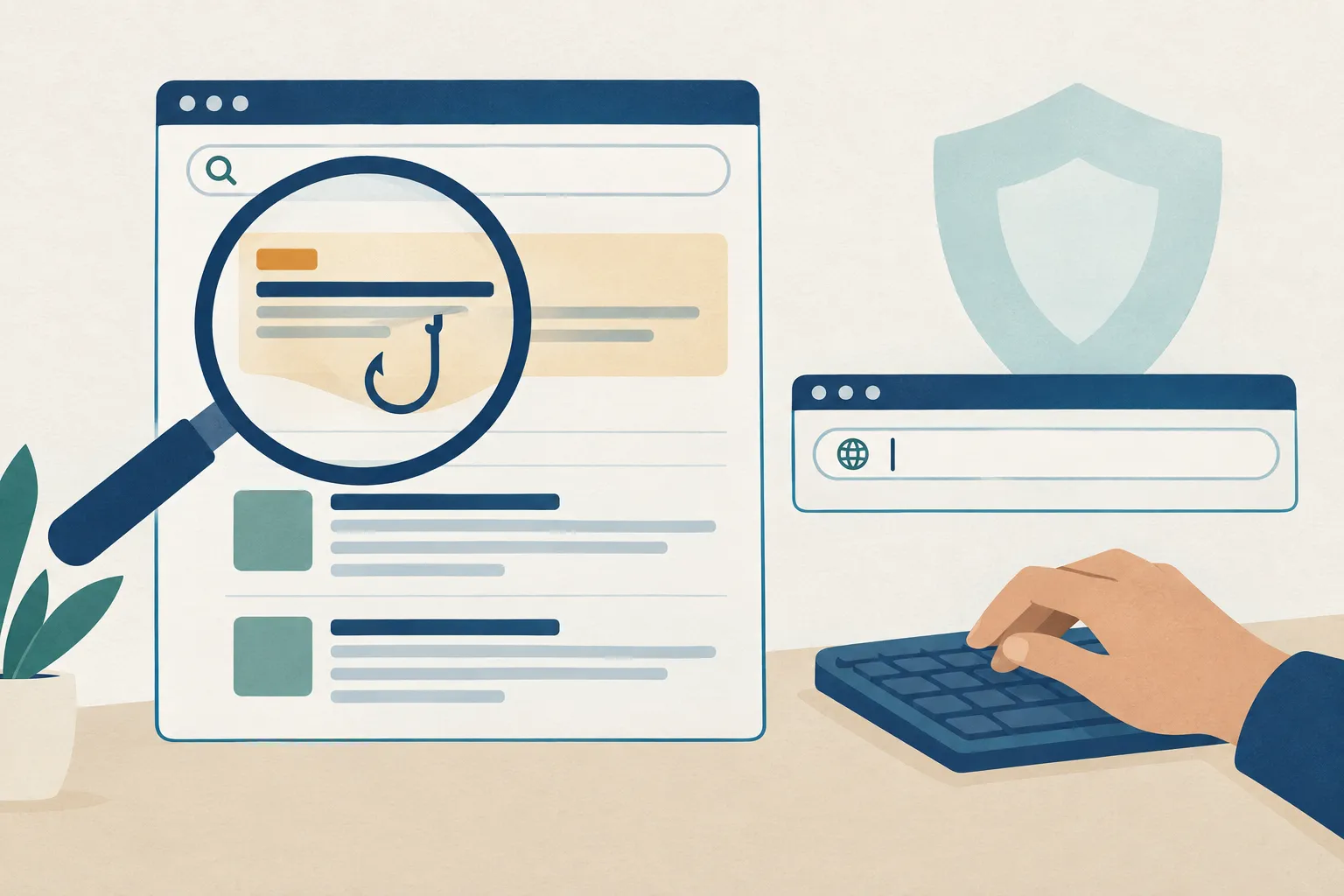
The Federal Trade Commission has warned holiday shoppers that scammers can buy paid search ads that lead to fake shopping sites. Oregon’s Division of Financial Regulation issued a similar warning, according to local news reports. Anyone shopping online this season who clicks a search result to find a deal could be affected.
What is happening
The FTC published a consumer alert titled “How to avoid holiday shopping scams in your search results.” It says scammers can pay for search ads. Those ads can sit at the top of the results page, right next to ads from legitimate companies.
That placement is the problem. A fake store can look just as official as a real one when both show up in the same spot.
Oregon’s Division of Financial Regulation, part of the state Department of Consumer and Business Services, raised the same concern. KTVZ, NBC16 and KVAL reported that DFR warned holiday search ads can lead shoppers to scam sites. We could not find the DFR release itself. The Oregon details in this story come from those news reports of the division’s statements.
This is not a new problem. The FTC issued a similar alert in November 2025, “How to avoid an online shopping scam this holiday season,” which also covered paid search ads. Oregon DFR issued a Thanksgiving scam warning on November 20, 2025.
The FTC alert does not give a dollar figure for losses tied to search ad scams.
What the warning covers
The FTC’s advice centers on where you click and how you check a seller.
First, the FTC advises scrolling past paid ads to the organic results. Organic results are ranked by relevance, not by who paid. That makes them harder for a scammer to buy their way into.
Second, if you already know the retailer, the FTC advises typing its address directly into your browser. That skips the search page entirely.
Third, for a seller you have never heard of, the FTC advises a quick check. Search the seller’s name and the web address shown in the ad, along with words like “review,” “complaint” or “scam.” If other shoppers have had trouble, you may find out before you pay.
According to the local news reports, Oregon DFR gave much the same advice. It said to skip sponsored results, research sellers and enter company addresses directly. The reports also say DFR stressed that no legitimate business or government agency will require payment by gift card.
The same reports say DFR helped recover nearly $6 million for Oregonians in the first three quarters of 2026.
Separately, the FTC has a page called “Tell the FTC about imposter ads online.” It asks the public to review and comment on possible new rules for platforms. The comment deadline is November 30, 2026. No rule has been adopted.
Scamwise, a scam-checking tool built by Savi Security, reported a fivefold rise in fake holiday store submissions from August to October 2026, in figures released October 20, 2026. It also says scam storefronts built with artificial intelligence are climbing search results. Treat that as unconfirmed. Scamwise is a tool from a private security company, and its figures do not come from the FTC or any other primary source.
How to spot it
Watch for these warning signs before you buy:
- The link you clicked was marked as a sponsored or paid ad.
- You have never heard of the store and cannot find independent reviews.
- A search of the store’s name with “complaint” or “scam” turns up problems.
- The web address does not match the brand name you searched for.
- The site asks you to pay with a gift card.
- Prices are far below what known retailers charge for the same item.
Never pay with a gift card
According to news reports of Oregon DFR’s statements, no legitimate business or government agency will require payment by gift card. If a seller insists on one, stop. Gift card payments are hard to trace and hard to get back.
If you were targeted
- Stop any further payments to the site, and do not send more money to fix a problem with your order.
- Call your bank or card issuer using the number on the back of your card. Tell them the charge may be fraud and ask about a dispute.
- If you paid with a gift card, contact the company that issued the card right away and keep the card and your receipt.
- If you created an account on the site, change that password and any other account that uses the same one.
- If you gave out your Social Security number or other personal details, go to IdentityTheft.gov for a recovery plan and consider freezing your credit with the three credit bureaus.
- Save screenshots of the ad, the site, your order and any emails. You will need them for reports and disputes.
How to report it
The FTC names ReportFraud.ftc.gov as the place to report these scams. Reports help the agency spot patterns and warn others.
If your personal information was stolen, report it at IdentityTheft.gov.
You can also contact your state attorney general’s consumer protection office. In Oregon, the local reports say DFR has been helping residents recover money, and the division has consumer advocates who take questions from the public.
If you are disputing a charge, report it to your bank or card issuer using the number on the back of your card. Do not use any contact information listed on the suspect site.
If you have lost a large sum or the seller will not respond, a nonprofit credit counselor can help you think through your next steps with creditors. For questions about your legal options, talk to a lawyer.
The simplest defense is also the oldest one. Go to the store you know by typing its address yourself. A few extra seconds can keep your holiday money where it belongs.
Check, verify or complain
Sources
- FTC Consumer Advice (consumer.ftc.gov) consumer.ftc.gov · official source
- FTC Consumer Advice (consumer.ftc.gov) consumer.ftc.gov · official source

Leah writes US Financer's Consumer Alerts: scam warnings and money rule changes issued by federal agencies, state attorneys general, regulators and courts. Each alert starts from the official notice, says what is confirmed and what is not known yet, and lists the agency's own page…
Ruth is US Financer's standards editor. Every article goes through her checks before and after it is published: each rate, fee, cap, deadline and rule is matched against its primary source, every law named is linked to its official text, and anything that cannot be…
What changed
- Nov 21, 2026 First published.
Comments are closed