

PROPOSEDConsumer alert, published October 27, 2026
A New Jersey lawmaker wants the state to oversee buy now, pay later loans. Assemblyman Chigozie U. Onyema introduced Assembly Bill A5664, the “Buy Now Pay Later Act,” on October 19, 2026, according to the New Jersey Legislature. If it passes, lenders offering pay-later plans to New Jersey residents would face new state rules.
What changed
Nothing has changed for shoppers yet. A5664 is a proposal. The New Jersey Legislature’s records show it was introduced in the 222nd Legislature on October 19, 2026, and referred to the Assembly Consumer Affairs Committee that same day.
Onyema represents District 28, which covers parts of Essex and Union counties. The introduced bill text, posted by the New Jersey Legislature, describes it as an act concerning buy now pay later lenders that supplements Title 17 of the Revised Statutes.
Under that text, oversight would fall to the Commissioner of Banking and Insurance. Banks and lenders licensed under the New Jersey Consumer Finance Licensing Act, other than exempt organizations, would need the commissioner’s prior written authorization to act as a pay-later lender. To apply, a lender would have to submit a written plan, policies for following the act, and its underwriting policies.
The bill text also lists conduct lenders could not engage in. That includes giving inaccurate information to a consumer reporting agency. It also includes making false statements or leaving out material facts in filings with a department or agency.
New Jersey Globe, covering the bill and the sponsor’s statements in late October 2026, reports that A5664 would require pay-later lenders to be state-licensed and would limit fees and interest rates. The Globe also reports the bill would call for clearer disclosure of loan terms, responsible lending standards and procedures for resolving consumer disputes. The introduced bill text we reviewed does not list specific dollar amounts or rate caps.
Who it affects
The bill text defines a “consumer” as an individual who is a New Jersey resident.
It defines a pay-later loan as closed-end credit tied to a consumer’s particular purchase of goods or services. Two kinds are covered: zero-interest installment loans and installment loans that carry interest or finance charges. The commissioner could name other types by regulation.
Some credit falls outside the definition. Loans for buying a motor vehicle are not covered. Credit where the seller is also the lender is generally excluded.
Pay-later plans are widely used. Insider NJ, in its coverage around the time of the bill’s introduction, cited the advocacy group Protect Borrowers as saying nearly half of Americans have used these plans and nearly half of those users missed a payment in the past year. Those figures come from an advocacy group, not from official data.
What happens next
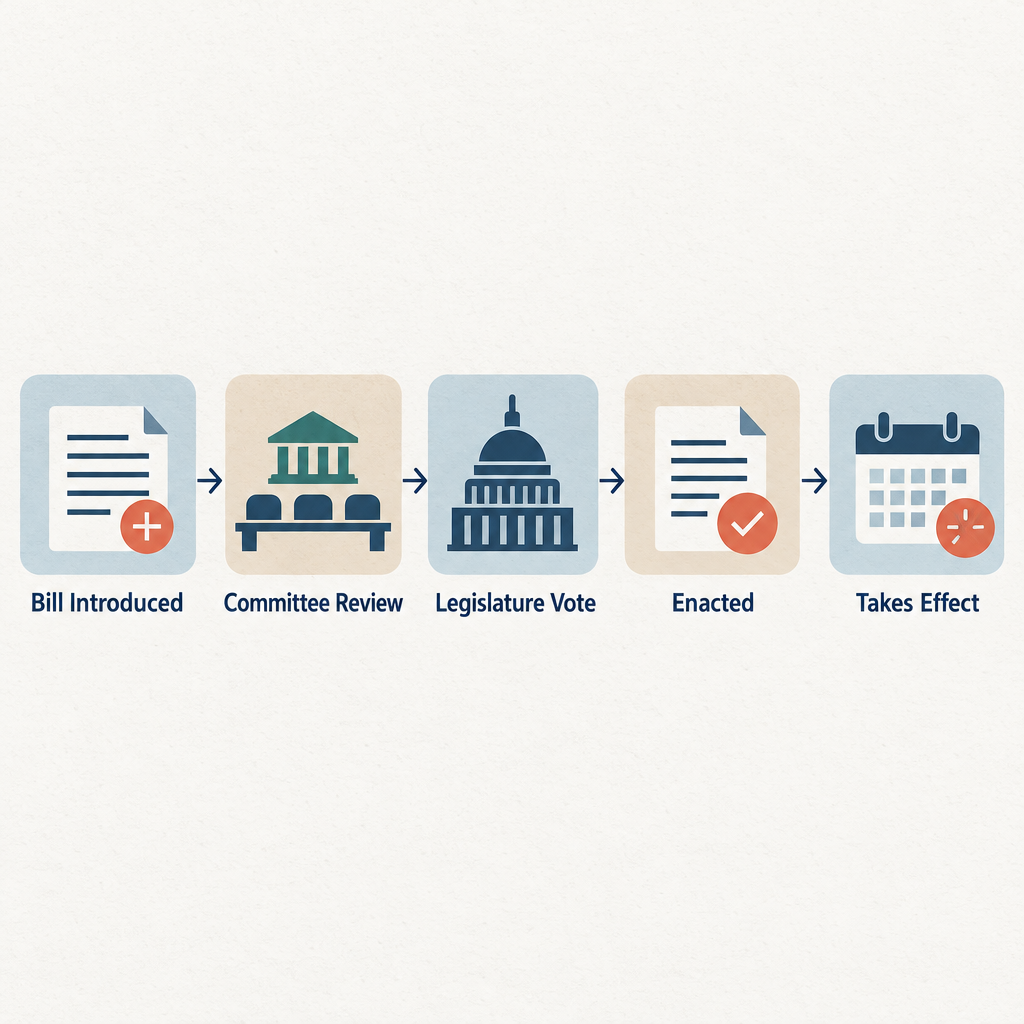
The bill now sits with the Assembly Consumer Affairs Committee. The bill text sets no hearing dates or comment dates. It would need to pass the Legislature and become law before any rules apply.
If enacted, the bill text says the act would take effect one year after the date of enactment. Because it has not been enacted, there is no effective date yet.
Onyema’s office posted a press release on the bill on the Assembly Democrats’ site on October 26, 2026. He also led the Fair Price Protection Act, a separate bill from earlier in 2026.
This bill does not protect you yet
A5664 is only a proposal. Today, any pay-later plan you sign up for works under the rules that already apply. A missed payment can still bring fees or other costs, depending on your plan’s terms.
What you should do now
You do not need to take any action because of this bill. It is still a good time to check how you use pay-later plans.
- Read the terms of each plan before you agree. Look for late fees, interest and the payment schedule.
- Keep a list of every plan you have open and when each payment is due. Several small plans can add up fast.
- Check your credit reports for loans or payments that look wrong.
- If pay-later payments are straining your budget, consider talking to a nonprofit credit counselor. If you are in a dispute with a lender and think your rights were violated, a lawyer can explain your options.
What we don’t know yet
The bill text we reviewed does not say how high any fee or interest rate limits would be. New Jersey Globe reports limits are planned, but no figures appear in the introduced version.
We do not know when, or if, the committee will hold a hearing. We do not know what other types of loans the commissioner might add by regulation if the bill passes. And the text could change as it moves through the Legislature.
We will update this alert if A5664 advances.
Sources
- New Jersey Legislature (pub.njleg.gov), bill text A5664 (introduced version) pub.njleg.gov · primary source

Leah writes US Financer's Consumer Alerts: scam warnings and money rule changes issued by federal agencies, state attorneys general, regulators and courts. Each alert starts from the official notice, says what is confirmed and what is not known yet, and lists the agency's own page…

Ruth is US Financer's standards editor. Every article goes through her checks before and after it is published: each rate, fee, cap, deadline and rule is matched against its primary source, every law named is linked to its official text, and anything that cannot be…
Comments are closed