
SCAM ALERTConsumer alert, published October 22, 2026
New Jersey’s Department of Human Services and the Office of the Attorney General are warning immigrant communities about scams that sell fake immigration help. The Attorney General’s office posted the notice on October 21, 2026. It is aimed at anyone in New Jersey seeking immigration services, and it explains how to find real legal help.
What is happening
The New Jersey Office of the Attorney General said in its October 21, 2026 release that Attorney General Jennifer Davenport’s office and Human Services Commissioner Stephen Cha’s department are partnering to raise awareness. The Attorney General’s page labels the release ‘ICYMI’ (in case you missed it), so the first announcement may have gone out earlier.
According to the release, two state offices have put guidance online. These are the Office of New Americans within Human Services and the Division of Consumer Affairs within the Attorney General’s office. The guidance covers how to find safe legal help, how to recognize a possible immigration scam, and how to file a complaint.
This is an awareness effort. It is not a new rule or penalty.
How the scam works
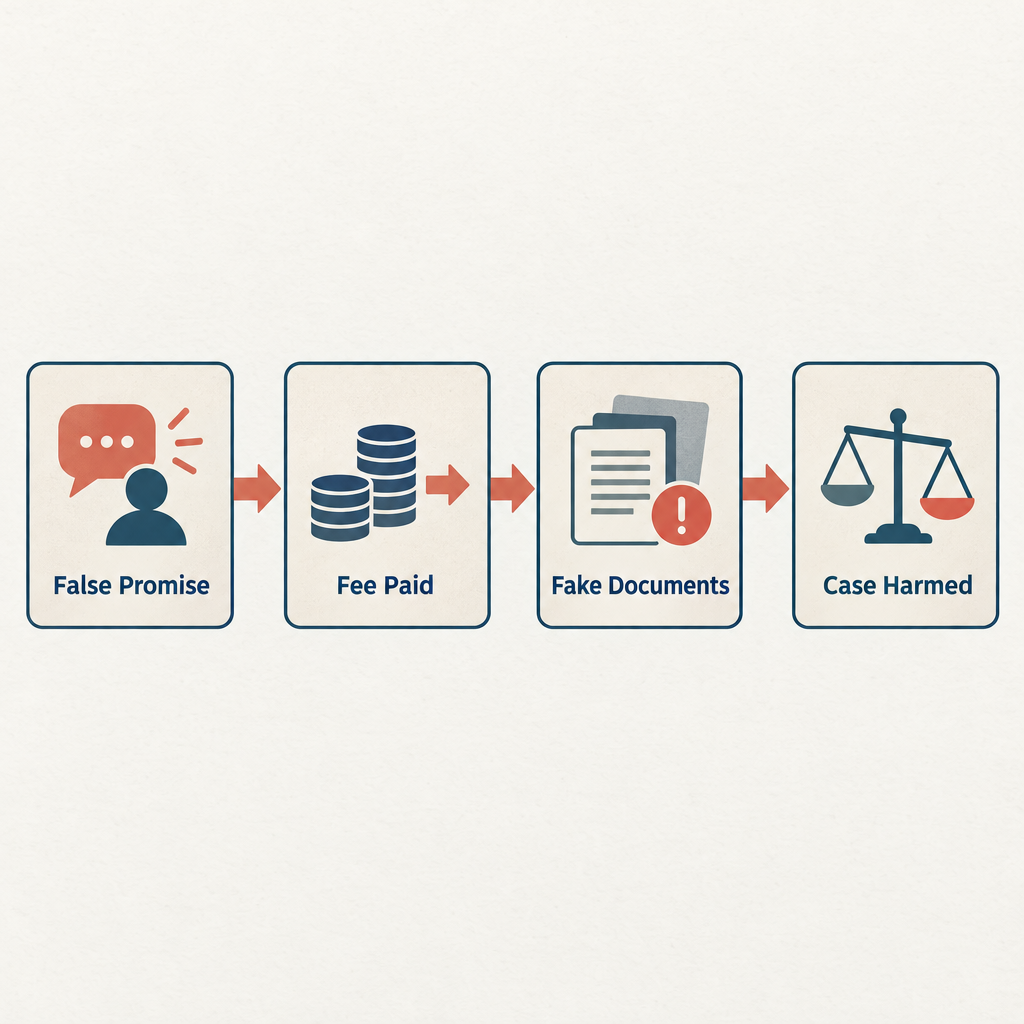
WRNJ Radio, reporting on the officials’ statements, said the warning targets people who advertise themselves as immigration consultants or ‘notarios’ and falsely claim they can give legal services. In many Spanish-speaking countries, a Notario Público is a licensed legal professional. In the United States, a notary generally does not have that authority. WRNJ reported that the state says the guidance is meant to protect people from excessive fees, fraudulent legal advice and mishandling of personal information.
A consumer brief from the NJ Division of Consumer Affairs, ‘Avoiding Immigration Services and Government Imposter Scams,’ describes how these scams play out. Scammers charge hundreds of dollars to process phony or flawed immigration documents and then fail to deliver. The brief says victims can lose money and irreplaceable documents such as birth certificates and passports. Their immigration status can be harmed, and they can face charges or deportation.
New Jersey has acted on this before. In October 2015, the Division of Consumer Affairs issued $10,000 Notices of Violation to four Passaic County ‘Notarios Publicos’ whose fees ran roughly $600 to $1,000 per client. In May 2016, the state resolved proceedings against four businesses accused of scams targeting Spanish-speaking immigrants. In November 2018, the Division issued Notices of Violation to 28 businesses for allegedly offering immigration services they were not permitted to provide. Some of those businesses quoted fees above $1,500.
A notary is not a lawyer
In the US, a notary generally cannot give legal advice or handle your immigration case. A title like ‘notario’ or ‘consultant’ does not mean the person is allowed to do this work.
How to spot it
The Division of Consumer Affairs brief and the state’s ‘Avoid Immigration Services Fraud’ page point to these warning signs:
- A promise of guaranteed results
- An offer to speed up or expedite your claim
- Someone calling themselves a ‘notario’ or immigration consultant instead of an attorney or accredited representative
- No clear answers about their training, experience or certification
- No written agreement describing the services
- Refusal to give you your case status, a timeline, or copies of your records and documents
If you were targeted
If you were targeted
- Stop paying. Do not hand over more money or original documents.
- Ask for a full copy of your records and documents, as the state’s guidance advises. Keep receipts, ads, messages and any agreement.
- If you paid by card or bank transfer, call your bank or card issuer using the number on the back of your card.
- If your passport, birth certificate or personal information was taken or misused, report it at IdentityTheft.gov and consider freezing your credit with the three credit bureaus.
- Before filing anything else, talk to a licensed immigration attorney or an accredited representative about your case.
- Report the scam to the NJ Division of Consumer Affairs.
How to report it
The State of New Jersey’s ‘Avoid Immigration Services Fraud’ page says to report immigration scams to the NJ Division of Consumer Affairs at 1-800-242-5846 or at njconsumeraffairs.gov.
The state says the Division takes reports from everyone, regardless of citizenship or immigration status. Its employees do not ask about your status.
The Division’s consumer brief says New Jersey has joined the FTC, the Board of Immigration Appeals and USCIS in fighting immigration services scams. You can also report fraud to the FTC at ReportFraud.ftc.gov.
The Division also publishes an Immigration Services Fraud Prevention Handbook, which covers affinity fraud. That is when a scammer targets people in their own community.
Check, verify or complain
Sources
- New Jersey Office of the Attorney General (njoag.gov), Immigrants' Rights press release; AG Jennifer Davenport, DHS Comm njoag.gov · primary source
- State of New Jersey 'Avoid Immigration Services Fraud' page (nj.gov/knowyourrights) nj.gov · primary source
- NJ Division of Consumer Affairs consumer brief 'Avoiding Immigration Services and Government Imposter Scams' njconsumeraffairs.gov · primary source

Leah writes US Financer's Consumer Alerts: scam warnings and money rule changes issued by federal agencies, state attorneys general, regulators and courts. Each alert starts from the official notice, says what is confirmed and what is not known yet, and lists the agency's own page…

Ruth is US Financer's standards editor. Every article goes through her checks before and after it is published: each rate, fee, cap, deadline and rule is matched against its primary source, every law named is linked to its official text, and anything that cannot be…
Comments are closed