SCAM ALERTConsumer alert, published October 16, 2026
Idaho Attorney General Raúl Labrador issued a Consumer Alert on October 15, 2026, warning Idahoans about a growing number of scams that use the name of Idaho Power Company and electrical service in the state. The alert says almost 400 Idaho Power customer accounts, both residential and business, have seen fraudulent activity. Scammers are reaching people by phone, email and text, and some customers have already paid deposits and fees to avoid a shutoff that was never going to happen.
What is happening
According to the Attorney General’s October 15, 2026 alert, Idaho Power has identified nearly 400 customer accounts with fraudulent activity. The activity includes unauthorized service requests, fraudulent payment processing, customer impersonation, and unauthorized changes to customer account information.
Labrador said his office is working with Idaho Power’s investigators to identify the source. “We suspect they originate overseas,” he said, pointing to spoofed phone numbers and websites registered in foreign countries. The alert describes this as a suspicion, not a finding. It gives no total dollar-loss figure.
Idaho Power’s Customer Experience Director Megan Ronk, quoted in the same alert, urged customers to watch their accounts through My Account or the Idaho Power app and to contact the utility directly when in doubt.
How the scam works
The Attorney General’s alert describes several versions of the scheme.
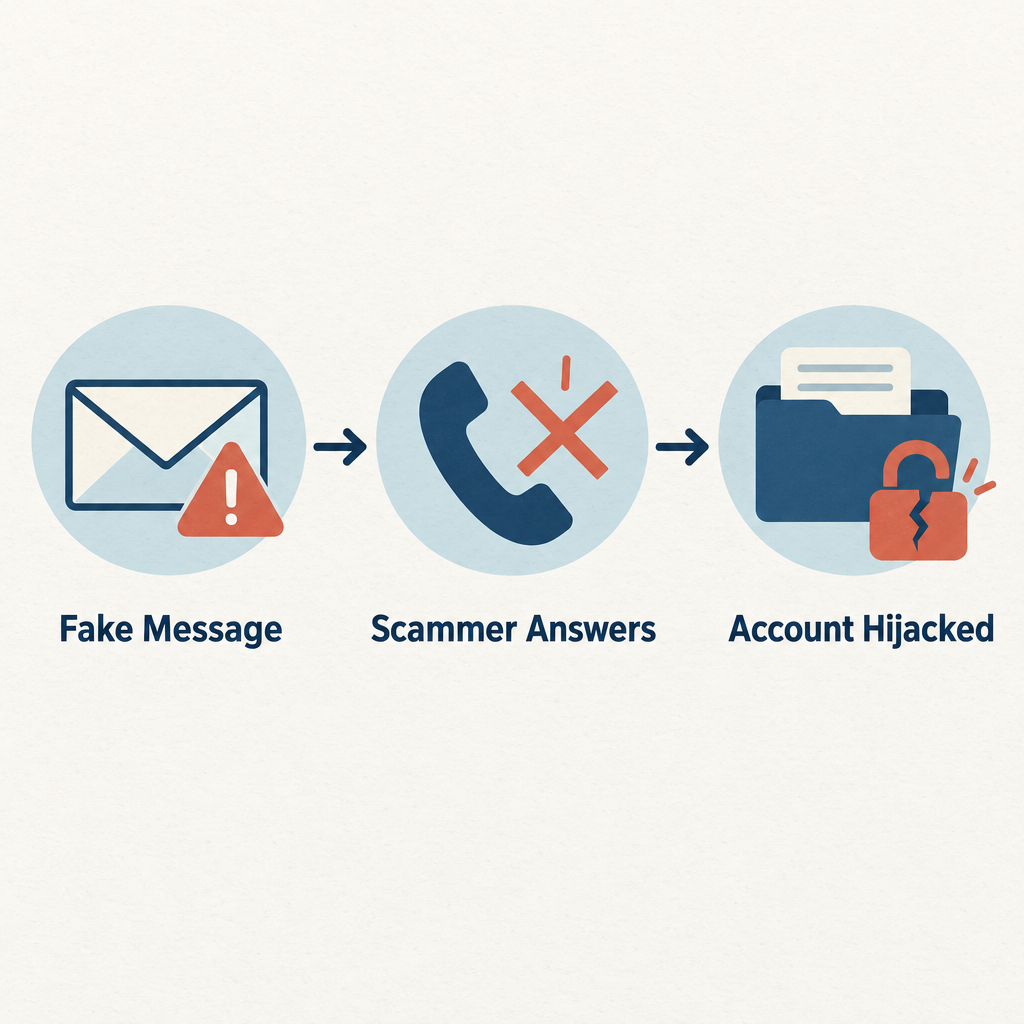
In the most common one, a scammer calls, emails or texts a customer about a supposed planned outage. The message includes a phone number that the scammer claims belongs to Idaho Power. When the customer calls that number, the person who answers asks for personal information. The scammers then use that information to change the customer’s account.
Customers reported calls from out-of-state numbers with area codes 224 (Chicago), 470 (Atlanta) and 725 (Las Vegas), according to the alert.
A second version uses fake websites with names that imitate a power company. The alert names one such site, which advertised low monthly power rates to collect identifying and financial information and then disappeared.
In a third version, scammers threaten to turn off a customer’s power unless a deposit or fee is paid right away. Some customers paid. The alert says those charges may show up on bank or card statements under the names “Stallion” or “PayEnergy.”
For context, Idaho Power said in July 2025, as reported by KBOI/CBS2, that it never demands payment by phone or prepaid card, does not charge for a defective meter, and does not accept Bitcoin or QR codes. If a caller asks for any of those, it is not Idaho Power.
How to spot it
- A call, text or email about a “planned outage” that includes a phone number to call back
- A caller from an out-of-state area code claiming to be Idaho Power
- A demand for immediate payment to stop a shutoff
- A request for payment by prepaid card, cryptocurrency or QR code
- A website offering unusually low power rates that asks for your Social Security number or bank details
- A caller who asks for account passwords, full account numbers or personal identifying information
- Unfamiliar charges on your statement labeled “Stallion” or “PayEnergy”
Never call the number in the message
The Attorney General’s alert says the fake phone numbers are the heart of this scam. The outage notice may look real, but the number inside it connects you to the scammer. Always find Idaho Power’s number on your paper bill or in the official app and call that one instead.
If you were targeted
- Hang up or stop replying. Do not call back the number in the message or click any link in it.
- Call Idaho Power using the number printed on your bill or shown in the Idaho Power app, and ask them to review your account for unauthorized changes.
- If you paid, call your bank or card issuer using the number on the back of your card. Ask to dispute the charge and look for descriptors such as “Stallion” or “PayEnergy.”
- If you gave out a Social Security number, date of birth or bank details, consider placing a fraud alert or credit freeze with the three credit bureaus and report the identity theft at IdentityTheft.gov.
- Change the password on your Idaho Power account and any account that shares that password.
- Keep screenshots, call logs and any receipts. You will need them to file complaints.
How to report it
The Attorney General’s October 15, 2026 alert directs victims of Idaho Power impersonators or other scammers to file a complaint with the Idaho AG’s Consumer Protection Division at ReportScamsIdaho.com.
You can also report the scam to the Federal Trade Commission at ReportFraud.ftc.gov. If a text or email was part of it, forward the details there as well. If your personal information was taken, use IdentityTheft.gov to build a recovery plan.
If you lost money, contact your bank or card issuer first using the number on the back of your card. The sooner a disputed charge is flagged, the better the chance of recovering it.
If you are unsure whether you have a legal claim, or if the account changes caused larger financial damage, talk to a lawyer or a nonprofit credit counselor. The Attorney General’s office can accept complaints, but it does not represent individual consumers in private disputes.
Check, verify or complain
Sources
- Idaho Office of Attorney General (ag.idaho.gov), press release dated October 15, 2026 ag.idaho.gov · primary source

Leah writes US Financer's Consumer Alerts: scam warnings and money rule changes issued by federal agencies, state attorneys general, regulators and courts. Each alert starts from the official notice, says what is confirmed and what is not known yet, and lists the agency's own page…

Ruth is US Financer's standards editor. Every article goes through her checks before and after it is published: each rate, fee, cap, deadline and rule is matched against its primary source, every law named is linked to its official text, and anything that cannot be…
Comments are closed