

SCAM ALERTConsumer alert, published October 26, 2026
The Federal Trade Commission’s consumer advice team is warning people about scammers who pose as well-known charities and sweepstakes to get money or personal information. The alert is dated October 26, 2026. It matters most for people who give to charity, because the scammers use those donations as their hook.
What is happening
The FTC’s consumer advice scams page lists an alert titled “Spot scammers impersonating well-known charities and sweepstakes,” dated October 26, 2026. It says scammers impersonate all kinds of organizations, including reputable charities.
The FTC describes impersonators who try to make you believe you won a charity-sponsored sweepstakes because you donated to that charity. In the agency’s example, you get a call about a sweepstakes contest you supposedly won. The caller says they are with a charity you support. The alert asks how you can tell whether the prize is real or a scam.
This fits a pattern the FTC has flagged before. In an August 2026 consumer alert, the agency said scammers might create fake charities that seem official. Others impersonate well-known charities, hoping the familiar name draws a donation. Money given to these fakes goes to the scammer, not to people in need.
How the scam works
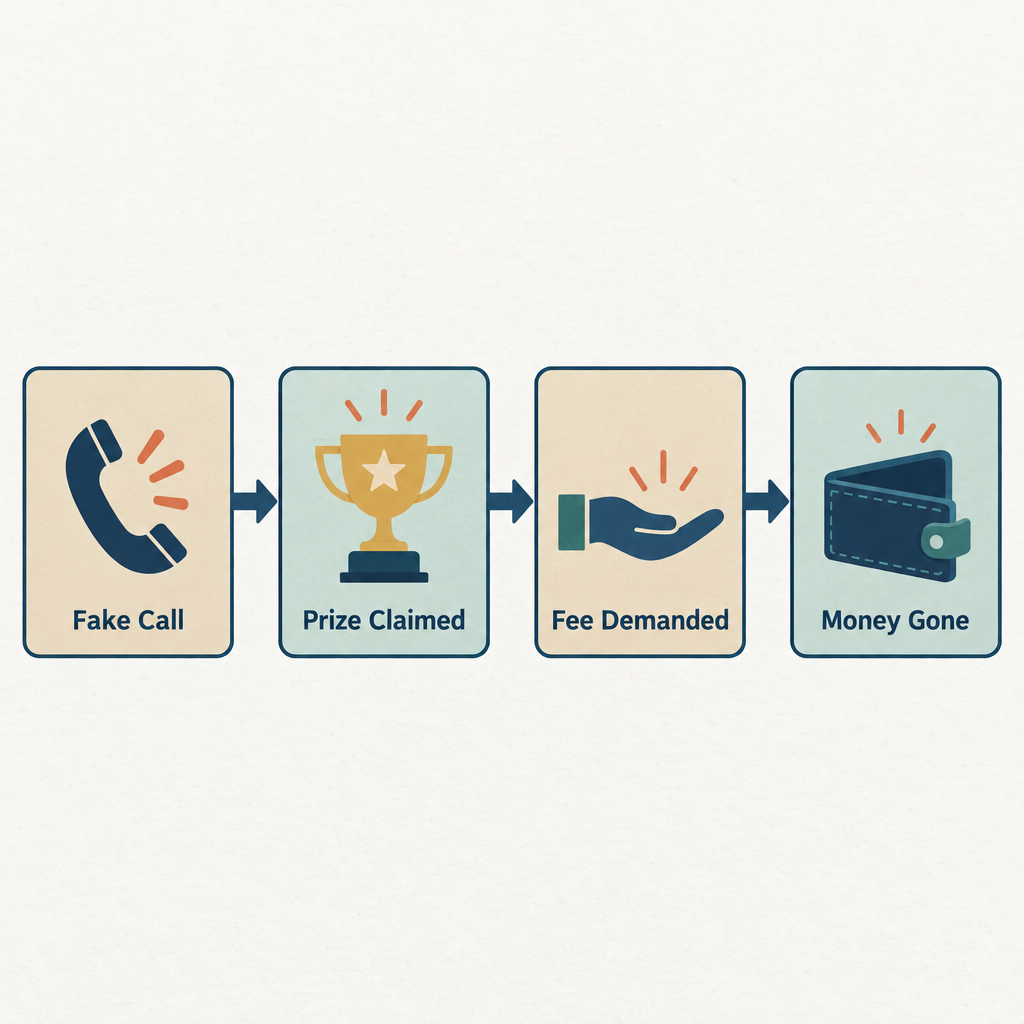
The hook is trust. On its page “Fake Prize, Sweepstakes, and Lottery Scams,” the FTC says scammers use names of organizations you might recognize. They pretend to be from well-known companies that run real sweepstakes.
Then comes the ask. The same FTC page says scammers ask you to pay money or give account information to get the prize. In a March 2026 consumer alert, the FTC said prize-scam callers may claim to be from a well-known sweepstakes company such as Publishers Clearing House. They say you must pay “taxes,” “shipping and handling charges,” or “processing fees” before you can claim the prize.
The charity angle adds pressure. On its page “Donating Safely and Avoiding Scams,” the FTC says some scammers use names that sound like real charities. They make vague, sentimental claims with no specifics on how a donation will be used. They may also falsely claim a donation is tax-deductible.
The FTC is direct on one point. Guaranteeing sweepstakes winnings in exchange for a donation is a scam, and it is illegal.
How to spot it
These red flags come from the FTC’s guidance:
- A caller says you won a prize because you donated to their charity.
- You are asked to pay a fee, tax or shipping charge to claim a prize.
- You are asked for bank or account information to receive winnings.
- The charity’s name sounds close to a real one, but not quite right.
- The pitch is emotional but vague about how your money will be used.
- You are told to pay by cash, gift card, cryptocurrency or money transfer service.
The FTC’s prize-scam page says no real sweepstakes company will contact you asking for money to claim a prize. In a December 2021 consumer alert, the FTC said to avoid donating by cash, gift card, cryptocurrency or money transfer if someone demands you pay that way. Paying by credit card is the safer option.
If a fundraiser tells you a donation is tax-deductible and that matters to you, check with a tax professional before relying on the claim.
Real prizes are free
If someone says you must pay to collect a prize, stop. The FTC says no real sweepstakes company will ask for money to claim a prize. Promising winnings in exchange for a donation is illegal.
If you were targeted
- Hang up. Do not call back any number the caller gives you. The FTC says to look up the real organization’s contact information yourself.
- If you paid by card, call your card issuer using the number on the back of your card and explain what happened.
- If you shared bank account details, call your bank right away using the number on the back of your card or on your statement.
- If you gave your Social Security number or other personal details, consider freezing your credit and report it at IdentityTheft.gov.
- Write down what you remember: the name the caller used, the phone number and what they said. The FTC asks for these details when you report.
How to report it
The FTC asks people to report scams at ReportFraud.ftc.gov. Its December 2021 consumer alert says reports to the FTC are used to investigate and bring law enforcement cases.
The FTC’s page on donating safely also tells people to find their state charity regulator at nasconet.org and report to them. Include the organization or fundraiser name, the phone number and what the fundraiser said.
You can also contact your state attorney general’s consumer protection office. If you lost money or are struggling with debt after a scam, a nonprofit credit counselor can help you sort out next steps.
Check, verify or complain
Sources
- FTC Consumer Advice (consumer.ftc.gov), Scams page consumer.ftc.gov · primary source
- FTC Consumer Advice (consumer.ftc.gov), Scams page consumer.ftc.gov · primary source
- FTC Consumer Advice, 'Fake Prize, Sweepstakes, and Lottery Scams' consumer.ftc.gov · primary source
- FTC Consumer Advice, 'Donating Safely and Avoiding Scams' consumer.ftc.gov · primary source
- FTC Consumer Alert, December 2021 consumer.ftc.gov · primary source
- FTC Consumer Alert, March 2026 consumer.ftc.gov · primary source
- FTC Consumer Alert, August 2026 consumer.ftc.gov · primary source

Leah writes US Financer's Consumer Alerts: scam warnings and money rule changes issued by federal agencies, state attorneys general, regulators and courts. Each alert starts from the official notice, says what is confirmed and what is not known yet, and lists the agency's own page…

Ruth is US Financer's standards editor. Every article goes through her checks before and after it is published: each rate, fee, cap, deadline and rule is matched against its primary source, every law named is linked to its official text, and anything that cannot be…
Comments are closed